

 Guide updated by Charlotte Luise on 08 December 2025
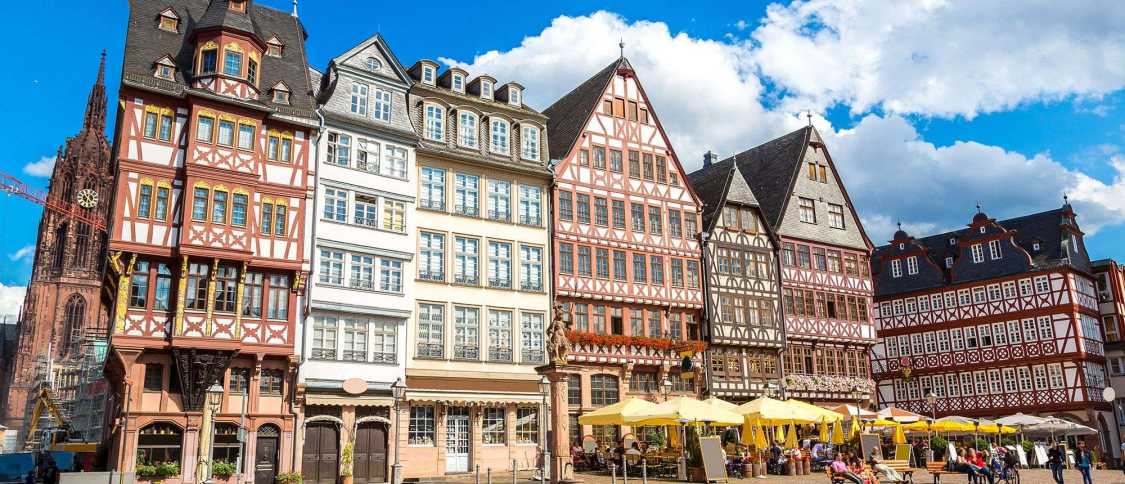
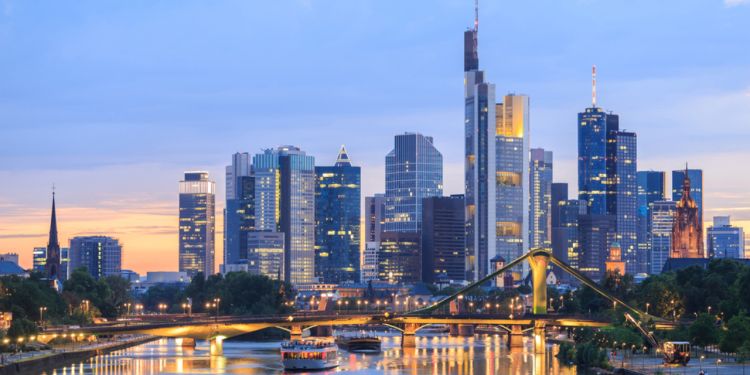
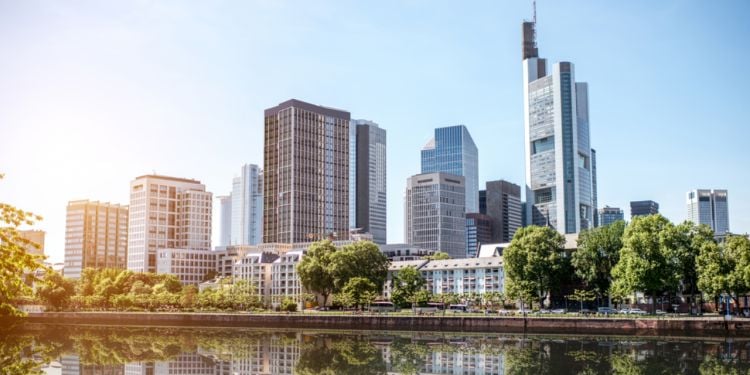
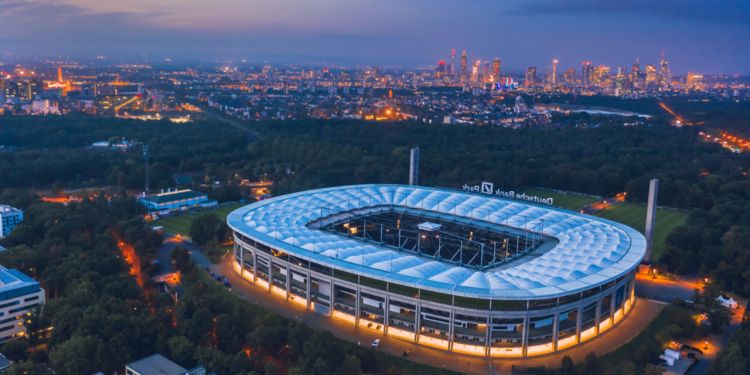
Frankfurt, Germany’s fifth-largest city, is one of Europe’s financial centers and a major transportation hub. It is home to the European Central Bank, the German Stock Exchange, and numerous multinational corporations, combining advanced business infrastructure with a rich cultural heritage.The city's skyline, unique in Germany, features modern skyscrapers alongside medieval architecture in the reconstructed Old Town. With a population of approximately 750,000 residents and nearly 30% foreign nationals, Frankfurt offers an exceptionally international environment where English is widely spoken in business settings.
5 good reasons to move to Frankfurt
- International career opportunities: As a leading financial capital, Frankfurt hosts the headquarters of major banks, financial institutions, and multinational companies, offering abundant employment prospects.
- Excellent connectivity: Frankfurt Airport is one of Europe's busiest hubs, and the city's central location provides easy access to other major European cities by rail or road.
- Multicultural environment: With residents from over 180 countries, Frankfurt offers diverse international communities, schools, restaurants, and cultural events.
- High quality of life: Modern city living alongside abundant green spaces, efficient public services and excellent healthcare provision.
- Cultural richness: From world-class museums along the Museumsufer to the renowned Frankfurt Book Fair and opera, the city offers year-round cultural experiences.
Your setup journey
Guide in 8 steps. Click any step below to jump directly to the section you need.
01Working in Frankfurt
Among the main engines of Frankfurt’s economy are finance, banking, consulting, and professional services. The city hosts the European Central Bank, Deutsche Bundesbank, and major institutions like Deutsche Bank, Commerzbank, and DZ Bank. Beyond finance, Frankfurt’s other important sectors include pharmaceuticals, logistics and technology.
Employment opportunities and key sectors
Finance employs tens of thousands across banking, asset management, insurance, and fintech. The consulting sector thrives here, with firms like PwC, Deloitte, KPMG, and McKinsey maintaining offices. Technology and IT roles are expanding rapidly as companies digitalize operations.
Work permits and employment regulations
EU, EEA, and Swiss citizens can work in Frankfurt without a visa, needing only registration at the local Bürgeramt (citizens’ office). Non-EU nationals require appropriate visas and work permits before starting employment. The EU Blue Card is the main route for highly skilled professionals, requiring a university degree and an annual salary of at least €48,300 (or €43,760 for shortage occupations such as IT, engineering, or healthcare). Other options include a regular work visa for qualified employment, and the Opportunity Card (Chancenkarte) introduced in 2024, which allows non-EU nationals to enter Germany for up to one year to search for a job.
Unemployment rate (State of Hesse) | 5.9% |
Average monthly salary (net) | €3,968 |
Main employment sectors | Finance, professional services, pharmaceuticals, logistics, IT |
Data correct as of November 2025.


02Housing & neighbourhoods
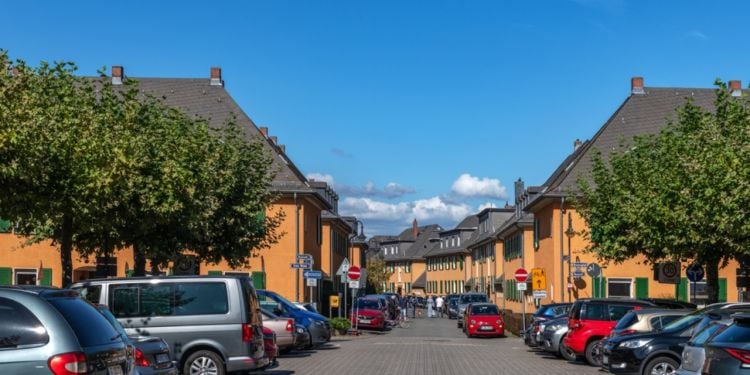
Frankfurt's housing market is competitive due to high demand from international professionals and limited supply. Rental prices are among Germany's highest, though still moderate compared to other major European financial centers. Many expats rent rather than buy. Starting your search early and understanding local procedures significantly improves your chances of securing suitable accommodation.
Popular neighbourhoods for expats
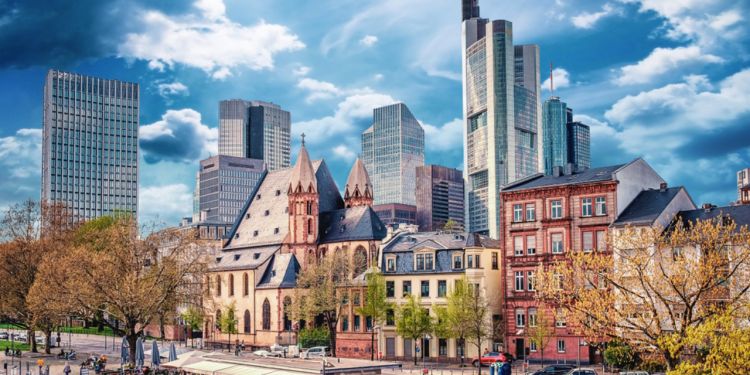
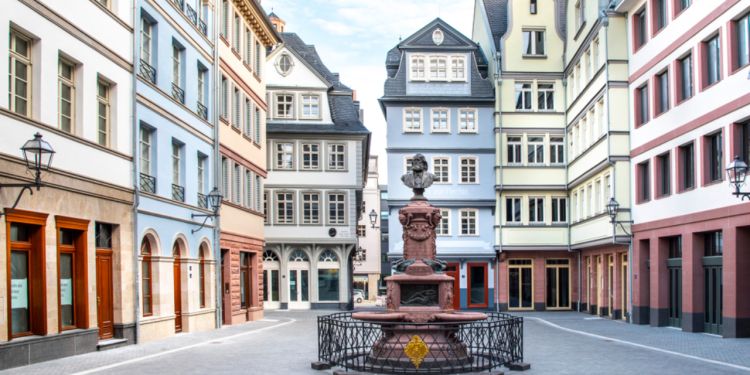
Westend is the most prestigious area, close to the banking district, and popular with professionals and families. Sachsenhausen has historic charm, known for traditional apple wine taverns and the Museumsufer. Nordend is cosmopolitan, attracting young professionals with its restaurants and boutiques. Bockenheim is a more affordable, student-friendly area near the university.
Rental costs and procedures
Landlords typically request documents like proof of income, credit reports and ID. Contracts distinguish between Kaltmiete (base rent) and Warmmiete (including some utilities). Expect to have to pay a refundable security deposit, often three months' rent.
1-bedroom apartment (city center) | €1,000 - €1,600/month |
3-bedroom apartment (city center) | €2,000 - €3,500/month |
Data correct as of November 2025.
Source: Numbeo
03Cost of living
Frankfurt's cost of living is high compared to most German cities but remains reasonable relative to other major European financial hubs like London or Zurich. Housing represents the largest expense, with rental costs significantly above the German average.
Monthly costs for a single person
Rent (1-bedroom apartment in the city center) | €1,000 - €1,600 |
Utilities (electricity, heating, water) | €200 - €450 |
Groceries | €300 - €400 |
Data correct as of November 2025.
Monthly costs for a family of four
Rent (3-bedroom apartment in the city center) | €2,000 - €3,500 |
Utilities (electricity, heating, water) | €350 |
Groceries | €700 - €900 |
Source: Numbeo
04Higher education & universities
For students wanting to enter higher education in Frankfurt, there are plenty of options. They include major universities and specialized schools in finance, management, and technology. Many graduate programs are taught in English, making the city accessible for international students seeking globally recognized qualifications.
Major universities and programs
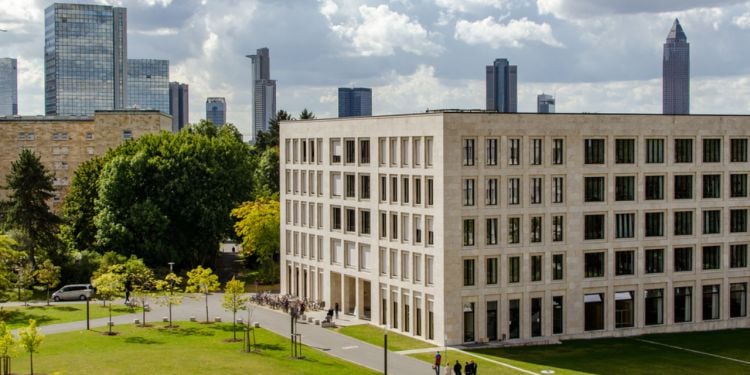
Frankfurt has around 20 institutes of higher education offering a wide variety of study programs. Students can choose from full universities, applied-sciences colleges, and specialist schools covering diverse disciplines — from sciences, humanities, and business to engineering, arts, social work, and health. The two main public universities are Goethe University Frankfurt and Frankfurt University of Applied Sciences.
Tuition fees and admission requirements
Public universities charge small semester contributions covering administrative costs and public transport. Private schools have higher tuition depending on the program. Admission usually requires a recognized secondary school diploma, language proficiency, and students sometimes have to sit entrance exams or or attend interviews.
Sources: Goethe University, Frankfurt University of Applied Sciences
Discover more

05Schooling for children
The Frankfurt school system encompasses a wide range of options , from public schools to international and bilingual institutions. Public schools deliver free, high-quality education, primarily in German, while international schools accommodate English-language or global curricula.
German public and private schools
The public system follows Grundschule (grades 1-4), then Gymnasium, Realschule, or Hauptschule. Public schools require German proficiency, though some offer bilingual programs or intensive language support. Private German schools, including Philanthropin and Montessori/Waldorf institutions, charge €3,000–€8,000 annually. Enrollment requires registration with the local school district and proof of residence and birth certificates.
International and bilingual schools
There are numerous international schools in Frankfurt, including Frankfurt International School and Metropolitan School Frankfurt. Fees typically range from €12,000 to €28,000 per year. Be aware that most international schools have waiting lists, so early application is recommended. Application requirements usually include previous school records, language assessments, and registration fees of €500–€2,000.
Sources: Frankfurt International School, Metropolitan School Frankfurt, Hesse Ministry of Education
06Daily life
The city operates with characteristic German punctuality and respect for rules, while its diverse population brings global influences to neighborhoods, restaurants, and cultural life. English is commonly spoken in business settings and international areas, though learning German improves integration and daily interactions. Frankfurt's compact size means most amenities are accessible within short distances.
Transportation and getting around
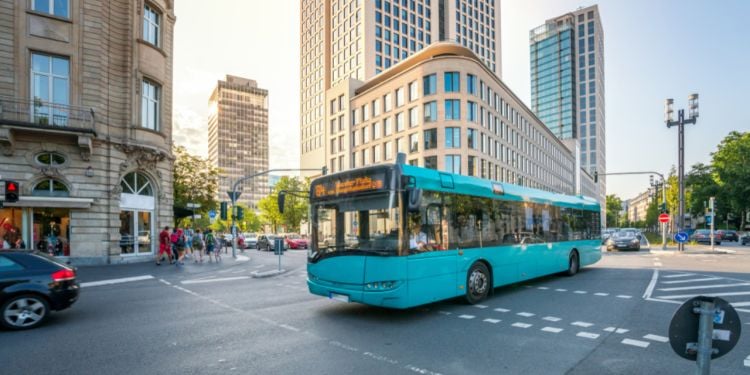
Frankfurt's public transport system, operated by RMV (Rhein-Main-Verkehrsverbund), includes an extensive network of U-Bahn (subway), S-Bahn (regional trains), trams, and buses connecting the city and surrounding region. The system is punctual, clean, and operates from early morning until past midnight, with night buses on weekends. Frankfurt is bicycle-friendly with bike lanes and a public bike-sharing system called Nextbike. The city's compact center makes walking pleasant for daily errands.
Lifestyle and cultural habits
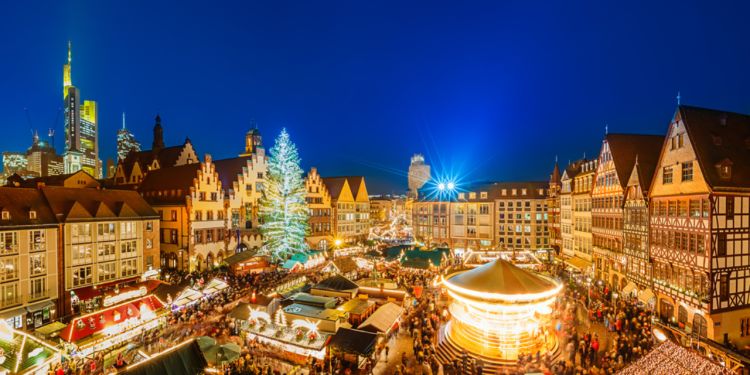
Germans value privacy, punctuality, and direct communication. Shops typically close by 8:00 PM on weekdays and 6:00 PM on Saturdays, with most stores closed on Sundays except at the train station and airport. Banking and administrative tasks often require appointments. The city celebrates traditional festivals including the Dippemess (spring and autumn fairs) and Frankfurt Christmas Market. Local specialty Apfelwein (apple wine) is enjoyed in traditional taverns called Ebbelwoi-Kneipen.
Source: City of Frankfurt
Discover more


07Leisure, culture & things to do
Frankfurt, often recognized as a business hub, features a lively array of historic sites, green spaces, and entertainment options. The city hosts major international gatherings, including the renowned Frankfurt Book Fair, one of the world's largest publishing events, alongside various seasonal festivals. Visitors looking for things to do in Frankfurt can admire outstanding architecture, enjoy performances, or relax in expansive parks. The central layout makes both walking and biking practical for exploration.
Museums and cultural attractions
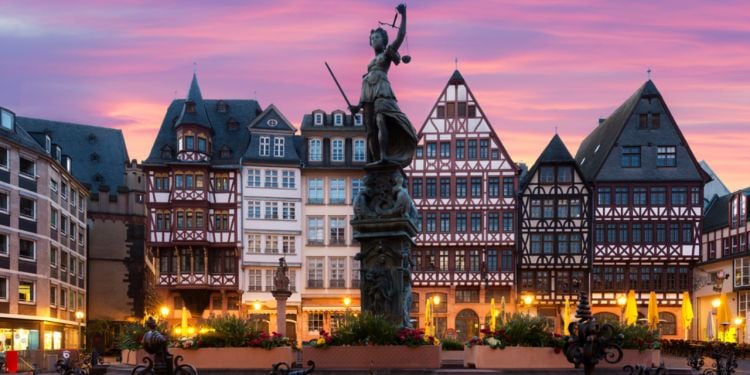
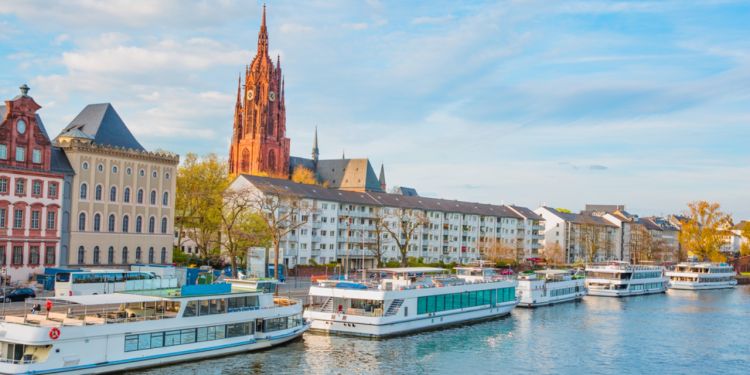
The Museumsufer (Museum Embankment) along the Main River features major institutions. The Städel Museum presents 700 years of European art, featuring works by masters like Rembrandt and Monet. The Museum für Moderne Kunst (MMK) displays contemporary art in a distinctive triangular building. For families, the Senckenberg Natural History Museum offers extensive dinosaur and biodiversity exhibits. Key historic sites include the Goethe House, the birthplace of Germany's greatest writer, and the reconstructed Römerberg old town square.
Entertainment and nightlife
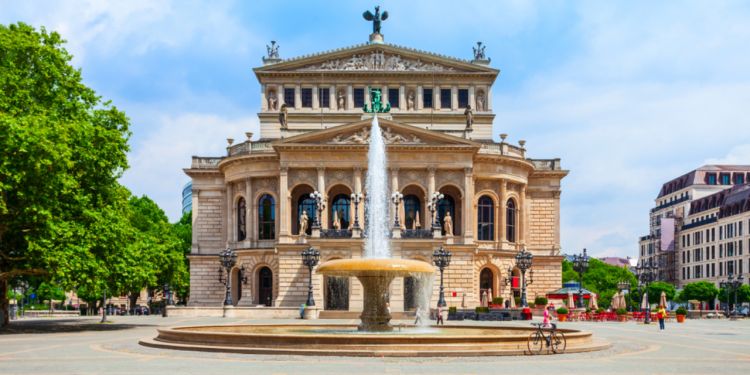
The Alte Oper (Old Opera House) is a venue for classical concerts, while the Oper Frankfurt hosts opera and ballet. The English Theatre is continental Europe's largest English-language venue. Nightlife is centered in areas like Sachsenhausen for traditional apple wine taverns, the Bahnhofsviertel for diverse bars, and Ostend for techno clubs.
Sources: Frankfurt Tourism, Städel Museum, Goethe House
Discover more

08In short
As a leading European financial capital with a truly cosmopolitan atmosphere, Frankfurt welcomes expats from around the world into a well-organized, efficient environment. While housing costs are high and the weather can be gray, the city compensates with outstanding transport connections, quality schools, beautiful museums, and easy access to the rest of Europe. For more information, check out our informative articles and join fellow expats in the Frankfurt forum on Expat.com to share experiences and get practical advice for your move.
Join the Frankfurt community
Get regular tips and advice to make the most of your expat life
Essential services for your expat journey







Forum topics on living in Frankfurt
Discover forums topics on expat life in Frankfurt: join the conversation, ask your questions, get advice and share your experience.
- Seeking guidance from disabled expats who moved to Germany
- Moving to Germany on an Opportunity Visa
- HousingAnywhere
- change ausbildung visa to student visa .
- How to become an Erzieherin in Germany?
- What is the attitute of eastern Germans to western tourists?
- Smell Problem in the Apartment
- No Hot Water - New Rental Agreement