


Julien Faliu
@Julien
French expat in Mauritius
Forum posts
53212
Contacts
727
About me
French, Married with children, 48 years old
Lives in Grand Baie
Speaks Français, anglais, espagnol, catalan, créole mauricien
Registration: 11 March 2005
Articles written or translated by Julien Faliu
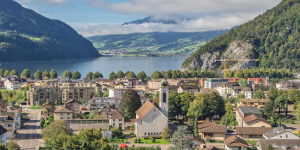
Roughly one in four residents of Switzerland is a foreign national, yet the country offers no single "Swiss lifestyle" to prepare for: a move to Zurich, Geneva, or Ticino means settling into different languages, climates, and even administrative cultures, since so much of daily life is governed at the cantonal level rather than nationally. Newcomers weighing the country's reputation for order and high salaries against its cost and paperwork will find both hold up, from a public transport system built around punctuality to a permit system where free movement applies only to EU/EFTA citizens and everyone else needs a qualifying visa route. Add a legal working week capped around 45 hours, a food culture that shifts character by language region, and leisure time built more around hiking and skiing than nightlife, and the practical picture becomes clearer than the national label suggests.
08 September 2026
Switzerland does not offer a fast track to permanent residency through investment, property purchase, or entrepreneurship: the timeline runs strictly on years of residence, five for nationals covered by settlement treaties and ten for most other applicants. That distinction determines almost everything else about the process, from which pathway to plan around to how much patience it demands. For expats already settled in the country, the practical stakes of the C permit are significant: it removes the tie to a specific employer, strengthens family reunification, and unlocks near-equal footing with Swiss nationals in the labor market. What catches many holders off guard later is that this status, unlike citizenship, is conditional: an absence abroad of more than six months without prior notice can end it entirely.
08 September 2026
Switzerland naturalizes foreign residents through one of the longest ordinary residency requirements in Europe: 10 years, with at least 3 of them in the 5 years before applying, plus a settlement permit C and proof of integration that goes well beyond a language certificate. For anyone who has already built a life there, whether through years of residence, a Swiss spouse, or a Swiss parent, the practical question is less about eligibility on paper and more about what citizenship actually changes day to day, since a C permit already secures work, healthcare, and schooling on equal terms. What sets Switzerland apart is its dual nationality policy: Swiss law imposes no renunciation requirement at all, which shifts the real risk entirely onto the applicant's country of origin and its own rules on keeping or losing a first passport.
08 September 2026
Housing supply across Switzerland is officially described as scarce, yet the national price index tells only part of the story for a foreign buyer weighing a purchase in Zurich, Geneva, or a smaller canton. The real gatekeeper is Lex Koller, the federal framework that decides whether someone counts as a "person abroad" and therefore needs cantonal authorization before completing a purchase, a process the Federal Council is actively working to tighten. Prices themselves range widely, from roughly CHF 9,300 per square meter in Bern to nearly CHF 17,000 in Zurich, but eligibility, not budget, is usually the first wall a foreign buyer hits. Ownership, once secured, still creates no right to live in the country.
08 September 2026
Belgium has no digital nomad visa, so anyone earning a living remotely and hoping to settle here for more than 90 days has to fit an existing category: an employer-sponsored single permit or, for freelancers, a professional card followed by a D-visa, each with its own income threshold, sworn-translation requirement, and roughly three-month processing time. Brussels anchors the practical side of that decision, with the country's deepest coworking network, furnished and coliving supply running from around EUR 430 to EUR 1,200 a month, and the clearest entry point into a working social circle.
07 September 2026
Marrying in Belgium means dealing with two separate legal questions: getting married there, and getting that marriage recognized elsewhere. Only a civil ceremony before a municipal registrar has any legal force, a rule that surprises couples from countries where a religious wedding can itself be legally binding. For foreign nationals, Belgium's 14-day notice period is rarely the real obstacle; the bottleneck is usually gathering a birth certificate, proof of single status, and other papers from abroad, then getting them apostilled or legalized and translated into Dutch, French, or German before a registrar will accept the file. Same-sex couples marry under the same procedure, in place since 2003. What follows covers the documents, timeline, costs, and what a Belgian marriage certificate does and does not unlock afterward.
07 September 2026
Belgium has no single national system for the practicalities of raising children abroad: family allowances, school enrollment, and even the language of instruction depend on which of the country's three language Communities a family settles into. For parents relocating with children, this makes the earliest decisions, choosing a region and a school network, more consequential than in most destinations, and Brussels adds its own layer of complexity with separate French and Dutch enrollment calendars that open months before the school year starts. Adjustment also plays out differently by age: a toddler's disruption looks nothing like a teenager's struggle to rebuild peer status in a new language. Belgium's schools, preventive health services, and youth associations each offer concrete, practical entry points for families navigating these differences.
07 September 2026
Belgium rarely tops the list of retirement destinations, and the numbers explain why: a one-bedroom apartment in central Brussels runs EUR 1,100 to EUR 1,500 a month, well above what Liege or Leuven ask for similar space. What Belgium offers instead of low costs is a health system that legal residents can access on near-universal terms, with satisfaction ratings above the OECD average, and a choice of cities that trade off differently between rent, hospital access, and the local administrative language. For anyone living on a fixed foreign pension, the real work lies in coordinating that income across borders and picking a city where the budget and the paperwork both hold up.
07 September 2026
Belgium lets long-term residents keep their original nationality when they naturalize, but whether that nationality survives on the other end depends entirely on the home country's own law, not Belgium's, which makes this the first question worth answering before starting any paperwork. Most adult residents reach Belgian citizenship through a declaration of nationality after five years of legal residence, a route built around proof of language, social integration, and work history rather than a single civic exam. A fixed registration duty of EUR 1,000 applies before filing, and a Belgian passport currently ranks 4th globally for visa-free travel. For residents who already have stable work, healthcare, and schooling under permanent residence, the real decision comes down to political rights, passport strength, and independence from a residence card, weighed against the five-year wait and what happens to the passport they already hold.
07 September 2026
Switzerland boasts several cantonal universities, federal institutes of technology, and prestigious private institutes. Swiss education is highly regarded internationally. You may apply to a Swiss higher education institution, depending on your country of origin. Here's a summary of the entry requirements and administrative procedures for studying in Switzerland.
31 August 2026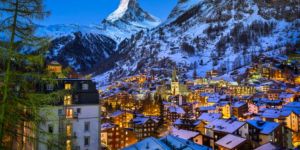
Moving to a new country often brings concerns about finding suitable housing. Since Switzerland is known for having a challenging real estate market, especially for those on a modest budget, you may be wondering about your housing options and how to conduct an effective search. This article provides all the information you need.
31 August 2026
Switzerland is a leading global financial center, known for its strong banking system and expertise in wealth management. Its economic stability fosters confidence among both individuals and investors. What are the key features of the Swiss banking and financial system? And how do you go about opening a bank account if you're moving to Switzerland?
31 August 2026
Are you moving to Switzerland? One of the most essential steps in relocating to a new country is understanding the local healthcare system and securing the right health insurance for you and your family. How does the Swiss healthcare system work, and what are your options as an expatriate or a worker on a local contract? Find out in this article.
31 August 2026
If you move to Switzerland as an employee or to start a business, you will be subject to the Swiss tax system unless you have tax residency elsewhere. Switzerland has signed numerous bilateral agreements with other countries to prevent double taxation. Understanding your tax status and learning about Swiss taxation if it affects you is essential. This article explores Switzerland's tax systems and the procedures for filing tax returns.
31 August 2026
Switzerland's stable economy and high standard of living make it an appealing destination for foreign workers. To find a job here, begin by familiarizing yourself with the Swiss labor market and its requirements to tailor your job search strategy accordingly. It's also important to understand the specific conditions you need to meet as a foreigner to work in the country. Using effective job search tools is crucial as well. This article provides an overview to help you get started.
31 August 2026
Switzerland offers numerous benefits to its employees, including flexible contracts, strong worker protections, and high wages. Despite a relatively protected labor market, job opportunities for foreigners are available, especially in fields with a local labor shortage, such as IT, engineering, and healthcare. This article provides an overview.
31 August 2026
If you plan to work in Switzerland for an extended period, you'll need a work permit, even if you're a citizen of the European Union. The requirements for obtaining a work permit depend on your nationality and the type of job you will be doing. Here's what you need to know about Swiss work permits.
31 August 2026
Every country has its own set of entry policies. In Switzerland, the requirements vary depending on your nationality, the duration of your visit, and the reason for your travel. Here is some information about visa requirements for Switzerland that you should be aware of.
31 August 2026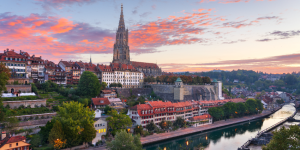
Living costs, the German language, and a reserved social culture are the three factors that most shape whether Bern works for a given newcomer. The city itself offers a compelling package: a compact, walkable area built around a UNESCO-listed medieval core, the Aare river, and a federal-capital employment base in healthcare, IT, communications, and public administration. Safety is strong, public transport is reliable, and nature access from the center is immediate. But the Swiss price level applies across every budget line, health insurance is mandatory and not employer-provided, the rental market is competitive and document-intensive, and social integration in a city of this size and this character takes deliberate, patient effort over months rather than weeks.
28 August 2026
Bern's position as Switzerland's federal capital draws a consistent flow of diplomats, international organization staff, and foreign professionals, yet the city's networking culture does not reward spontaneity. Relationships here build through repeated attendance at structured events, formal and semi-formal, rather than through cold outreach or chance encounters. Introductions from trusted contacts carry more weight than volume of activity, and German is the default language in most professional settings outside the tech and international sectors.
27 August 2026
Bern's medieval arcades and sandstone restaurant cellars project a city firmly anchored in tradition, and its food identity is genuinely rooted in German-Swiss cooking: rösti, aged cheese, braised meats, and weekly farmers' markets that locals treat as a living institution. What surprises most newly arrived expats, however, is not the cuisine but the rhythm. Restaurant kitchens in Bern close between 14:00 and 18:00 without exception, dinner service wraps by 22:00, and the most practical way to eat a full cooked meal on a regular budget is the weekday set lunch at CHF 18-25 (USD 22-31) rather than an evening out. Alongside this structured daily pattern sits a genuine craft beer scene, a city-backed sustainability charter reshaping restaurant menus, and an international food offer broader than the traditional image suggests.
27 August 2026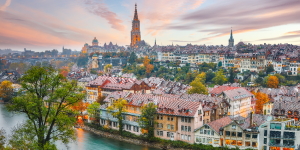
Bern's leisure scene is shaped by a fact that sets it apart from most European capitals: its UNESCO-listed medieval center is the actual city downtown, not a heritage zone kept apart from daily life. Markets, cafés, bars, and cultural institutions operate within the same 12th-century streetscape where residents commute and shop. Much of what the city offers is free or genuinely low-cost: the four municipal outdoor pools on the Aare charge no admission, the city's parks cost nothing, and the Swiss Museum Pass (Museums-PASS-Muséees) grants free entry to more than 500 institutions across Switzerland, Germany, and France. Major annual events including the Buskers Bern street festival, the Swiss National Day celebration on Bundesplatz, and the nightly Rendez-vous Bundesplatz light projections all run without a ticket, making it possible to build an active cultural and social life from the first week of arrival.
27 August 2026
Bern draws a wide mix of internationally mobile families: diplomats, staff at federal institutions, and expat professionals from across the world all settle here, and the city's school landscape reflects that diversity. Free German-language public schooling is available for all resident children through Grade 9; the public École cantonale de langue française (ECLF) runs kindergarten through Grade 11 at no charge; and private international schools teach in English and French. That range is unusual for a city of Bern's size and makes it practically workable for families across different language backgrounds.
27 August 2026
You're weighing up Bern as a study destination: a compact Swiss capital with the federal parliament a short walk from campus, a research university ranked in the global top 200, and an applied-sciences institution covering everything from engineering to the performing arts. The city's proximity to federal institutions is a direct advantage for students in law, political science, or public administration, where the policy environment is part of the academic context rather than mere background. The practical counterweights are equally concrete: daily life in Bern runs in German, no university accommodation is guaranteed, and a realistic monthly budget, excluding tuition, ranges from CHF 1,500 to CHF 2,200 (approximately USD 1,850 to USD 2,710).
27 August 2026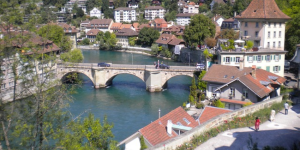
Buying property in Bern is not open to all foreign nationals on equal terms. Switzerland's Lex Koller legislation restricts who can purchase residential real estate, and eligibility depends on nationality and the type of Swiss residence permit held: EU and EFTA nationals with Swiss residency buy freely, while others may need cantonal authorization before any transaction can proceed. The city is also a high-cost market by international standards, with prices averaging around CHF 9,157 per m² (USD 11,328) city-wide and rising to nearly double that in the center.
27 August 2026
In your first week in Bern, you will notice something that takes a moment to register: the streets are quiet. Private cars account for less than 9% of commutes within the city; trams, buses, and trains handle roughly half of all journeys, and walking and cycling cover most of the rest. That split is not incidental; the city has built its mobility infrastructure around non-car travel for decades, and the results are visible from the moment you step off the train at Bern Bahnhof. All city buses, trams, regional trains, and PostBus services operate under a single integrated fare system called Libero, so one ticket or subscription covers every mode within your chosen zones. For most newcomers, a car is simply unnecessary from day one.
27 August 2026
Switzerland's federal capital is more readily associated with its medieval arcades and government institutions than with organized sport, yet Bern runs one of the more structured municipal sports systems in the country. Six outdoor pools, most free to enter in summer, sit alongside a dense network of clubs, public running circuits, and indoor facilities that can be booked through a single city system. Two professional clubs anchor the spectator calendar: SC Bern in ice hockey and BSC Young Boys in football. For newcomers, the key practical reality is that access to sport in Bern runs mostly through clubs and booked sessions rather than open drop-in facilities, making the Sportamt Bern (City Sports Office) the natural first stop for finding clubs, booking courts, and registering for programs.
27 August 2026
Bern is a compact federal capital where a furnished apartment can be arranged within days for a bridging stay, yet securing a permanent lease typically takes 4 to 8 weeks and demands documents most newcomers have never assembled: an official extract from the Swiss debt-enforcement register, pre-warned landlord references, and proof of liability insurance before many agencies will consider an application. Rents range from around CHF 1,328 per month for a 1-room apartment to over CHF 4,200 for a large family flat, and they vary significantly across the city's six administrative districts.
26 August 2026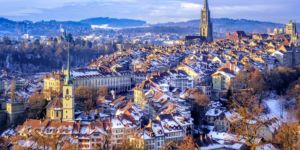
What surprises most professionals arriving in Bern is how little the city resembles a typical European commercial center. As Switzerland's federal capital, its job market is shaped by the concentrated weight of government: federal, cantonal, and municipal employers account for a substantial share of available roles, and their career portals matter as much as any private-sector platform. For expats, this has a direct practical consequence. German is the working language in most institutional environments, regardless of the canton's official bilingualism, and the stakes of getting the job search right are considerable.
26 August 2026
Families arriving in Basel can choose between free state compulsory schools, bilingual private institutions, and fully English-medium international schools offering the IB or Cambridge curriculum. Few Swiss cities of comparable size offer this range. The canton's public system is open to any registered resident child at no cost, while fee-paying options span from CHF 11,640 to CHF 38,000 per year. Here's all you need to consider when choosing a school for your children in Basel.
25 August 2026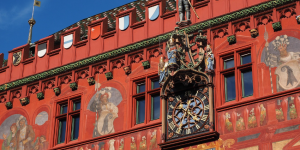
The Rhine doubles as a public swimming pool each summer, most of Basel's major museums offer free entry on weekday evenings and the first Sunday of each month, and one of the world's most significant art fairs brings free public art installations across Kleinbasel every June. For a mid-sized city, Basel carries a disproportionate cultural and outdoor offer, and a meaningful portion of it costs nothing. The practical challenge for newcomers is orientation: knowing which institutions offer free entry, which neighborhoods anchor the nightlife, where the weekly food markets run, and how to use Basel's three-country geographic position to make day trips genuinely easy. Getting that orientation right in the first weeks changes how quickly the city starts to feel like home.
25 August 2026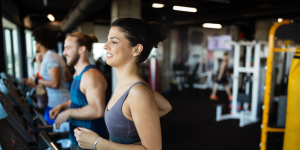
The first weeks in Basel tend to settle quickly around one practical question: how do you stay active without yet knowing anyone or having a gym membership sorted? The answer, for most newcomers, starts at the Rhine bank, where running, cycling, and open-water swimming are free and require nothing except showing up. Beyond that immediate resource, the city runs on the Verein system: organized sport in Basel means joining a club, and clubs expect you to email first and arrange a trial session before turning up. The canton operates 69 public sports facilities, and registering with local authorities promptly after moving in unlocks a monthly pool pass at CHF 45 rather than CHF 60, a saving that compounds quickly across a full year of active city living.
25 August 2026
Your first week in Basel as an incoming student involves a particular geography: lecture halls are a short tram ride away, the French and German borders are minutes from the city center, and the research campuses of Novartis and Roche are part of the same urban fabric students pass through daily. The University of Basel charges CHF 850 per semester, the same for domestic and international students, which ranks among the lowest tuition rates for an internationally ranked research university in Western Europe. The practical challenge is that monthly living costs run CHF 2,050-2,150, making accommodation the financial variable to resolve before accepting an offer. The academic environment operates in German at bachelor level and in a mix of German and English at master level, so students who arrive with working German access the fullest range of courses, labs, and social life.
25 August 2026
Basel's position at the border of Switzerland, France, and Germany has shaped a food culture that is both distinctly local and genuinely international. The practical realities matter as much as the variety: kitchens close around 21:30, making dinner timing a real planning factor, and sit-down restaurant prices sit firmly in the expensive tier by most reference points. The city's most iconic food, Basler Läckerli, is a spiced honey biscuit with no real equivalent elsewhere, and it anchors a local food identity that runs alongside one of the most diverse food-hall scenes in German-speaking Switzerland.
24 August 2026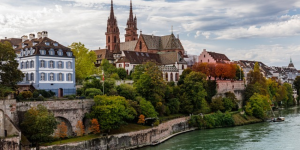
With 79,744 foreign nationals resident in the canton in 2025, Basel is genuinely diverse in its workplaces and public institutions, yet daily life runs on German-speaking Swiss rhythms that take real adjustment to enter fully. The gap between Basel's cosmopolitan professional environment and its structured, orderly social culture is the central tension most newcomers navigate: English carries well in the offices of Novartis and Roche and in the galleries of Art Basel each June, but housing searches, school enrollment, and neighborhood friendships all become noticeably easier with German.
24 August 2026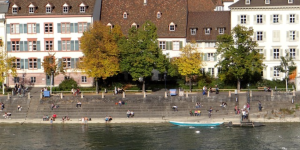
The moment a foreign buyer commits to searching the Basel property market, two questions immediately arise: is this market affordable, and am I legally permitted to buy here at all? At a city-wide average of around CHF 10,574/m² (USD 13,130), Basel ranks among Europe's most expensive residential markets, though prices remain materially below Zurich and Geneva. The federal Lex Koller framework creates a distinct two-tier system: EU/EFTA nationals resident in Switzerland and holders of a Swiss C settlement permit may purchase freely, while other foreign nationals generally require cantonal authorization before any acquisition can proceed. That authorization process, not a financial surcharge, is what separates the Basel property market for foreign buyers from its domestic equivalent.
24 August 2026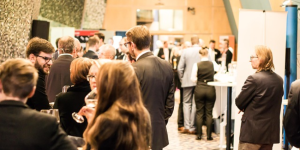
The first weeks after arriving in Basel reveal a city with a structured approach to professional and social contact: events are organized, introductions happen through repeated attendance rather than cold outreach, and the canton itself provides formal entry points for newcomers, including an 80-lesson German-course voucher for eligible long-term residents. For professionals in life sciences, technology, or academia, English operates as a genuine working language, making professional entry considerably easier than in most German-speaking cities. Social integration, however, runs on German, and the gap between first contacts in expat circles and lasting connections in the wider city is real and takes deliberate effort to close.
24 August 2026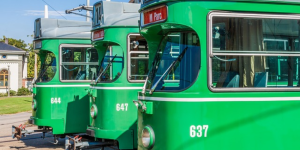
In the first days after arriving in Basel, transport decisions set the pattern for daily life. The city is compact enough that a car is unnecessary for most residents, but navigating without one means quickly understanding the TNW (Tarifverbund Nordwestschweiz), the integrated fare network that covers every tram, bus, and regional train in the area under a single ticketing system. What makes Basel unusual among European cities is its position at the junction of Switzerland, Germany, and France: cross-border commuting by public transit is a practical daily reality for residents near either border, not an edge case. Over 20% of all resident trips are made by bicycle, placing the city among the most cycle-intensive in Switzerland, and the tram network run by BVB fills the role that an underground metro plays elsewhere.
24 August 2026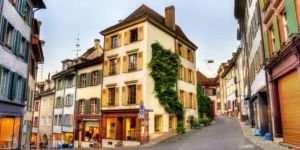
The first decisions that shape a career move to Basel are made before the job search properly begins: which sector to target, which campus to live near, and whether a work permit needs to be in place before an offer can be accepted. Basel's job market is organized around a concentrated cluster of pharmaceutical, biotech, and diagnostics employers rather than a generalist economy, which makes it unusually legible for candidates with the right profile and unusually narrow for those without one. Roche and Novartis together account for a significant share of private-sector professional employment, with the Bank for International Settlements adding a distinct international-finance niche near Basel SBB. Getting oriented early, well before arrival, is the practical advantage most successful expat job seekers share.
24 August 2026
Around 85% of Basel's population rents rather than owns, yet competition for housing is fierce and rents sit among the highest in Switzerland. Attractive apartments attract multiple applicants almost immediately, and the application process is more document-intensive than newcomers typically expect. What makes Basel particularly demanding for foreign nationals is the combination of a long-term rental stock that is almost entirely unfurnished, a formal paperwork process conducted largely in German, and a deposit system with specific legal rules: the deposit must be held in a dedicated bank account in the tenant's name, not paid directly to the landlord. Booking a furnished temporary base for the first month or two before searching for a long-term lease is standard practice in Basel, not a fallback option.
24 August 2026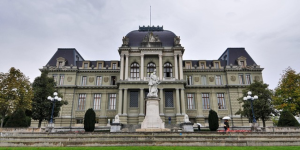
Lausanne has been the official seat of the International Olympic Committee since 1915, a designation that over more than a century has drawn global sports federations, international institutions, and a steady stream of internationally mobile professionals to a lakeside city of just 145,000 people. That accumulation of international presence, layered over a French-speaking Swiss university city anchored by EPFL and UNIL, produces a daily life that feels significantly larger and more cosmopolitan than the city's scale would normally allow. For newcomers, this creates a particular dynamic: the city is genuinely international in composition, but its social codes, administrative language, and cost structure are unmistakably Swiss. Housing is tight and expensive, French is the practical language for everything beyond professional and academic settings, and the steep three-hill geography between the medieval hilltop and the lakefront surprises almost everyone who imagined a flat, easy lakeside city.
20 August 2026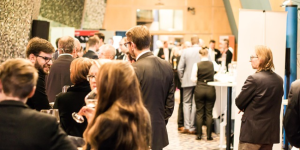
Many expats who settle in Lausanne notice early that the city's professional and social circles are smaller and more interconnected than they expected. With a compact center and knowledge-intensive sectors including life sciences, international sport administration, and EPFL-linked research and innovation, the same people tend to reappear across different events and institutions. That makes reliable, repeated participation far more valuable than any single well-handled first impression. Lausanne's networking scene runs on scheduled formats: professional apéros (after-work drinks with networking), sector fairs, chamber gatherings, and activity-based clubs, rather than spontaneous encounters. French dominates most local associations, but English-language options through groups like Executives International and the PMI Switzerland Chapter give newcomers a genuine entry point into the professional scene before French is fully operational.
20 August 2026
Lausanne offers two structurally separate school systems, and the gap between them is stark. The Canton of Vaud's public compulsory schools are free and assigned by home address, teaching entirely in French from preschool through the final year of secondary. Alongside them sits a concentrated private and international school market where annual day fees reach CHF 38,990 (USD 44,400) and where a child can earn an IB Diploma, Cambridge A Levels, a French Baccalauréat, or an American High School Diploma. Few cities of comparable size offer this breadth of internationally recognized diplomas within commuting distance of one another. For relocating families, the critical early insight is that housing and school choice are interlinked: in the public system, the home address determines the assigned school entirely.
20 August 2026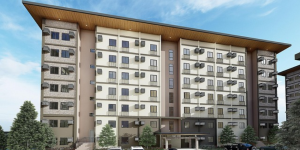
You've found an apartment in Lausanne you want to buy. At CHF 11,567/m² on average (approx. USD 14,300), the price is significant, but the more immediate question is whether you can buy at all. Switzerland's Lex Koller framework classifies buyers into those who can purchase freely and those who need cantonal authorization from Vaud before any transfer can proceed. That legal gateway, combined with a 20% minimum equity requirement for Swiss mortgages and closing costs of approximately 4 to 4.3% of the purchase price, shapes the entire purchase process in Lausanne. The city ranks among the most expensive 10% of communes in Vaud, running roughly 30% above the cantonal average for ownership housing, and apartment prices rose approximately 3.1% over the past year, leaving little room for buyers to wait out any softening.
20 August 2026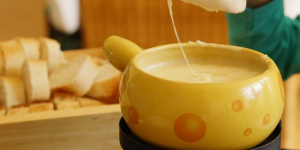
Lausanne packs a food scene of surprising range into a compact lakeside city: traditional Vaud inns serving papet vaudois, Michelin two-star restaurants, UNESCO-listed vineyards producing Chasselas wines that appear on every local wine list, and an international grocery network covering Japanese, Spanish, Portuguese, and English-market specialty products. For expats settling here, the food culture is accessible at every level of formality and budget, but the cost of eating out is a practical reality to plan around: a meal at an inexpensive restaurant runs around CHF 25 (approx. USD 31), and a mid-range dinner for two approaches CHF 100 (approx. USD 122) without drinks. What sets Lausanne apart is the directness of its connection to local food and wine production, with the Lavaux vineyard terraces just outside the city and an artisan chocolate heritage dating to 1830 woven into the everyday dining scene.
20 August 2026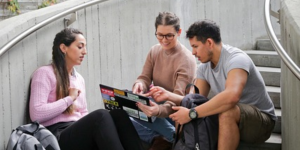
Choosing Lausanne as a study destination means securing world-class academic credentials at a fraction of the tuition cost charged elsewhere. EPFL ranks equal 22nd globally in the QS World University Rankings 2026, EHL has held the top global position in hospitality management for eight consecutive years, and public university tuition at UNIL stays below CHF 1,000 (USD 1,009) per year. The real financial calculation sits elsewhere: EPFL estimates that international students need roughly CHF 25,219 (USD 31,254) annually before tuition to cover housing, transport, and daily expenses in a city where demand for student accommodation consistently outpaces the roughly 6,000 new students who arrive each academic year.
20 August 2026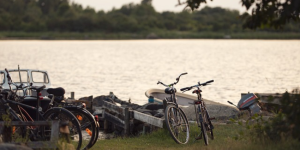
The assumption that leisure in a Swiss city is uniformly expensive is understandable but misleading when applied to Lausanne specifically. Alongside its high retail and hospitality prices, the city runs a broad free-access layer that makes cultural and outdoor life accessible from day one: all official lake bathing zones charge nothing, the three museums at Plateforme 10 waive admission for visitors under 26 at all times and open free to everyone on the first Saturday of every month, and several of the largest summer festivals in the city are free at the door. The Collection de l'Art Brut, housed in the Château de Beaulieu, is a dedicated institution of its kind with no direct equivalent in Europe, and the Olympic Museum at Ouchy is the world's largest museum dedicated to the Games.
20 August 2026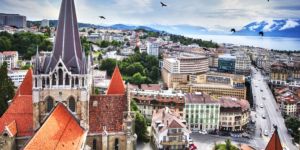
Lausanne draws internationally mobile workers across a wider range of sectors than most cities of its size: the International Olympic Committee, the CHUV university hospital, EPFL-linked research institutions, and IMD business school all recruit internationally, alongside a growing life-sciences cluster and a service and finance base that accounts for the majority of city employment. That breadth is an opportunity, but navigating it requires targeting. Employment in Lausanne is sharply distributed by district, and choosing where to live without knowing where your sector concentrates can add meaningful time to every working day, especially given the city's steep topography.
20 August 2026
Your first run from a new apartment in Lausanne will almost certainly involve a hill you did not expect. The city drops steeply from the Jorat forest to Lake Geneva, and that gradient shapes every sport practiced here, from cycling commutes to running club meeting points. What makes the adjustment easier is the scale of infrastructure already in place: nearly 300 clubs spanning roughly 70 disciplines, three municipal pools, free lakefront bathing zones, and a municipal sports service that supports participants at every level and age. Lausanne's status as the Capitale olympique means around 60 international sports federations are based here, making major events and world-class facilities a recurring feature of city life rather than a rare occasion.
19 August 2026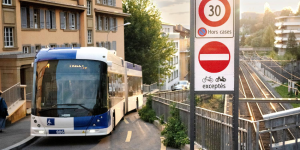
Lausanne is a hilly city built between a lake and higher ground, which might suggest that driving is the only practical way to get around. The reality is the opposite: the city runs on two automated metro lines, a dense bus and trolleybus network, and a single integrated fare system called Mobilis that covers every tl vehicle and eligible local trains on one ticket. Public transport ridership has grown 50% over the past decade, and car ownership in Lausanne sits well below the average for comparable Swiss cities. One thing that catches many newcomers off guard: unlike pay-as-you-go transit systems, every tl vehicle requires a valid ticket before boarding, which makes downloading SBB Mobile and buying tickets in advance the essential first step on arrival.
19 August 2026