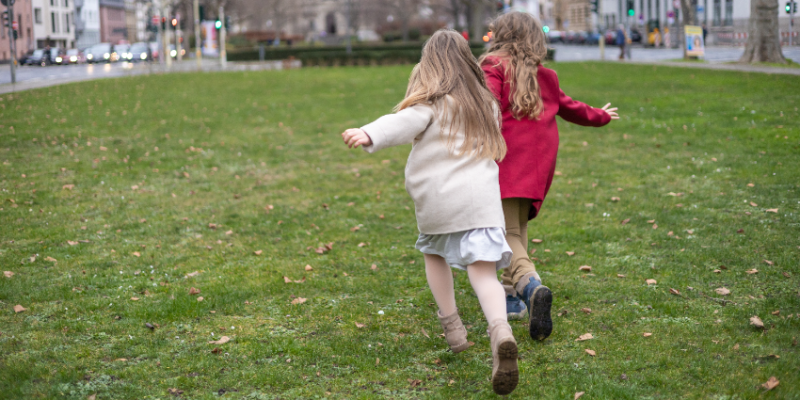
Belgium has no single national system for the practicalities of raising children abroad: family allowances, school enrollment, and even the language of instruction depend on which of the country's three language Communities a family settles into. For parents relocating with children, this makes the earliest decisions, choosing a region and a school network, more consequential than in most destinations, and Brussels adds its own layer of complexity with separate French and Dutch enrollment calendars that open months before the school year starts. Adjustment also plays out differently by age: a toddler's disruption looks nothing like a teenager's struggle to rebuild peer status in a new language. Belgium's schools, preventive health services, and youth associations each offer concrete, practical entry points for families navigating these differences.
Nearly every child living in Belgium qualifies for a monthly family allowance, but which authority pays it depends entirely on where the family is registered. Wallonia runs its allowance through Famiwal, Flanders through the Groeipakket, Brussels through Iriscare, and the German-speaking Community through Ostbelgienlive. There is no single national office handling this benefit, so one of the first administrative tasks after settling in a Belgian municipality is identifying which of these four regional systems applies and registering with it directly, since the family allowances portal explains the regional split in detail.
Road safety rules single out children as a group needing extra protection. Drivers are expected to slow down in residential and play streets and to respect 30 km/h zones around schools, and correctly fitted child restraints are treated as the main way to reduce the risk of injury for young passengers. A revised public road code puts fresh emphasis on shared pedestrian space and protected sidewalks, which matters directly for families who walk or cycle to school rather than drive.
Join the Belgium community
Get regular tips and advice to make the most of your expat life
Cultural adjustment for families
How a child settles into life in Belgium depends heavily on age, so the same relocation plan rarely works for a toddler and a teenager in the same household. For children under 5, the move is best understood as a disruption to attachment, sleep, feeding, and daily caregiving cues rather than a language problem; keeping routines predictable and seeking help early if regression or persistent distress appears matters more than any language class. For children between 5 and 11, school belonging is the practical battleground: classroom inclusion, playground friendships, and help with local-language homework matter as much as the paperwork of enrollment, since Belgian primary and secondary schools are the main setting for helping migrant children adapt culturally. Teenagers face a harder social rebuild: they are learning Dutch, French, or German as a school language while trying to re-establish peer status, and common complaints include feeling outside local social circles, dealing with unfamiliar slang, or missing old friendship groups. Parents of teenagers get better results by setting up structured social entry points in advance and protecting time to stay in contact with friends back home, while watching for withdrawal or refusal to attend school.
Preparing before departure helps at every age. Giving a school-age child concrete information about the school, the language, and the daily routine to expect, and involving them in decisions such as what to bring or which activity to try first, gives them some control over an otherwise disorienting process. Securing a school contact before arrival is worth prioritizing, since schools function as the main integration setting for migrant children of all ages. Once in Belgium, the first routines worth building deliberately are the school commute, a sport or arts activity, a weekend ritual, and repeated contact with the same group of children rather than one-off outings; cycling and local activities work as practical anchors precisely because they create recurring contact rather than a single encounter. For language, a mixed approach tends to work better than full immersion alone: school immersion combined with targeted classes and, where the length of stay or exam stage makes it too risky, a period in bilingual or international schooling. Flanders runs reception education for newly arrived pupils who do not yet speak Dutch, which gives younger children a bridge into mainstream primary classes.
Adjustment is not a single event with a fixed end date. Children can still describe real difficulty months after arrival, and school-language transitions typically take longer to resolve than the practical logistics of moving house. A more useful marker of settling in is a combination of signs: predictable routines, at least one regular social contact, reduced distress around school mornings, and enough language or school support that the child can participate without constant exhaustion. Watch for withdrawal, school refusal, regression, aggression, or tearfulness; if these persist, intensify, or come with sleep disruption, talk of self-harm, substance use, panic, or a marked drop in functioning, it is worth contacting the school counselor or a child psychologist rather than waiting for things to worsen. In Flanders, the first point of contact is the CLB; in French-speaking schools, the equivalent is the PMS, and both function much like a school counselor or pastoral care lead elsewhere, offering wellbeing support alongside academic guidance. Belgium's child and adolescent mental health networks focus on catching problems early rather than waiting for a crisis; beyond the school itself, the Bureau International Jeunesse publishes a wellbeing and mental health toolkit for young people going through international moves, covering the period before, during, and after relocation.
Childcare options in Belgium
Full-time daycare in Belgium costs roughly EUR 64 to EUR 908 a month, and where a family lands in that range depends on household income, the region, and the type of setting chosen. A licensed crèche in Brussels typically opens from 07:00 to 18:00 on weekdays, though exact hours vary by provider, so it's worth confirming them directly with the setting before enrolling. Because fully subsidized daycare capacity is limited, registering early and combining an income-based fee scale with the available tax relief is the more realistic cost-planning strategy than hoping to find a last-minute place.
Two forms of financial support exist side by side. In Flanders and Brussels, a childcare allowance known as the kinderopvangtoeslag is paid automatically once a child already receives the Groeipakket and attends care licensed by Opgroeien at a non-income-based price, provided the child meets residence conditions and has not yet started nursery school. Separately, and available regardless of region, Belgian federal tax relief covers 45% of eligible childcare costs up to a daily ceiling of EUR 17.30, as long as the provider issues an official attestation. Checking whether a childcare setting holds an Opgroeien license is therefore a useful signal for both quality and eligibility for support before signing up.
Finding a registered place works differently depending on where a family settles. In Flanders, Kind en Gezin (rebranded Opgroeien), local authorities, Huizen van het Kind, the VDAB employment service, and the OCMW social welfare office can all point parents toward registered childcare. In Brussels, Actiris directs parents entering work or training to its own childcare network, with places for training-linked care available through the Coordination du Réseau des Structures d'Accueil.
Structure of the education system in Belgium
Schooling in Belgium is organized by its three language Communities rather than a single national ministry: the Flemish Community, the French Community, and the German-speaking Community each set their own rules on school organization, enrollment, and day-to-day operation, while the federal government only sets the age at which education becomes compulsory. In practice, this means the system a family experiences depends on which region and which linguistic network they settle into, not on a single set of nationwide rules.
Pre-primary education (maternelle in the French Community) accepts children from 2 years and 6 months, and it becomes compulsory from the school year in which the child turns 5. Compulsory education itself starts on September 1 of the calendar year a child turns 5 and runs until age 18, ending on the pupil's 18th birthday if that falls on or before June 30, or otherwise on June 30 of that year; it can end earlier once a secondary-education diploma is obtained. Primary school covers children aged 6 to 11, or those who reach that age by December 31 of the relevant school year. In Flanders, schools require direct communication with parents about any absence during compulsory schooling, since the school director decides which absences are acceptable.
School options for expat children in Belgium
Public schooling in Belgium is split by language network, and choosing one is often the single biggest early decision a family makes. In Brussels, municipal schools operate as either French-language or Dutch-language institutions with entirely separate registration procedures; in Flanders, Dutch is the language of instruction, with dedicated reception provisions for newcomers; in the French-speaking system, newly arrived pupils may be placed in DASPA reception classes, or receive FLA French-learning support where no DASPA class is available. Language support varies by community: Flanders runs onthaalonderwijs for non-Dutch-speaking newcomers and is expanding language-support classes known as taalheldklassen in primary schools, while the French-speaking system relies on DASPA or FLA depending on what a given school offers. Families staying long-term generally benefit from entering one of these local networks, since it is the standard integration route and the lowest-cost option, but they must choose Dutch, French, or German early, and it is difficult to reverse once a child is settled in one system.
Enrollment documents required in Flanders include an eID, a health-insurance isi+ card, or another official document proving the child's exact name and date of birth; children without official residence documents still have the right to enroll, and the child must simply be present if no documents are available. In Brussels, French-language nursery and primary enrollment follows phased windows: priority applicants apply in early December, general requests follow in January through the IRISbox platform or by phone, and direct requests to schools open from February onward. Dutch-language enrollment in Brussels instead uses a citywide online calendar, with general registration running from late February into March, followed by an allocated-pupil enrollment period in April and May. Because these Brussels calendars are date-sensitive, securing a school place before finalizing housing is worth doing wherever possible.
For families who need curriculum continuity, whose stay is short, or whose teenager is close to exams, international schools remove much of that disruption, at a cost. The International School of Brussels (ISB) serves children from age 2.5 to 18 and follows the IB, AP, and US Diploma pathways; current tuition ranges from EUR 22,995 for preschool to EUR 51,105 for grades 10 through 12, with an additional EUR 25,860 charge for Intensive Learning Support on top of grade-level fees where a child needs it. Applications go through a six-step online platform with a EUR 2,000 application fee; decisions typically arrive within 7 to 10 working days of a completed application, and accepted families must confirm within five working days. Applications for children with diagnosed learning-support or special-education needs require psycho-educational reports and individual learning or education plans, translated into English where applicable. TheBritish School of Brussels follows British IGCSE and A-Level pathways continuous with UK secondary education, useful if a child is partway through GCSEs, and charges a separate, non-refundable application fee of EUR 750 per child; exam fees for IGCSE, A-Level, BTEC Diploma, and IB Diploma are generally included in tuition, apart from re-sits. Bilingual English/French and other multilingual pathways are also available across the international sector, alongside the European Baccalaureate.
Both systems provide special educational needs support. Flanders guarantees free choice of school even when a child is referred for special-needs education, and enrolling in mainstream education with special-education support requires an IAC or OV4 report where applicable; Brussels' French-language secondary enrollment process gives priority to some children with specific needs. In the international sector, ISB's Intensive Learning Support fee and documentation requirements, described above, apply in addition to standard admissions. Contacting shortlisted schools with existing assessments before enrollment, rather than after arrival, tends to produce a smoother placement in either system.
Social integration for children and teenagers in Belgium
Friendships for newly arrived children in Belgium build mainly through school, language learning, activities, and repeated local routines rather than instant inclusion on arrival, and school remains the main setting for supporting cultural adaptation for children aged 6 to 18. Teenage social life in Belgium runs largely through organized activity: in Flanders, 71.5% of 12 to 17-year-olds take part in an association, including 54.6% in a sports club, 26.8% in a youth association, and 17.4% in a cultural association. Given how mainstream this is, enrolling a child in a club, sports team, or youth movement is a more reliable route into local peer contact than waiting for spontaneous friendships to form. Volunteering within a youth organization is also a straightforward option for younger teenagers, since activities carried out within a youth organization or another body focused on children's education and training are not classed as prohibited child work, separate from paid student jobs, which carry their own age and schooling conditions.
Screens and social media are part of daily life for children and teenagers, and official guidance recommends setting clear household rules, supervising gradually rather than passively, and avoiding accounts on digital platforms before age 13 without parental consent. Sedentary behavior, eyesight strain, and disrupted sleep are the most established physical effects of excessive screen use in teenagers, and the recommended response is parental supervision combined with media literacy rather than an outright ban.
Since 2024, French Community schools have been required to have a named internal procedure for handling bullying and cyberbullying, so it is reasonable for parents to ask any prospective school directly for its procedure, its named contact person, and its escalation route before enrolling.
Things to do with children in Belgium
Family budgets in Belgium stretch across a wide range, from free to genuinely expensive, so planning a mix rather than defaulting to the priciest option keeps costs manageable. At the free end, Brussels has a strong network of parks and playgrounds, including a large playground opposite the BELvue Museum, and Brussels Park and the Cinquantenaire are commonly used for family time. City libraries run recurring story sessions for toddlers and children, and Brussels' Lire dans les parcs program offers free story readings in green spaces each summer for children aged 3 to 10; some Brussels libraries also hold English-language collections. In Flanders, nature parks such as Hoge Kempen National Park and the Maasvallei river park offer walking and cycling routes suited to families, while Wallonia has shorter walking and cycling trails, adventure parks, forest discovery at Parc Chlorophylle, and riverside leisure at Domaine de Palogne on the Ourthe.
Museums cover a broad age range at moderate cost: Brussels' Children's Museum, the Institute of Natural Sciences, the Brussels Comics Figurines Museum, Mini-Europe, the BELvue Museum, the Musical Instruments Museum, and Choco-Story Brussels are the main options in the capital. In Flanders, STAM in Ghent runs interactive installations for children aged 6 to 12, alongside the NAVIGO Fisheries Museum, Technopolis, and Mechelen's Toy Museum, and the Royal Museums of Fine Arts of Belgium organize family visits for a wide age range. Several Brussels family museum trails are included in the general admission ticket rather than charged separately, and federal museums apply harmonized preferential rates for children.
At the higher end of the budget, animal and amusement parks are worth pricing out before committing. At Pairi Daiza in Brugelette, children under 3 enter free, children aged 3 to 11 pay between EUR 37 and EUR 46 online, and adults aged 12 to 64 pay between EUR 43 and EUR 52, so a family of two adults and two children in that age bracket can expect to pay roughly EUR 160 to EUR 196 in entry alone, before an optional EUR 7 Edenya add-on, parking, or food. ZOO Planckendael in Mechelen also admits children under 3 for free, with group rates for children aged 3 to 11 running from about EUR 21.50 to EUR 29.50. Antwerp ZOO is the third main animal park option. For amusement parks, Walibi Belgium in Wavre charges EUR 55 for visitors taller than 1.40 meters and EUR 45 for those between 1 and 1.40 meters, with children under 1 meter admitted free and parking at EUR 13 per car per day; a family of two adults and two children between 1 and 1.40 meters pays around EUR 200 in entry, or EUR 213 including parking. Plopsaland Belgium in De Panne and Bellewaerde Park in Ypres are the other main amusement park options. The Flemish coast offers beach and dune access for outdoor time, while Wallonia's Spin Leisure Park adds wakeboarding, a skatepark, and an inflatable aquapark to its inland lakeside options.
Healthcare for children in Belgium
Child healthcare in Belgium runs through two parallel tracks. Preventive services organize scheduled checks and vaccinations for free: Kind en Gezin (Opgroeien) in Flanders, ONE in Wallonia and French-language Brussels, and CLB/PSE school-health services for school-age children. Diagnosis, acute illness, and ongoing medical care go through a general practitioner or a pediatrician instead. Only polio vaccination is legally compulsory in Belgium; children attending childcare in Wallonia must also receive additional vaccines in line with ONE recommendations, and whether proof of vaccination is required for school enrollment depends on the individual school. Because of this, bringing a child's existing vaccination record to the first appointment with a GP, pediatrician, Kind en Gezin, or ONE is more useful than assuming a long mandatory list applies at enrollment.
Belgium's basic infant schedule covers polio, diphtheria, tetanus, pertussis, Hib, and hepatitis B in doses given at 8, 12, and 16 weeks with a later booster, alongside pneumococcal doses at 8 and 16 weeks and rotavirus doses at 8 and 12 weeks, with a possible third dose at 16 weeks. A meningococcal ACWY vaccine follows in toddlerhood and again at ages 14 to 16 alongside a dTap booster, and measles, mumps, and rubella (MMR) as well as HPV vaccination are also part of the standard child and adolescent schedule; families can check the full timing on the European vaccine schedule tool. Vaccines on the basic schedule are free in principle, since doctors can order them at no cost through the Vaccinnet system, though this does not necessarily cover every consultation or a private catch-up service.
Choosing where to live in Belgium as a family means weighing proximity to schools, perceived safety, parks and green space, community feel, and transport links, rather than picking a neighborhood based on reputation alone. Green-space access around schools varies sharply between neighborhoods, and Brussels children were found to have the least access to green space around schools of any comparison group studied, which is a reason to check actual park and play-space access around both home and school in person, during school hours, rather than relying on a citywide impression.
Within Brussels, Woluwe-Saint-Pierre and Woluwe-Saint-Lambert combine green space at Woluwe Park and Hof ter Musschen with strong school access, including proximity to European schools, making the area workable for parents who want school access without losing urban connectivity. Watermael-Boitsfort is one of the city's greenest communes thanks to direct access to the Sonian Forest, suiting families who prioritize outdoor space and a calmer, more village-like setting. Just outside Brussels, Tervuren offers lower-density suburban living while keeping proximity to international schooling, including the British School of Brussels, which makes it practical once a school choice is already fixed. Leuven is compact and well connected, allowing a commute to Brussels while offering a smaller-scale environment with its own services, parks, and school options; neighborhoods in Ghent near parks and tram links offer a similar combination of safety, schools, and transport within a larger city.
Expat families commonly cluster around international schools, European institutions, and multilingual service areas, which speeds up parent networking and school logistics but can slow integration into local-language neighborhood life if school, friends, and activities all stay inside that same circuit. Mapping the school run and the parent commute together before signing a lease is worth doing deliberately: Brussels-area congestion and cross-city school trips can make a centrally located home less practical than a quieter area near the chosen school, and for teenagers, independent public transport access to school, friends, sport, and language activities becomes as important as the primary-school drop-off ever was.
Have questions about moving to Belgium with children? Join the Expat.com community to connect with families who have been through the process.
Frequently asked questions
For school planning, the key point is that compulsory education starts on September 1 of the calendar year in which a child turns 5. Younger children generally adapt through childcare or nursery settings with fewer complications, while teenagers need more deliberate planning around language, curriculum continuity, and school placement. Moving before the school year starts, rather than mid-year, makes enrollment and language-support arrangements easier to organize.
Local schools are the standard route for children living in Belgium and can help younger children pick up the community language faster, though the language of instruction depends on the region: Dutch, French, or German. International schools suit short assignments or older children already committed to another curriculum, but fees are substantial, and places should be researched early. For teenagers, prioritize language level and subject continuity over commute time or reputation.
Adjustment is individual. Younger children often settle through routine, play, and language exposure, while older children and teenagers typically need more time since they are rebuilding friendships and academic confidence at once. Belgian schools use reception or language-support classes for newly arrived pupils, which can make the first months feel transitional. Progress usually comes in stages: first routines and safety, then language and friendships, then a deeper sense of belonging.
Children do not need to be fluent in Dutch, French, or German before arrival to have a right to schooling, but language quickly becomes central to friendships and classroom learning. In Dutch-language primary education in Flanders, entering the first year may require evidence of sufficient Dutch nursery attendance or a language test. Newly arrived pupils can be placed in reception classes to learn Dutch or French before joining regular education.
Belgium's basic vaccination schedule for children covers polio, diphtheria, tetanus, pertussis, Hib, hepatitis B, pneumococcal disease, rotavirus, meningococcal ACWY, measles-mumps-rubella, and HPV, all free in principle when given through the standard schedule. Only polio vaccination is legally compulsory for school enrollment; the others are recommended rather than mandatory outside specific settings such as childcare in Wallonia. Bring the child's vaccination record to the first appointment with a general practitioner, pediatrician, Kind en Gezin, or ONE so any catch-up doses can be identified early.
Cost depends heavily on the region and the type of setting. In Flanders, many childcare providers use a means-tested fee based on household income and family composition. Full-time places typically cost between roughly EUR 64 and EUR 908 a month, and Belgium's federal tax system allows a 45% tax reduction on qualifying childcare costs, capped at EUR 17.30 per day per child.
Fees vary by school, curriculum, and grade level. At the International School of Brussels, tuition ranges from EUR 22,995 for preschool to EUR 51,105 for grades 10 to 12, with a separate EUR 25,860 charge for Intensive Learning Support where needed. Application fees are charged separately: EUR 2,000 at ISB and EUR 750 per child at the British School of Brussels. Request each shortlisted school's full fee schedule, including registration and exam fees, rather than comparing tuition figures alone.
Choose school placement with curriculum continuity and language level in mind, then build routines outside school through sports, arts, or youth activities. Reception or language-support classes help, but teens may still feel socially behind while their language skills catch up. Keep contact with friends and culture from home while creating predictable opportunities to meet local and international peers in Belgium.
Belgium has healthcare institutions providing care for children and families, including specialized multidisciplinary teams. Access and reimbursement depend on the family's social-security position, nationality, employment status, and any applicable EU or bilateral rules, so arranging health-insurance registration early after arrival is worthwhile. Bring vaccination records, medical summaries, prescriptions, and any educational or therapeutic reports so a Belgian doctor can continue care without starting the history from zero.
Yes, but availability varies by location: families typically find activities through schools, municipalities, sports clubs, cultural centers, and holiday-camp providers. Belgium's tax rules recognize eligible childcare-style costs for certain camps and holiday activities when conditions are met, reflecting how common these are in family logistics. For settling in, activities matter as much emotionally as practically, giving children repeated contact with peers outside the classroom.
Contact shortlisted schools before enrollment and share existing assessments, support plans, and therapy reports rather than waiting until after arrival. Belgium's systems are organized by language community, so the available pathway and terminology differ between Dutch-, French-, and German-speaking education. For children with significant needs, coordinate healthcare and school support together so medical, therapeutic, and classroom adjustments are not handled in isolation.
Keep the connection intentional: maintain the home language at home, continue reading and media in that language, and protect regular contact with relatives and friends. For school choice, consider whether the curriculum should preserve a route back to the home system or onward to university elsewhere. Balance matters: keeping roots should support confidence, not prevent children from building friendships and routines in Belgium.
ℹ️
We do our best to provide accurate and up to date information. However, if you have noticed any inaccuracies in this article, please let us know in the comments section below.
I fell in love with words at an early age After a break to focus on my studies, I rediscovered the joy of writing while keeping a blog during my years between London and Madrid. This passion for storytelling and for exploring new cultures naturally inspired me to create Expat.com, a space for my own reflections as well as for anyone wishing to share their experiences and journeys abroad.