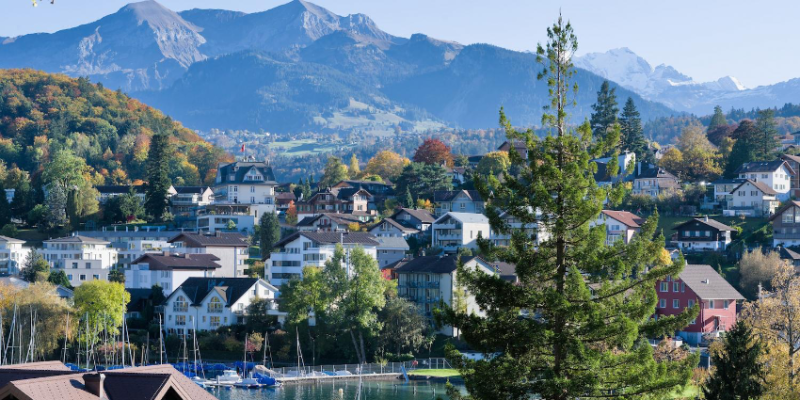
Switzerland does not offer a fast track to permanent residency through investment, property purchase, or entrepreneurship: the timeline runs strictly on years of residence, five for nationals covered by settlement treaties and ten for most other applicants. That distinction determines almost everything else about the process, from which pathway to plan around to how much patience it demands. For expats already settled in the country, the practical stakes of the C permit are significant: it removes the tie to a specific employer, strengthens family reunification, and unlocks near-equal footing with Swiss nationals in the labor market. What catches many holders off guard later is that this status, unlike citizenship, is conditional: an absence abroad of more than six months without prior notice can end it entirely.
Switzerland's version of permanent residency is the C permit (Niederlassungsbewilligung), a status that grants an unlimited right of residence no longer tied to a specific job, employer, or purpose of stay once it is issued. First, determine which timeline applies to your nationality, because Switzerland runs two separate clocks. Nationals of Belgium, Denmark, Germany, Finland, France, Greece, Ireland, Italy, Luxembourg, the Netherlands, Austria, Portugal, Sweden, and Spain, along with the EFTA states Iceland, Liechtenstein, and Norway, can apply for a C permit after five years of orderly, uninterrupted residence if they meet the required conditions. Nationals of most other countries need ten years, though an early grant after five years remains possible when integration criteria are met.
Most people go through this process for practical rather than symbolic reasons: a settlement status not conditioned on holding a particular job, unrestricted work rights, an easier path to bringing family members over, and the fact that it is the required stepping stone toward Swiss citizenship. It is worth being clear from the outset about what does not accelerate the clock. Creating jobs, founding a company, tax planning, or buying real estate are not, on their own, grounds for early settlement.
For third-country nationals still on a work permit rather than already counting years toward settlement, another bottleneck is worth knowing about. Work-permit quotas are capped at 4,500 B residence permits and 4,000 L short-stay permits for the year, and employers must first demonstrate unsuccessful recruitment efforts in Switzerland and the EU/EFTA area before hiring a third-country candidate. This quota system does not affect the settlement timeline itself, but it shapes how many people from outside the EU/EFTA even get the chance to start that clock in the first place.
Permanent residency vs. citizenship: key differences in Switzerland
The C permit and Swiss citizenship look similar from a distance but sit on opposite sides of a legal line. The card and status appear under two names depending on the document's language: Ausweis C or Niederlassungsbewilligung in German-language paperwork, and C permit or settlement permit in English. In practical terms, holders sit just behind Swiss nationals and ahead of newly admitted third-country workers in the country's labor-market priority order, which gives a genuine edge when applying for jobs that require a labor-market check.
However, the C permit is not Swiss nationality. It is a prerequisite migration status, and naturalization is a separate legal process with its own criteria: successful integration, familiarity with Swiss living conditions, and no threat to Switzerland's internal or external security. As a general rule, someone who has lived in Switzerland for ten years and holds a C permit can apply for ordinary naturalization, making permanent residence a stepping stone rather than an alternative to citizenship.
A structural difference also matters more than it might seem at first: permanent residence can be revoked or downgraded. Unlike citizenship, it is not an irreversible status once granted. For readers already familiar with other countries' systems, the C permit functions much like a US Green Card or the UK's indefinite leave to remain: it secures long-term residence but not nationality, and unlike a naturalized status, it can lapse after an extended absence from the country.
Join the Switzerland community
Get regular tips and advice to make the most of your expat life
Pathways to permanent residency in Switzerland
Nearly every route into a C permit runs on the same underlying clock described above rather than offering a genuine shortcut. Employment, family ties, and long residence mainly change how time is counted and which paperwork proves it, not whether the five- or ten-year rule applies at all.
Residence-permit holders can apply for an early settlement permit after five years if their integration is judged successful under the statutory criteria in Article 58a of the Foreign Nationals and Integration Act. This route requires a recognized language certificate of at least A2 level (CEFR) under Article 62 of the Ordinance on Admission, Period of Stay and Employment. Cantonal authorities review conduct and the degree of integration before granting this early C permit, including checking whether any grounds for permit revocation apply. There is no separate employment-only fast track: workers qualify under the same five- or ten-year rule as everyone else, and they must hold a valid residence permit throughout. Time spent on a B residence permit counts toward settlement, but time on an L short-stay permit does not, although EU/EFTA doctoral or postdoctoral researchers with an employment contract of more than 15 hours per week can, in some cases, have that time counted retroactively. Once granted, the permit is not tied to a specific employer: EU/EFTA employed persons generally need an employment contract with a Swiss employer or proof of self-employment to register residence, while third-country workers need their employer to file the work-permit application with the cantonal labor-market authority.
Family reunification is open to spouses, registered partners, and children; dependent parents and grandparents qualify only in specific cases, such as when the Swiss or EU/EFTA sponsor is not in education or training. Swiss citizens and sponsors who already hold a C permit have no general minimum prior-residence requirement, though provisionally admitted sponsors can be examined for reunification only after three years. A C permit gives a stronger, less discretionary right to family reunification than a B permit does. There is no fixed published income threshold for sponsoring a family member; the practical test is whether the sponsor has adequate housing and enough financial resources to avoid dependence on social assistance, with somewhat more flexible treatment for employed EU/EFTA sponsors, family members of Swiss citizens, and recognized refugees. Cantonal authorities measure suitable housing with a simple benchmark: the number of family members minus one should equal the number of rooms in the dwelling. Reunited spouses must show at least oral A1-level ability in the local language, or proof of enrollment in a language course, with A1 to be demonstrated one year after arrival; this condition does not apply to unmarried minor children. Applications generally must be filed within five years of the sponsor's qualifying status (one year for children over 12), though later reunification can still be approved for important family reasons; EU/EFTA nationals face no such deadline. Once approved, spouses and children of a permanent-residence holder may work without a separate authorization procedure; children must attend compulsory schooling, and each family member must have health insurance.
Switzerland's C permit is itself the national permanent-residence status; there is no separate EU-style long-term resident category, since Switzerland is not an EU member state. It also does not create an automatic right to live or work in other European countries, though it supports Schengen short-stay travel within the same limits that apply to any residence-permit holder.
Recognized refugees, provisionally admitted persons, and persons in need of protection hold distinct permit categories (B, F, and S). Persons in need of protection may be granted a C permit after ten years of residence, though this remains at cantonal discretion rather than an automatic entitlement.
Good to know:
Starting June 15, 2026, an earlier period of residence can still count toward settlement after a longer absence, but only if the time spent outside Switzerland did not exceed two years and social and cultural ties with the country continued throughout.
Required documents for permanent residency in Switzerland
Document readiness for a C permit centers on proving an unbroken permit history and clean record, not on a single exhaustive federal form. The exact checklist still varies by canton, so confirm requirements with the cantonal migration authority handling the application before assuming a single national list applies everywhere.
A valid, recognized passport from the home country; applicants without recognized, valid national identity documents face stricter conditions.
Proof of an unbroken residence-permit history: for early settlement, the last five years must have been held continuously on a residence permit while living in Switzerland without interruption.
A clean criminal record and public-order check, assessed against no criminal-register entry, no unpaid debt-enforcement certificates, and taxes paid.
Where language ability must be proven, a certificate from SEM's official recognized language certificate list.
Integration documentation matched to the pathway used: early settlement after five years is assessed against the statutory integration criteria in Article 58a of the Foreign Nationals and Integration Act.
All applications, extensions, and supporting paperwork are filed with the cantonal migration authority of the applicant's place of residence, not centrally with the federal government.
Application process for permanent residency in Switzerland
The C permit process runs through the canton, not through a single national office. Applications are examined by the cantonal migration authority for the applicant's canton of residence, and any inquiry about a pending file should go directly to that office rather than to the federal State Secretariat for Migration (SEM). Appointment scheduling and biometric data collection also follow cantonal procedures, which means the exact steps and paperwork can differ from one canton to the next. There is no universal national interview requirement for issuing a C permit; whether an interview is needed depends on how the canton runs the process.
The permit itself is issued as a biometric foreign-national ID card, with biometric data captured by the cantonal authority using the applicant's national passport for identification. The associated fee is not a single line item: it is split into an authorization-procedure fee, a card-production fee, and a biometric-data capture fee, each charged separately.
If an application is refused, applicants can pursue an appeal through the SEM's dedicated contact channel for residence and appeal matters, in addition to the standard cantonal channels used for ordinary permit decisions. A refusal is not the end of the road, but it does mean starting a formal review process rather than simply reapplying.
Processing times and fees for permanent residency in Switzerland
The federal fee schedule for a C permit is modest on paper. The settlement-permit fee is CHF 95, and a separate fee of up to CHF 22 covers issuing, replacing, or modifying the biometric permit card itself. Cantons can add their own administrative charges on top of these federal amounts, so the total out-of-pocket cost depends on where you file the application.
There is no single published national processing time for C-permit decisions, since cantonal migration authorities handle the actual review. As a benchmark, comparable residence and work-authorization files that involve Swiss representations abroad, cantonal authorities, and SEM together typically take six to eight weeks, though first-time employer applications, complex cases, or unusual circumstances can take longer. Processing speed depends on the canton, the purpose of stay, how many authorities are involved, the case's complexity, and whether the submitted documentation is complete from the start; incomplete files are the most common cause of delay.
One practical warning applies regardless of canton: SEM never requests permit or insurance payments by email. Treat any emailed payment demand received while waiting on a decision as fraudulent, and direct payment questions only to the competent cantonal authority.
Rights and benefits of permanent residency in Switzerland
A C permit puts its holder close to a Swiss citizen's day-to-day economic footing, though a few things remain out of reach. The permit is not tied to a specific employer or job, and family members of Swiss nationals or other residence-permit holders can take up self-employment without an extra permit procedure; C-permit holders, as noted, also rank just behind Swiss nationals in the country's labor-market priority order. Posts legally reserved for Swiss citizens remain outside what the C permit grants, even though most private-sector and many public-sector jobs are open.
Health coverage is not automatic just because settlement status is granted: arranging mandatory health insurance is required of every resident regardless of permit type. Access to social benefits and welfare is limited rather than automatic, and long-term, substantial dependence on social assistance can itself put the settlement permit at risk, a point worth returning to in the next section. Children resident in Switzerland attend compulsory schooling under cantonal rules regardless of permit status, so enrolling a child in public school does not depend on the parents holding a C permit.
The right of residence that comes with a C permit is unlimited and not tied to a specific work purpose, so settling anywhere within Switzerland is unrestricted, and property ownership is unrestricted as well. What the permit does not do is extend outward: it does not grant a general right to live or work in EU or Schengen countries, only the same short-stay travel allowance that applies to any residence-permit holder. Family reunification, covered in more detail earlier, becomes easier once a sponsor holds a C permit, since spouses and children can then work without a separate authorization procedure, limited by the validity of the sponsor's own permit.
What remains exclusive to Swiss nationality, and is not conferred by the C permit under any circumstances, is voting rights, a Swiss passport, unconditional protection against loss of status, and access to posts legally reserved for citizens. Holding a C permit for ten years is the standard prerequisite for applying for ordinary naturalization, a process covered in full toward the end of this article.
Maintaining permanent residency status in Switzerland
The word "permanent" describes the right of residence itself, not an unconditional guarantee that it will never change. Settlement status is not time-limited or conditional in principle, but it can still expire, be revoked, or be downgraded if you breach statutory conditions.
The rule that trips up the most applicants is the six-month absence limit. A C permit expires if the holder actually stays abroad for more than six months, unless maintenance is requested before that six-month period runs out. If the request is filed in time, the permit can be preserved for planned stays abroad of up to four years. What ultimately matters is whether the person has genuinely moved their center of life abroad; short visits, tourism, or business trips back to Switzerland do not reset the clock if daily life has actually relocated elsewhere. To preserve status during a planned absence, the holder must apply before the initial six-month window closes and show a genuine intention to return within the maintenance period.
Good to know:
The maintenance mechanism works much like a US re-entry permit: applying in advance, rather than after the fact, preserves status during an extended absence.
Beyond absence, other grounds can put a settlement permit at risk: deregistration abroad, fraud or false statements in the original application, a serious breach of public security and order, and long-term, substantial dependence on social assistance. A serious criminal conviction, including longer-term imprisonment or a criminal-law measure, can also trigger revocation, though the authority weighs proportionality on a case-by-case basis rather than applying an automatic cutoff.
None of this means the underlying settlement status expires on a fixed cycle: it does not. The physical permit card itself does need periodic renewal through the commune or cantonal migration authority. File renewal applications no earlier than three months and no later than two weeks before the current card expires, along with the existing permit, a valid ID or passport, and the expiry notice if one was received. If status has already lapsed through an unapproved absence or other breach, a new settlement permit can still be requested under the ordinary admission rules, but this is treated as a fresh application assessed against current requirements, not an automatic restoration of the previous permit. Holders should also keep their registration current with the commune: report address changes promptly, and notify the cantonal migration authority after a separation, divorce, or the death of a family member whose status was the basis for family-based residence.
Reaching ten years with a C permit opens the door to ordinary naturalization, but the C permit alone does not decide the outcome. Applicants generally need at least ten years of residence in Switzerland, including three of the five years immediately before applying, and must hold a C permit at the time of application.
Not all residence time counts equally toward that ten-year total. Time on B and C permits counts in full, time on an F permit counts at half value, and time on N permits (asylum procedure) or L short-stay permits does not count at all. Years lived in Switzerland between ages 8 and 18 count double, though actual residence must still total at least six years.
Beyond the residence period and the C permit itself, applicants must demonstrate B1-level oral and A2-level written ability in a national language, meet public-order standards (no criminal record, no unpaid debt-enforcement certificates, taxes paid), respect constitutional values, participate in economic life or education, and show no reliance on social assistance in the three years before applying unless it has been fully repaid. Cantons and communes can add further requirements on top of the federal ones, including two to five years of residence in the specific canton and commune where the application is filed.
Once all of that is met, citizenship adds what the C permit deliberately withholds: independence from maintaining settlement conditions, a Swiss passport, and political rights. It is worth weighing whether and when to pursue naturalization only after securing residence through the C permit, since the two processes serve different purposes even though one leads to the other.
Frequently asked questions
Switzerland's permanent residence status is the C permit. The general federal route requires ten years of residence, but nationals covered by settlement treaties or reciprocal agreements can qualify after five years of regular, uninterrupted residence if they meet the required conditions. An early C permit after five years is also possible for residence-permit holders whose integration is judged successful.
Yes. Language ability is one of the statutory integration criteria used in Swiss immigration decisions. For an early C permit after five years, a recognized language certificate of at least A2 level under the Common European Framework is required, unless an exemption applies, for example where the local language is the applicant's mother tongue or was the language of prior schooling.
A criminal record can work against a C permit application, since respect for public safety, security, and order is one of the statutory integration criteria used to assess settlement applications. Depending on the case, this can lead to refusal, downgrading, or revocation of the permit. Anyone with a record should check their specific situation with their cantonal migration authority before applying.
The federal settlement-permit fee is CHF 95, plus a separate fee of up to CHF 22 to produce or replace the biometric permit card. Cantons can apply additional administrative charges, so it is worth confirming the total with the cantonal migration authority handling the application.
There is no single published national processing time for C permit applications, since cantonal migration authorities handle the decision. As a benchmark, comparable residence and work-authorization files involving Swiss representations abroad, cantonal authorities, and the State Secretariat for Migration together typically take six to eight weeks, with complex or first-time cases taking longer.
Yes. A C permit expires after more than six months of actual stay abroad, unless the holder applies before that deadline to have the permit maintained, which can then preserve status for up to four years. Short visits to Switzerland do not stop the clock if the person's center of life has genuinely moved abroad.
The C permit gives an unlimited right of residence and is not tied to a specific employer or job, and holders rank in the labor-market priority order right behind Swiss nationals. Posts legally reserved for Swiss citizens, and any sector-specific professional licensing requirements, still apply regardless of permit type.
Yes, with conditions. Family members must live together in accommodation suitable for the household size; a simple benchmark is that the number of rooms equals the number of family members minus one. Spouses joining a C permit holder must show at least oral A1-level ability in the local language, or proof of enrollment in a language course, with A1 level to be demonstrated one year after arrival; this language condition does not apply to unmarried minor children.
Permanent residence is the C permit: a settlement status granted after five or ten years of residence that gives an unlimited right to stay but can still be lost through an extended absence or a serious breach of the rules. Citizenship is Swiss nationality, acquired through naturalization, which generally requires ten years of residence and holding a C permit, plus further integration, language, and public-order requirements, and it cannot be lost simply by living abroad.
Yes, for ordinary naturalization. Applicants must have lived in Switzerland for ten years and hold a C permit when they apply, while also meeting language, integration, and public-order requirements.
ℹ️
We do our best to provide accurate and up to date information. However, if you have noticed any inaccuracies in this article, please let us know in the comments section below.
I fell in love with words at an early age After a break to focus on my studies, I rediscovered the joy of writing while keeping a blog during my years between London and Madrid. This passion for storytelling and for exploring new cultures naturally inspired me to create Expat.com, a space for my own reflections as well as for anyone wishing to share their experiences and journeys abroad.