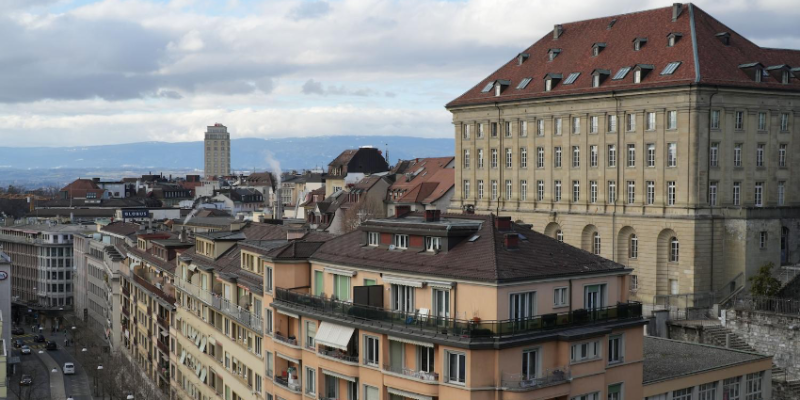
You've found an apartment in Lausanne you want to buy. At CHF 11,567/m² on average (approx. USD 14,300), the price is significant, but the more immediate question is whether you can buy at all. Switzerland's Lex Koller framework classifies buyers into those who can purchase freely and those who need cantonal authorization from Vaud before any transfer can proceed. That legal gateway, combined with a 20% minimum equity requirement for Swiss mortgages and closing costs of approximately 4 to 4.3% of the purchase price, shapes the entire purchase process in Lausanne. The city ranks among the most expensive 10% of communes in Vaud, running roughly 30% above the cantonal average for ownership housing, and apartment prices rose approximately 3.1% over the past year, leaving little room for buyers to wait out any softening.
The first question any foreign buyer in Lausanne must resolve has nothing to do with price or location: it is whether Swiss federal law permits the purchase at all. The Lex Koller framework (Federal Act on the Acquisition of Immovable Property by Foreign Non-Residents, known in French as ANRA) divides potential buyers into two groups: those who can purchase freely, and those classified as "persons abroad" who need cantonal authorization before any transfer can be registered with the land register.
The persons-abroad category covers foreign nationals resident outside Switzerland; foreign nationals resident in Switzerland who hold neither EU/EFTA nationality nor a Swiss C settlement permit; foreign-controlled companies domiciled abroad; and Swiss-domiciled companies under foreign control. For a Lausanne property, the competent authority is the canton of Vaud, which examines each file individually. Buyers in the persons-abroad category should not assume authorization will be granted automatically and should engage a Swiss notary or lawyer to assess their specific situation before making any offer.
EU/EFTA nationals who are legally and effectively resident in Switzerland are treated on the same basis as Swiss buyers and need no Lex Koller authorization. Third-country nationals generally need a C permit (settlement permit) and actual Swiss residence to purchase without triggering the persons-abroad classification. Residency status must therefore be the first determination, before visiting properties or signing anything. UK nationals who became lawfully resident in Switzerland on or after January 1, 2021, are expressly classified as persons abroad under federal Lex Koller guidance, regardless of their length of stay; this differs from EU/EFTA nationals and from UK nationals who were already resident before that date. Confirming exact status with a Swiss notary or lawyer before signing any preliminary agreement is essential for anyone in this situation.
Buying property in Lausanne does not entitle a foreign national to a Swiss residence permit. Property ownership and the right to reside in Switzerland are entirely separate legal questions.
Company-ownership structures offer no shortcut for residential property. Foreign-controlled companies domiciled abroad, and Swiss-domiciled companies under foreign control, fall within the persons-abroad category and generally require authorization for residential acquisitions. A foreign company can acquire real estate used for business operations without authorization, but that route does not extend to apartments or houses.
Separate from the Lex Koller question, Swiss banks assess residency status independently when evaluating mortgage applications. Some lenders require permanent Swiss domicile for their standard products, making residency practically important even where the purchase itself is legally unrestricted.
Lausanne sits among the 10% most expensive communes in Vaud, with ownership housing in the Lausanne district running roughly 30% above the cantonal average (BCV). That premium applies across the board, so choosing a neighborhood is really about calibrating how much additional uplift, in price and lifestyle, each zone adds on top of an already high baseline.
Ouchy and the adjacent Sous-Gare quarter form Lausanne's prime lakeside zone. Prices along Avenue d'Evian in Ouchy average around CHF 15,600/m² (approx. USD 19,300), making it one of the most expensive micro-locations in the city. Lakefront access, waterfront walks, and strong public-transport connections justify the premium for internationally mobile buyers and retirees seeking prestige addresses. Across town to the east, Chailly-Rovéréaz offers a quieter, greener alternative with more single-family housing than the urban center. Its preserved village character appeals to established professionals and families with children who want space and calm without leaving the city boundary; prices are upscale but reflect size rather than lake views.
The city center around Flon is the practical entry point for new arrivals who prioritize walkability, short commutes, and immediate access to services and restaurants. Streets such as Rue Pré-du-Marché average around CHF 15,300/m² (approx. USD 18,900). Buyers should check noise exposure and building condition carefully before committing, since the area is dense and active. For more space at a lower price point, La Sallaz, Vennes, and Fourmi in the northeast offer a mid-range residential option with reliable public-transport connections to the center. This zone suits families and households who cannot or prefer not to pay lakefront or Chailly premiums.
To the west, Sébeillon and Malley are undergoing active urban redevelopment. New construction brings potential for value growth over time, but the area requires careful inspection of specific streets, noise exposure, and transport access before committing; it is not a safe choice for buyers unfamiliar with Lausanne. Further out, Bourdonnette and similar peripheral areas offer comparatively lower prices, mainly through smaller units, but with trade-offs in distance from the center that suit students and younger households more than buyers seeking owner-occupied family property.
Join the Lausanne community
Get regular tips and advice to make the most of your expat life
Property prices in Lausanne
The city-wide average residential property price in Lausanne is approximately CHF 11,567/m² (approx. USD 14,300). That figure quickly translates into significant absolute sums: a 70 m² apartment at the city average would cost around CHF 810,000 (approx. USD 1,000,000). Swiss mortgages require at least 20% equity, so the minimum cash commitment on a typical Lausanne purchase is substantial, even before closing costs.
Apartments across the Lausanne market range from approximately CHF 11,428 to CHF 16,470/m² (approx. USD 14,100 to USD 20,400), with premium lakeside units approaching the top of that band. Houses span a wider and somewhat lower range, from approximately CHF 8,765 to CHF 14,411/m² (approx. USD 10,800 to USD 17,800), reflecting the diversity from peripheral plots to well-positioned villa-type buildings; standalone houses are significantly rarer than apartments in Lausanne. At the top of the market, luxury propertyin Ouchy and comparable prime central zones is priced from approximately CHF 16,470 to CHF 24,606/m² (approx. USD 20,400 to USD 30,400).
Prices are moving upward across the market. Lausanne apartment prices rose approximately 3.1% and house prices approximately 2.8% over the 12 months to mid-year, broadly in line with the national Swiss residential property trend (SECO). Buyers should budget from current market levels rather than expecting prices to soften.
Types of property in Lausanne
Apartments dominate the Lausanne property market, and most listings use the Swiss room-count system rather than the bedroom count familiar to buyers from North American or UK markets. A 3.5 pièces apartment, for example, typically includes two bedrooms and a living room, not three bedrooms. Always verify the floor plan or ask the agent to confirm the bedroom count before viewing; the pièces number alone does not tell the full story.
Buying an apartment in Lausanne almost always means acquiring under PPE (propriété par étages), the Swiss condominium ownership structure. As a PPE owner, you hold title to your individual unit and a proportional share of the building's common areas, governed by a co-owners' assembly. Monthly PPE charges cover building management and maintenance, and the amounts vary by property size and managing agency.
New-build supply is limited in Lausanne. Off-plan purchases, where apartments are marketed before or at the start of construction, represent one of the few routes to new-build ownership in the city. Buyers considering off-plan projects should review construction-contract guarantees with care: Swiss construction-contract law changed on January 1, 2026, extending the defect-notification period for real-estate purchases to 60 days from the date of handover.
A luxury residential segment exists in Lausanne, concentrated in lakeside and premium central locations with limited stock; premium properties in Ouchy and comparable zones are primarily handled by specialized agencies, including Switzerland Sotheby's International Realty.
Finding property in Lausanne
Five main online portals carry purchase listings for Lausanne: Homegate, ImmoScout24, immobilier.ch (particularly strong across French-speaking Switzerland), Comparis (cross-portal comparison), and Immostreet. Using more than one portal is advisable because agency mandates are not always duplicated across all platforms. Both ImmoScout24 and Homegate display listings and agency profiles in English, which makes initial research more accessible before diving into French-language listings.
Active agencies for purchase mandates in Lausanne include: Neho Lausanne, which operates on a fixed seller mandate of CHF 12,000 (approx. USD 14,700); PROXIMMO Agence Immobilière at Place Bel-Air 1, 1003 Lausanne; Bernard Nicod SA; deRham SA; Switzerland Sotheby's International Realty for premium and international transactions; OMNIA Immobilier SA; Régimo Lausanne; and Duboux Immobilier. Most agencies operating on a percentage mandate charge 2 to 5% of the sale price. Crucially, buyers pay no agency commission in Lausanne: the brokerage fee is charged to the seller. Buyers can contact agencies directly by phone or email to request property lists without any financial commitment on their side.
Before engaging agencies or arranging viewings, benchmark asking prices using independent price tools. RealAdvisor and Acheteur.ch both publish Lausanne-specific per-m² data and agency comparisons, which help calibrate whether a listed price is in line with the market before entering negotiations.
Buyers searching from abroad should take extra precautions. Fake listings and phantom agents are the primary risks for remote buyers. Verify any agency's Swiss registration and physical address before sharing personal documents or transferring any funds. Also clarify early whether the agency accepts foreign applicants without a Swiss guarantor, as some sellers or landlords set this as a condition before entering serious negotiations.
The buying process in Lausanne
Purchasing residential property in Lausanne follows a mandatory notarial sequence, and the most common mistake foreign buyers make is failing to resolve their Lex Koller status before making a binding commitment. The five steps below reflect the practical journey from first offer to registered ownership.
Confirm Lex Koller status. Before making any offer, establish whether you are classified as a person abroad under Swiss federal law. If you are, the Vaud cantonal authority must examine your file and grant authorization before the transfer can be registered. A Swiss notary or lawyer should confirm your status based on your specific permit, residence situation, and intended property type.
Negotiate and instruct a Vaud notary. Once you agree on terms with the seller, instruct a Vaud notary to prepare the transaction. Swiss law requires an acte authentique (authentic deed) for all real-estate transfers; a private written agreement between buyer and seller alone is not legally sufficient to transfer ownership. Notaires Vaudois provides information on the notarial process for real-estate transactions in the canton.
Due diligence before signing. Before the deed is executed, check the land-register extract (registre foncier) for current ownership, easements, real-estate liens (cédules hypothécaires), and any outstanding mortgage; consult the PLR Cadastre for public-law restrictions that do not appear in the land register; and verify the property's building-permit history through the Lausanne Service de l'urbanisme at rue du Port-Franc 18, 2nd floor.
Execute the authentic deed and transfer requisition. The parties sign before the notary, who verifies identity and all transaction documentation. Once conditions are satisfied, the réquisition de transfert is signed, authorizing the land register to record the change of ownership. The notary then files the complete deed through the official Notariat+ electronic channel with the Vaud land register and cantonal tax administration.
Land-register registration completes ownership. Signing the deed does not complete the purchase. Ownership passes only when the transfer is registered in the Vaud land register. If the land-register officer cannot exclude a Lex Koller authorization requirement after a summary review, the file is referred to the cantonal authority before registration proceeds.
Transfer duty is payable by the buyer within 30 days of notification of the tax assessment. Budget for this cost before finalizing any purchase price, as it adds materially to the total outlay.
Costs of buying property in Lausanne
Total closing costs on a Lausanne purchase run to approximately 4.0 to 4.3% of the purchase price, and buyers pay no agency commission on top of that. The main components break down as follows.
The highest cost is the droit de mutation (transfer tax). In Vaud, the combined standard rate is 3.3% of the taxable property value: a cantonal component of 2.2% plus a communal component equivalent to 1.1%. The buyer is primarily liable; the seller is jointly liable. Payment is due within 30 days of the tax assessment notification. Residential property transfers are exempt from Swiss VAT, so no VAT is added to the purchase price of a standard apartment or house.
Beyond the transfer tax, notary and registration fees add a further 0.7 to 1.0% of the purchase price. A Lausanne notary fee runs approximately CHF 4,000 (approx. USD 4,880); purchase-contract drafting costs approximately CHF 2,575 to CHF 3,475 (approx. USD 3,142 to USD 4,240) depending on the purchase price, plus VAT on those professional fees; and land-registry registration fees add approximately CHF 1,300 to CHF 2,200 (approx. USD 1,586 to USD 2,684). Mortgage-deed fees, if applicable, are separate from these figures.
From day one of ownership, compulsory building insurance applies. All property owners in Vaud must insure their buildings against fire and natural elements with the ECA (Établissement cantonal d'assurance contre l'incendie et les éléments naturels du canton de Vaud, Av. du Grey 111, 1001 Lausanne). This is a mandatory cantonal institution, not a commercial insurance choice: the ECA is the sole authorized provider for building insurance in Vaud, and premiums are calculated from the insured sum and the property's risk category.
Financing and mortgages in Lausanne
Swiss residential mortgages finance a maximum of 80% of the property value, so every buyer must bring at least 20% in own funds (fonds propres). Of that 20%, at least 10% must be "hard" equity, meaning personal savings, securities, or inheritance, not pension assets. This minimum equity requirement applies universally across Swiss lenders for owner-occupied residential property and cannot be worked around through a second lender.
The 20% floor is the benchmark for resident owner-occupiers. Non-resident buyers and those with lower-category permits face stricter conditions: cross-border workers with a G permit and B-permit holders are typically offered loan-to-value ratios in the 65 to 75% range, while buyers who are not resident in Switzerland at all often receive offers in the 60 to 65% range. That means a non-resident buyer may need to provide 35 to 40% equity rather than 20%, a materially higher cash requirement on a Lausanne-priced property.
Swiss mortgages come in two main forms. A SARON mortgage tracks the Swiss overnight interbank rate plus a lender margin, with rates available from approximately 0.78% plus the compounded SARON rate. Fixed-rate mortgages lock the rate for a defined term: the UBS key4 platform published indicative rates of approximately 1.32% for a 5-year term, 1.57% for 10 years, and 1.79% for 15 years. Rates differ by lender, canton, loan-to-value ratio, and individual file strength, so published indicative rates are a starting point rather than a commitment.
Affordability is assessed using a conservative stress test. Swiss lenders calculate whether you could sustain the mortgage if the interest rate were 5%, not at today's actual rate. Combined with amortization of the second-rank portion and estimated maintenance costs, total housing costs must generally not exceed roughly one-third of gross income under the stress scenario. This rule catches buyers who can afford today's rates but would not clear the 5% calculation.
The Swiss mortgage structure itself differs from most markets. Lenders split the loan into a first rank, covering up to 65% of property value, which is interest-only and carries no mandatory repayment, and a second rank, covering the slice from 65% to 80% of value, which must be amortized down to 65% within 15 years. Ongoing monthly costs remain relatively contained once the second rank is paid down, but the initial equity requirement is non-negotiable.
Key lenders for Lausanne property include BCV (Banque Cantonale Vaudoise), the cantonal bank of Vaud, which offers fixed-rate loans from 2 to 10 years and SARON mortgages with a minimum loan of CHF 20,000 (approx. USD 24,500). Buyers with foreign-resident or complex permit profiles should consider working with a specialist broker: Vision Hypothèques works specifically with expat and cross-border buyer profiles and can navigate lender-specific policies across Swiss institutions.
Mortgage applications require payslips and an employment contract, or, for self-employed applicants, business and tax accounts; proof of assets and own funds; pension-fund and pillar-3a information where applicable; tax returns; and, where relevant, a copy of the residence permit. Property documents needed include the land-register extract not older than 6 months, the draft sale contract, and building plans. Buyers earning in a currency other than CHF carry an additional risk: Swiss mortgages are CHF obligations, and lenders may apply income discounts or stricter criteria for non-CHF income. Exchange-rate movements affect both the real cost of repayments and affordability calculations over the life of the loan.
Legal considerations for property buyers in Lausanne
Commissioning your own independent legal adviser is the single most effective step a foreign property buyer in Lausanne can take. The notary who prepares the authentic deed acts as a neutral transaction officer under Swiss law; they do not serve as your personal legal adviser, and relying solely on an agency-recommended contact leaves your interests unrepresented during the due-diligence stage.
Your adviser should cover four areas before you sign. First, obtain a certified land-register extract (extrait certifié conforme du registre foncier) from the Vaud land-register office. The extract shows current ownership, easements, real-estate liens (cédules hypothécaires), land charges, and any outstanding mortgage. For mortgage purposes, the extract must not be older than 6 months.
Second, consult the PLR Cadastre (Cadastre of public-law restrictions on landownership) separately from the land register. Public-law restrictions, including zoning designations, building lines, protected areas, and infrastructure reservations, are legally binding on the property but do not appear in the land register extract. Missing these can create serious constraints on renovation plans or future resale.
Third, verify the property's building-permit history through the Lausanne Service de l'urbanisme (rue du Port-Franc 18, 2nd floor). In Lausanne, construction-permit applications go through a 30-day public inquiry period during which any party may file written opposition. Buyers planning renovations should confirm that previous works have the required permit trail and that no objections are pending on current applications before making an offer.
Fourth, your adviser should review your Lex Koller status and confirm whether any cantonal authorization is required for your specific file. Property and civil-law disputes in Lausanne fall within the ordinary Swiss and Vaud judicial framework; the most effective protection is to preserve all written, notarized, and land-register documentation from the outset.
Owning property in Lausanne
Property ownership in Lausanne carries recurring obligations that differ from what buyers in many other markets expect. The first is an annual municipal property tax (impôt foncier communal). In Vaud, the maximum rate is 1.5‰ (1.5 per mille) of the property's fiscal assessment value (valeur fiscale) as at January 1 of the tax year. The actual Lausanne communal rate sits at or below this maximum and applies to all owners, including non-residents who hold Vaud property.
Building insurance is compulsory from day one and must be held with the ECA. Unlike in most countries, this is not a choice between commercial providers: the ECA is the sole authorized insurer for building fire and natural-elements coverage in Vaud, and premiums are calculated from the insured sum and the property's risk category. Budget for this as an ongoing fixed cost from the moment ownership transfers.
Non-resident owners of Lausanne property are subject to limited Vaud tax liability on income derived from their Swiss property. Rental income is taxed at the rate applicable to the owner's worldwide income and wealth under Vaud's progressive income tax scale, which ranges from 1.0% to 15.5% before cantonal and communal coefficients are applied. There is no separate flat withholding rate for non-residents and no additional annual surcharge specifically for foreign or absentee owners.
Short-term platform letting is regulated in Lausanne. Owners who let their property via platforms such as Airbnb for more than 90 days per calendar year must file an LPPPL authorization request with the City of Lausanne and register as accommodation providers subject to tourist tax. Long-term letting carries no equivalent restriction, though rental income is taxed as described above.
For owners who do not manage their Lausanne property directly, professional management services are available. Homewell publishes single-unit management from CHF 84/month (approx. USD 103) and building management at 3.3% of rent collected. Co-Prop offers PPE condominium administration from CHF 49.90/month per lot (approx. USD 61), including VAT. Both services typically cover rent collection, administrative and accounting management, debt recovery, insurance claims, and annual owner statements.
The sale of a Lausanne property follows the same mandatory notarial route as the purchase: seller and buyer agree terms, a Vaud notary prepares the authentic deed, both parties sign, and the réquisition de transfert is filed through the Notariat+ electronic channel with the Vaud land register and cantonal tax administration. Ownership transfer is completed by land-register registration, not at the moment the deed is signed.
Sellers using an agency sign a mandat de courtage (brokerage mandate) before marketing begins. Verified Lausanne tariffs include mandates at 3% of the sale price and exclusive sales mandates at 2.7%, all plus VAT. Agency commission is paid by the seller; compare mandate types and confirm whether VAT is included before signing any agreement.
The main seller-side tax is the Vaud real-estate gains tax (impôt sur les gains immobiliers), which applies to all sales of Vaud immovable property, including by non-residents. The rate is progressive by holding period: 40% for property held under one year, declining to 8% after 24 years of ownership. The seller must file the gains declaration within 30 days of the sale using the official Vaud form. In some transactions, a security equivalent to 5% of the sale price may be required against the potential gains tax liability; budget for this as a possible cash-flow item around the completion date.
Non-resident sellers should note that the gains tax applies equally regardless of their country of tax residence; the rate corresponds to the owner's worldwide income and wealth under Vaud's progressive scale. UK nationals who originally purchased as persons abroad under Lex Koller should confirm with a Vaud notary whether the authorization history of their file needs to be addressed when preparing the resale. This does not prevent selling but may require additional documentation at the notarial stage.
Fund repatriation after a lawful sale is straightforward. Switzerland imposes no general capital controls on the transfer of legitimate sale proceeds abroad; the restrictions under Lex Koller concern the authorization to acquire, not the movement of funds after a permitted sale is complete.
Have questions about moving to Switzerland? Join the Expat.com community to connect with expats who have been through the process.
Frequently asked questions
Residency is not a legal prerequisite for purchase, but it determines whether Lex Koller authorization is required. EU/EFTA nationals who are legally and effectively resident in Switzerland may buy freely. Non-EU/EFTA nationals generally need a C permit (settlement permit) and actual residence in Switzerland to avoid the authorization requirement. Non-residents, regardless of nationality, are classified as "persons abroad" and require cantonal authorization from the canton of Vaud before a purchase can proceed. Residency status also affects mortgage access, as some Swiss lenders require permanent Swiss domicile for their standard mortgage products.
Lausanne property is expensive, supply-constrained, and comes with significant transaction costs: around 4-4.3% on purchase and Vaud's real-estate gains tax on sale. The investment case is strongest for long-term residents seeking housing stability rather than short-term yield. Short-term platform letting is regulated, with a formal authorization requirement triggered after 90 days per year, which limits straightforward rental income strategies. Property-specific factors, including location, building condition, condominium charges, mortgage affordability, and holding period, matter as much as broader price trends when assessing individual return potential.
Prices are rising. The national Swiss Residential Property Price Index rose 0.7% quarter-on-quarter in its most recent reading, with condominiums up 1.6%. At the Lausanne market level, apartment prices rose approximately 3.1% and house prices approximately 2.8% over the preceding 12 months. Lausanne sits among the most expensive 10% of Vaud communes, with ownership housing running roughly 30% above the cantonal average.
New-build supply is limited in Lausanne, and off-plan purchases require careful review of construction-contract guarantees. Swiss construction-contract law changed on January 1, 2026, extending the defect-notification period to 60 days for real-estate purchases, so buyers considering off-plan projects should review contract terms carefully with a notary. Resale properties offer established locations and building histories but require due diligence on renovation needs, condominium decisions, and potential energy-upgrade obligations. Neither option is automatically superior: the decision depends on budget, risk tolerance, and how quickly you need to occupy.
Foreign residents can apply for a Swiss mortgage, but lenders assess permit status, residency, income, and affordability independently of Lex Koller eligibility. Swiss mortgages require at least 20% own funds for resident owner-occupiers; non-residents and buyers with lower-category permits typically need to provide 35-40% equity, depending on the lender and the file. Swiss mortgages are CHF obligations, so buyers earning in other currencies face additional lender scrutiny and ongoing exchange-rate risk. The Lex Koller authorization question must also be resolved before financing becomes actionable, since the purchase itself may require cantonal authorization from Vaud.
No official standard timeline has been published for a Lausanne purchase. The total duration depends on financing approval, notarial drafting, any Lex Koller authorization review by the Vaud cantonal authority, and land-register processing time. Files requiring cantonal Lex Koller review will take longer than straightforward resident-buyer transactions. Buyers should confirm their full file path, including authorization status, with their notary and bank before making any assumptions about timing.
Long-term letting is permitted for all property owners in Lausanne without special authorization. Short-term platform letting is regulated: owners who let via such platforms for more than 90 days per calendar year must file an authorization request with the City of Lausanne and register as accommodation providers subject to tourist tax. Rental income is subject to Vaud's progressive income tax for all owners, including non-residents, as part of their limited Vaud tax liability.
The primary seller-side tax is Vaud's real-estate gains tax, which applies to all sales including those by non-residents. Rates decrease with holding period: 40% for property held under one year, declining to 8% after 24 years of ownership. The seller must file the gains declaration within 30 days of the sale, and in some transactions a security deposit equivalent to 5% of the sale price may be required against the potential tax liability. Switzerland does not restrict the repatriation of legitimate sale proceeds abroad, so transferring funds after a lawful sale is not subject to capital controls.
ℹ️
We do our best to provide accurate and up to date information. However, if you have noticed any inaccuracies in this article, please let us know in the comments section below.
I fell in love with words at an early age After a break to focus on my studies, I rediscovered the joy of writing while keeping a blog during my years between London and Madrid. This passion for storytelling and for exploring new cultures naturally inspired me to create Expat.com, a space for my own reflections as well as for anyone wishing to share their experiences and journeys abroad.