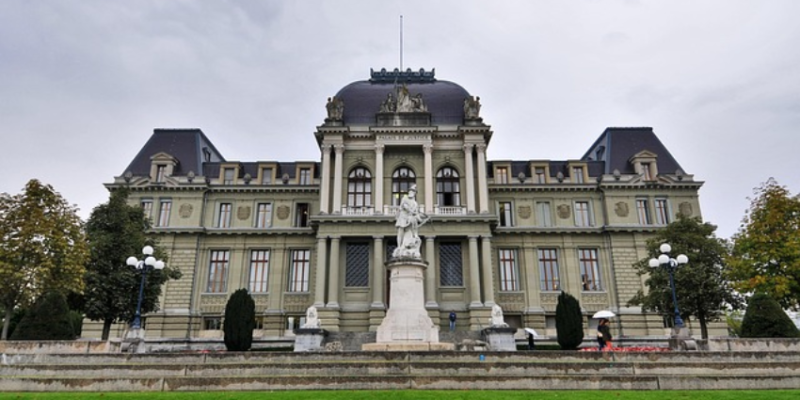
Lausanne has been the official seat of the International Olympic Committee since 1915, a designation that over more than a century has drawn global sports federations, international institutions, and a steady stream of internationally mobile professionals to a lakeside city of just 145,000 people. That accumulation of international presence, layered over a French-speaking Swiss university city anchored by EPFL and UNIL, produces a daily life that feels significantly larger and more cosmopolitan than the city's scale would normally allow. For newcomers, this creates a particular dynamic: the city is genuinely international in composition, but its social codes, administrative language, and cost structure are unmistakably Swiss. Housing is tight and expensive, French is the practical language for everything beyond professional and academic settings, and the steep three-hill geography between the medieval hilltop and the lakefront surprises almost everyone who imagined a flat, easy lakeside city.
Three hills, a lakefront, and an improbable concentration of global institutions define daily life in Lausanne. With a population of around 145,000, the city sits directly on the northern shore of Lake Geneva in the Canton de Vaud (the Swiss canton that governs most administrative matters affecting residents), combining a strong academic identity anchored by EPFL (École Polytechnique Fédérale de Lausanne) and UNIL (University of Lausanne) with an international sports and institutional presence centered on the IOC (International Olympic Committee) and dozens of global sports federations. That combination gives Lausanne a profile, recognized globally as the Olympic Capital and the seat of the Court of Arbitration for Sport, that draws internationally mobile professionals, researchers, and students far beyond what a city of its population would normally attract.
The city's physical form is steep and layered: the medieval Cité sits at the highest point, the commercial and transit center around Lausanne-Gare lies below it, and the lakefront district of Ouchy extends further down toward the water, with two metro lines linking all three levels. Everyday movement in Lausanne almost always involves a change in elevation, whether on foot, by metro, or by bus, rather than a flat-grid walk. Newcomers consistently note this as the first practical surprise of the city: a lakeside address implies flat terrain, but Lausanne is anything but.
People choose Lausanne for a recognizable combination of reasons: the French-speaking Swiss quality of life, EPFL and university-linked career and research opportunities, proximity to international sport and corporate institutions, immediate access to Lake Geneva, nearby vineyards at the Lavaux UNESCO wine terraces that begin at the city's eastern edge, mountain views, and efficient public transport. The city offers a human-scale alternative to the larger and faster environments of other major Swiss cities, without sacrificing urban services or international connections. That compact scale can feel like a relief or a limitation depending on expectations, and being clear-eyed about which it will be for you is the most honest preparation for arrival.
Everyday life in Lausanne runs at a moderate pace. Residents use public transport for most journeys, walk or cycle for short trips in the center, and organize leisure around the lakefront, parks, museums, and cultural events. Outdoor activities, from swimming in the lake to hiking and cycling, are woven into daily and weekend routines rather than treated as exceptional excursions. The city feels significantly livelier and more international than its population might suggest, yet without the speed or anonymity of a major metropolitan center.
The most common adaptation challenges in the first months are finding housing before peak student and corporate relocation seasons, budgeting realistically for Swiss prices across rent, groceries, insurance, and eating out, handling French-language administration for registration, banking, and healthcare, and building a social circle in a city that is internationally composed but gradual in social intimacy. That last quality is Swiss rather than unique to Lausanne, but it is worth anticipating: friendliness here does not automatically translate into friendship, and social connections tend to build slowly and deliberately.
Sous-Gare and Ouchy form Lausanne's premium lakeside zone. The Ouchy waterfront, Olympic Park, lakeside gardens, and promenade give this district the city's most recognizable lifestyle, while the station-to-lake axis offers cafés, cultural stops, and a polished residential feel. The district sits directly on the m2 metro corridor, providing direct links between the lake, Lausanne-Gare, and the city center. It suits corporate expats, families who want parks and lake access, and retirees who prioritize walkability and scenery. Prices reflect that premium.
Le Flon is Lausanne's central, contemporary leisure district: a former industrial and warehouse area reshaped into the city's main hub for restaurants, offices, shopping, and evening life. It appeals to young professionals, entrepreneurs, and short-stay expats who value urban energy and easy access to the city. Lausanne-Flon is the key interchange for both the m1 and m2 metro lines, making it one of the best-connected bases in the city, with direct m1 access westward to EPFL and UNIL.
La Cité and the Vieille Ville form Lausanne's medieval core, centered on the Cité hill with its cathedral, heritage buildings, and narrow old-town streets. The old town suits culture-focused residents, newcomers who want character over space, and students or professionals comfortable with central-city stairs and a dense urban fabric. Access to the wider city is good for those happy walking into the center.
A step west and down from the station, Montriond and Cour offer a green, residential, and family-friendly character shaped by Parc de Milan, the Botanical Garden, and the Montriond hill viewpoint. It is a mid-to-high price area that suits families and professionals who want quieter streets and a less showy address than Ouchy, with practical access to the M2 metro corridor and walkable links to parks and schools.
Chailly and Rovéréaz are among Lausanne's quieter, greener, and more affordable residential areas, with a village-like local center and a consistent reputation for calm, family-oriented everyday life. Bus connections link the area to the city center and to CHUV (the university hospital). Long-term professionals, families, and retirees who want neighborhood shops and greenery over proximity to nightlife tend to find it a practical and pleasant base.
Further north, Sallaz, Vennes, and Séchaud make up a practical, mixed, everyday-residential area with strong appeal for people connected to CHUV and northern Lausanne institutions. The area sits close to the M2 line, providing direct metro access to the hospital, Lausanne-Gare, Flon, and Ouchy. It works well for hospital and university professionals, budget-conscious families, and students who do not need the EPFL and UNIL western axis.
In the city's west, Sébeillon and Malley are more affordable and transitional, with a contemporary rather than historic identity. They appeal to students, early-career professionals, and residents watching costs, with good connections toward the Flon-to-Renens-to-EPFL/UNIL route. This is one of Lausanne's developing districts and offers better value for residents willing to trade lake views for practicality. The most budget-friendly option is Montoie and Bourdonnette, with a student and campus-adjacent character, particularly around Bourdonnette and the western M1 axis toward UNIL and EPFL. Rent here is among the lowest in Lausanne, making it a natural first stop for students, interns, and cost-conscious single professionals.
Good to know:
Each district in Lausanne has a maison de quartier (neighborhood community center) offering social, sports, and cultural activities at the local level, helping residents meet people beyond expat and professional networks.
Join the Lausanne community
Get regular tips and advice to make the most of your expat life
Cost of living in Lausanne
Housing is the dominant cost in Lausanne and the item that shapes every other budget decision. A studio or one-room apartment rents for CHF 1,310 to CHF 2,600 per month (EUR 1,400 to EUR 2,780), while a one-bedroom apartment typically costs CHF 1,800 to CHF 2,600 per month (EUR 1,926 to EUR 2,782). The rental market is tight, with a vacancy rate around 0.67%, so budgeting toward the higher end of those ranges is more realistic than assuming the lower end will be easy to find. A well-prepared application dossier matters as much as budget.
Beyond rent, a realistic total monthly budget for a single adult, covering groceries, transport, healthcare insurance, and basic leisure, runs CHF 4,000 to CHF 5,500 per month (EUR 4,280 to EUR 5,885). Groceries alone typically cost CHF 400 to CHF 550 per month (EUR 428 to EUR 589), and a monthly transport pass for the Lausanne urban network (Mobilis zones 11 and 12) costs CHF 78 (EUR 83). Note that mandatory Swiss health insurance is charged per person on top of these figures, adding a significant cost not always visible in headline summaries.
Eating out is noticeably expensive. A budget meal at a café or brasserie costs around CHF 25 (EUR 27), a mid-range dinner for two at a sit-down restaurant averages CHF 100 (EUR 107), and a standard coffee costs approximately CHF 5 (EUR 5.40). Cooking at home using market produce is the most reliable way to control food spending. Lausanne's high price level reflects structural Swiss pricing rather than acute inflation, so budgets calibrated in one year remain broadly valid the next.
All core recurring costs, including rent, transport passes, groceries, insurance, and utilities, are CHF-denominated. For newcomers paid in EUR, GBP, or another currency, exchange-rate movements can materially affect disposable income. This is a practical consideration worth factoring in before committing to a rental contract or monthly budget, particularly for those on foreign salaries, pensions, or freelance income.
Climate and weather in Lausanne
Proximity to Lake Geneva stabilizes Lausanne's temperatures in ways that distinguish it from inland Swiss locations at the same altitude. The result is a temperate, lake-moderated humid climate: warm summers, cool winters, precipitation spread across all seasons, and sunshine totals that are above average for the Swiss Plateau. The lake's thermal mass keeps winters milder and summers more pleasant than those experienced further inland.
Summers are warm to hot: average daily highs reach 23°C in June, 25.5°C in July, and 24.8°C in August at the Lausanne-Pully station, the official MeteoSwiss reference point for the Lausanne area, located in the adjacent lakeside municipality of Pully. Overnight lows in summer sit between 15 and 17°C. Heatwave episodes can be uncomfortable in less well-ventilated buildings. Winters are cool and often grey but not severely cold: average highs of 4.7 to 5.8°C in December through February, with overnight lows just above freezing. Snow and ice occur but are not persistent; the practical impact on daily movement is occasional icy sidewalks and colder wind off the lake rather than sustained disruption.
Lausanne receives around 1,132 to 1,164 mm of rainfall per year, spread fairly evenly across the seasons, with the wettest months being May, June, August, and October. Rain and thunderstorms are a consistent feature from spring through autumn; a waterproof jacket and umbrella are everyday items rather than seasonal ones. By contrast, the Lausanne-Pully station records about 1,966 sunshine hours per year, one of the better totals on the Swiss Plateau. Spring and early autumn are the most reliably pleasant periods, warm enough to be outdoors comfortably, bright, and without the heat stress of late summer.
Heatwaves are a growing practical risk for residents in Lausanne. MeteoSwiss climate monitoring shows Switzerland's last decade running significantly warmer than the pre-industrial reference period, with more frequent and intense heat extremes in urban and low-altitude areas. Summer thunderstorms are also relevant: warm air favors storm development and intense localized downpours. Newcomers should plan around sharp seasonal contrasts, and May, June, September, and early October are generally the most comfortable months to arrive and orient.
For housing decisions, prioritize heating and insulation over air conditioning for most of the year, but check that summer apartments have shutters, cross-ventilation, or fans, since heatwaves make this increasingly important. Because of Lausanne's sloping lakeside setting and summer thunderstorms, also check drainage, cellar humidity, and whether lower-ground-floor or semi-basement apartments have had water ingress issues. For clothing, plan layers: light summer clothes and sun protection for June through August; a waterproof jacket year-round; and a warm coat, scarf, gloves, and non-slip footwear for winter mornings and occasional ice. MeteoSwiss's annual climate cycle data provides a reliable month-by-month reference for temperature and rainfall expectations.
Getting around Lausanne
A car is rarely needed for daily life in Lausanne. The city is built around public transport: the default for most journeys is the TL (Transports publics lausannois) metro, bus, and trolleybus network, covered by the Mobilis regional ticketing system. The two metro lines are the backbone: the m1 runs east to west connecting Lausanne-Flon to UNIL, EPFL, and Renens; the m2 runs north to south between Croisettes and Ouchy via Lausanne-Gare and Flon, linking the city's three main vertical levels. A monthly urban pass for Mobilis zones 11 and 12 costs CHF 78 (EUR 83).
Lausanne is walkable in its central areas, though the city's steep three-hill geography means walking often involves meaningful elevation changes: stairs, ramps, and slopes rather than flat sidewalks. E-bikes in particular are well suited to the gradient and are increasingly common among residents. For journey planning, the two essential tools are the SBB Mobile / CFF Mobile app, which covers all Swiss rail, metro, and bus connections including regional travel from Lausanne, and the TL app or website for local metro, bus, and trolleybus timetables. Taxis and app-based ride services are available but are rarely the practical first choice given the network's quality and coverage.
Language and communication in Lausanne
All municipal communications, official paperwork, school administration, healthcare reception, and most neighborhood interactions in Lausanne operate in French. This is the administrative and everyday language of the city and the Canton de Vaud. The local variety is Swiss French (français romand), which has a distinct accent and some local vocabulary differences from Parisian French, but standard French is fully understood and is the practical language to learn and use. German and Italian, Switzerland's other national languages, have no meaningful role in daily life here.
English is widely encountered in university, international-company, Olympic and sports institutions, hospitality, and expat-facing contexts, particularly around EPFL, UNIL, and multinational employers. In these environments, English can carry a newcomer through the first months. It does not, however, replace French for leases, healthcare appointments, local jobs, school communications, neighborhood services, or long-term integration. Residents consistently find that French becomes necessary quickly once they navigate the initial professional or institutional layer. The International Women's Club of Lausanne (IWC), a volunteer-run non-profit organization helping women of all nationalities settle into the city and Canton de Vaud through social, sporting, and cultural activities, is one of the most established English-language community anchors in Lausanne and a useful early social base while language skills develop.
Swiss communication style in administrative and housing contexts tends toward polite formality: prepare written requests carefully, arrive on time for appointments, and use formal salutations (Monsieur/Madame) rather than first names until invited otherwise. In student, cultural, and lakeside social settings, the tone is more relaxed, but punctuality and concise written communication remain valued across all contexts.
Multiple established schools offer French courses for adults at all levels. ECAP offers weekly and intensive formats oriented to everyday life, work, and integration. Institut Richelieu provides intensive courses and DELF (Diplôme d'Études en Langue Française, an internationally recognized French-language proficiency qualification) preparation in central Lausanne. Pôle Sud runs intensive courses at a Lausanne-resident price of approximately CHF 450 (EUR 481) per session. Further options include Swiss French School, École Agora (French as a foreign language, all levels, intensive year-round), Berlitz Lausanne (adults, business learners, children, and teenagers), and inlingua Léman (small-group weekly formats). EPFL also offers a campus-based Language Center intensive French course before the academic year for incoming students.
A handful of French phrases cover the most common early-arrival situations: Bonjour, je viens d'arriver à Lausanne (Hello, I've just arrived in Lausanne); Je cherche un appartement à louer (I'm looking for an apartment to rent); Est-ce que vous parlez anglais ? (Do you speak English?); Où dois-je m'annoncer à la commune ? (Where do I register with the municipality?); Je voudrais prendre rendez-vous (I'd like to make an appointment). Learning these before arrival makes the first administrative steps significantly easier.
Culture and social norms in Lausanne
Social contact in Lausanne follows Swiss patterns even when the population around you is international: privacy, planned interactions, gradual trust-building, and a preference for reliability over spontaneity are the baseline. The city is sociable by Swiss standards and genuinely diverse in composition, but casual friendliness here does not equal friendship. Social warmth develops more slowly and deliberately than in many other cultures, and once trust is established, the relationships tend to be durable. Recent residents describe Lausanne as warmer and more approachable than some other Swiss cities, but unmistakably Swiss in its social tempo.
A few social codes matter from day one: greet everyone formally (Bonjour Madame / Monsieur) before making a request in shops, offices, or buildings; arrive on time or slightly early for appointments and meetings, since punctuality is taken seriously; use vous rather than tu until invited otherwise in professional or administrative settings; and default to smart casual dress for professional and social situations. Overfamiliarity too quickly reads as a social misstep rather than warmth.
Residential quiet norms matter from day one. Sunday closures and quiet hours apply in residential buildings, typically covering noisy activities at midday, evenings after 22:00, and throughout Sundays. The Canton de Vaud observes multiple public holidays, including New Year's Day, Saint Berchtold (January 2), Good Friday, Easter Monday, Ascension, Whit Monday, Swiss National Day (August 1), the Monday of the Federal Fast, Christmas Day, and St Stephen's Day. Many offices, services, and shops reduce hours or close on these dates; planning around long weekends is a practical part of Lausanne life from the start. Check the Lausanne tourism events calendar for current cultural programming and holiday dates, as these shift each year.
The most effective integration strategy is building routines through repeated contact in the same places: neighborhood cafés, language-exchange meetups, sports clubs, university or professional networks, maisons de quartier, or recurring cultural events. People in Lausanne tend to become meaningfully warmer after seeing the same faces regularly, so investing in regular local activities rather than one-off social events builds a more durable social life.
Pace of life and work culture in Lausanne
Universities, international sport institutions, public administration, and lake life shape Lausanne's daily rhythm more than any single commercial sector, giving the city a pace that residents consistently describe as lively for its size without operating at metropolitan speed. It sits between the corporate intensity of Switzerland's largest financial hub and the formal density of its main diplomatic center, occupying a comfortable middle ground that suits professionals who want a productive urban environment without the pressure of a global financial capital.
A standard Swiss full-time working week runs approximately 41 to 42 hours, and day and evening work falls within the 06:00 to 23:00 band under federal working-time rules. Evenings and weekends are clearly separated from work in most sectors, and remote work is well accepted in international companies, research institutions, and the city's tech and sport sectors. Lunch is typically a short, functional break rather than a social occasion; restaurants serve set menus at midday, but service windows are defined. Professionals moving from cultures with longer or more informal working styles often find the Swiss working week a positive adjustment.
Lausanne has a pronounced seasonal lifestyle shift. From late spring to early autumn, daily life tilts strongly toward the lakefront, terraces, outdoor sports, and evening events, with long daylight hours making the city feel unusually active and social. From November to February, the rhythm moves indoors: transport, work, culture, and structured services become the backbone of daily life. The steep topography and lake exposure make this seasonal contrast more noticeable in Lausanne than in flatter Swiss cities.
Food culture in Lausanne
Freshwater fish from Lake Geneva, dairy from Vaud farms, and the white wines of the Lavaux terraces just east of the city form the foundation of Lausanne's culinary character. Swiss staples, fondue and raclette in particular, are genuine everyday dishes here rather than tourist set-pieces. The restaurant scene is notably international for the city's size, with cuisines ranging across European, Asian, Middle Eastern, and American options concentrated especially in and around Le Flon and the city center. The city's open-air markets, including the main market at Place de la Riponne and neighborhood markets on fixed days, are a strong feature of weekly life, offering local producers, seasonal produce, and artisan goods.
Meal timing matters more in Lausanne than in some European cultures. Lunch service in restaurants typically runs from around noon to 13:30 or 14:00; arriving at 14:00 or later will often mean a limited or closed kitchen. Dinner is commonly eaten around 19:00 to 20:00, and restaurant kitchens follow defined service windows. Newcomers from late-dining cultures should plan around these hours from the start, or budget for fast-food and all-day kitchen formats for meals outside service windows.
Despite its modest size, Lausanne supports a broad international dining scene. Annual food events, including the Miam Festival and the Lausanne à Table program running from May through December each year, bring additional culinary diversity and outdoor dining experiences to the city calendar.
Leisure and social life in Lausanne
The lakefront at Ouchy is where much of Lausanne's social life actually happens: walking, swimming, cycling, picnicking, and lake-watching from a broad promenade that fills up from the first warm days of spring. Key parks, including Parc de Milan, Parc Mon-Repos, Parc de Sauvabelin, Parc de l'Hermitage, and the lakeside spaces at Vidy, function as everyday meeting and relaxation grounds, with the most animated parks used for nocturnal social gatherings in summer. Lake excursions via CGN (Compagnie Générale de Navigation) boat services, vineyard walks in the Lavaux, hiking, cycling, and seasonal swimming from the city's beaches and pools complete a strong outdoor offer largely accessible without a car. The full leisure offer in Lausanne spans every season.
Lausanne has a dense cultural calendar for a city of its size. The museum district Plateforme 10, housing three major institutions adjacent to the train station, MCBA (Musée cantonal des Beaux-Arts), mudac (Museum of Contemporary Design and Applied Arts), and Photo Elysée (Museum of Photography), provides year-round programming. Beyond Plateforme 10, the Olympic Museum, Collection de l'Art Brut, Musée romain de Lausanne-Vidy, Musée de la Main, and Musée Historique Lausanne all offer consistent programming. Annual festivals, including JazzOnze+, Label Suisse, Cinémas d'Afrique, and Nuit des musées, reward residents who engage regularly with the city's cultural life rather than waiting for weekend trips elsewhere. Check the Lausanne tourism event calendar for current programming, since festival dates shift each year.
Lausanne has been recognized as one of Switzerland's more active nightlife cities. Year-round venues concentrated around Flon and the central entertainment area include Les Docks, Mad Club, D! Club, Le Romandie, Buzz Club, Cave du Bleu Lézard, Le Bourg, Chorus, Folklor Club, Jagger's, Movida, Le XIIIe siècle, La Brèche, and Jumeaux Jazz Club. The evening scene is livelier than in many Swiss cities of comparable size, particularly in spring and summer when outdoor terraces, open-air events, and lakeside gatherings extend social life beyond indoor venues.
Family life in Lausanne
Lausanne runs a structured early-years childcare system open to resident families. The Réseau-L / IPE (Institutions pour enfance) network covers children aged 0 to 6, and accueil familial de jour (family day-care with registered childminders approved by the city) covers ages 0 to 12. After-school and lunch-hour care for school-age children is organized through the parascolaire / APEMS system by neighborhood and school. The central contact for all early-childcare place requests is the Bureau d'information aux parents (BIP), reachable at famille@lausanne.ch or +41 21 315 69 04.
Access to public childcare is priority-based: places in the Réseau-L / IPE network and in accueil familial de jour are allocated to principal Lausanne residents by criteria including parental employment, certified training, or unemployment-benefit status. The practical implication is straightforward: apply early, well before both parents start work or study. Private crèche and childcare costs run approximately CHF 1,675 to CHF 3,245 per month (EUR 1,792 to EUR 3,472) for full-time care depending on the provider and hours; budget for this while waiting for priority access to be established. The city of Lausanne's childcare priority criteria are published online and worth reviewing before arrival.
Compulsory public schooling follows the Vaud cantonal system and is open to all resident children. The city explicitly provides support and reception classes for pupils who do not yet speak French well, making public school a realistic entry route even for families arriving with no French. School registration requires principal residence in Lausanne and relevant registration documents; the process is managed through the city's school administration.
Three international schools operate in and immediately around Lausanne. The International School of Lausanne (ISL), based at Le Mont-sur-Lausanne, offers the full IB program (PYP, MYP, and Diploma) with annual fees of CHF 28,200 to CHF 38,990 (EUR 30,174 to EUR 41,719). Brillantmont International School, centrally located in Lausanne, offers a British program leading to IGCSE and A Levels alongside an American High School Graduation Diploma, with annual fees of CHF 34,500 to CHF 103,500 (EUR 36,915 to EUR 110,745; the upper end reflects boarding). The International School of Monts-de-Corsier (ISM Lausanne), located on Route d'Oron, publishes its current fee schedule on its website. ISL fees are substantial, comparable to independent school fees in major international cities, so confirming employer education packages before arrival is strongly advisable.
Key family support services in Lausanne include La Maison Ouverte de Lausanne, a parent-child welcome and meeting space for children from birth to 4 years old (note: it closes during July and August); Maison de l'enfance / L'Aronde at the Flon, welcoming children up to age 6 accompanied by an adult, with childhood professionals available for support; and the Centre socioculturel de la Bourdonnette, which runs monthly parent meetings and hosts a family support and mutual aid project. Around fifteen maisons de quartier and sociocultural centers across the city offer neighborhood-based activities for children, young people, and families.
Safety in Lausanne
Street crime is not a dominant feature of daily life in Lausanne: the city's compact, well-lit urban core and efficient public transport reduce many of the risk factors common in larger cities. The residential neighborhoods are broadly safe, and for housing decisions, the most practical approach is to visit candidate streets at commute time and after dark to assess the local environment directly.
The most relevant day-to-day risks are petty theft in busy transit and tourist areas, impersonation scams in which individuals falsely claim to be police officers or insurance representatives and ask for money, valuables, or home access (the City of Lausanne has officially warned residents about this), and nightlife-area hazards including alcohol- and substance-related incidents around late-night transport nodes and gathering spots. The area around Rue de Genève 85 was the focus of a significant police operation linked to drug dealing and associated nuisance; treat this as a specific local hotspot rather than a city-wide condition. If someone claiming to be a police officer or insurer asks for money or access to your home, do not comply: verify independently through official channels first.
Key emergency contacts for Lausanne: police, 117; fire, 118; ambulance, 144; European emergency number, 112. For other urgent needs: poisoning emergencies, 145 (Centre suisse d'information toxicologique); emotional support for adults, 143 (La Main Tendue); support for young people, 147 (Pro Juventute); out-of-hours duty doctor and dentist, 0848 133 133 (Centrale des médecins de garde). Lausanne's night correspondents (Domaine médiation urbaine) are active in nightlife areas and can direct people to social, dependency, or isolation support services.
Environment in Lausanne
Parks and gardens in Lausanne serve as everyday social and relaxation spaces rather than occasional destinations: the lakefront provides open water and promenades, and the wooded higher ground toward the Jorat forest gives the city a green backdrop unusual for a European city of its density. The environmental feel varies considerably by location: lakeside areas are open and breezy, central districts are denser with more traffic noise and heat exposure, and higher northern residential areas are greener and cooler. Central roads operate under 30 km/h nighttime speed limits as a noise-reduction measure, which makes residential streets significantly quieter after dark than daytime traffic patterns suggest.
Tap water in Lausanne is safe to drink without restriction for all population groups. The city's water service monitors drinking water extensively, with pesticide metabolite and PFAS standards actively tracked and maintained; bottled water is optional, not a health necessity. Air quality is tracked in real time via the city's IPC (Indice de pollution courante) index, rated 1 to 6 hourly, measured at Plaines-du-Loup and César-Roux stations. The main local pollution drivers are road traffic, building energy use, and combustion. Urban air quality is generally acceptable for daily life, but residents with respiratory conditions should monitor the IPC during high-traffic or heat periods.
Urban heat is the most practically relevant environmental risk for residents in Lausanne. MeteoSwiss includes Lausanne in its urban-heat exposure assessment, and the city uses climate modeling to guide adaptation: tree planting, permeable surfaces, low-carbon building materials, cooler public spaces, and improved water management address both heatwaves and the flash flooding risk that accompanies intense summer downpours. Lausanne's climate plan targets zero direct mobility emissions by 2030 and citywide direct emissions by 2050, making sustainability a structurally embedded part of how the city is planned and governed.
Expat community in Lausanne
Foreign nationals make up a substantial share of Lausanne's approximately 145,000 residents. The four largest foreign-origin groups are French (22% of the foreign population), Portuguese (12%), Italian (10%), and Spanish (9%). This mix, combined with the university, Olympic, and international-organization presence, gives the city a genuinely cosmopolitan day-to-day character, though the dominant frame remains French-speaking Swiss rather than internationally neutral.
The International Women's Club of Lausanne (IWC) is a well-established, volunteer-run, non-political, non-profit organization specifically designed to help women of all nationalities settle into Lausanne and the Canton de Vaud, through social, sporting, charitable, and cultural activities including art appreciation, wine meetups, literature groups, pickleball, skiing, and hiking. It is one of the most accessible and proven English-language community anchors in the city. Beyond the IWC, Lausanne International Toastmasters holds English-language meetings on the 2nd and 4th Wednesday and French meetings on the 3rd Wednesday of each month, providing a practical bilingual social and professional development entry point. GoSocial Lausanne (on Meetup) runs recurring multilingual language exchanges, lake meetups, professional networking, and social events specifically aimed at people new to the city.
ARCIIM (Association Romande Contribuant à l'Insertion et à l'Intégration des Migrants) provides coaching, training, and integration support for migrants. La Fraternité (CSP Vaud) offers migration-law training sessions and social support at Place Marc-Louis Arlaud 2 in Lausanne. The r/Lausanne Reddit community is an active digital touchpoint where newcomers regularly ask about making friends, finding accommodation, volunteering, and settling in; resident responses consistently point toward Meetup groups, hobby clubs, French classes, and neighborhood routines as the most effective integration routes.
Longer-term international residents describe Lausanne as highly liveable but not socially effortless. The city is internationally staffed and English-accessible in many professional settings, but adult friendship-building follows Swiss patterns: gradually, through repeated contact, and more through shared activities than through casual conversation. The most successfully integrated newcomers consistently move beyond passive expat channels into clubs, volunteering, sport, language exchange, or neighborhood routines. French proficiency accelerates this process substantially.
The outdoor lifestyle in Lausanne is not a weekend option; it is a daily one. The lake, the Lavaux vineyards, Parc de Sauvabelin, and the surrounding hiking terrain are accessible from the city center in a matter of minutes, and this integration of nature into urban routine is one of Lausanne's most distinctive and consistent advantages. Beyond the outdoors, the cultural calendar, anchored by Plateforme 10, the Olympic Museum, and a year-round festival program, punches well above what the city's size would typically support. The presence of EPFL, UNIL, and a cluster of international sport and corporate institutions gives the city a professional environment that attracts mobile talent from across the world. Public transport is efficient and integrated, making car-free city life genuinely comfortable. The city is also clean, well-maintained, and has a strong sustainability culture embedded in its planning.
The challenges are equally specific. Housing cost and competition dominate arrival planning: a 0.67% rental vacancy rate means apartment hunting is a structured campaign, not a casual search, and a one-bedroom apartment starts at CHF 1,800 (EUR 1,926) per month. Total monthly costs for a single adult run CHF 4,000 to CHF 5,500 (EUR 4,280 to EUR 5,885), and mandatory Swiss health insurance per person adds further. The city's steep three-hill topography surprises many arrivals who picture a flat lakeside city; everyday movement involves climbs, stairs, and level changes as routine. Social life requires deliberate effort: Lausanne is international in composition but Swiss in social pace, and building genuine local connections takes time and French. Growing summer heat is also a practical comfort issue in less ventilated buildings.
Frequently asked questions
Yes, if the budget is there. Lausanne offers strong public transport, a compact and walkable core, a coworking-adjacent energy around Le Flon, lake access, and a genuinely international environment. The significant caveat is cost: solo monthly living expenses run CHF 4,000-5,500 all-in, making it an expensive base by any standard. It suits nomads who want stability, safety, scenic quality, and easy urban logistics more than cheap short-term living or a large nomad social scene.
You can function in international, academic, and professional circles with English for the first months. For anything longer, including signing a lease, communicating with neighbors, attending medical appointments, handling school administration, or integrating beyond expat circles, French becomes genuinely necessary. Residents who invest in French consistently report a better and richer daily experience.
A single adult should budget CHF 4,000-5,500 per month all-in, with rent the dominant variable: studios start at CHF 1,310 and one-bedroom apartments at CHF 1,800. A couple or family should add proportional housing costs and mandatory Swiss health insurance per person on top of that base. Students can live on less by sharing housing and cutting discretionary spending significantly. Income confirmed in CHF before arrival is strongly advisable.
Lausanne is broadly safe across its residential neighborhoods. Practical expat choices concentrate in well-connected areas such as Sous-Gare/Ouchy, Chailly, and the main metro corridors because they combine daily convenience, established housing stock, and good transport. The area around Rue de Genève 85 has been identified as a specific local hotspot for drug-related activity. For any housing decision, visit the street at different times of day and assess the environment directly.
Both work, but Lausanne's strengths reveal themselves over time: French-language progress, a stable social network, better-value leases, and deeper access to the cultural and outdoor offer all compound with length of stay. Short stays are attractive because the city is scenic and easy to navigate, but furnished or short-term housing is disproportionately expensive. Long-term residents find that proximity to the lake, vineyards, mountains, and efficient regional transport becomes part of an everyday rhythm rather than a weekend excursion.
Three things consistently surface. First, the hills: daily life involves more elevation change than a lakeside city implies, with stairs, metro rides, and slopes as routine. Second, the cost: even residents who knew Switzerland was expensive are often surprised by the cumulative weight of rent, insurance, eating out, and everyday shopping. Third, the size-versus-intensity contrast: Lausanne feels like a much larger city in terms of institutions, culture, and international presence than its 145,000 residents would suggest, which is a positive surprise for most.
Foreigners can rent, but the process is competitive. The rental vacancy rate is around 0.67%, meaning demand consistently outpaces supply. A strong application file, including proof of income or Swiss employment, payslips or employer confirmation, and references if available, makes a significant difference. New arrivals without Swiss references or a local contract often need temporary housing first while building a dossier. Homegate and Immobilier.ch are the main listing platforms for available apartments.
Housing cost and competition are the most consistently cited friction points, followed by mandatory costs such as Swiss health insurance per person, high grocery prices, and expensive eating out. French is a genuine requirement for neighbors, administration, and long-term integration beyond international circles. The city is also smaller than major European capitals in terms of social life scale, nightlife variety, and job market depth, which residents who need metropolitan scale may find limiting over time.
Both patterns exist and often overlap for years. The EPFL, UNIL, IOC, and international employer environment makes it easy to remain in international or English-language circles indefinitely. Deeper integration into Swiss local life almost always correlates with French proficiency, neighborhood participation, and length of stay. Residents who join clubs, volunteer, take language classes, or get involved in neighborhood community centers consistently report a broader and more satisfying social life than those who stay within professional expat networks alone.
ℹ️
We do our best to provide accurate and up to date information. However, if you have noticed any inaccuracies in this article, please let us know in the comments section below.
I fell in love with words at an early age After a break to focus on my studies, I rediscovered the joy of writing while keeping a blog during my years between London and Madrid. This passion for storytelling and for exploring new cultures naturally inspired me to create Expat.com, a space for my own reflections as well as for anyone wishing to share their experiences and journeys abroad.