Many expats who settle in Lausanne notice early that the city's professional and social circles are smaller and more interconnected than they expected. With a compact center and knowledge-intensive sectors including life sciences, international sport administration, and EPFL-linked research and innovation, the same people tend to reappear across different events and institutions. That makes reliable, repeated participation far more valuable than any single well-handled first impression. Lausanne's networking scene runs on scheduled formats: professional apéros (after-work drinks with networking), sector fairs, chamber gatherings, and activity-based clubs, rather than spontaneous encounters. French dominates most local associations, but English-language options through groups like Executives International and the PMI Switzerland Chapter give newcomers a genuine entry point into the professional scene before French is fully operational.
Cold approaches in cafés are not how professional connections form in Lausanne. The city operates on a structured, event-driven model: professional apéros (after-work drinks combined with networking), sector fairs, chamber gatherings, university career events, and activity-based clubs are the primary entry points. Walking up unannounced to someone in a public space is simply not the local norm, so building a network here means getting on event lists and showing up consistently.
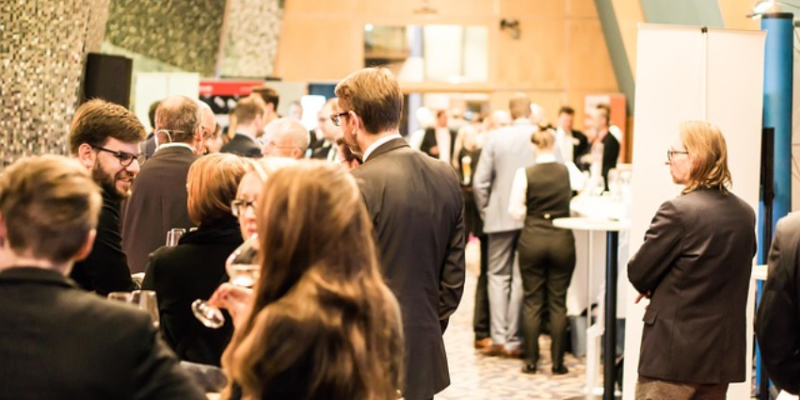
Most professional events in Lausanne follow a recognizable format: a structured opening segment, whether a talk, workshop, or short conference, followed by an informal networking portion where most of the real contact-making happens. Arriving on time for the structured part and staying through the drinks is the expected pattern. Leaving immediately after the formal presentation signals disinterest and misses the point of being there.
Introductions are helpful but not strictly required at open or ticketed events. What matters far more is repeated attendance. Lausanne is a compact city where the same people circulate across multiple institutions and events, so reliability- showing up more than once and engaging around a shared topic- builds more credibility than any single well-handled introduction. Groups such as Lausanne International Toastmasters, which meets twice monthly in English, are specifically structured to give newcomers recurring chances to become recognizable rather than relying on a single cold approach.
Networking in Lausanne is bilingual in practice. French is the dominant language at most local professional associations, chamber events, and civic gatherings. English is common at EPFL-linked events, startup and deeptech forums, international sport administration gatherings, and explicitly international professional formats. Some sector fairs run both French and English sessions within the same program. Asking early which language a contact prefers is always reasonable. Several major professional networks in Lausanne, including PMI Switzerland's local chapter and Executives International, run their events in English, which gives newcomers a real entry point into the professional scene before French is fully operational.
Groups explicitly targeting international professionals and students expect attendees to register in advance, join structured activities, and engage around a common purpose. Private invitations into local social circles tend to follow several appearances at the same recurring event, not a single interaction. Follow-up after meeting someone is expected promptly: a short, personalized message within a day or two, referencing the specific event and one shared topic, is the standard practice. At events that use registration systems (such as PMI Switzerland's Lausanne apéros), canceling in advance when you cannot attend is a specific etiquette norm, so a waitlisted contact can take the place.
Lausanne's professional scene clusters around a handful of knowledge-intensive sectors: health and social care, life sciences and biomedical research, EPFL and UNIL-linked research and innovation, international sport administration, technology and startups, HR and business services, finance, insurance and law, and a dense congress and hospitality sector. Knowing which cluster fits your profile helps you decide which events and associations to prioritize.
The Chambre vaudoise du commerce et de l'industrie (CVCI), headquartered at Avenue d'Ouchy 47, is the main business network for companies operating in the Vaud economy. It offers training, advisory services, and regular professional events. Annual membership in the CVCI Business Club costs CHF 450 (approximately USD 500), prorated when joining mid-year. Individual event prices range from free workshops requiring only registration to a CHF 140 (approximately USD 156) masterclass and the Lausanne HR Congress, priced at CHF 480 to CHF 580 (approximately USD 534 to USD 645) for professionals and CHF 240 (approximately USD 267) for students and retirees. Most CVCI events require checking the CVCI site directly for current listings, as the calendar updates regularly.
Executives International runs monthly English-language business networking at Hôtel de la Paix Lausanne, targeting active professionals, executives, entrepreneurs, senior managers, and diplomatic contacts around Lausanne and the Léman region. All events are open to both members and non-members, making it the most consistently accessible English-language professional networking format in the city. For professionals with U.S. or U.K. business ties, the Swiss-American Chamber of Commerce and the British-Swiss Chamber of Commerce also organize panel discussions, luncheons, and briefings across French-speaking Switzerland, though their focus is bilateral trade rather than general Lausanne integration.
HR Vaud is the professional association for HR practitioners from public and private, local and international organizations across the Vaud region. Its annual program includes conferences, round tables, workshops, afterworks, and webinars, making it relevant not only for HR professionals but also for anyone building or managing a team in the Lausanne area.
For life sciences contacts, the BioAlps Association holds its annual Networking Day at Palais Beaulieu Lausanne each autumn, bringing together life sciences, digital health, research, entrepreneurship, and investment contacts from across Western Switzerland. BioAlps is headquartered at Biopôle SA in Epalinges, placing it squarely within Lausanne's life-sciences cluster. Another major annual touchpoint for anyone in events, communications, or marketing is the Swiss LiveCom Association networking event at Beaulieu Lausanne, held each summer, which brings together live communication professionals across French-speaking Switzerland.
The Beaulieu Lausanne congress agenda is the single most useful source for tracking large professional gatherings in the city. Key annual sector events include Ilmac Lausanne (chemistry and life sciences, with a networking lunch and apéro, held each September), the Salon RH trade fair and conference for French-speaking Switzerland (every October), and the MassChallenge Switzerland Awards Ceremony for startups and innovation (also in October). Checking the Beaulieu agenda at the start of each season gives a clear picture of which professional communities are active.
For deeptech and investment networking, the EPFL Investor Day at the SwissTech Convention Center connects investors with breakthrough deeptech startups from EPFL and Western Switzerland, with an afternoon session open to all attendees. Students and early-career arrivals will find the Career Networking Fair at HEC Lausanne (held each October at Amphipôle) particularly useful; the format includes a shared networking break and a closing aperitif alongside company recruitment stands and graduate program presentations.
The Smart Cities and Sport Summit in Lausanne draws professionals from sport federations, Olympic legacy organizations, clubs, cities, and companies, making it a natural gathering point for the many international professionals in the city connected to sport governance and administration.
On the innovation side, theEPFL Innovation Park on the EPFL campus is the main destination for deeptech, life sciences, cleantech, AI, cybersecurity, and digital health startups. Within it, La Forge incubates early-stage EPFL-linked startups, and The Station is a community space hosting workshops, meetups, and co-creation sessions open to founders and students. Impact Hub Lausanne runs a parallel community focused on impact entrepreneurship, with Free Coworking Fridays and an Open Hub Day as accessible entry points. 42 Lausanne hosts collaborative digital-skills events, including hackathon-style AI sprints that bring together tech professionals and SME contacts in a less conventional networking format.
PMI Switzerland Chapter organizes English-language project management networking apéros in Lausanne on a recurring basis. Registration is required, and spots are limited, so organizers explicitly request that you sign up in advance and cancel if your plans change. Check the PMI Switzerland events calendar for upcoming Lausanne editions.
Join the Lausanne community
Get regular tips and advice to make the most of your expat life
Expat networking in Lausanne
Lausanne has enough English-language and international channels to build an initial social circle within the first few weeks, particularly through Meetup groups, community platforms, and student or professional networks. The practical risk for newcomers is staying permanently within that circuit; combining at least one French or bilingual setting alongside an international one is the most effective way to build connections that outlast the first year.
The Lausanne Social Club on Meetup explicitly welcomes people new to Lausanne or Switzerland, including students, professionals, artists, and retirees. Its recurring formats include monthly coffee mornings, Jeudredi (Thursday-Friday crossover) after-work gatherings, aperitifs, board-game evenings, and sports outings. It is one of the most accessible low-barrier entry points for meeting a genuinely mixed local and international crowd.
Meet People Social Lausanne runs weekly social events for international locals, travelers, expats, and students, with language practice across English, Spanish, French, German, Japanese, Korean, and Mandarin. It is particularly useful for newcomers who want a structured multilingual social setting before committing to a single-language community. glocals Lausanne provides a web-based alternative to Meetup, with a dedicated city page used for local activities, information exchange, and language-buddy listings.
For structured language exchange, GoSocial Lausanne uses table flags at each session to show which language is being spoken at a given table, so newcomers can join the right conversation immediately. WhatsApp coordination links are shared after contacting the organizer. Sprachtandem.ch lists Lausanne participants looking for one-to-one language tandem partners across multiple languages, which suits newcomers who prefer repeated private exchanges over bar-format events. François en Jeu offers structured French courses in Lausanne for those who want classroom-format learning alongside social practice.
The Bureau lausannois pour les immigrés (BLI) is the City of Lausanne's official service for newcomer and immigrant inclusion. Its online resources include the "Apprendre à Lausanne" training directory and multilingual integration information, making it a practical first stop for understanding which French courses, civic orientation sessions, and community programs the city offers. Action-Parrainages complements this with a one-to-one sponsorship and friendship initiative that pairs newcomers with local contacts around shared activities, suited to those who prefer a personal integration route over group events.
Good to know:
Families with young children can look for Booketins, a bilingual English-French parent-and-child storytime group that meets at the library. It is one of the few Lausanne community formats built specifically around English-language parent socializing, and it doubles as a practical way for parents to meet other families in the early months.
Social clubs and groups in Lausanne
Lausanne has nearly 300 sports associations and clubs across approximately 70 disciplines. The City of Lausanne sports-club directory is the safest starting point: it covers football, martial arts, rowing, tennis, running, gymnastics, water sports, and neighborhood-based activities, and the municipality notes that most clubs allow one or more trial training sessions before registration. Choosing a sport or activity that fits your schedule and then attending regularly is consistently the most effective way to build lasting local contacts in Lausanne.
For running and casual outdoor sport, Meetup Lausanne's sports and hobbies listings include lakeside yoga, volleyball-style lake gatherings, and outdoor social activities. Running clubs appear repeatedly in newcomer discussions as among the most accessible recurring formats: the group session structure removes the awkwardness of one-on-one introductions, and coordination typically happens through WhatsApp or Instagram once you've attended an open session.
Water sports draw their own community at Port de Vidy, where the Centre Lausannois d'Aviron, the Kayak Club Lausanne, and the Cercle de Voile de Vidy are all based. Rowing, kayaking, and sailing memberships are available by contacting each club directly or through the city directory. The Halles sportives de Beaulieu cluster several activity operators in central Lausanne under one roof: Urban Padel, Grimper.ch for bouldering, the Club Lausannois d'Haltérophilie et de Musculation for strength training, Halle13 for roller sports, and Swiss Basketball for 3x3 basketball. This makes Beaulieu a practical first stop for newcomers who want recurring indoor activities with a built-in community.
AbFab Lausanne is an LGBTQIA+ sports association integrated into Lausanne and Swiss competitive sport, with community tournaments across Switzerland and Europe. The Club en Fauteuil Roulant Lausanne offers social and sporting activities for members including day outings, craft workshops, shows, and sports such as curling, fencing, tai chi, water activities, and choreographic dance; it is the primary Lausanne contact for newcomers seeking accessible social and sporting activity.
Language exchange clubs provide structured settings for meeting people around shared linguistic goals. GoSocial Lausanne's table-flag system makes it easy to find the right conversation on arrival. Alma Latina is a Spanish- and Italian-language leadership and public-speaking club meeting in Lausanne, structured around high-level communication development for participants who want to improve in their own language within a club format.
The International Women's Club of Lausanne (IWC) is a volunteer-run non-profit offering social, sporting, charitable, and cultural activities, with interest groups covering art, languages, sports, and cooking. Its "5 O'Clock Somewhere" event functions as a try-before-joining format: contact the events address to attend once before committing to membership. The International Club of Lausanne (ICL) operates in English as its working language and brings multinational members together for monthly outings and shared activities; it shares programming with the English Speaking and Anglo-Swiss Club of Lausanne, making both clubs natural entry points for English-speaking newcomers looking for social activities in their language.
Danzarte, based at Chemin de Pierrefleur 60 in Lausanne, is a multicultural association offering cultural events, dance, singing, French classes, and administrative support, combining social and integration-oriented activities in one place. The Centre Culturel Africain de Lausanne (CCAL) connects members of the African diaspora and cultural communities with cultural, entrepreneurship, and institutional resources in the city, including Pôle Sud, Plateforme 10, and the BLI.
For newcomers settling long-term, the Fondation pour l'Animation socioculturelle Lausannoise (FASL) runs neighborhood sociocultural centers throughout the city with family support and local community activities. Checking the FASL center closest to your neighborhood is a practical step for meeting residents outside the expat circuit, as these spaces operate in French and draw a genuinely local crowd rather than an international one.
Online networking in Lausanne
LinkedIn is widely used in Lausanne's professional ecosystem for event promotion, post-meeting follow-up, and visibility within executive, MBA alumni, and sector networks. The Club de Lausanne executive network has an active LinkedIn presence, and SwissMBAs Romandie promotes Lausanne networking apéros through the platform. LinkedIn is most effective when used to send a short, personalized connection request after an in-person meeting, referencing the specific event and a shared topic, rather than for cold outreach to contacts you have never met.
WhatsApp is the dominant tool for day-to-day social and professional coordination in Lausanne. GoSocial Lausanne uses it for event sign-ups and subgroup coordination; PAUSE-PAIRES, a social integration platform, directs Lausanne newcomers to WhatsApp activity groups for outings, sports, and events; and the Ladies Club Lausanne uses WhatsApp as its main communication channel. Facebook functions as a public-facing discovery layer for some groups, but ongoing activity typically moves to WhatsApp once you've made contact.
The main platforms for finding groups and events are Meetup (GoSocial Lausanne, the Lausanne Social Club, and Executives International all have active listings), glocals.com (with current activity posts and language-buddy listings), PAUSE-PAIRES (which creates local integration tandems and directs participants to WhatsApp groups), and Meet People Social Lausanne. A Lausanne Discord server is also referenced in recent newcomer threads on Reddit as an active social group option; it is worth searching for in current newcomer discussions to find the active invite link.
Reddit's r/Lausanne community is active, with recent threads from newcomers seeking friends, language partners, running groups, book clubs, and general social-life advice. It is useful as a discovery tool and for asking which local groups are currently active, but verify any private group through an in-person event before joining remotely.
The overall dynamic in Lausanne is offline-first after online discovery: Meetup and LinkedIn help identify the right event; WhatsApp handles logistics; the actual relationship-building happens at the apéro, breakfast, or club session. A cold LinkedIn message to a Lausanne contact you have never met in person is consistently less effective than attending one open event and connecting afterward. French is the default in locally oriented online groups, while English is commonly accepted in newcomer and international communities.
Open every professional encounter with a polite, concise introduction: who you are and why you are in Lausanne, followed by a genuine question or comment. At French-language events, use vous and surnames unless explicitly invited to switch; at clearly international events, follow the other person's lead. Have a clear two-sentence professional background ready before any structured event. What you do and what you are working on is enough to start; requests for referrals or introductions come later, after some trust has formed.
Repeated attendance matters more than collecting contacts at a single event. Lausanne is small enough that people reappear across institutions: the person you meet at a CVCI workshop may also turn up at a sector apéro or a sport club session. Choosing one or two recurring formats that match your sector or interests and attending consistently for several weeks is far more effective than rotating through many one-off events. Reliability signals credibility, and in a city where professional and social circles overlap, that credibility transfers.
Punctuality matters at registered professional events, workshops, business breakfasts, and language exchanges. These formats use fixed start times and limited capacity. If you are delayed, send a brief message. Informal social meetups allow some flexibility, but repeated lateness in any format erodes the reliability that newcomers need to establish early.
Follow-up after a professional encounter should arrive within a day or two. Write a brief, specific message in the language used at the event, reference where you met and one concrete shared topic, then propose one realistic next step: a coffee, a useful link, or a third-person introduction. At chamber or association events, a LinkedIn message or email is appropriate. In social or language-exchange settings, a lighter message proposing the next meetup is safer than an immediate professional pitch. Never send a CV or referral request as a first follow-up unless you were explicitly asked to.
The most common mistakes newcomers make in Lausanne are treating the city as a purely English-speaking expat environment and missing the French-language events where most local professional contacts form; moving too quickly toward referrals or job requests before trust has been established; and relying only on online groups rather than joining recurring in-person activities. Stronger ties in Lausanne typically come through French-language professional associations, sports clubs, volunteering, and cultural events, not a single expat drinks gathering.
Use French as the default opening language, even at events where many attendees also speak English. A brief opening in French before switching signals commitment to local integration and is consistently noted as a trust-builder among long-term residents. Even a basic greeting in French at the start of a professional encounter, before switching to English, carries real social weight in Lausanne's local professional circles. For Spanish- and Italian-speaking newcomers, multilingual meetups provide useful practice, but functional French remains the most direct path to credibility in local professional settings.
Have questions about life in Lausanne? Join the Expat.com community to connect with expats who have already been through the process.
Frequently asked questions
Lausanne's professional scene runs on structured, scheduled events rather than spontaneous socializing: sector-specific afterworks (apéros), chamber gatherings, university career fairs, and hobby-based clubs are the main entry points. Most events follow a semi-formal format with a structured opening followed by an informal drinks session where real connections form. Repeated attendance matters more than showing up to a single event; joining a recurring format and appearing consistently is how trust is built in this city. See the Networking culture section above for more detail on what to expect at a first event.
Executives International runs monthly English-language business networking at Hôtel de la Paix, open to members and non-members alike. For sector-specific contacts, BioAlps serves life sciences professionals, PMI Switzerland hosts project-management apéros, and the HEC Lausanne Career Networking Fair is open to students and early-career arrivals. The Chambre vaudoise du commerce et de l'industrie (CVCI) covers a broad range of Vaud-based businesses through workshops, masterclasses, and its Business Club. The Beaulieu Lausanne events calendar and Meetup networking listings are the most practical ongoing sources for discovering new professional events.
Introductions are useful, especially in professional and sector-specific circles where trust develops incrementally through repeated contact. Structured formats such as executive networking clubs, sector afterworks, and mentoring-linked events are built around warm introductions. For a newcomer, the most effective approach is to attend an open event first, build one genuine conversation, and then request a specific introduction by naming who you are, why the connection is relevant, and what realistic next step you are proposing.
Yes. LinkedIn is active across Lausanne's professional ecosystem for event promotion, executive network building, MBA alumni connections, and sector community visibility. It is most effective when used to follow up after an in-person meeting with a short, personalized note referencing where you met and a shared topic. Cold outreach on LinkedIn without a prior meeting is considerably less effective than attending one open event and connecting afterward; this is particularly true in the English-dominant professional niches around EPFL, PMI Switzerland, and executive networks.
Yes. The Lausanne Social Club and Executives International both maintain active Meetup listings with recurring events for international residents. Meet People Social Lausanne holds weekly multilingual social events, and glocals Lausanne provides an online community platform with activity posts and language-buddy listings. For the most reliable access to WhatsApp coordination groups and private community channels, attending an in-person event first is the practical route, as organizers typically share those links after a real-world contact rather than in response to cold online requests.
Making lasting connections in Lausanne takes deliberate effort; casual friendships rarely form through work alone. Sports clubs, language exchanges, coworking communities, cultural associations, and recurring neighborhood activities are the most consistent routes. The most effective strategy is to commit to one recurring activity in a bilingual or French-language setting and one international social format, attending both consistently for several weeks before expecting lasting connections to develop. Action-Parrainages, a Lausanne-based friendship and sponsorship initiative, offers a structured one-to-one integration route for those who prefer that format over group events.
French is the default at most local professional associations, chamber events, and neighborhood civic groups. English is common at EPFL-linked events, startup gatherings, international sport administration networks, and explicitly international professional formats such as Executives International and PMI Switzerland. A practical rule: open in French when approaching local or civic groups, use English at clearly international events, and ask the contact early which language they prefer. Many event pages in Lausanne are published in both languages or in English alone.
The most common errors are staying exclusively within English-speaking expat circles and missing the French-language professional events where most local contacts form, asking for referrals or job leads before trust has been established through several interactions, and substituting online group membership for regular in-person attendance. Lausanne is a small city where the same people reappear across institutions, so reliability and patience build more trust than collecting contacts at a single event. Stronger ties in Lausanne consistently come through recurring local activities rather than one-off international drinks events or cold LinkedIn outreach.
LinkedIn, email, or an organizer's member channel are the standard follow-up routes after a professional event in Lausanne. The message should arrive within a day or two, reference the specific event and a shared topic from the conversation, and propose one concrete next step such as a coffee meeting, a useful link, or an introduction to a third contact. WhatsApp is used for coordination within established groups, but is typically introduced by the group organizer rather than exchanged on first contact.
Yes, particularly for freelancers, founders, and newly arrived professionals. Work'n'Share, near the lakefront, runs an active coworker community with apéros, sports outings, and knowledge-sharing events; day passes run CHF 37 to CHF 41 and hot-desk monthly memberships cost CHF 150 to CHF 250. Impact Hub Lausanne offers Free Coworking Fridays and community events, while Eclau provides a small coworking association with simple monthly access options. Coworking spaces are most useful for networking when you attend their events or use the space regularly rather than booking a single day pass.
ℹ️
We do our best to provide accurate and up to date information. However, if you have noticed any inaccuracies in this article, please let us know in the comments section below.
I fell in love with words at an early age After a break to focus on my studies, I rediscovered the joy of writing while keeping a blog during my years between London and Madrid. This passion for storytelling and for exploring new cultures naturally inspired me to create Expat.com, a space for my own reflections as well as for anyone wishing to share their experiences and journeys abroad.