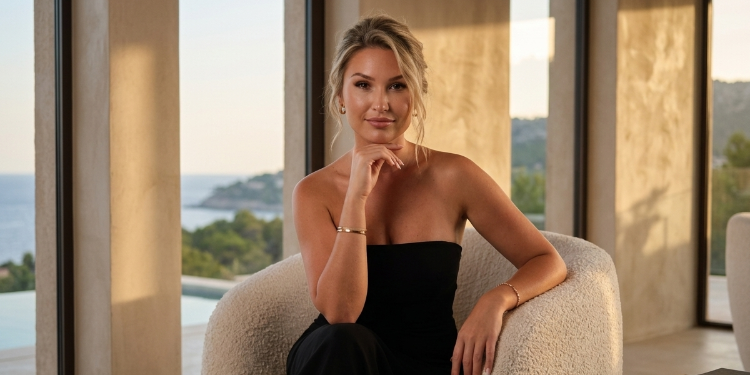
What if moving abroad could change not just where you live, but how you define success? For German entrepreneur Sandra Berger, relocating to Mauritius with her husband and daughter marked a new chapter in both her personal and professional life. From building an international business to empowering women entrepreneurs, she shares how island life has reshaped her ambitions, brought her family closer, and inspired her to explore new opportunities across Africa.
Could you introduce yourself and tell us about your professional background?
My name is Sandra Berger. I'm an international entrepreneur, leadership mentor, and speaker, specializing in women's entrepreneurship, leadership development, and financial independence.
My professional journey began more than 15 years ago in the beauty, hospitality, and management industries. Over the years, I built my own successful beauty business before expanding into international sales, digital entrepreneurship, and leadership development.
Since 2020, I've been building international organizations within the direct sales industry, working with entrepreneurs across different countries and cultures.
Today, my work focuses primarily on developing leaders, creating scalable business structures, and helping ambitious women acquire the skills they need to build successful businesses and achieve greater economic independence.
But my journey hasn't been a straight line. I've experienced extraordinary professional success, significant financial setbacks, and the challenges of completely reinventing a business.
Those experiences shaped my understanding of entrepreneurship far more than any theoretical education ever could.
My mission today is to redefine what is possible for ambitious women by equipping them with the skills, strategies, and leadership mindset to build successful businesses and create true economic independence.
Because I believe entrepreneurship should ultimately give people something much more valuable than money alone: the ability to make independent choices about their lives.
You had always dreamed of living on an island. Why Mauritius, and when did you decide to move?
For as long as I can remember, I knew I wanted to experience life beyond the country where I was born.
Growing up in Germany, I was surrounded by a relatively traditional understanding of what a successful life should look like. But even as a young girl, I questioned whether that was the only way to live.
As my entrepreneurial career developed, I began traveling internationally, building relationships with people from different countries and experiencing completely different approaches to business, family, and everyday life.
That changed my perspective enormously.
I realized that the environment we choose influences not only our lifestyle but also our ambitions, our relationships, and the opportunities we recognize.
When I became a mother, that realization became even more important.
My husband is Senegalese, I'm German, and our daughter is growing up with multiple cultural identities. I didn't want her to feel that her opportunities or sense of belonging were limited to one country.
I wanted her to experience the world as something open to her.
Mauritius offered a combination that was particularly attractive to us: an extraordinary natural environment, a multicultural society, international education, and the possibility of combining an ambitious professional life with a very different family lifestyle.
Our decision wasn't about escaping our previous life.
It was about consciously choosing the environment in which we wanted to build our next chapter. The world is her home. Not just one country, one culture, or one place she happens to come from.
Join the Mauritius community
Get regular tips and advice to make the most of your expat life
Did you know Mauritius before moving? What surprised you once you arrived?
We had visited Mauritius only once, for approximately ten days, before deciding to relocate.
For some people, that might sound spontaneous. But having built an international business, I had already learned that you don't necessarily need to have every detail figured out before making a major decision.
You need a clear direction, the ability to adapt, and the confidence that you can find solutions along the way.
After spending many years working extremely long hours, sometimes 70 to 75 hours a week, I had reached a point where I wanted to reconsider not only where I lived but how I wanted to live.
I had already achieved significant professional milestones. What interested me now was building an even more ambitious future without repeating every sacrifice that had brought me to that point.
What surprised me most about Mauritius was the quality of the international community and the entrepreneurial connections available here.
I met people from different industries, countries, and professional backgrounds who introduced me to perspectives I hadn't previously considered.
And something unexpected happened.
Instead of making me less ambitious, Mauritius made me dream bigger.
I began thinking beyond my own business success and asking myself how the knowledge, networks, and opportunities I had developed could contribute to creating economic opportunities for other people.
My perspective became much more international, particularly regarding Africa and emerging entrepreneurial markets.
Mauritius didn't just change where I live. It expanded the vision of what I want to accomplish with my life.
You wanted your daughter to grow up near the sea and in a healthy environment. What does that mean in everyday life?
For me, the ocean has always represented freedom, energy, and possibility.
There's something extraordinary about living in an environment where the horizon seems endless. I genuinely believe that our surroundings influence the way we think and the possibilities we allow ourselves to imagine.
Today, we live directly by the Indian Ocean.
Sometimes I'm working on an international business call while looking outside and seeing my husband and daughter playing on the beach.
And within minutes, I can join them.
That might sound like a small thing, but after spending so many years building my career, I understand how valuable those moments are.
Our afternoons often involve swimming, walking along the beach at sunset, collecting shells, or listening to our daughter invent stories about the creatures living in the ocean.
But a healthy environment means much more to me than beautiful nature.
I believe a healthy family begins with meaningful relationships, and meaningful relationships require quality time.
That includes our relationship as a couple.
My husband and I consciously make time for each other, whether that's exercising together, enjoying a quiet morning, or occasionally taking a spontaneous boat trip while our daughter is at kindergarten.
For me, success means creating a life in which professional ambition and meaningful family relationships can exist together.
The greatest paycheck of my life isn't the money I've earned. It's the freedom to be present for moments that money could never buy.
How has your daughter settled in? What does she enjoy most about life in Mauritius?
Our daughter has been traveling internationally since she was a baby, so adapting to different countries and environments has always been a natural part of her life.
When I became a mother, I never believed that motherhood meant I had to abandon my professional ambitions.
Instead, I learned how to integrate my daughter into the life I was already building.
She accompanied me through different stages of my entrepreneurial journey, including international travel and the development of my businesses.
Today, it's completely normal for her to ask questions like, “Mommy, when are we going to Dubai?” or “Are we going to Bali?”
She doesn't associate traveling with something extraordinary or intimidating. To her, discovering new places and meeting people from different cultures is simply part of life.
And Mauritius has become a particularly beautiful part of that experience.
She's an absolute island girl.
She loves the ocean, swimming, diving, and spending time in the water. If she could, she would probably spend half her day swimming.
What I value most, however, is the adaptability she's developing.
I want her to understand that unfamiliar environments don't necessarily have to feel threatening. They can be exciting opportunities to discover something new.
For us, Mauritius was a conscious decision.
For her, it's simply another beautiful place she gets to call home.
As a family with German and Senegalese roots, what were you hoping your daughter would experience growing up in Mauritius?
Perhaps the easiest way to explain this is to start with what I didn't want her to experience. I didn't want my daughter to grow up feeling that she had to choose between two worlds.
I didn't want her identity, her opportunities, or her sense of belonging to be defined by her skin color, nationality, or family background.
Of course, discrimination exists in many societies, including multicultural ones. But I wanted to give her an environment where diversity is part of everyday life rather than something she constantly has to explain.
Mauritius offers an extraordinary combination of cultures, languages, religions, and traditions. Our daughter is growing up surrounded by people whose families come from different parts of the world.
She's exposed to English, French, and Mauritian Creole, while our own family also brings German language and traditions, Senegalese culture, Wolof, and both Christian and Muslim influences into her life.
I want her to understand and respect different beliefs, from the Hindu traditions she encounters in Mauritius to the traditions within her own family.
But there's another dimension to this that matters deeply to me as an entrepreneur.
I've learned that a significant part of what we achieve in life is influenced by the people we know, the relationships we build, and the perspectives we're exposed to.
I want my daughter to develop friendships and connections that extend across borders.
Not because I expect her to become an entrepreneur, but because I want her to have the confidence, understanding, and opportunities to choose her own future.
I don't want my daughter to grow up thinking she is half German and half Senegalese. I want her to understand that she is fully herself, enriched by every culture, language, and experience that becomes part of her life.
What has been easier for your family here than expected? What has required more adjustment?
Interestingly, organizing our everyday life was much easier than we expected.
Finding a home, arranging transportation, and discovering excellent international education options for our daughter all happened relatively smoothly.
We were able to establish a comfortable family routine quite quickly.
The biggest adjustment wasn't actually related to Mauritius itself.
It was related to how my professional life was perceived by people who had known me before.
For years, my personal brand had been closely associated with an extremely demanding work ethic, long working hours, and a very visible commitment to building businesses.
Suddenly, people were seeing photographs of palm trees, beaches, and a completely different lifestyle. And for some, that created the impression that I had somehow stepped away from my business. In reality, the opposite was true.
I had become more focused, more strategic, and, during certain phases, even more intensely involved in developing my organization.
The difference was that I had created better systems, stronger leadership structures, and a family environment that allowed me to work more effectively.
It taught me an interesting lesson about leadership and perception.
People often associate ambition with visible stress.
But a successful business doesn't have to look exhausting from the outside.
Freedom doesn't mean working less. It means having the power to decide how, when, and where you work.
You started in beauty and education and today you're an international speaker, leadership trainer, and sales entrepreneur. What prompted that change?
I don't think I ever truly changed my career. I evolved as an entrepreneur.
I grew up in an ordinary working family. We had what we needed, but wealth, entrepreneurship, and financial independence weren't things I experienced through successful business owners in my immediate environment.
Even as a child, I was fascinated by the idea that some people lived completely different lives.
I remember wondering who the people were flying business class or owning beautiful yachts, and what they had understood about creating wealth that I hadn't learned yet.
I knew I wanted to discover that.
But I also understood early on that ambition without competence wouldn't take me very far.
So I invested years in education and professional experience, working internationally across beauty, hospitality, and management.
Those industries taught me discipline, communication, resilience, service excellence, and the ability to understand people.
Eventually, I returned to Germany and built my own successful beauty institute. My business became fully booked, clients traveled to see me, and financially I was doing very well. Then COVID changed everything.
The disruption left my business facing more than €200,000 in debt.
That experience forced me to reconsider the entire structure of my business.
I realized that although I had built something successful, I was still operating within a model that depended heavily on my personal presence and performance.
So I began educating myself in digital entrepreneurship and sales, learning from mentors and developing new business models alongside my existing company.
Over time, I moved from providing services myself to building scalable sales organizations, developing leadership systems, and mentoring other entrepreneurs.
It was an evolution from being self-employed to understanding what it truly means to build a business that can grow beyond your personal working hours.
Today, I'm still actively building businesses. I haven't stepped away from entrepreneurship to teach it from a distance.
My leadership education, mentoring, and speaking are grounded in the challenges I continue to experience and solve as an entrepreneur.
And as my career has developed, so has my sense of responsibility.
I increasingly want to use the knowledge, experience, and platforms I've earned to help other women access opportunities that may once have seemed out of reach.
I didn't become a leadership mentor because I stopped building businesses. I became one because I learned what it actually takes to build them.
What does your everyday life look like? How do you balance travel, work, and raising a young child?
One of the biggest misconceptions about successful entrepreneurship is that success automatically requires endless working hours.
Of course, building a business demands extraordinary commitment, especially in the beginning.
But today, my main responsibility is developing independent leaders who can build and scale their own organizations.
Rather than personally managing thousands of people, I work closely with a selected group of key leaders, helping them develop the skills and structures to lead independently.
That allows me to organize my everyday life very intentionally.
Living in Mauritius is particularly convenient because of the time difference with Europe, where a significant part of my organization operates.
Our mornings are relatively slow.
My husband and I usually take our daughter to kindergarten around 9 a.m. We often go to the gym afterward, something we prioritize around four times a week.
Around midday, I begin approximately four hours of focused work, concentrating on business development, strategic decisions, and leadership mentoring.
In the afternoon, we usually pick up our daughter and spend time together as a family. Once she's asleep, I often return to international meetings, leadership calls, or training sessions.
Traveling is equally flexible. Depending on the destination, we either travel together or my husband and I travel independently. The excellent childcare and educational environment we've found in Mauritius provide tremendous support.
But when it comes to raising my daughter, there's something I consider even more important than how we organize our schedules.
It's the example I set for her every day.
I believe children learn enormously from observing how their parents live.
My daughter watches how we approach challenges, how we make decisions, how we solve problems, and how we respond when something doesn't go according to plan.
Those experiences influence how she interprets situations, how she feels about them, and the choices she makes.
I don't want her to grow up believing that success must mean constant stress, exhaustion, or sacrificing the people you love.
I want her to see that ambition, discipline, family, and personal freedom can coexist.
The most powerful lesson I can teach my daughter isn't what I tell her about life. It's the life she watches me build.
How do you manage your business remotely? Has moving to Mauritius changed the way you work or the markets you want to reach?
Mauritius didn't make my business more remote. It made my vision more global.
My business was already operating internationally before we relocated, but moving created an important shift in both my leadership approach and my understanding of international markets.
When I physically left Europe, I created space for other leaders to take greater responsibility, strengthen their local teams, and develop their own leadership capabilities.
That was an important step in building an organization that could continue growing independently of my physical presence.
But the biggest transformation has been my understanding of cultural differences.
When you build a business primarily within Europe, it's easy to develop strategies around relatively familiar consumer behavior, communication styles, and business expectations.
Living in Mauritius has connected me with entrepreneurs and professionals from very different markets.
And I've learned that a strategy that works brilliantly in Germany may require an entirely different approach in South Africa, India, Senegal, or Indonesia.
Every market has its own purchasing behavior, cultural dynamics, educational expectations, and attitudes toward entrepreneurship.
Global expansion isn't simply about bringing your business into another country. It's about understanding the people who live there.
That understanding has influenced how I develop leadership systems. They need to be scalable and replicable, but also flexible enough to adapt to local markets.
The company I work with operates in more than 130 countries, and our organization already has partners across numerous international markets.
Yet in many of those countries, our organization's presence is still at a very early stage. That represents enormous potential.
Africa, in particular, has become significantly more interesting to me, and Mauritius itself is a fascinating place to observe entrepreneurial development.
My ambition is no longer simply to build a successful international business.
It's to develop leaders and organizations capable of growing across cultures, countries, and continents.
Your original Mission 100 has evolved into Mission 25,000. What is the vision behind this movement, and why do you want to expand this work across Africa?
Mission 100 originally started in the German-speaking market with a simple goal: helping 100 women build an additional online income of €1,000 per month.
But as our organization grew, so did the vision.
More entrepreneurs and established leaders joined us, and what began as a relatively small initiative evolved into something much bigger.
Today, we call it Mission 25,000 — our ambition to help 25,000 people develop opportunities to earn an online income, build entrepreneurial skills, and create greater financial independence.
But this movement is about much more than numbers.
One of my biggest missions is to challenge the leadership gap within the direct sales industry.
Women are a driving force behind this industry, yet the highest leadership positions remain disproportionately male.
And I believe it's time to change that.
Women often bring different strengths, perspectives, and approaches to leadership. Yet many are still trying to succeed within structures that don't necessarily reflect their individual circumstances or strengths.
I don't believe women need to lead like men to become extraordinary leaders. I believe they need the right skills, strategies, and systems to succeed by embracing their own strengths.
That's why my work focuses on developing female leaders through practical leadership education, scalable business structures, digital strategies, and AI-powered tools.
My vision isn't simply to bring more women into entrepreneurship. It's to see more women leading at the very highest levels.
And this is where Africa becomes particularly exciting to me.
I genuinely believe Africa is one of the most interesting entrepreneurial regions in the world today.
For centuries, colonial exploitation and structural inequalities restricted economic opportunities across much of the continent. Yet Africa has always possessed extraordinary talent, ambition, creativity, and entrepreneurial potential.
What is changing today is access.
Digital business models, technology, international networks, and online education are creating opportunities that were far more difficult to access just a generation ago.
Through conversations with entrepreneurs across different African markets, I've experienced an incredible determination to build, innovate, and create economic independence.
I don't see Africa as a continent waiting for opportunities. I see a continent increasingly creating its own.
I believe the next three to five years will bring significant entrepreneurial transformation across many African markets.
And looking further ahead, I genuinely believe Africa has the potential to become one of the world's most influential economic and entrepreneurial forces.
That's a future I want to contribute to.
Not by bringing European business models into African markets and expecting them to work unchanged, but by collaborating with local entrepreneurs, developing strong leaders, and building systems that respect the cultures and opportunities of each market.
Ultimately, Mission 25,000 is about creating a movement that extends beyond individual success.
I don't just want to build successful businesses. I want to develop leaders who create opportunities for thousands of others — and I believe Africa will play an extraordinary role in that future.
What do you think women are most often promised about entrepreneurship that doesn't match reality?
I think one of the biggest misconceptions women are sold about entrepreneurship is that we all have the same 24 hours and the same opportunities to succeed.
Because the truth is, we don't.
Many women are building businesses while simultaneously carrying responsibilities that are rarely reflected in traditional entrepreneurial success stories.
Motherhood, household management, relationships, and the emotional responsibility of being there for everyone else often exist alongside the demands of building a company.
And then we're told that success is simply a matter of discipline, motivation, and working harder. But I believe we need to acknowledge something important:
Women don't always operate under the same conditions as men, and pretending otherwise doesn't create equality.
Even our physical energy and emotional well-being can fluctuate throughout the month due to hormonal changes. Yet we're often expected to perform with the same intensity every single day, as though our bodies and circumstances never change.
I don't believe the solution is to lower our ambitions. Quite the opposite.
I believe women need to become exceptionally skilled at understanding their own strengths, managing their energy, building effective systems, and developing leadership strategies that work with their lives rather than constantly against them. Because motivation alone won't build a sustainable business.
Skills, discipline, resilience, and the right structures will.
And I think we also need to be much more transparent about what entrepreneurship actually demands.
It will be harder than you expect. It will take longer than you think. But if you build it the right way, it can become more rewarding and give you more freedom than you ever imagined.
That's the reality I want women to understand.
Not because I want to discourage them from becoming entrepreneurs, but because I want them to succeed.
What would you tell a woman who is interested in entrepreneurship but feels wary of moving abroad?
First of all, you don't have to leave your country to become successful.
But you should never let the borders of your comfort zone determine the size of your life.
My advice would be to stop asking yourself whether you're brave enough and start asking yourself what you actually want your life to look like.
Because once you have a clear vision, you can begin identifying the skills, resources, and relationships you need to make it a reality.
And this is where I believe mentorship becomes absolutely essential.
Throughout my entrepreneurial journey, I've consistently surrounded myself with people who had already achieved what I was working toward.
I learned from their experiences, their decisions, and their mistakes.
I didn't simply choose destinations because they were beautiful or exciting.
Many of my travels, including frequent visits to Dubai, were connected to mentors, entrepreneurs, and environments that challenged me to think bigger.
Your environment has an enormous influence on what you believe is possible.
If you want to build an extraordinary life, spend time with people who are already living in ways that inspire you.
Learn how they think, how they solve problems, and how they make decisions.
Moving abroad can be an incredible experience, but it can also introduce additional challenges, particularly when you're still trying to establish yourself professionally or financially.
That's why I believe in building the right foundation rather than making life-changing decisions purely out of emotion.
And this is also something I want to teach my daughter.
I want her to grow up understanding that the world isn't something she needs to be afraid of. It's a world she has the freedom to explore.
But freedom also requires resources, skills, and the ability to make independent decisions. Money, to me, has never been the ultimate goal.
It's a tool that can give you something far more valuable: choices.
Most importantly, I want her to develop a solution-oriented mindset.
Whenever she faces a challenge, I want her to ask herself: What exactly do I want to achieve? What do I need to learn? And who can help me find the right solution?
Because asking for guidance isn't a weakness. It's one of the most powerful ways to accelerate your growth.
You don't need to have all the answers. You need the courage to define your vision, the discipline to develop your abilities, and the wisdom to learn from people who are already where you want to be.
And once you understand that, the world becomes a place of possibilities rather than limitations.
A journalist, holder of the DALF C1 and C2 and a diploma from the University of Mauritius, I have nearly twenty years of writing experience. After six years in the Mauritian press, I joined Expat.com, where I have been working for over a decade, including five years as editorial assistant, and now as editorial manager.