



Veedushi Bissessur
@Veedushi
Mauritian citizen
Forum posts
1643
Contacts
68
About me
Mauritian
Lives in Quatre Bornes
Speaks Français, anglais, créole, hindi
Registration: 02 April 2013
About
Beyond writing, I have a deep passion for exploration, whether hiking through nature and mountains, discovering the island's most secluded beaches and waterfalls, or trying out new restaurants and dishes. Always happy to share a good tip, so don't hesitate to get in touch!
Occupation
I am Editorial Manager for Expat Blog Ltée
My expat journey

Quatre Bornes, Mauritius
Articles written or translated by Veedushi Bissessur

Brazil has no single emergency number, since police, ambulance, fire and civil protection each answer on their own three-digit line, and 112 or 911 from a mobile phone reach only the Polícia Militar (state uniformed police). The line you dial depends on the emergency, and in a medical emergency, it helps to know that hospital care isn't conditional on a deposit or guarantee. Beyond the call itself, you will want to save the numbers, know which natural hazards your region faces and have a route to replace your documents if they are lost or stolen. Flood and landslide alerts reach some phones without any registration, but SMS, WhatsApp and Telegram warnings need a postal code you register yourself before the rain.
21 October 2026
Brazil lets foreign individuals and foreign companies own an ordinary limited-liability company outright, with no Brazilian equity partner, but the right to live in the country or work for the business comes from a separate immigration application. That distinction runs through every stage of setting up. Registry fees change from state to state, banks set their own account-opening checklists, and hiring adds employer contributions on top of salary. Taxes are also moving toward new consumption levies while corporate and dividend rules keep changing. National growth of 2% year-on-year says little about demand in your sector, which is why regional hubs such as Campinas, Florianópolis, and Recife matter as places to test an idea.
16 October 2026
Brazil's roads vary widely from one route to the next, and only 10.1% of the federal and key state roads assessed are rated excellent. That makes the first decision whether you need a car at all, since São Paulo's subway and commuter rail can replace one for many daily trips while intercity travel and rural areas leave few alternatives. If you do drive, your foreign license is recognized for up to 180 days from the day you enter, after which you convert it or take local tests. Rental, insurance, registration, tolls and parking each follow their own rules, and some of them differ from one state to the next.
16 October 2026
Metro, bus and ferry services in Brazil run city by city under separate operators, so a single metro journey costs BRL 5.40 (USD 1.07) in São Paulo and BRL 7.90 (USD 1.57) on Rio de Janeiro's metro, MetrôRio. You will need to decide which payment card or app fits the city where you live, which ride-hailing service works there, and whether your commute justifies a car at all. Reliability varies as much as fares do, and bus punctuality is the improvement riders ask for most. In São Paulo, the Bilhete Único (the rechargeable travel card) that holds every fare product requires your own CPF (taxpayer registration number), which foreigners can request online before their first ride.
16 October 2026
Most short trips to Brazil, whether for tourism, business meetings, conferences, or visiting family, fall under a single visa category capped at 90 days and not allowing paid work. Getting in is straightforward for many nationalities, but not all: European, British, Irish, South African, Japanese, and most Latin American travelers can skip the visa altogether, while U.S., Canadian, and Australian citizens must secure an electronic visa before they fly, since Brazil doesn't issue one at the border. Even then, a visa only creates an expectation of entry, and officers can still ask for proof of funds, accommodation, and onward travel on arrival. Anyone tempted to stretch a visit past the allowed days should know fines scale up fast, reaching BRL 10,000 for the longest overstays, and repeated border runs don't reset the clock as some travelers assume.
12 October 2026
Dating in Brazil runs through several channels at once, including mutual friends, travel, social networks and apps. Among smartphone users, 23% say they have met someone through a dating app, which makes apps a mainstream route. Beyond the phone, free language-exchange evenings and cultural classes in Rio de Janeiro and São Paulo give newcomers regular places to meet people, and most practical details focus on those two cities. Brazilian law also recognizes cohabiting couples as a legal union once they intend to build a shared life, with no minimum duration, and that has consequences for property and, for foreign partners, for residency.
09 October 2026
Brazil's public health system, known as SUS (Sistema Único de Saúde), covers prenatal care and birth for foreign residents, regardless of their immigration status. Private insurance is not required to use it. The rest of the journey follows local rules, from a national health card issued at a local clinic and a prenatal schedule of at least seven visits to a birth culture in which cesareans account for 60.6% of deliveries. A baby born in Brazil is normally Brazilian by birth, and you have 15 days to register the birth before you can start the passport application. Timing also matters for private cover, since a health plan can impose a waiting period of up to 300 days for a term birth.
09 October 2026
Working legally in Brazil starts with immigration paperwork, not a job offer alone. Foreign professionals need a residence authorization tied to their work, filed differently depending on whether they are still abroad or already in the country, before any employment contract becomes a valid basis for staying. Brazil organizes this system by the nature of the activity rather than a single national threshold. An employment contract, self-employment, research work, investment, and a corporate transfer each follow their own set of rules, documents, and timelines. Sponsorship ties your status closely to your employer and role. Changing either one triggers a notification requirement, and losing your job can open a formal review of your residence. Understanding which category fits your situation, and what happens if your circumstances change, matters as much as the paperwork itself.
06 October 2026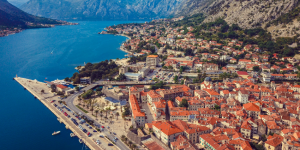
Hotels, restaurants, and building sites account for the largest share of the work permits Montenegro plans to issue to foreign workers in 2026, which tells you where most openings for newcomers are. Pay follows a wide spread, with average net earnings of about EUR 1,040 (USD 1,172) a month and finance at the top of the scale. Getting hired still takes some groundwork. Some professional posts ask for Montenegrin as well as English, regulated fields such as engineering need more than a recognized diploma, and coastal resort employers increasingly run their selection online with video interviews. Once you sign, Montenegro's Labor Law (Zakon o radu, the main statute governing employment relationships) sets your contract, hours, leave, and dismissal protections on the same terms as for Montenegrin employees, with short deadlines that reward knowing your rights in advance.
02 October 2026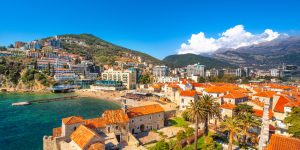
Finding a home in Montenegro means choosing between very different markets. In Podgorica and inland Nikšić, most homes are lived in all year, while in Budva, Ulcinj, and the mountain town of Žabljak, a third or more of the housing is built for seasonal use. Rents have also risen every year since 2023, with an 18.5% increase in 2025 alone, so prices that circulated a few years ago no longer hold. Montenegro's rental rules add their own steps to the search. A lease only becomes valid once a notary certifies it; foreigners must register their stay within 24 hours of arrival; and the ownership document your landlord hands over can later support a residence permit application.
02 October 2026
Montenegro lets you own 100% of a company and register it for a EUR 15 (USD 17) fee, yet owning that company gives you no right to live or work in the country. That gap shapes the first decisions you face as a foreign founder, from choosing a DOO (Društvo sa ograničenom odgovornošću, a limited liability company) that you can form remotely, to applying for a work and residence permit as its owner-director. After registration with the CRPS (Centralni registar privrednih i drugih subjekata, the Central Registry of Business Entities) come detailed bank checks, a progressive corporate income tax, and monthly value-added tax and payroll deadlines.
02 October 2026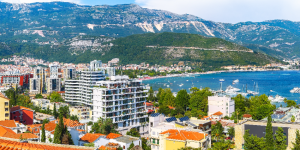
Foreigners already hold rights over more than 50,000 buildings and separate units in Montenegro, with the largest concentrations in coastal towns such as Budva, Kotor, and Tivat. You can buy as a foreign buyer, yet the law keeps some land out of reach, and a farmhouse with fields, a plot on an island, or a house near a land border needs a closer look before you commit. Ownership also stops short of residence, which remains a separate application. New-build prices have risen for three quarters in a row, and the purchase taxes added on top of the price shape your budget as much as the choice between the coast, Podgorica, and the inland regions.
02 October 2026
Moving to Montenegro for longer than a short visit means aligning your plans with one of the purposes the Foreigners Law (Zakon o strancima, Montenegro's main immigration statute) recognizes, from work or remote work to business, property purchase, study, or joining family. That choice decides which permit you file, what you pay, and how quickly your time in the country counts toward permanent residence, which requires five years of continuous lawful residence. Several routes, including the digital-nomad permit and the combined work permit, are applied for after you arrive, with deadlines counted in days. Nationality matters too, since citizens of the European Union, Iceland, Liechtenstein, Norway, and Switzerland are exempt from the EUR 150,000 (about USD 170,130) property threshold that applies to other buyers seeking residence.
02 October 2026
For a foreign national, marrying in Brazil comes down to one civil-registry process that applies the same way whether you're marrying a Brazilian partner or another foreigner, in a major city or a smaller town elsewhere in the country. The real hurdle is paperwork: a birth certificate, proof you're not already married, and a divorce or death record if you've been married before all need an apostille or consular legalization, followed by a sworn Portuguese translation done inside Brazil, before a cartório will even open your file. Same-sex couples marry under the same rules, registration fees vary widely by state, and a wedding held abroad counts in Brazil only after it passes through a Brazilian consulate and a domestic civil registry.
25 September 2026
Brazil ties nearly every step of a household move, from the customs treatment of a shipment to the deadline for registering with the Polícia Federal, to a single anchor point: the date you actually arrive. That date determines when movers should ship your belongings, how the customs window for household goods opens and closes, and how many days you have to complete registration once you land. The practicalities also shift with geography, since cost of living, healthcare access and school options in São Paulo look different from Rio de Janeiro or a smaller interior city, so where you settle carries as much weight as which visa route you take.
25 September 2026Activity
Water shortages in Mauritius: How are you coping with the cuts?
Hello everyone,Trust you're doing well.Water supply problems in Mauritius can make daily life challenging. We’d like to hear from you:Is your neighborhood experiencing water cuts? How often do they happen, and how long do they last?How do you ... Read More
Discover our new Living in Colombia Guide!
Hello everyone,I hope you're doing well.Whether you're preparing for your move, planning to work, study, retire, or settle in Colombia long-term, we have some good news for you.We have just updated our "Living in Colombia" guide.You'll find ... Read More
Our updated Costa Rica Guide is live! by Veedushi
Hello everyone,If you’re living in Costa Rica or thinking about making the move to the world's 4th-happiest country, this one’s for you.At Expat.com, we’re always working on ways to better support our community with clear, ...
@wfreerHello,Thank you for pointing this out. We have actually missed out on language schools in our Study articles.I'll make sure to include a section on this in our upcoming guides.Best regards,Veedushi Read More
Our new Living in the Czech Republic Guide is online!
Hello everyone!Are you thinking about moving to the Czech Republic? Or already enjoying life there?We're pleased to announce that we’ve just updated our Living in the Czech Republic Guide to help you settle into one of Europe’s most ... Read More
Our new Living in Indonesia guide is online!
Hello everyone!Are you dreaming of life in Indonesia? Or already calling it home?We’ve just updated our Living in Indonesia Guide to help you find your bearings in one of Southeast Asia’s most exciting destinations.Whether you’re ... Read More
Can Mauritius really become a leading destination for medical tourism?
Hello everyone!Mauritius wants to accelerate the development of medical tourism and attract more international patients. According to official figures, more than 4,000 foreign patients choose Mauritius every year for medical treatments and wellness ... Read More
With fuel prices soaring, how are you getting around in Brazil?
Hello everyone!In many countries, transportation costs are becoming a real challenge for expats. Some are completely changing their habits: using public transport more often, carpooling, switching to scooters… or cycling.In Denmark, for ... Read More
With fuel prices soaring, how are you getting around in Indonesia?
Hello everyone!In many countries, transportation costs are becoming a real challenge for expats. Some are completely changing their habits: using public transport more often, carpooling, switching to scooters… or cycling.In Denmark, for ... Read More
With fuel prices soaring, how are you getting around in Mauritius?
Hello everyone!In many countries, transportation costs are becoming a real challenge for expats. Some are completely changing their habits: using public transport more often, carpooling, switching to scooters… or cycling.In Denmark, for ... Read More
With fuel prices soaring, how are you getting around in Vietnam?
Hello everyone!In many countries, transportation costs are becoming a real challenge for expats. Some are completely changing their habits: using public transport more often, carpooling, switching to scooters… or cycling.In Denmark, for ... Read More
With fuel prices soaring, how are you getting around in Thailand?
Hello everyone!In many countries, transportation costs are becoming a real challenge for expats. Some are completely changing their habits: using public transport more often, carpooling, switching to scooters… or cycling.In Denmark, for ... Read More
Our new Hungary Guide is live!
Hello everyone,I hope you’re doing well and finding the support you need as you plan your move to Hungary or settle into your new life there.At Expat.com, we’re always looking for ways to stay close to our community and provide ... Read More
Our updated Sweden Guide is live!
Hello everyone,I hope you’re doing well and finding the support you need as you plan your move to Sweden or settle into your new life there.At Expat.com, we’re always looking for ways to stay close to our community and provide practical, ... Read More
Rising prices in Mauritius: how far will it go?
Hello everyone,Since April 16, fuel prices in Mauritius have surged: petrol has increased from Rs 58.45 to Rs 64.25, and diesel from Rs 64.80 to Rs 71.25. And this may only be the beginning… The Minister of Commerce has warned that another ... Read More
What are your thoughts on the phone ban in schools?
Hello everyone!From the second term onwards, mobile phones and connected devices such as tablets could be banned in schools in Mauritius, except for educational or medical use.This is a long-awaited measure, but it is already sparking debate, as the ... Read More