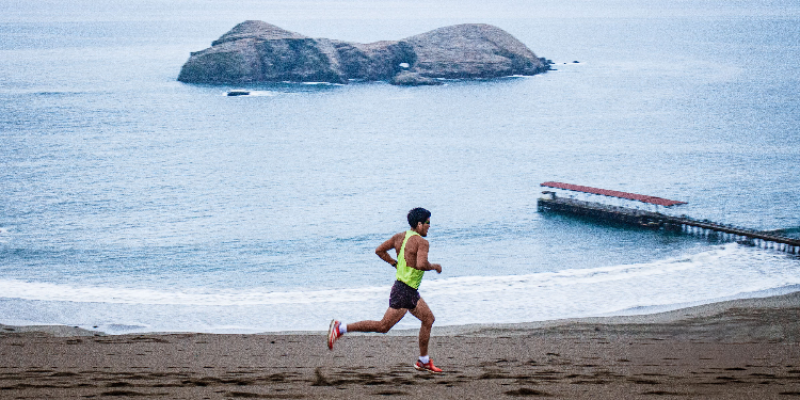
You've arrived in Lima and you want to stay active, meet people, and find your sport. Peru's offer is broader than most newcomers expect: the Instituto Peruano del Deporte (IPD) runs free multi-sport academies across 24 regions, Lima's coastal path draws hundreds of runners on every weekend morning, and padel courts have multiplied across the capital in recent years. Football and volleyball dominate the local sports culture, but the country also hosts world-class surfing competitions and is actively upgrading infrastructure ahead of Lima 2027. The practical challenge for most newcomers is that public registration channels are entirely in Spanish, and the options range from genuinely free municipal programs to exclusive private clubs with five-figure membership fees.
Football dominates Peru's mass-participation and spectator sports landscape, but the picture is broader than that single sport suggests. Volleyball carries genuine national weight, particularly in women's and school-age competition, while surfing, basketball, athletics, tennis, and paleta frontón (a racquet-and-wall sport with Andean roots) all feature in official programming run by the Instituto Peruano del Deporte (IPD), the government body overseeing public sports development across the country's 24 regions.
Public access is one of the defining features of organized sport in Peru. The IPD, district municipalities, and Lima's parks authority, SERPAR, all run free or subsidized programs open to all residents regardless of nationality. The free Academia IPD operates a rotating seasonal calendar for children and teenagers across 24 regions. Municipal workshops extend the offer further: boxing, karate, capoeira, and beach volleyball appear alongside the more expected football and volleyball in district summer programs. For newcomers, these channels provide both a practical entry point into sport and a genuine route to meeting people, since groups form around shared sessions rather than social networks.
Seasonality shapes the calendar noticeably. Summer (roughly January through March, coinciding with school vacations) concentrates free outdoor and beach programs: the IPD adds beach football, beach volleyball, and skateboarding to its Academy at Punta Rocas, while SERPAR opens sports and cultural schools across Lima's metropolitan parks.
Sport also extends into working life. The IPD runs national workplace sports competitions open to employees and institutions, held at venues such as the Coliseo Dibós in Lima. This breadth signals that organized sport in Peru is embedded across age groups and sectors, not confined to professionals or school-age athletes, which matters for newcomers looking to join something quickly.
Liga1 Te Apuesto is Peru's top professional men's football competition, divided into Apertura and Clausura tournaments each year and run by the Liga de Fútbol Profesional Peruana. The three most followed Lima clubs are Alianza Lima, Universitario de Deportes, and Sporting Cristal; in Arequipa, FBC Melgar dominates the regional competition. A Liga Femenina runs alongside the men's league with the same major clubs competing, and the finals draw genuine audience attention.
Match venues vary in scale and location. Lima's Estadio Nacional del Perú, administered by the IPD and holding 50,000 spectators, hosts the country's largest fixtures. Alianza Lima plays at the Estadio Alejandro Villanueva in La Victoria, known locally as "Matute," while the Estadio Alberto Gallardo hosts other matches in Lima. Outside the capital, the Estadio Monumental de la UNSA in Arequipa (permitted capacity 19,900) hosts FBC Melgar's Liga1 fixtures, and the Estadio Inca Garcilaso de la Vega in Cusco is the home of the regional "Clásico del Sur" derby.
Ticket prices start at a regulated minimum of PEN 10 per seat, including spectator insurance. For popular sections at Lima derby fixtures, prices range from around PEN 30 to PEN 250 for central Occidente seats. High-demand matches sell out through priority windows before general sale opens, so creating an account on Joinnus, the primary ticketing platform for Liga1 fixtures, well ahead of a match is worth the effort. Alianza Lima's priority windows open first for its loyalty program members before the general sale begins. Ticketmaster Perú handles tickets for the Liga Femenina finals and other major events. Liga1 matches are broadcast on L1 Max and distributed through pay-TV operators, including Movistar TV and DirecTV; online streaming is available via Movistar Play and DGO for subscribers, and Fanatiz offers streaming for viewers outside standard pay-TV reach.
Join the Peru community
Get regular tips and advice to make the most of your expat life
Gyms and fitness centers in Peru
Gym memberships in Peru average around PEN 104 per month, with most clubs priced between PEN 70 and 150. Budget neighborhood gyms can start from around PEN 30, while premium boutique studios reach PEN 300. The gap between cheapest and most expensive reflects geography as much as equipment: Miraflores and San Isidro in Lima sit firmly at the top of the price range, with gyms there considerably more expensive than equivalent facilities in other districts or in provincial cities.
For public multi-sport facilities in Lima, the VIDENA (Villa Deportiva Nacional) in San Luis is the most accessible option. Memberships, including swimming academy packages, are sold through the FDNDA ticketing platform. Boutique options concentrate in Miraflores: KMF Studio at José de la Torre Ugarte 386 combines running, strength, technique, and recovery training. For martial-arts-focused facilities, The Factory Miraflores lists monthly memberships at around PEN 250. To search by district, discipline, and price, gimnasios.com.pe lists Lima gyms with current schedules and is a practical first stop before committing to a membership.
Running and jogging in Peru
Lima's main recreational running corridor is the Costa Verde, a paved coastal road and clifftop path stretching through Miraflores, San Isidro, Barranco, and San Miguel. It is heavily used on weekend mornings and serves as the route for Lima's major road races. For solo runners who prefer a managed environment, SERPAR's Club de Corredores program offers running support, security, and access to athletics tracks across Lima's metropolitan parks.
Lima also has a dedicated athletics track at the Pista Atlética de la VIDENA in San Luis, the venue for the national athletics championship. The track is undergoing a full renovation toward international Class 1 certification, with improvements for para-athletes included in the project.
Several running clubs operate in Lima and are open to newcomers. Lima Running Club is a women-focused community with a trimestral membership of PEN 45 plus a PEN 15 initial registration fee, giving access to member-only events, partner discounts, and race registration benefits. KMF Run Club is based in Miraflores at José de la Torre Ugarte 386 and pairs running with strength, technique, and recovery training. Grone Runners is linked to an Alianza Lima supporter community and emphasizes an inclusive, family atmosphere; UFIS Perú - Club de atletismo covers both trail and road running and is located at Avenida Próceres de la Independencia 4003 in Lima.
Lima's road-race calendar runs across most of the year, so there is usually an event to train toward regardless of when you arrive. The Maratón adidas RIMAC Lima 42K, organized by Peru Runners and held in May, offers 10K, 21K, and 42K options. The Media Maratón de Lima, typically held in August, is one of the country's longest-running events. The RUN & FUN 10K/21K on the Costa Verde takes place in September. The Carrera IPD 8K, starting at the Estadio Nacional in June, is free and organized directly by the IPD as a public event. Race entry fees start around PEN 90-110 for popular 5K/10K events at early-bird prices.
Swimming in Peru
Public pool sessions in Lima are available at two main venues. Campo de Marte in Jesús María offers one-hour public swimming slots that can be booked through the FDNDA ticketing platform. VIDENA in San Luis also sells swimming academy packages through the same platform, giving access to a larger multi-sport complex alongside the pool.
For a more structured private program, Country Club La Planicie runs one of Lima's more organized schedules: Master swimming runs Monday through Friday from 06:00 to 09:00; Aquaforce sessions run on Monday, Wednesday, and Friday; and Aquagym runs on Tuesday and Thursday. Afternoon lessons from beginner through advanced run Monday through Friday from 15:00 to 18:00. Monthly swimming academy fees range from PEN 265 (once per week) to PEN 360 (three times per week) for general members; the Master monthly membership is PEN 270 for members and PEN 425 for non-members. These are private-club rates, so access as a non-member requires checking the club's current visitor arrangements before registering.
FEDEPASA runs children's immersion swimming workshops in various formats, which are covered in more detail in the sports for children section.
Beach swimming along Peru's coast varies by location. The municipality of San Bartolo, south of Lima, has beaches open for swimming, surfing, and fishing. The municipality of Uchumayo runs an organized summer beach program in Mollendo, Arequipa region. Conditions, water quality, and lifeguard supervision vary significantly between beaches; always check municipal advisories and lifeguard flags before entering the sea.
Good to know:
The Humboldt Current keeps sea water along the Lima coast cool year-round. Casual beach swimming is more common south of Lima, in areas such as San Bartolo and around Mollendo, than at Lima's city beaches, which are heavily used for surfing.
Team sports in Peru
Four team sports offer the most accessible routes into informal and amateur play for newcomers: football (fútbol), five-a-side football (fulbito, the most common informal version), volleyball (vóley), and basketball (básquet). Rugby is also represented. All appear in the IPD's public sports-academy program and in municipal workshops across Lima.
Volleyball has a particularly active national women's club scene in Lima, with a range of clubs that newcomers can approach for trial or practice sessions: Alianza Lima, Regatas Lima, Universitario, USMP, Deportivo Géminis, Rebaza Acosta, Olva Latino, Deportivo Soan, Circolo Sportivo Italiano, and Club Atlético Atenea, among others. This breadth means there are genuine pathways into organized club volleyball for adults settling in Lima.
The fastest route to meeting players is to book a court and show up. TuCancha shows live court availability across Lima for football, volleyball, and multi-sport venues, with online booking by sport, venue, date, and time. FutVol and Golbound offer similar functionality. Public venues include municipal complexes in Miraflores (bookable via gob.pe) and Proyecto Legado's Villa María del Triunfo sports site, which has its own online reservation system. For organized amateur competitions, searching gob.pe by district plus Spanish terms (campeonato, fulbito libre, vóley, básquet, inscripción, or Academia IPD) surfaces municipal competitions that accept teams from communities and institutions with a simple registration form.
All official public registration channels and sports-competition pages operate in Spanish; searching with Spanish sports terms is the essential first step. Private clubs and court-booking apps are a more accessible entry point for those not yet fluent, and they also serve as social connectors: Lima International Community organizes mixed sports activities, including soccer, surf, and volleyball, alongside cultural events for an internationally mixed audience in Lima.PMI Lima Sports similarly offers sports activities for the professional community in Lima. These organized international community channels are worth exploring in parallel with the court-booking route.
Racquet sports in Peru
Around 60-65 padel centers and approximately 250 courts are now operating across Peru, making padel the most widely available racquet sport in the country outside of tennis, with Lima accounting for the majority of facilities. The portal LimaPadel.pe lists venues and court availability across the country and is the most practical starting point for finding a court near any Lima district. Court hire runs roughly PEN 100-200 per hour during daytime and PEN 240-280 per hour in the evenings, based on published rates at venues in San Miguel. Surco Padel at Jirón Montemar 190, Santiago de Surco, offers online slot booking from 06:00 to 21:00. The TuCancha platform also lists padel courts alongside football and multi-sport options, with real-time availability and hourly pricing.
Tennis in Peru is primarily accessible through private clubs. Club Tennis Las Terrazas Miraflores at Malecón 28 de Julio 390 has 10 courts for members, with an active membership entry fee of USD 30,000. Tennis also features in the national school-sport competition, indicating that academy-level junior pathways are available at a more accessible cost than full private club membership.
Badminton has an active federation structure through the Federación Deportiva Peruana de Bádminton, which runs official competitions including the Peru International Series and Copa Lawn Tennis. The federation's offices are at Estadio Nacional, Puerta 15A, and competition events have been held at Club de Regatas Lima in Villa El Salvador; contacting the federation directly is the practical route into competitive or club-level play. Squash is organized through the Federación Peruana de Squash Racket, which participates in international events.
Martial arts and combat sports in Peru
Boxing, kickboxing, taekwondo, judo, karate, kung fu, and mixed martial arts (MMA) all have active institutional backing in Peru, either through the free national Academia IPD program (ages 6-17, available in 24 regions) or through IPD-sanctioned national championships and international competition. Boxing's development is particularly active, with IPD-organized national championship events held at VIDENA in Lima.
For adults, private martial arts gyms are concentrated in Miraflores and Santiago de Surco. Venues include The Factory Miraflores (kickboxing, monthly membership around PEN 250), Clan Perú Fighting, Coach Fit Center, and Apex Fight Club (Muay Thai, Surco). Gimnasios.com.pe, filtered by discipline and district, shows current schedules and pricing. Searching in Spanish gives the widest results: boxeo Lima, kickboxing Miraflores, Muay Thai Surco, jiu jitsu Lima, karate Arequipa, and taekwondo Cusco all surface active venues.
For children and teenagers, the seasonal Academia IPD program is the simplest free entry point: registration windows open via the IPD's campaign pages on gob.pe, listing sports, age ranges, and venue locations for each cycle. District municipalities add further free options; summer programs in districts such as Lince include boxing, MMA, capoeira, karate, and taekwondo for younger participants.
Golf in Peru
Peru's golf infrastructure is organized around 12 clubs affiliated to the Federación Peruana de Golf: Arequipa Golf Club, Asia Golf Club, Country Club La Planicie, Country Club de Villa, Club Deportivo Las Lomas, Cuajone Country Club, Granja Azul Country Club de Golf, Golf & Country Club de Trujillo, Lima Golf Club, Los Andes Golf Club, Los Inkas Golf Club, and Toquepala Golf Club. Lima-area clubs dominate, but the network extends to Arequipa, Trujillo, and mining districts in the country's south.
The courses meet international competition standards: Los Inkas Golf Club has hosted the Peru Open and the Abierto Grupo Coril, and Lima Golf Club was announced as host of the Latin America Amateur Championship. Access to Lima clubs requires membership, reciprocal club arrangements, or a member invitation. Before committing to membership, the Federación Peruana de Golf publishes a list of all affiliated clubs on its website, and the Asociación de Golfistas Seniors del Perú (AGOSEP) publishes visitor green fees on its website, giving a practical reference for newly arrived golfers to compare access costs before choosing a club. The federation also publishes a dress code applicable to all affiliated clubs.
Water sports in Peru
Peru's Pacific coast is one of the world's recognized surfing destinations, and the country has hosted the ISA World Surfing Games at the IPD's CAR Punta Rocas facility, confirming competition infrastructure at the highest international level. San Bartolo, south of Lima, is accessible for both surfing and swimming. For real-time sea conditions along the Peruvian coast before heading into the water, the government-backed app Mis Olas provides mobile monitoring of current sea conditions.
Good to know:
The Humboldt Current keeps sea water along the Lima coast cool year-round, so a wetsuit is advisable for surfing or extended swimming, even in summer.
Sailing and boating are organized through private clubs. Yacht Club Peruano is located at Bolognesi 761, La Punta, Callao, approximately 1.5 km south of the Port of Callao entrance, with pier services including water, electricity, fuel, and crew facilities for member vessels. Club de Regatas "Lima" operates in Lima and handles associate inquiries at atencionalasociado@clubregatas.org.pe. Both operate as private member clubs rather than open public facilities, so contacting them directly is the first step for anyone interested in joining.
Kayaking and open-water paddling feature in Lima's coastal activity scene through events such as the Aqua Glow Fest in Chorrillos, organized by Club Nadar es Vida, which combines sea swimming and paddling for participants. For river kayaking and white-water rafting, licensed adventure operators in Arequipa (serving the Cañón del Colca area) and in jungle river regions offer organized expeditions.
Winter sports in Peru
High Andean glaciers require specialist mountaineering equipment and experienced guides and are not accessible as recreational ski terrain. The only indoor ice-skating venue in Lima is The Ice Experience at Calle Río Mantaro 158, San Miguel. It is open Monday through Thursday from 10:00 to 22:00 and Friday through Sunday from 10:00 to 22:30. Timed recreational entry sessions range from PEN 35 for 25 minutes (weekday promotional rate) to PEN 110 for a full day, with evening and weekend sessions priced slightly higher. Skates, helmet, and knee pads are included in the promotional recreational entry price; gloves and socks are mandatory and can be purchased at the rink from PEN 5 if not brought from home.
Outdoor and adventure sports in Peru
Three areas anchor Peru's trekking landscape. The Inca Trail network (Red de Caminos Inka), managed by SERNANP, reopens around March 1 each year after its rainy-season closure; entry to this network requires advance booking through an authorized operator, as independent trekking is not permitted. Parque Nacional Huascarán, near Huaraz, has open tourism sectors, including Quillcayhuanca, Ulta, Llaca, Laguna Parón, and Llanganuco. The Cordillera Huayhuash circuit, typically completed over 10 days, runs with operator-fixed departures concentrated from June through August. Cusco and the Sacred Valley support shorter multi-day and day-hike options connected to archaeological and cultural sites.
Huaraz is the center of Peru's mountaineering scene and the practical base for Cordillera Blanca and Huayhuash expeditions. Huaraz Treks and Climbs and operators such as Huayhuash Trekking Peru publish open trekking and climbing groups with fixed-date departures, making it straightforward to join a group without arranging a full private expedition. The main highland trekking and climbing season runs from June through August.
Indoor climbing is available in Lima at two venues. Vertical Gimnasio de Escalada in Jesús María has more than 125 m² of wall area with 30°, 15°, and slab configurations; single-entry passes cost PEN 30 (PEN 20 for university students with a valid card), a 10-pass pack is PEN 250, and a monthly plan is PEN 180. Pirqa offers free climbing sessions at PEN 39 per visit, with climbing shoes available to rent for PEN 10.
Mountain biking operators are active in both Lima and Cusco. Holy Trails, a rider-owned company based in both cities, offers one-day rides in Lima Olleros, Lima Pachacamac, Cusco City, and the Sacred Valley, as well as multi-day Andes single-track itineraries for more experienced riders.
For any guided adventure activity, ask whether the operator holds certification to Peru's INACAL (Instituto Nacional de Calidad) technical standards. Fifteen Peruvian Technical Standards cover operators providing trekking, rafting, canoeing, climbing, canopy, paragliding, and cycling, requiring risk-management plans, certified staff, certified equipment, and documented safe operating conditions. Entry to protected areas within the SERNANP national network may require authorization, guided tours, and permit fees; check the relevant SERNANP page for each site before visiting.
Good to know:
Altitude is the key safety variable for Andean activities. Cusco sits at 3,400 m; the Huascarán massif exceeds 6,700 m. Allow 1-3 days to acclimatize before trekking at altitude, and ensure your travel insurance covers high-altitude evacuation.
Sports for children in Peru
The free Academia IPD program is the most direct entry point for children aged 6 to 17 who want organized sport outside their school curriculum. Available across 24 regions and enrolling thousands of participants each seasonal cycle (one Lima winter cycle registered more than 10,000), the Academy covers basketball, boxing, football, volleyball, wrestling, athletics, karate, weightlifting, swimming, para-swimming, softball, tennis, and judo. Registration windows open seasonally via the IPD's campaign pages on gob.pe, where each cycle lists sports offered, age ranges, and venue locations. There is no fee.
Within the school system, sport is channeled through the Juegos Escolares Deportivos y Paradeportivos (JEDPA), the Ministry of Education competition for public and private schools that has expanded to include beach volleyball among its disciplines and projects participation in the millions of students before the competitive district stage. The Iniciativa Pedagógica Winaq, an IPD-linked before- and after-school program for ages 6-16, operates alongside JEDPA based on the national curriculum.
For children showing high-performance potential, the sports school CEDE "Julia Sánchez Deza" combines morning academic education with specialized afternoon sports training for more than 200 students. A selective annual admissions process identifies young athletes, and this is the only school of its type in the country.
Private options are available across all main disciplines. FEDEPASA runs children's immersion swimming workshops with packages from PEN 200 (three days per week) to PEN 380 for a full Monday-through-Friday block, and a family plan at PEN 550. Private Saco Oliveros swimming academies and school-linked programs also offer structured term-based lessons. Football, tennis, martial arts, and gymnastics academies operate across Lima's districts; Miraflores and San Isidro academies sit at the top of the price range, with equivalent programs available at lower cost in other districts.
Peru's sporting-event calendar extends well beyond domestic football. The ISA World Surfing Games at CAR Punta Rocas and the FISU America Games in Lima, which cover judo, karate-do, taekwondo, and other university-level sports, have both been confirmed as major international events to be hosted in the country. The Copa de las Américas women's artistic gymnastics competition at the Polideportivo del Callao, held in July, offers daily tickets from PEN 35 and is an example of the international competition coming to Lima in disciplines beyond football. The ongoing Liga1 Te Apuesto season runs fixtures across Lima, Arequipa, and Cusco throughout the year, as does the Liga Femenina de Vóley.
For runners, the annual calendar covers most of the year: the Maratón adidas RIMAC Lima 42K in May (with 10K and 21K options), the free Carrera IPD 8K from the Estadio Nacional in June, the Media Maratón de Lima in August, and the RUN & FUN 10K/21K on the Costa Verde in September. Infrastructure for international competition is improving; the VIDENA athletics track is undergoing renovation for Class 1 certification ahead of the Lima 2027 games, and the IPD is overseeing multiple venue upgrades. Monitoring IPD announcements on gob.pe is the most reliable way to follow registration and ticketing timelines for Lima 2027 events as they become available.
Three main platforms handle sports ticketing. Joinnus is the primary platform for professional football. Ticketmaster Perú covers Liga Femenina finals, gymnastics events, and other major competitions. Teleticket requires account creation, event selection, seat choice, and payment completion. For running and amateur races, GoTicket lists event dates, locations, and entry fees. For high-demand Lima derby fixtures, create platform accounts in advance: priority windows for season-ticket and loyalty-program holders open before general sale, and popular matches can sell out at that stage.
Frequently asked questions
Football is the dominant sport for both participation and spectating. Volleyball has a strong national profile, particularly in women's and school sport. At the school level, futsal, football, and volleyball record the highest collective participation, alongside athletics and chess. Among adults, running, gym training, and surfing are widely practiced depending on location and season.
A standard adult gym membership averages around PEN 104 per month, with mid-market clubs typically ranging from PEN 70 to PEN 150. Budget neighborhood gyms start from around PEN 30, while premium boutique studios can reach PEN 300. Prices are highest in Lima's Miraflores and San Isidro districts and generally lower in provincial cities.
For football and futsal, booking a court through platforms like TuCancha is the fastest way to meet local players. For volleyball, basketball, martial arts, swimming, and athletics, check the Instituto Peruano del Deporte for seasonal registrations at Academia IPD and contact district municipal sports complexes. Searching gob.pe by district and sport name in Spanish using terms like campeonato, inscripción, or liga surfaces local amateur competitions open to all residents. Lima International Community also organizes mixed sports activities for an internationally mixed audience in Lima.
Lima has an active running scene with several clubs: Lima Running Club charges PEN 45 per quarter plus a PEN 15 registration fee, KMF Run Club is based in Miraflores, and UFIS Perú Club de atletismo operates from Lima. The annual race calendar includes the Lima 42K marathon in May, a free 8K race organized by the Instituto Peruano del Deporte in June, the Media Maratón de Lima in August, and the RUN & FUN 10K/21K on the Costa Verde in September. Race entry fees start at PEN 90-110. The SERPAR Club de Corredores program supports runners in Lima's metropolitan parks.
Peru has 12 clubs affiliated to the Federación Peruana de Golf, concentrated in Lima but also present in Arequipa, Trujillo, and mining districts. Access is primarily through membership, reciprocal club arrangements, or a member invitation. The Asociación de Golfistas Seniors del Perú (AGOSEP) publishes a green fees page listing visitor rates for affiliated clubs, which is a practical starting point before committing to membership.
Surfing is the flagship water sport, with world-class breaks along Peru's Pacific coast, and the country hosts the ISA World Surfing Games at Punta Rocas. Sailing is accessible through private clubs, including Yacht Club Peruano in La Punta, Callao, and Club de Regatas Lima. Kayaking and open-water paddling feature in Lima coastal events, and river kayaking and white-water rafting are offered by licensed adventure operators in Arequipa and jungle river regions. Check sea conditions via the government app Mis Olas before entering the Pacific.
Yes, extensively. The free Academia IPD program covers ages 6 to 17, operates across 24 regions, and offers more than 14 sports at no cost, including swimming, basketball, football, tennis, and judo. The national school-sport competition JEDPA involves millions of students across public and private schools. Private options include football academies, swimming workshops through FEDEPASA starting from PEN 150, martial arts clubs, and tennis academies. For talented young athletes, the sports school CEDE Julia Sánchez Deza in Lima runs a selective annual admissions process combining morning school education with specialized afternoon training.
For Liga1 football fixtures, Joinnus is the primary ticketing platform. Ticketmaster Perú covers the Liga Femenina and other major events. For running races, GoTicket lists entry fees and event dates. For high-demand Lima derby matches, create an account on the relevant platform in advance: priority windows for season-ticket and loyalty-program holders open before general sale, and popular fixtures routinely sell out before public tickets become available.
Peru offers trekking, mountaineering, mountain biking, surfing, and river sports across diverse terrain. The Inca Trail and Machu Picchu network reopens around March each year following the rainy-season closure. The Cordillera Blanca and Huayhuash near Huaraz are the principal mountaineering and trekking areas, with the main season running from June through August. Always use operators certified under INACAL technical standards for guided high-altitude, river, and remote activities.
Peru has no public ski resort infrastructure. High Andean glaciers require specialist mountaineering equipment and experienced guides, and are not recreational ski terrain. The only indoor ice-skating venue is The Ice Experience in San Miguel, Lima, which offers timed recreational sessions starting from PEN 35 on weekdays, with skates, a helmet, and knee pads included in the entry price. Full-day passes are available for PEN 110.
Lima International Community organizes sports activities, including soccer, surfing, and volleyball, for an internationally mixed audience in Lima. PMI Lima Sports offers sports activities for the professional community. In practice, joining sport-specific channels such as running clubs, padel court booking apps, surf schools, gym communities, and football court apps is often the most reliable way to meet people through shared activities. In Lima, Miraflores, Barranco, and coastal districts have the most internationally mixed recreational sports communities.
Boxing, kickboxing, karate, taekwondo, judo, and MMA are all active, with national federations and Instituto Peruano del Deporte-backed competition structures. Free public classes for ages 6 to 17 are available through the Academia IPD and municipal summer workshops. For adults, monthly memberships at Lima martial arts gyms start around PEN 250. The aggregator gimnasios.com.pe, filtered by discipline and district, is a practical way to find current schedules and pricing across Lima.
ℹ️
We do our best to provide accurate and up to date information. However, if you have noticed any inaccuracies in this article, please let us know in the comments section below.
A journalist, holder of the DALF C1 and C2 and a diploma from the University of Mauritius, I have nearly twenty years of writing experience. After six years in the Mauritian press, I joined Expat.com, where I have been working for over a decade, including five years as editorial assistant, and now as editorial manager.