



Veedushi Bissessur
@Veedushi
Mauritian citizen
Forum posts
1643
Contacts
68
About me
Mauritian
Lives in Quatre Bornes
Speaks Français, anglais, créole, hindi
Registration: 02 April 2013
Articles written or translated by Veedushi Bissessur

Moving to Montenegro for longer than a short visit means aligning your plans with one of the purposes the Foreigners Law (Zakon o strancima, Montenegro's main immigration statute) recognizes, from work or remote work to business, property purchase, study, or joining family. That choice decides which permit you file, what you pay, and how quickly your time in the country counts toward permanent residence, which requires five years of continuous lawful residence. Several routes, including the digital-nomad permit and the combined work permit, are applied for after you arrive, with deadlines counted in days. Nationality matters too, since citizens of the European Union, Iceland, Liechtenstein, Norway, and Switzerland are exempt from the EUR 150,000 (about USD 170,130) property threshold that applies to other buyers seeking residence.
02 October 2026
For a foreign national, marrying in Brazil comes down to one civil-registry process that applies the same way whether you're marrying a Brazilian partner or another foreigner, in a major city or a smaller town elsewhere in the country. The real hurdle is paperwork: a birth certificate, proof you're not already married, and a divorce or death record if you've been married before all need an apostille or consular legalization, followed by a sworn Portuguese translation done inside Brazil, before a cartório will even open your file. Same-sex couples marry under the same rules, registration fees vary widely by state, and a wedding held abroad counts in Brazil only after it passes through a Brazilian consulate and a domestic civil registry.
25 September 2026
Brazil ties nearly every step of a household move, from the customs treatment of a shipment to the deadline for registering with the Polícia Federal, to a single anchor point: the date you actually arrive. That date determines when movers should ship your belongings, how the customs window for household goods opens and closes, and how many days you have to complete registration once you land. The practicalities also shift with geography, since cost of living, healthcare access and school options in São Paulo look different from Rio de Janeiro or a smaller interior city, so where you settle carries as much weight as which visa route you take.
25 September 2026
Renting in Rio de Janeiro means choosing between two different cities in one. A furnished one-bedroom in Ipanema or Leblon can run BRL 6,500-12,000 a month, while the same size apartment in Tijuca, a short metro ride from downtown, costs a fraction of that. Long-term rental supply has also tightened in recent years, so a well-located, verified listing rarely stays open for long. Foreign renters face an additional hurdle beyond price: without a Brazilian guarantor or local credit history, most leases require a cash deposit, an insurance bond, or another accepted guarantee before the keys change hands. Knowing which neighborhood, contract type, and guarantee route fit your situation makes the difference between a smooth move and a stressful one.
25 September 2026
Picking a school is one of the first big decisions a family faces when relocating to Brazil, and it isn't a quick one. Responsibility for education sits with state and municipal networks rather than a single national system, so what's available, and in which language, depends heavily on exactly where you settle. International schools in São Paulo, Rio de Janeiro, and Brasília span an enormous fee range, from around USD 2,182 to over USD 104,000 a year, and places at the strongest schools can fill up to a year in advance. Public school is free and genuinely open to any child regardless of nationality, but it runs in Portuguese, which shapes whether it's a realistic option for your family from day one.
24 September 2026
Finding a place to live in Brazil means being faced with a market that runs on legal categories more than on property type, whether an ordinary lease, a capped 90-day seasonal contract, or a registered serviced unit, each with its own rules. Rents vary sharply between neighborhoods in São Paulo, Rio de Janeiro, and Brasília, and the same size apartment can cost several times more in one district than another within the same city. For most newcomers, the real obstacle is rarely the search itself. It is qualifying for a guarantee, since a landlord can require only one type, whether a cash deposit capped at 3 months' rent, a guarantor, or rental-guarantee insurance, and avoiding the scams that target renters who pay before verifying a property.
24 September 2026
Brazil runs its everyday financial life on a single free instant-payment system, Pix, and on one document, the CPF, an individual taxpayer number that unlocks everything from opening a bank account to receiving a local salary. Neither a foreign passport nor a residence permit guarantees a bank will say yes, since Brazilian banks and payment institutions each set their own onboarding rules and can decline an applicant even when the requested paperwork is in hand. For newcomers, that makes the CPF, not the choice of bank, the real first step, followed by comparing what each institution actually requires and what its free account bundle covers before paying for anything extra. Digital banks like Nubank, Inter, C6 Bank and PagBank have made low-fee, Pix-enabled accounts widely accessible, but cash withdrawals, foreign-exchange transfers, and in-person document checks still often depend on a traditional branch.
23 September 2026
Brazil's job market keeps expanding, with tens of thousands of net new positions added most months, yet that growth offers little automatic access to foreigners without valid work authorization already in place. For a foreign professional, the practical opening lies in a set of shortage-driven sectors- technology, industrial, and engineering roles chief among them- concentrated overwhelmingly in São Paulo, where multinational hiring is strongest. Portuguese remains the working language almost everywhere outside a handful of international employers, and LinkedIn has become a genuine hiring channel here. Understanding how CVs, interviews and CLT contracts actually work locally, and what protections apply once hired, matters as much as finding the opening itself.
11 September 2026
Brazil's immigration system does not offer a single "expat visa": it routes every applicant, whether they are taking a local job, retiring, joining family, or working remotely for a foreign employer, into a distinct residence basis with its own authority and paperwork. That distinction matters most for people who assume a tourist entry can later be converted into something else; in most cases it cannot, and choosing the wrong track from the start is one of the most common reasons applications stall. One detail that surprises many newcomers is how concrete some thresholds are, such as the fixed monthly foreign-currency transfer required for the retirement route, or the minimum property value for real estate investors. Matching the right personal situation to the right category, before filing anything, is the first real step toward living legally in Brazil.
11 September 2026
Brazil offers something few countries can match: a universal public healthcare system that is free at the point of use, including for foreigners. The Sistema Único de Saúde (SUS) covers routine consultations, emergency care and complex treatment, although access and waiting times vary locally. For newcomers, the challenge is understanding how it works: registering at a local health center, knowing when to call SAMU on 192, and deciding whether private insurance is worth considering for faster access and greater choice.
10 September 2026
Moving to Brazil often means discovering that tax liability has little to do with the visa stamped in a passport. Receita Federal, the federal tax authority, classifies newcomers as resident or non-resident purely for tax purposes, and that classification, reached either instantly for some visa holders or gradually after 184 days in the country, decides whether foreign salary, pensions, or investment income become taxable in Brazil at all. Fresh brackets and a new 10% withholding on larger dividend payments took effect in January 2026, alongside a consumption-tax reform that will require even small self-employed operators to hold a CNPJ from 2027. Between monthly Carnê-Leão self-assessments, annual reconciliation returns, and treaty-based relief that must be actively claimed rather than assumed, understanding the mechanics early avoids costly gaps later.
10 September 2026
In Brazil, the question of whether a foreigner can buy property has less to do with passports than with land classification. An apartment in a city can be purchased by almost any non-resident without restriction, while a farm or rural plot triggers a constitutional rule requiring residency and, in most cases, authorization from INCRA, the federal agency overseeing rural land. That distinction shapes every other decision: which documents apply, whether a mortgage is realistic, and how much protection sits behind a signed contract. Closing costs run a predictable 4% to 6% on top of the price, but the paperwork chain, from CPF registration to registry certificates, is what actually determines whether a purchase holds up. Ownership alone, it's worth noting from the outset, never grants the right to live in the country.
10 September 2026
Mauritius' 2026–2027 Finance Act put higher Occupation Permit thresholds, the Golden Visa and new technology incentives in the spotlight. But for foreigners planning to build a life or business on the island, some of the most consequential changes lie in the fine print. An August update from the Economic Development Board clarifies the rules for young foreign graduates, entrepreneurs, start-up founders and retirees, from proof-of-funds requirements and reporting obligations to the demanding financial thresholds for permanent residence.
07 September 2026
Expats who have settled in Trujillo say the hardest part was not finding a property to rent but knowing what to look for before signing. Renting in Trujillo is affordable by most international standards, and the city has a working rental market with apartments across a wide range of budgets. What newcomers often underestimate is how much the right building, on the right street, in the right part of the city matters here. Security conditions vary sharply at the micro-level, Migraciones registration requirements apply specifically to foreign tenants, and all landlord communication happens in Spanish.
31 July 2026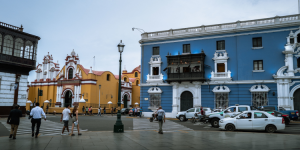
Many expats who have worked in Trujillo say the thing that surprised them most was how structured the formal job market is, complete with government-run job fairs, statutory benefits paid twice a year, and a labor inspectorate that enforces minimum wage requirements for foreign nationals on payroll. What catches some newcomers off guard is the gap between that formal sector and the roughly 41% of city workers in informal or vulnerable employment: knowing which side of that divide you are on matters enormously. Trujillo's economy runs on services, agroindustry, commerce, health, education, and a growing business-process outsourcing sector, and it is the last of these that offers the most accessible entry point for foreign workers, particularly those with strong English or French.
31 July 2026
Peru runs its school year from March to December, which immediately sets it apart from most Northern Hemisphere calendars. For families arriving from Europe or North America in August or September, this means joining mid-year or facing a gap of several months before the next school year begins. The international school sector is well-developed, with 90 IB World Schools across the country and additional options following the French, Cambridge, American, and Italian curricula, most of them concentrated in Lima's districts of Santiago de Surco and La Molina.
31 July 2026
You've arrived in Lima and you want to stay active, meet people, and find your sport. Peru's offer is broader than most newcomers expect: the Instituto Peruano del Deporte (IPD) runs free multi-sport academies across 24 regions, Lima's coastal path draws hundreds of runners on every weekend morning, and padel courts have multiplied across the capital in recent years. Football and volleyball dominate the local sports culture, but the country also hosts world-class surfing competitions and is actively upgrading infrastructure ahead of Lima 2027. The practical challenge for most newcomers is that public registration channels are entirely in Spanish, and the options range from genuinely free municipal programs to exclusive private clubs with five-figure membership fees.
31 July 2026
Peru may not be the first country that comes to mind when planning retirement abroad, but it's increasingly attracting foreign retirees looking for a lower cost of living, diverse landscapes, and a slower pace of life. Whether you're drawn to the Pacific coast, colonial cities in the Andes, or year-round sunshine in the north, the country offers a wide range of lifestyles to suit different budgets and preferences. However, retiring in Peru requires careful planning. From visas and taxes to healthcare, pensions, and choosing the right place to settle, understanding the practical realities is essential before making the move. Here's everything you need to know about retiring in Peru as an expat.
31 July 2026
Three years of continuous residence in an eligible category is the central requirement for permanent residency in Peru, but that timeline comes with conditions that quietly disqualify many applicants: an absence rule, an income threshold, a clean-record requirement, and documents that must be apostilled and translated before submission. Administered by the Superintendencia Nacional de Migraciones, Peru's permanent resident status removes the need for recurring residence renewals, yet the physical identity card still expires every 5 years and must be actively renewed. A transitional period in the naturalization rules adds further complexity for those who eventually want Peruvian citizenship.
31 July 2026
Building professional and personal connections in Peru depends far more on confianza (trust) than on a well-timed pitch or a stack of business cards. Relationships come before transactions here, and the professional event calendar in Lima, which spans chambers of commerce, sector expos, startup pitch nights, and executive forums, reflects an active networking culture where repeated, consistent presence matters more than a single appearance. Over 1 million foreign entries were recorded in Peru in just the first quarter of 2026, so foreign professionals are a familiar presence, particularly in Lima; yet access to the real professional and social landscape still depends on Spanish ability, cultural attentiveness, and a willingness to invest time in rapport before asking for anything concrete.
31 July 2026
Getting the basics right for your children is the decision that shapes everything else about a move to Peru. The school year runs from March to December, the opposite of the Northern Hemisphere calendar, so timing your arrival matters more than in most destinations. Peru's education system offers a real choice between local schools, where Spanish immersion happens quickly, and Lima's established international schools that follow IB, British, and American curricula. Beyond school, the country has a structured public framework for children's healthcare, including free vaccinations and mandatory growth and development controls from birth to age 11.
31 July 2026
Your job offer is signed, your move to Lima is confirmed, and your first day at work is three weeks away. That timeline may not be enough. In Peru, foreign nationals must hold a work-authorizing migration status before they can legally start employment, and the employment contract itself cannot be used in the immigration procedure unless it has first been approved by Peru's administrative labor authority. The country's immigration system does not issue a single "work permit" document; instead, it grants purpose-specific statuses called calidades migratorias (migration statuses) tied to a particular type of work relationship.
31 July 2026
Expecting a baby abroad is exciting, but it also comes with countless questions. How does the healthcare system work? Should you choose public or private maternity care? Will your insurance cover the costs? And what happens once your baby is born? If you're planning to welcome a child in Peru, understanding the local system before your due date can make the experience far less stressful. From prenatal care and giving birth to maternity leave, birth registration, and newborn healthcare, here's everything expat parents need to know about having a baby in Peru.
31 July 2026
Deciding to marry in Peru sets a clear administrative clock in motion. The entire legal process runs through local municipalities, not a standalone civil registry, so the competent authority varies by district and procedures differ meaningfully between Lima neighborhoods and provincial towns. Foreign nationals are eligible to marry here regardless of immigration status, but gathering the right documents from abroad, getting them apostilled, and having them officially translated into Spanish is almost always the part that takes the longest.
31 July 2026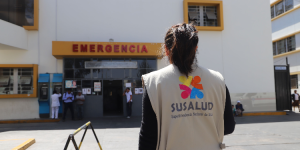
Peru sits in one of the world's most seismically active zones, spans terrain from Pacific coastline to high Andes to Amazon jungle, and sees seasonal rains that can close roads, disrupt flights, and cut off tourist corridors for days at a time. For expats living here, knowing what to do before an emergency matters as much as knowing what to do during one. Peru uses separate free emergency numbers for each service rather than a single universal number: police, ambulance, fire, and civil protection each have their own line. Official services operate in Spanish, but a dedicated Tourist Police WhatsApp channel and the Red de Protección al Turista network provide additional support for foreign nationals navigating incidents in unfamiliar territory.
31 July 2026
Peru formally recognizes extraordinary cultural and ethnic plurality: 55 Indigenous peoples, 48 Indigenous languages, and constitutional recognition of Afro-Peruvian identity. Yet the gap between legal frameworks and lived experience is wide across nearly every dimension of diversity in Peru. A gender pay gap of approximately 25% persists in Metropolitan Lima despite employment laws that score at the top of international benchmarks. LGBTQ+ expats face a legally restrictive environment with no same-sex marriage, no legal gender recognition, and no comprehensive anti-discrimination statute. Disability inclusion legislation is actively enforced, but physical accessibility varies sharply by location. Religious freedom is genuinely protected, yet Catholicism shapes public life in ways that affect expats from other faith backgrounds. For diverse expats settling in Peru, understanding where protections exist on paper and where they translate into practice is not optional preparation: it is the foundation of navigating daily life.
31 July 2026
You have spent years building a life in Peru, your work is settled, your family is rooted, and one question keeps surfacing: is Peruvian citizenship worth pursuing, and can you keep your existing passport? Peru's answer to that second question is clear: the country permits dual or multiple nationality without requiring renunciation of any other citizenship. The path to get there is more complex. Law N° 32421, published in August 2025, is changing the residency requirement from two to five continuous years once implementing regulations enter into force, a transition still incomplete at the time of publication. Alongside naturalization by residency, Peru recognizes pathways through marriage and ancestry up to the third generation, each with its own timeline, fees, and document requirements.
31 July 2026
Most people assume that dating abroad simply requires adjusting to a new social scene. In Peru, the picture is more layered: the country has a relationship-oriented culture in most social circles, a highly active app scene concentrated in Lima, and a legal framework that shapes what long-term partnerships actually mean in practice. Same-sex activity has been legal since 1924, yet same-sex unions carry no formal recognition, and public attitudes toward LGBTQ+ visibility have shifted downward in recent years.
31 July 2026
The decision to base yourself in Peru as a remote worker arrives at a legally unusual moment. Peru has passed legislation creating a dedicated immigration status for digital nomads, the Calidad migratoria Nómada Digital, but the application procedure has not been activated: no fee schedule, no document checklist, and no portal exist yet. Remote workers currently enter on tourist status, which does not formally authorize work. That gap between what the law promises and what is operationally available shapes every practical decision, from how long to stay to whether crossing 183 days in-country triggers Peruvian worldwide income taxation. Lima's fiber-optic infrastructure and affordable, well-located rental market make Peru a workable base; the immigration grey area makes legal awareness non-negotiable before arrival.
31 July 2026
Your first week in Lima puts the country's complexity on full display: a city of over 10 million people, where formal employment and embassies cluster in coastal districts, Spanish is non-negotiable for virtually every official interaction, and street-level safety habits matter from day one. Peru is a country of three deeply distinct geographies: the Pacific coast, the Andes, and the Amazon basin. Daily life shifts markedly between Lima, Arequipa, Cusco, and smaller regional cities. For foreign residents, the rewards are genuine: a food culture of remarkable depth, a rich calendar of festivals and public events, and a cost of living that can be more favorable than in most Western countries. The trade-off is a political environment marked by institutional instability, a bureaucracy that rewards patience and Spanish fluency, and security conditions that require consistent, realistic management.
31 July 2026
You have arrived in Peru and quickly realize that leisure here is structured around a calendar you did not expect: free museum Sundays, a national Independence Day that shuts down the country for two days, and a food culture where a three-course set lunch costs around USD 4. For expats settling in Lima, Cusco, or Arequipa, navigating that calendar, knowing which events are free, which heritage sites require booking months in advance, and where to meet people outside of work, makes a real difference to daily life.
31 July 2026
The first weeks of an internship abroad set the tone for everything that follows, and Peru has rules that will surprise many foreign candidates before they even start. Unlike many countries where internship arrangements are largely informal, Peru regulates all internships under a statutory framework called modalidades formativas laborales (labor-training modalities). That means a written agreement is mandatory, a monthly allowance is legally guaranteed and cannot be waived, and working without the right immigration status is not permitted. For a foreign student or recent graduate, sorting out the correct visa or permit before arriving, finding calls through the right portals, and understanding what the law actually guarantees versus what employers may offer above the minimum are the three decisions that shape the entire experience.
31 July 2026
Many expats arriving in Peru assume that the country's public health system works like a national health service: show up, get care. The reality is more layered. Healthcare in Peru runs through three distinct public tiers: the Ministerio de Salud (MINSA) for general public services, the Seguro Social de Salud (EsSalud) for formally employed workers, and the Seguro Integral de Salud (SIS) for residents without other coverage. None of these is automatic for foreign nationals; all require active affiliation using a Carné de Extranjería. The one genuine exception is SAMU 106, Peru's medical emergency line, which is free and open to everyone regardless of insurance status or nationality. Where you sit within this system shapes the care you can access, how quickly you get it, and what it costs.
31 July 2026
Foreign nationals can buy residential property in Peru on exactly the same legal terms as Peruvians, with no prior government approval and no residency requirement. That equal treatment is established in Article 71 of Peru's Constitution and applies across nearly the entire country, with one geographic exception: within 50 kilometers of Peru's international borders, foreigners cannot acquire land or natural resources, and violating this rule results in automatic loss of the property to the state. Buyers in Lima or Arequipa are not affected; those considering coastal northern Peru or highland areas near Bolivia should verify their property's location before committing. The process is notary-led, conducted in Spanish, and ownership transfers only upon registration with SUNARP (Superintendencia Nacional de los Registros Públicos), Peru's public property registry, not upon payment or contract signing.
31 July 2026
Moving to Peru means making one important decision before almost anything else: where will you live? Whether you're relocating for work, retirement, studies, or simply a change of lifestyle, finding the right home involves more than comparing rents. Peru's housing market varies dramatically from one city to another, with Lima's premium neighborhoods commanding prices far above the rest of the country, while cities such as Arequipa or Trujillo offer more affordable alternatives. Beyond choosing a neighborhood, understanding how rental contracts work, what your rights are as a tenant, and how to avoid common pitfalls can save you time, money, and unnecessary stress. Here's everything you need to know before renting accommodation in Peru.
31 July 2026
Peru has quietly become one of Latin America's most promising economies, combining steady growth, expanding investment, and rising demand for skilled professionals. From mining and infrastructure to technology, logistics, and agribusiness, opportunities are emerging across a wide range of industries. But finding a job as a foreigner involves more than sending out CVs. Understanding the visa process, knowing where employers recruit, navigating local hiring practices, and adapting to Peru's workplace culture can make all the difference. Whether you're planning your move or already living in the country, this guide explains everything you need to know about working in Peru, from finding a job and negotiating your salary to understanding your rights as an employee.
31 July 2026
Arequipa's rental market runs almost entirely on personal negotiation, Spanish-language portals, and landlord discretion: there is no centralized listing system, no standard lease template, and no citywide rule on what utilities a furnished apartment must include. For an expat arriving in Peru's second-largest city, that means the practical work of finding a home starts well before landing. The city's residential districts vary sharply in price and character, from the quiet, clinic-adjacent streets of Yanahuara to the modern condominium buildings of Cerro Colorado, and understanding those differences shapes both your budget and your daily life. A furnished studio in a sought-after district runs around PEN 1,550 per month (approximately USD 440), while a three-bedroom condominium apartment reaches PEN 3,700 (approximately USD 1,036), and what sits between those two figures covers most of what expats actually rent.
31 July 2026
Arequipa's formal private sector added nearly 13,000 jobs in a single year, making it one of Peru's most active provincial job markets outside Lima. For expats, that growth is concentrated in a handful of sectors: services account for more than half of all new formal positions, with mining, construction, and manufacturing filling out the rest. What makes Arequipa distinctive is how hiring actually happens here: in-person employment events where employers select candidates on the day sit alongside national online platforms as legitimate entry points, and the entire process operates in Spanish. Understanding where jobs are physically located, what the statutory pay and benefits package looks like, and how to navigate the city's bus network and rush-hour traffic will shape your experience from the first week.
31 July 2026
Driver imprudence, speeding, and drink-driving together account for more than 62% of road crashes in Peru, a figure that sets the practical stakes for any newcomer considering getting behind the wheel. The rules for foreign drivers are time-sensitive: a valid home-country license covers the first six months of stay, but only where Peru has signed and ratified an international convention with the issuing country. After that window closes, obtaining or exchanging a Peruvian brevete (driving license) is not optional.
31 July 2026
A small but visible pattern has emerged around Mauritius over the last few years: French, British, Spanish, and even South African nationals relocating and building a public online presence specifically around the fact that they left. Some are self-described "serial expats" who lived in a couple of other countries first and now post about the island's beaches, budgets, and everyday logistics, occasionally selling a paid guide on the side or offering paid tour guide services. Others are entrepreneurs who left explicitly to build a business under different conditions and have talked, on podcasts and in interviews, about wanting a life that felt freer or more balanced than the one they had. Others still are couples who visited once, years earlier, and eventually restructured an existing online business specifically so they could run it from the island rather than just visit it.
30 July 2026
Lima's school year starts in March and runs to December, the reverse of the northern hemisphere calendar: a timing gap that catches many relocating families off guard and requires careful planning around arrival dates and enrollment windows. The city offers genuine curriculum diversity for expat families, with international schools in Lima following the IB Diploma, Cambridge IGCSE, French Baccalauréat, Italian Baccalauréat, and American college-preparatory models, alongside bilingual programs that combine international qualifications with the Peruvian national secondary certificate. These schools are concentrated in a cluster of southern districts: Santiago de Surco, La Molina, Miraflores, San Isidro, and Chorrillos.
28 July 2026
Before enrolling in any Lima university, one check is non-negotiable: the institution must appear on the licensed-university registry maintained by SUNEDU (Superintendencia Nacional de Educación Superior Universitaria). Studying at an unlicensed institution affects both the legal recognition of the degree and the validity of student immigration status in Peru. Beyond that single requirement, Lima's higher education landscape is clearly divided between institutions with well-developed international offices, peer support programs, and documented enrollment procedures for incoming exchange students, and those without.
28 July 2026
You've just moved to Lima and already have a sense that food here operates differently from anywhere else you've lived. A full cooked lunch costs around S/.15 (approximately USD 4.47) at a neighborhood spot, while the world's top-ranked restaurant is a 20-minute cab ride away in Miraflores. That contrast is a structural feature of daily life rather than a curiosity: Lima holds the World Travel Awards title of World's Leading Culinary Destination, and its cuisine carries centuries of Andean, Spanish, Chinese, Japanese, and African influences that continue to shape what residents eat today.
28 July 2026
Lima is synonymous with football fandom, yet the city runs one of the most accessible public sports networks in the region. Through SERPAR's 12 metropolitan pool complexes, free outdoor fitness spaces along the Costa Verde coastal corridor, and municipal court systems bookable from a smartphone, sport in Lima is organized district by district rather than around private clubs. For newcomers, this structure provides a low-cost entry into fitness and team sports from the first week of arrival.
28 July 2026
What do most people assume about buying property in Lima as a foreigner? That nationality restrictions or residency requirements will complicate the process. In fact, Peru's constitution places foreign buyers on exactly the same legal footing as Peruvian nationals, with no nationality-based limits on residential property ownership anywhere in the metropolitan area. What matters in Lima is not your passport but your preparation.
28 July 2026
The first weeks after arriving in Lima set the tone for everything that follows: professional relationships here are built through repeated contact, not single introductions, and the networks that matter most take time to enter. Bilateral chambers representing multiple nationalities, coworking hubs in Miraflores and San Isidro, and a dense calendar of sector conferences give newcomers several structured entry points into the city's professional life. Spanish is the working language across most professional and social settings, and arriving without at least a basic professional introduction in Spanish narrows access considerably.
28 July 2026
Lima concentrates Peru's political, commercial, and cultural life into a single sprawling coastal metropolis of 43 districts, and the gap between a rewarding experience and a frustrating one often comes down to a single decision: which neighborhood to live in. District choice determines commute times in some of the region's most congested traffic, daily safety routines, access to international schools and hospitals, and the difference between premium rental costs and genuinely affordable living. The food scene is a concrete draw, with Lima named Time Out's Best City for Food in 2026, but the city also brings persistent grey winters under coastal cloud, an active urban security context, and a daily life that runs almost entirely in Spanish.
28 July 2026
Many expats settling in Lima are surprised by how much of the city's cultural and leisure life is free or genuinely low-cost, and by how little advance planning most of it requires. The public museum network opens at no charge on the first Sunday of every month, 3 state museums never charge admission at all, and July brings a concentrated wave of opera, book festivals, live music events, and national celebrations that few capital cities could match in a single month.
28 July 2026
The first few weeks after arriving in Lima set the tone for everything that follows, and housing is where most newcomers make their most consequential early decision. With 43 metropolitan districts, Lima does not have a single obvious place to land: choosing a neighborhood is a genuine lifestyle and commute decision, not just a price calculation. Rents in the most popular expat districts are often quoted in US dollars, landlords are legally required to register foreign tenants with the immigration authority, and building maintenance fees are almost never included in the advertised rent. Getting these details right before signing a lease, rather than after, makes the difference between a smooth transition and an expensive reset.
28 July 2026
You've accepted a role in Lima, or you're about to start looking for one. Either way, a few things will shape your experience fast: where your employer sits in the city, how long it takes to get there, and whether your contract reflects the full picture of what Peruvian labor law actually provides. Lima is Peru's dominant job market by a wide margin, with more than 5.88 million people employed across the metropolitan area and the strongest hiring concentrated in services, commerce, finance, technology, and mining. What makes Lima distinctive for expats is the combination of a genuinely growing formal economy and a commute culture that can add nearly 2 hours to your working day if you choose the wrong neighborhood to live in.
28 July 2026