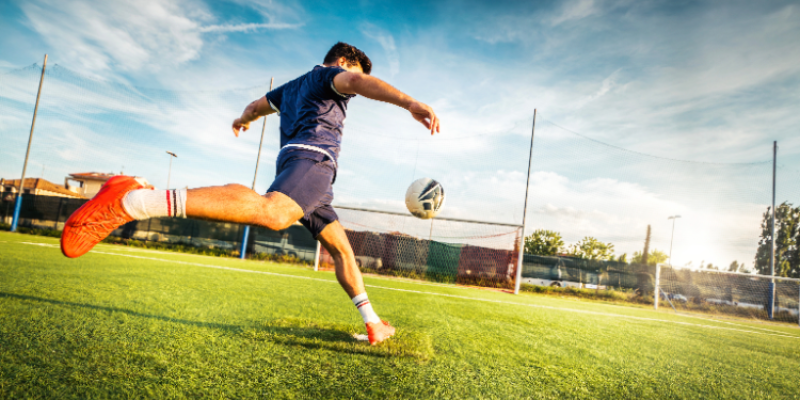
Football may dominate the national conversation, but Chile's sports landscape runs far deeper than any single game. From the ski slopes of the Andes to the surf breaks of Pichilemu, and from packed padel courts in Santiago to mountain trails in Patagonia, the country offers an unusually wide range of active pursuits for all fitness levels and budgets. For expats, sport is also one of the most effective ways to build a social life: Chile's historic community sports clubs have welcomed immigrant communities for generations, and that tradition is very much alive today. This article covers how to find facilities, join clubs, follow local teams, and get the most out of Chile's active culture wherever you settle.
Football is the undisputed center of Chilean sports culture, functioning as both the most widely practiced sport and a primary social glue across the country. But the broader sports landscape is diversifying rapidly. Participation in fitness activities, running, cycling, and racquet sports has surged in recent years, and padel in Chile has transformed the social habits of both locals and expats, becoming one of the most accessible and fastest-growing sports in the country.
For expats, one of the most distinctive features of Chilean sports culture is the historic network of community sports clubs, known locally as clubes de colonia. Founded by immigrant communities that settled in Chile over the past century, these clubs remain the epicenter of expat sports and social life, offering premium facilities, organized leagues, and immediate access to an established community. The Prince of Wales Country Club (PWCC) in La Reina, for example, was founded in 1925 by British residents and continues to field competitive teams in rugby and field hockey, making it a natural first stop for English-speaking expats looking to get active and meet people.
Football in Chile draws the largest crowds of any spectator sport, with the Primera División serving as the premier domestic competition. The three clubs with the biggest national followings are Colo-Colo, Universidad de Chile, and Universidad Católica: matches involving any of these sides attract passionate support across the country. Beyond domestic football, international club competitions such as the Copa Libertadores are followed closely, and sports bars throughout Santiago regularly broadcast Premier League fixtures for international audiences.
Tennis holds a firm position as the second most popular spectator sport, underpinned by a strong tradition of successful Chilean players on the ATP tour. Basketball is also growing: the Liga Nacional de Básquetbol (LNB) is attracting increasing crowds, alongside a local following for the NBA. Motorsport and volleyball round out a diverse spectator offer that continues to expand.
Get regular tips and advice to make the most of your expat life
Gyms and fitness centers in Chile
Gyms in Chile cover a wide spectrum, from budget chains to specialist boutique studios. Smart Fit is the dominant budget operator, with a basic "Plan Fit" membership costing approximately CLP 23,900 to CLP 25,900 (roughly USD 25 to USD 27) per month depending on location. The "Plan Black," which provides access to all Smart Fit locations across Latin America, costs CLP 34,900 (roughly USD 37) per month. The chain has been expanding aggressively into secondary cities, including Concepción, Valdivia, and Punta Arenas, making it an increasingly practical option outside the capital.
Mid-range fitness clubs typically charge around USD 45 per month and often include guided classes and nutrition tracking tools. CrossFit boxes and functional training gyms in Chile sit at a higher price point, averaging between CLP 55,000 and CLP 80,000 (roughly USD 58 to USD 84) per month, reflecting the more personalized coaching model. At the premium end, newer boutique brands in Santiago's eastern sector are pricing memberships at between USD 100 and USD 150 per month.
Good to know:
Smart Fit's "Plan Black" membership works across the chain's entire Latin American network, which can be useful for expats who travel frequently within the region.
Running and jogging in Chile
Running is a mainstream activity for both locals and expats across Chile, with an active club scene and a major annual race to anchor the calendar. Santiago Runners is the country's oldest established running club, with over 30 years of history organizing group training sessions and participating in national races. The club is a practical first point of contact for expats looking to run with others from day one.
The Maratón de Santiago is the country's largest mass-participation sporting event, drawing tens of thousands of runners to the capital's streets each April or May. Registration fees for residents vary by race distance and registration phase: for the 10K, fees range from CLP 28,000 to CLP 36,000 (roughly USD 29 to USD 38), while the full 42K marathon costs between CLP 37,000 and CLP 49,000 (roughly USD 39 to USD 52). Foreign non-residents are subject to a separate fee structure: USD 80 for the 10K, USD 100 for the 21K, and USD 120 for the full marathon.
Swimming in Chile
Public swimming pools are a popular and affordable option during the Chilean summer, which runs roughly from December to March. In Santiago, the Piscina Tupahue in the Parque Metropolitano on Cerro San Cristóbal charges CLP 7,000 (roughly USD 7.50) for adults and CLP 4,000 (roughly USD 4.20) for children, with free entry for seniors over 60 and people with disabilities. Other municipal pools in neighborhoods including Las Condes, Providencia, and Quinta Normal charge daily access fees ranging from CLP 3,000 to CLP 12,000 (roughly USD 3 to USD 13), with discounts for registered local residents.
Outside the capital, municipalities in areas such as Talca and La Pintana offer free access to community pools during the summer. Access typically requires prior registration with local neighborhood boards, so it is worth contacting your local municipality as the season approaches.
Team sports in Chile
For expats who want to join amateur leagues in team sports such as rugby, field hockey, volleyball, or basketball, the historic community sports clubs offer the most direct route in. These institutions require a formal admission process, sponsorship by an existing member, and an incorporation fee, but in return, they provide access to well-maintained facilities and an established social network that is difficult to replicate elsewhere.
Rugby in Chile is well-organized within these club frameworks, with teams competing in the Asociación de Rugby Santiago (ARUSA) leagues, ranging from youth academies to senior amateur divisions. The Prince of Wales Country Club in La Reina is a key institution for English-speaking expats interested in rugby and field hockey, with a history of competitive play stretching back to its founding in 1925.
Other major community clubs include the Estadio Español in Las Condes, which in 2026 charges an active member a monthly fee of CLP 86,500, with incorporation fees varying by applicant background. The Stadio Italiano, with facilities in Las Condes, Santiago, and Concepción, has over 4,500 members and fields teams in basketball, volleyball, and roller hockey. The Stade Français in Las Condes fields one of Chile's oldest rugby teams and hosts regional tournaments.
Racquet sports in Chile
The padel boom in Chile has been substantial. Following a period of rapid court construction, availability has caught up with demand, and courts can now often be booked on the same day without long waiting lists. Court rental prices during off-peak daytime hours (09:00 to 15:00) range from CLP 15,000 to CLP 20,000 (roughly USD 16 to USD 21) per hour. During prime evening slots (16:00 to 22:00) and on weekends, prices rise to between CLP 20,000 and CLP 30,000 (roughly USD 21 to USD 32) per hour.
Tennis remains a well-established sport with a broad range of facilities. Public and semi-private courts are available at venues, including the Estadio Contraloría in Santiago, where hourly rental rates range from CLP 9,000 to CLP 11,000 (roughly USD 9.50 to USD 11.50), depending on the day of the week and whether the courts are used for singles or doubles play.
Golf in Chile is predominantly a private-club activity, with the most prominent courses concentrated in Santiago's affluent neighborhoods. Clubs such as Los Leones Golf Club, Hacienda Chicureo, and La Dehesa Country Club are accessible primarily to members, though many operate reciprocal agreements that allow members of international golf clubs to book tee times when visiting. General public access to these courses is heavily restricted.
Outside the capital, options become more accessible. The Patagonia Virgin Golf Club in Frutillar offers a 9-hole course designed by Jack Nicklaus set against a striking Andean backdrop. Guests accompanying members can pay a green fee of CLP 20,000 (roughly USD 21) for adults and CLP 10,000 (roughly USD 11) for juniors, making it one of the more accessible premium golf experiences in the country.
Water sports in Chile
Chile's extensive Pacific coastline creates excellent conditions for water sports, with surfing at the top of the list. Pichilemu, in the O'Higgins Region, is widely recognized as the surfing capital of Chile; its Punta de Lobos break has been designated a World Surfing Reserve, signaling the quality and consistency of its waves.
Surf schools operate year-round along the coast. At Playa Grande in Punta de Lobos, a 2-hour group surf lesson in Chile costs CLP 20,000 (roughly USD 21) per person, including board, wetsuit, and instructor. Individual lessons range from CLP 30,000 (roughly USD 32) for basic instruction to CLP 35,000 (roughly USD 37) for more advanced sessions. Experienced surfers who simply want equipment can rent a surfboard and wetsuit together for around CLP 12,000 (roughly USD 13).
Winter sports in Chile
The Andes give Chile a world-class skiing and snowboarding offer that is unusual in the southern hemisphere. The season typically runs from July to mid-September, with several major resorts within a few hours of Santiago. High-season daily lift ticket prices vary by resort: Valle Nevado charges around CLP 89,000 (USD 97), Nevados de Chillán charges CLP 85,000 (USD 92), La Parva charges CLP 79,000 (USD 86), El Colorado charges CLP 69,000 (USD 75), and Portillo charges CLP 64,000 (USD 70). Across all resorts, daily adult tickets range from USD 52 to USD 130, depending on the resort, date, and season category.
For expats planning to ski regularly during the season, ski season passes in Chile are available at most major resorts and typically cost between USD 651 and USD 1,111, representing meaningful savings for frequent visitors.
Outdoor and adventure sports in Chile
Chile's geography makes it a natural destination for hiking, trekking, and mountaineering. The Club Alemán Andino (DAV) is one of the most active organizations promoting alpine sports, running frequent mountain expeditions and guided ascents. Non-members can participate for around CLP 15,000 (roughly USD 16) per day. The Club Andino de Chile (CACH) is another long-standing institution promoting mountain sports; it also manages the Lagunillas winter center, located around 67 km from Santiago in the Cajón del Maipo area, making it an accessible option for expats based in the capital.
Both clubs offer structured routes for different experience levels, and joining either is a straightforward way to explore Chile's mountain terrain with experienced companions rather than going it alone.
The Maratón de Santiago anchors the annual sporting calendar as the largest mass-participation event in the country, drawing local and international runners to the capital each spring. In professional football, Primera División matches involving Colo-Colo, Universidad de Chile, and Universidad Católica are the main weekly spectator occasions, with fixtures between these clubs generating the largest crowds of the season.
At the amateur level, the senior rugby "Campeonato +45," hosted largely at the Stade Français, has grown into a multi-regional competition with 12 teams competing between May and November. For padel enthusiasts, the annual CChC Day organized by the Chamber of Construction serves as both a networking festival and a major sporting occasion, including the Gran Final del Campeonato Nacional de Pádel. Together, these events give expats plenty of opportunities to both compete and spectate throughout the year.
Frequently asked questions about sports in Chile
Budget gyms like Smart Fit cost around CLP 25,900 (roughly USD 27) per month for a basic membership. Mid-range gyms average around USD 45 per month, while CrossFit boxes and functional training gyms typically charge between CLP 55,000 and CLP 80,000 per month (roughly USD 58 to USD 84). Premium boutique studios can exceed USD 100 per month.
Yes, the Maratón de Santiago welcomes international participants. Foreign non-residents pay a separate fee structure: USD 80 for the 10K, USD 100 for the 21K, and USD 120 for the full 42K marathon. Registration opens well in advance, so it is worth checking dates early if you plan to take part.
During the high season, a daily lift ticket at major resorts costs between USD 70 and USD 97, depending on the resort. Full season passes are available for regular visitors and typically range from USD 651 to USD 1,111. The ski season generally runs from July to mid-September.
Padel has grown very quickly in Chile and courts are now widely available with same-day bookings often possible. Off-peak daytime rates run from CLP 15,000 to CLP 20,000 (roughly USD 16 to USD 21) per hour, while evening and weekend slots cost between CLP 20,000 and CLP 30,000 (roughly USD 21 to USD 32) per hour.
Most municipalities operate public pools between December and March. In Santiago, the Piscina Tupahue charges CLP 7,000 (roughly USD 7.50) for adults, while many regional towns offer free entry to registered local residents. It is worth contacting your local municipality early in the season, as some pools require prior registration.
At most of Chile's major courses, membership is required, and general public access is limited. However, some clubs have reciprocal agreements with international golf clubs, allowing visiting members to book tee times. Outside Santiago, a small number of venues, such as the Patagonia Virgin Golf Club in Frutillar, allow guests accompanied by members to pay a daily green fee of around CLP 20,000 (roughly USD 21).
The Prince of Wales Country Club (PWCC) in La Reina is the traditional hub for English-speaking expats pursuing team sports. Founded in 1925, it runs competitive programs in rugby and field hockey, and is a well-established entry point for building both a sporting and social life in Chile. Admission requires sponsorship by a current member.
Pichilemu, and specifically the Punta de Lobos area, is the main destination for surfing in Chile. Group surf lessons for beginners start at around CLP 20,000 (roughly USD 21) per person and include the surfboard, wetsuit, and instructor. The area operates year-round, though wave conditions vary by season.
ℹ️
We do our best to provide accurate and up to date information. However, if you have noticed any inaccuracies in this article, please let us know in the comments section below.
A journalist, holder of the DALF C1 and C2 and a diploma from the University of Mauritius, I have nearly twenty years of writing experience. After six years in the Mauritian press, I joined Expat.com, where I have been working for over a decade, including five years as editorial assistant, and now as editorial manager.