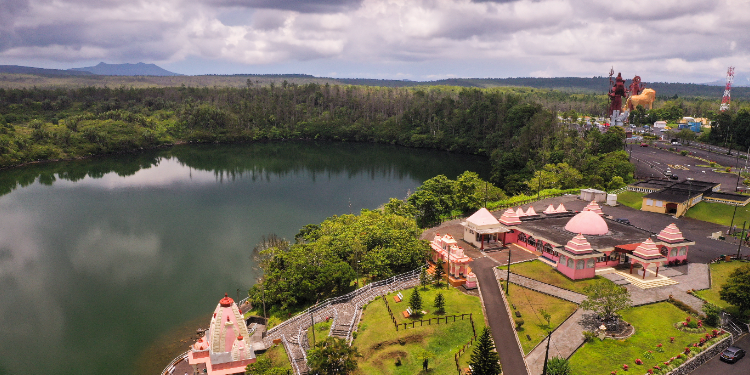
On May 14, 2026, a 53-year-old Italian national was attacked in broad daylight at one of the island's most visited tourist sites. Two members of a sociocultural association were arrested. The association subsequently claimed that the tourists had been eating non-vegetarian food near a Hindu sacred site, a justification rejected by authorities and widely condemned by public opinion.
The incident could have been dismissed as an isolated event. It wasn't. Across expat Facebook groups, newspaper comment sections, and business circles, the same question kept coming up: has Mauritius changed?
"I feel safer here than back home"
For the most part, those who have lived on the island for years are unequivocal. Doriane, based in Flic-en-Flac, echoes a sentiment shared by many: she feels "calmer here than in Paris, Grenoble, or Lyon." Patrick, who has been coming to the island since 1983, says crime "is no worse here than anywhere else." Jean-Pierre says he has "never witnessed any delinquency" in ten years of regular visits. Another expat living on the west coast goes further: "Mauritians are kind and genuinely warm-hearted. I've never felt any hostility whatsoever."
These testimonials are numerous and consistent, and they come from people who know the island well beyond the walls of a hotel room. They deserve to be taken seriously. But they don't tell the whole story. "Living here is very different from spending ten days in a luxury hotel. The best thing you can do is come and stay for at least a month or two to form your own opinion," says Laure.
That sincere advice inadvertently points to the real issue: your experience of the island depends enormously on where you live, who you spend time with, and how you settle in. An expat in a villa in Tamarin is not living in the same Mauritius as a young local in the center of the island.
The European comparison: A reflex and blind spot
Whenever the question of safety comes up, one reflex kicks in almost immediately: comparing Mauritius to Europe, and France in particular. The move is nearly automatic in online discussions, and it's not entirely without merit. Corinne describes Mauritius as "a very pleasant life with a very different pace." Patrice sums up the prevailing view: "France could learn a thing or two from Mauritius." Another expat adds: "It's like anywhere else: drugs, theft, crime. You just can't wander around everywhere at night. But it's the same in Europe, and far worse in some French cities."
The comparison has its uses: it puts into perspective fears that are sometimes amplified by selective social media reading. But it also has its limits. The Grand Bassin incident was not a routine pickpocketing. It was an organized, ideologically motivated assault at a major tourist site. That kind of event can't simply be waved away with "it happens everywhere."
A two-speed island
Economic tension runs as an undercurrent through almost all of these conversations. "The country operates at two speeds, one for the wealthy and one for everyone else," as one participant puts it. The steady influx of expats, often perceived as affluent and sometimes visibly so, does not go unnoticed in that context. Dee Bella frames it precisely: "When local incomes are significantly lower, but prices follow international logic, that inevitably creates an imbalance."
Another expat is blunter: "Yes, there are scammers, drugs, corruption. It's Africa, after all. You get that in Europe too; it's just better hidden." The phrasing jars, but the underlying intuition is real: resentment toward foreigners perceived as privileged does exist, even if the majority of Mauritians never translate it into hostility.
"If I'm going to struggle, I'd rather do it in the sunshine surrounded by people who, for the most part, face life with a smile," says Élodie.
Drugs: The debate's blind spot
While direct violence against foreigners remains rare, several voices point to the proliferation of drugs as the island's real structural problem, distinct from ordinary crime but potentially deeper. Steph, a resident, identifies it as "the only real problem" while stressing that it poses "no direct danger to tourists and expats." Jacqueline, who has lived in Flic-en-Flac for many years, brushes aside the concern: "It's everywhere, even in small Swiss villages."
Neither official statistics nor available testimonials make it possible to gauge the full extent of the problem. That partial silence is telling in itself: in Mauritius as elsewhere, there is often a preference for not looking squarely at what might tarnish the country's image.
"Live like an immigrant, not an expat"
Those who thrive in Mauritius tend to share, to varying degrees, the same mindset. Louis puts it most clearly: "You have to live like an immigrant rather than an expat. The distinction matters." Steph is emphatic: "Never look down on people, and never forget that you're in their home." Oliver, who has lived in many countries, agrees: "Times are tough everywhere. Find a place you like, make sure you have the funds, don't romanticize the postcard version, and don't expect to be welcomed like a savior anywhere. That era is over."
This isn't defeatism; it's a clear-eyed perspective that takes nothing away from the island's appeal. Mauritius is not a dangerous place. But it is not cut off from the world either, and the tensions running through it deserve more than denial or defensive comparisons.
Moving to Mauritius: Practical guidelines
These are not rules so much as lessons distilled from the accumulated experience of people who live or have long lived on the island. They guarantee nothing, but they make a real difference.
Before you go
- Spend at least one to two months on the island before making any commitments (rental, contract, business project) so that your opinion is based on real experience, not forum posts.
- Read the serious local press, some of which have an English corner or can be translated directly from your browser: Le Mauricien, Defimedia, L'Express, and the Expat Mag. It reflects Mauritian society far better than expat Facebook groups.
- Make sure your finances are solid. The cost of living has risen sharply. The idea of Mauritius as a "cheap" destination is well out of date.
- Don't idealize. A villa in Belle-Mare on Airbnb and the reality of an annual lease in Rose-Hill are two very different versions of Mauritius.
Everyday life
- Live like a resident, not an expat on assignment. Shop at the local market, pick up a few words of Creole, and take an interest in your neighborhood.
- Never talk down to Mauritians. Arrogance, even unintentional, is noticed and rarely forgiven.
- Avoid isolated areas at night, just as you would in any city in the world. Common sense generally goes a long way.
- If you are robbed or involved in an incident, file a report with the police. The Safe City system covers a large proportion of high-traffic areas.
At cultural and religious sites
- Do your research before visiting a temple or pilgrimage site, as each has its own customs and expectations.
- Do not bring non-vegetarian food near Hindu sacred sites. The rule is rarely posted, but it is expected.
- Dress modestly. No shorts or bare shoulders in places of worship.
- Do not photograph religious ceremonies or worshippers without their explicit consent.