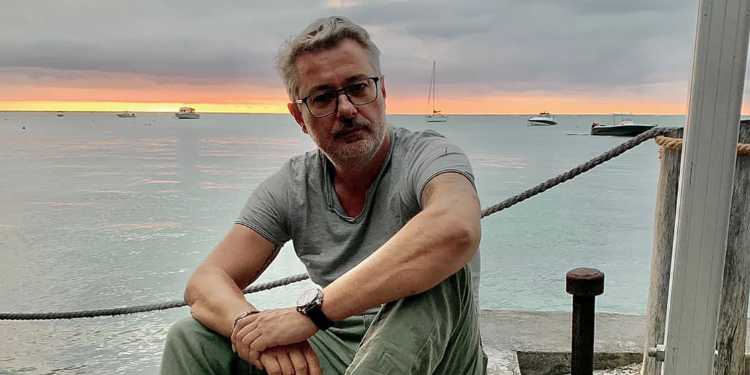
After more than 30 years in Swiss communications and advertising, Bernard Perroud was ready for a change. When the pandemic struck in 2020, he took the opportunity to rethink his priorities and start a new chapter in Mauritius. He didn't want to give up the career he loved, but to find a better balance between work and personal life. Today, he runs his own communications agency on the island, where building a business has come with its share of surprises and challenges. From overcoming cultural differences and recruitment challenges to understanding the local market, Bernard shares what he's learned, the adjustments he's made, and his advice for aspiring entrepreneurs looking to make Mauritius their new home.
Can you introduce yourself and tell us about your career before moving to Mauritius?
I'm Bernard Perroud, a Swiss entrepreneur and creative director. I've been working in communication, advertising, graphic design, and visual arts for over 30 years. In Switzerland, I built my business through De Visu Stanprod, helping companies across a wide range of industries with their communication and growth strategies.
I've always loved this work because it brings together creativity, strategy, and a genuine understanding of what clients need. Over the years, I built solid expertise, but I also experienced the demanding pace of running your own business, with days that could easily stretch to twelve hours.
In 2020, in the middle of the COVID pandemic, I decided to leave Switzerland and move to Mauritius. The pandemic was a major turning point. It pushed me to rethink how I was living, what my priorities were, and how much space I still wanted work to take in my daily life.
I didn't want to give up my profession, which I'm still passionate about, but I wanted a different balance. That's the spirit in which I developed our business in Mauritius, combining my Swiss experience with a local team's skills.
At its core, it was a desire for change. After many years of working intensely, sometimes up to twelve hours a day, I needed to step back and think about what I actually wanted next.
COVID was a significant catalyst. That period reshaped how we related to work and everyday life. It reinforced my feeling that it might be time to do things differently, rather than continuing at a professional pace that was taking up too much of my life.
Mauritius offered a different possibility: a multicultural environment and a lifestyle that suited me. But I also wanted to keep running a business and practicing my craft.
My goal wasn't to stop everything, but to find another way to work and live. Looking back, I can say I've managed to work two to three times less than before. That's a significant shift, even if settling into a new country comes with its own set of challenges.
Join the Mauritius community
Get regular tips and advice to make the most of your expat life
How did your business in Mauritius take shape? Can you tell us about your company and what it entails?
We established our presence in Mauritius through De Visu Stanprod Ltd, which operates under the Moris Agency brand.
We're a full-service communication agency covering a broad range of services: marketing strategy, visual identity, advertising, graphic design, websites, and web development. Our approach is holistic. Rather than focusing on a single channel, we aim to address each client's communication needs as a whole.
What sets us apart is the combination of my experience in the Swiss market and the skills of a Mauritian team of marketing professionals, graphic designers, visual arts specialists, and developers.
Day-to-day, I handle company management, client relationships, creative direction, and business development, while overseeing ongoing projects.
The experience I gained in Switzerland is a real asset, but we have to adapt it to local realities. Our goal is to deliver professional, structured work that genuinely responds to our clients' needs.
How did your first few months go, between settling in personally and getting the business off the ground?
I had to learn how to operate in a new environment, both personally and professionally. When you arrive in a new country, you gradually discover the habits, the ways people communicate, and the economic realities on the ground.
Professionally, I naturally expected my experience to carry me through. It helped, but it wasn't enough to understand how a new market works right away.
You have to observe, adapt, and sometimes rethink your approach. You also encounter differences you didn't necessarily anticipate.
Looking back, there are things I would prepare differently. When you move to another country, it's easy to focus on what you're leaving behind and underestimate the realities you'll need to adapt to.
That doesn't mean I regret my decision. It simply means that an experience like this teaches you as much about yourself as it does about the country you're moving to.
Before launching, how did you assess the opportunities in Mauritius's communication sector? What did you discover once you were on the ground?
My background gave me a solid understanding of the communication industry, but I quickly found that the commercial dynamics could be quite different from what I'd known in Switzerland.
One thing that surprised me was how budgets and business follow-through worked. A prospect might ask for a proposal, request a quote, and then simply go silent. The same thing can happen when you're the one requesting a quote from a supplier.
What catches me off guard most is the absence of any response, even a negative one. In a business relationship, a simple reply, even just to say no, lets everyone move forward.
You learn to navigate these situations without automatically interpreting them through the lens of your home country's business culture.
I also found it important to understand available budgets and how clients perceive the value of services. A company may need to communicate but not be ready to invest as much as you might expect.
That means being very clear about your offer, carefully qualifying inquiries, and protecting your business's profitability.
What were the main challenges in getting your business started in Mauritius?
Recruitment was one of the most significant hurdles. Finding someone with the right skills, who fits the company culture, and who is genuinely committed for the long term isn't always straightforward.
I even had a situation where a new hire signed their contract but never showed up on their first day, then went completely silent.
That kind of experience is disorienting because you organize your business around the people you plan to bring on board. When a hire falls through at the last minute, it can unsettle the team and delay projects.
Internal communication also requires particular care. I learned that feedback and remarks sometimes need to be delivered more carefully than I was used to. What I might consider a straightforward professional conversation can land very differently here.
Finding the right balance between honesty, high standards, and diplomacy takes practice.
These experiences reminded me that a business doesn't grow on expertise alone. The quality of human relationships, how you recruit, and how well people work together are just as important.
How did you land your first contracts and start building your reputation in Mauritius?
First, you have to build relationships and show what you can do. In communication, clients don't choose an agency just for its portfolio; they need to trust the people who will work with them.
We grew the business by showcasing our skills, meeting the right people, and consistently building our reputation.
I believe strongly in the quality of the work and in keeping your commitments. A satisfied client can become a great advocate, but you can't rely on word of mouth alone.
Prospecting is essential. You have to go out, find opportunities, present your offer, and accept that not every approach will lead anywhere.
I also learned not to invest too much time in inquiries where the seriousness or the budget hasn't been clearly established. When you run a business, you have to manage time as carefully as money.
In a field where understanding your audience is everything, how did you learn to grasp Mauritian expectations and sensitivities?
By working with local clients and colleagues, and above all by accepting that my Swiss experience wasn't a universal answer.
An advertising campaign has to speak to its intended audience. Cultural references, habits, languages, and motivations can all differ. What works in Switzerland won't necessarily work the same way in Mauritius.
The local team's perspective is invaluable. It lets you test ideas against real-world conditions and catch sensitivities you might miss on your own.
I also learned that how you communicate matters as much as what you say. In professional relationships, you have to pay attention to how a remark is phrased and how it's likely to be received.
Adapting doesn't mean lowering your standards or avoiding difficult conversations. It means finding the right way to have them.
Mauritius is a multilingual, multicultural country. How does that shape the way you approach a campaign or develop a brand identity?
That diversity is genuinely enriching, but it requires careful thought about who you're trying to reach.
You don't communicate the same way with a local audience, expats, and international visitors. The language you use, the tone, the visual references, and the way you present an offer can all affect how a message lands.
Simply translating a text isn't enough. You have to make sure the message is relevant and meaningful to the specific audience you're addressing.
That's also where our work really comes into its own. Good communication isn't just about producing something visually appealing. It's about delivering the right message, to the right person, in the right way.
Our job is to protect a brand's identity while adapting how it communicates to the context it operates in.
What did you have to change about your professional habits to work effectively with clients and partners on the island?
I had to adapt how I communicate, especially when managing professional relationships and teams.
I'm used to a fairly direct style. With experience, you get to the point quickly, name the problem, and look for solutions. In Mauritius, I learned that feedback and messages sometimes need to be delivered more carefully.
I also had to adjust my expectations around commercial follow-up. When someone doesn't respond to a request or a quote, you sometimes need to follow up without chasing indefinitely.
You have to accept these differences without abandoning your principles. For me, keeping commitments, maintaining quality, and respecting deadlines remain non-negotiable.
Adapting doesn't mean accepting everything. It means understanding your environment well enough to work effectively within it, while holding on to the standards that keep your business running well.
For a foreign entrepreneur starting a business in Mauritius, what communication mistakes can make the early days harder?
The first mistake is assuming that what worked back home will automatically work in Mauritius. You need to take the time to understand the market, the clients, and their expectations.
The second is trying to reach everyone. A business needs to know who it's talking to and what sets it apart from competitors. With a limited budget, it's far better to focus your efforts precisely than to try to be visible everywhere.
The third mistake is competing on price alone. Local budgets matter, of course, but you also need to explain the value of what you offer and the concrete benefits it delivers.
Finally, I'd strongly advise against neglecting communication in your business relationships. Be clear about commitments, timelines, deliverables, and budgets. It prevents a lot of misunderstandings.
And one very practical piece of advice to close: don't treat a quote request as a contract in the making. Learn to qualify prospects, identify serious projects, and avoid tying up too much time on uncertain opportunities.
With a limited budget, where should a new business start to get noticed and attract its first clients?
I'd start by defining your offer and your target audience precisely. Before spending anything on advertising, you need to clearly explain what you're selling, who it's for, and why a client should choose you.
From there, build a professional presence that fits your business: a clear website, a compelling pitch, and the social media channels that actually matter to your target clients.
But I'd put real weight on direct prospecting. Meet people, build your network, reach out to potential clients, and invest in professional relationships.
On a tight budget, this approach will often deliver more than spreading your resources across multiple advertising campaigns.
Finally, track your results. Views and likes aren't enough. What matters is whether your efforts are generating qualified leads, quote requests, and sales.
The goal isn't to communicate more. It's to communicate smarter.
How do you balance running your business, creative work, and your personal life in Mauritius?
That balance was exactly what I was looking for when I decided to change my life, and on that front, I've achieved something concrete. Today, I work roughly two to three times less than I used to.
That doesn't mean I've stepped back from my business or lost interest in it. I'm still involved in projects, decisions, and the company's development. But I've managed to significantly reduce the time I spend working.
After years of sometimes spending twelve hours a day at the office, that shift is substantial.
It's also worth accepting that a life change isn't measured in professional terms alone. The time you have available, the freedom to organize your days, and the ability to invest in other things all have real value.
I still love my work, but I no longer want it to consume the better part of my life. For me, that's one of the main gains of this move abroad.
Beyond work, what helped you settle into Mauritian life, and what took more time to adjust to?
The climate and the surroundings are obviously appealing, but the adjustment is more nuanced than you might expect.
What I sometimes miss about Switzerland is the cultural and social life. I enjoyed going out after work, having places to meet friends or acquaintances, grab a drink, catch an event, or simply run into people without planning everything in advance.
You don't always think about these habits when you're preparing to leave. You focus on housing, work, the climate, and day-to-day logistics, but you can underestimate how much those small social rituals matter.
In Mauritius, you discover different ways of living, different relationships, and different pleasures. But that doesn't mean you stop missing what you left behind.
I think you have to accept that reality: expat life isn't a perfect life replacing an imperfect one. It's a different life, with its own advantages, limitations, and trade-offs.
Looking back, who would you recommend this entrepreneurial adventure in Mauritius to, and what should someone have in place before taking the leap?
I'd recommend it to someone with a serious project, a genuine skill set to offer, and a real willingness to adapt. But above all, I think you need to be honest with yourself about your motivations before you go.
You need to prepare your business plan, research the market, identify potential clients, and understand the administrative requirements for operating legally. You also need to anticipate difficulties and not assume your experience at home will guarantee success.
But you also need to ask yourself some personal questions. What do I actually want to change? What am I prepared to leave behind? What am I willing to do differently?
My advice is simple: take the time to think it through before you commit.
You know what you're leaving. You don't know exactly what you'll gain.
Expat life isn't for everyone. You have to be willing to lose certain reference points, rethink your habits, and face realities you didn't necessarily see coming.
But if you know why you're going and what you want to change in your life, the experience can be enormously rewarding. Personally, I probably wouldn't do everything exactly the same way again, but I know why I made this choice.
I wanted to change my life without giving up my profession. Today, I've found a different balance, and that's exactly what I was looking for.
A journalist, holder of the DALF C1 and C2 and a diploma from the University of Mauritius, I have nearly twenty years of writing experience. After six years in the Mauritian press, I joined Expat.com, where I have been working for over a decade, including five years as editorial assistant, and now as editorial manager.