

Belgium recognizes three major categories of driving licenses based on their origin: the Belgian license, the license issued by an EU, EEA member state, or Switzerland, and the license issued by other countries (outside the EU/EEA/Switzerland), with or without a bilateral agreement allowing a direct exchange for a Belgian license.
Driving in Belgium
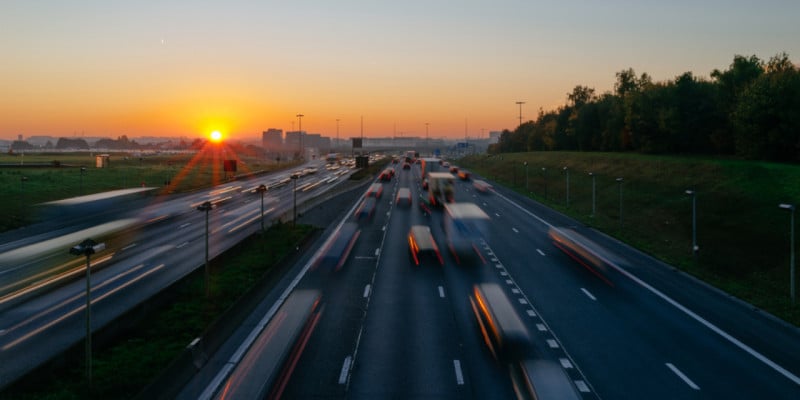 © Shutterstock.com
If you are moving to Belgium, it's important to know the rules and procedures related to driving. This article explains how to obtain or convert a driver's license, the existing categories, the functioning of exams, as well as the essential traffic rules: speed limits, mandatory equipment, parking, and the rights of cyclists and pedestrians.
In this article
- Converting a european driving license for a Belgian license
- Converting a foreign driving license (outside Europe) for a Belgian license
- Obtaining a driving license
- Where to take a driving exam
- How much does a driving license cost ?
- Roads
- Mandatory equipment and documents in a car
- Speed limits on roads
- Parking and parking lots
- Rights of cyclists and pedestrians
The Belgium expat guide
Updated in 2026, comprehensive and free
Read it now
Converting a european driving license for a Belgian license
After registering with the population register or the foreigners' register of your municipality, you can apply to exchange your driving license issued in a European Union country, European Economic Area, or Switzerland.
The conversion of your European driving license for a Belgian license is no longer mandatory. However, it can be very useful in case you lose your foreign driving license.
The application is made at the driving license service of your municipality. The processing times vary depending on the place of residence (on average 2 to 4 weeks).
The documents required to exchange the driving license are as follows:
- Belgian identity card or valid residence permit;
- Passport (depending on nationality);
- Recent identity photo;
- Administrative fees (often between 20 and 30 €).
- Copy of the front and back of the foreign driving license.
Join the Belgium community
Get regular tips and advice to make the most of your expat life
Converting a foreign driving license (outside Europe) for a Belgian license
If you come from a country outside the European Union, European Economic Area, or Switzerland and you reside in Belgium long-term, you must exchange your driving license for a Belgian license to continue driving legally. The application is made at the driving license service of your municipality as soon as you have obtained your Belgian identity card.
If your country has a bilateral agreement with Belgium, the exchange is done directly. Otherwise, you will need to pass the theoretical and practical exams within the year following your registration with the municipality.
The necessary documents for exchanging the license are as follows:
- Belgian identity card or valid residence permit;
- Original driving license;
- Sworn translation of the license if it is not written in Dutch, French, or German;
- Recent identity photo;
- Administrative fees (often between 25 and 35 €).
The processing time is generally 4 to 8 weeks, depending on the municipality.
If you are staying temporarily in Belgium, you can use your national driving license as long as it is recognized by Belgium. If not, an international driving license, accompanied by your national license, will be necessary.
Obtaining a driving license in Belgium
In Belgium, certain motor vehicles require a specific license, according to the category:
- Category AM: Mopeds with a maximum speed of more than 25 km/h and up to 45 km/h;
- Category A: Motorcycles;
- Category B: Cars;
- Category C: Trucks;
- Category D: Buses;
- Category G: Agricultural vehicles.
If you do not yet have a driving license, it is possible to obtain one directly in Belgium by following one of the training paths provided by law.
For category B, two paths are possible:
- Accompanied learning: temporary license valid for 36 months, with one or more guides;
- Driving school: temporary license valid for 18 months, with a minimum of 20 hours of practical lessons.
Category B driving license candidates must be at least 18 years old and pass a theoretical exam (50 questions, minimum 41 correct answers) on the highway code and traffic rules. This exam is valid for 3 years. After two failures, 12 hours of theoretical lessons at an accredited driving school become mandatory (except in certain cases).
The practical exam can only be taken if the theoretical exam is valid. In case of two practical failures, 6 additional hours of lessons are required. An expired temporary license can only be renewed after a 3-year period.
Where to take a driving exam in Belgium
Candidates can take a driving exam privately. They will thus obtain a temporary driving license, valid for 36 months. The teaching period is at least three months with an instructor. The instructor must have held a driving license for more than 8 years.
Candidates can also choose conventional driving schools. They will obtain a temporary driving license valid for 18 months. The teaching period includes 20 hours of practice. The exam can be taken after a minimum of three months.
Note that candidates who fail the exam twice must take six additional hours of practice at an accredited driving school before they can retake the exam.
How much does a driving license cost in Belgium?
The fees related to obtaining a license vary depending on the category, region, and municipality, but as a guide:
- Theoretical exam: around 16 €, with an additional fee of about 50 € for an interpreter/translator if necessary;
- Temporary driving license: 26 to 30 €, depending on the municipality;
- Practical exam:
- Category B (car): around 36 € for the test on private grounds and 56 € for the test on public roads;
- Category A (motorcycle): around 18 to 22 € for maneuvers on private grounds and 56 € for road traffic.
- Issuance of the definitive license: 25 to 35 €, depending on the municipality;
- Practical lessons at a driving school: around 50 € per hour, or about 1,000 € for a 20-hour cycle.
Costs may be higher for heavy vehicles, buses, or for certain professional training courses. Detailed information is available from the GOCA (Group of Accredited Companies for Vehicle Control and Driving Exams).
Roads in Belgium
As in many European countries, Belgian roads are generally well-maintained, but the quality can vary by region. Flanders, Wallonia, and Brussels each have their own network and investment policy.
There are no tolls for private cars. However, trucks over 3.5 tons must pay a kilometer charge via the Viapass system.
Driving is on the right, as in most European countries.
Mandatory equipment and documents in a car in Belgium
A reflective vest, a fire extinguisher, a first aid kit, and a box of new bulbs are all mandatory safety accessories in a car in Belgium. A warning triangle is also required.
In addition to these items, the following documents must always be in your vehicle:
- Driving license;
- Registration certificate (gray card);
- Insurance proof (green card);
- Technical inspection certificate if the vehicle is subject to it.
Speed limits on roads in Belgium
In built-up areas: the standard limit is 50 km/h. However, many municipalities impose 30 km/h in certain residential areas, around schools, or throughout their territory (as is the case in Brussels since 2021).
Outside built-up areas: the maximum speed is set at 70 km/h in Wallonia and Flanders.
On certain roads, a sign may allow a speed of 90 km/h. Roads with two separate carriageways, but without motorway status, are often limited to 70 or 90 km/h depending on the signage.
Motorways and expressways: the maximum speed is 120 km/h, unless otherwise indicated.
In all cases, lower limits may be imposed temporarily, especially during roadworks, in adverse weather conditions, or in specific zones such as meeting zones and residential zones (20 km/h).
Parking and parking lots in Belgium
You can apply for a residential parking permit from your municipality to park your vehicle near your home. The conditions, validity period, and fee vary by city. In Brussels, some municipalities offer the first card free of charge per household, while others apply an annual fee.
In cities, parking is often paid via parking meters. Blue zones allow free but time-limited parking; you must then use a blue disc, available in supermarkets, service stations, and some stores.
The Belgium expat guide
Updated in 2026, comprehensive and free
Read it nowRights of cyclists and pedestrians in Belgium
In Belgium, cyclists benefit from specific signs and markings that offer them certain advantages:
- Possibility to turn right or go straight at a red light if a sign allows it;
- Riding against traffic in certain one-way streets when the "Limited One-Way" (SUL) sign is present;
- Possibility to occupy the full width of a lane when safety requires it (e.g., on a narrow road or limited to 50 km/h).
It is forbidden to park or stop on a cycle path, and motorists must leave at least 1 meter of distance when overtaking (1.5 meters outside built-up areas).
Pedestrians have priority over drivers when they are on or entering a pedestrian crossing. Motorists must also yield to pedestrians who clearly indicate their intention to cross.
Useful links:
Mobility and Transport – List of countries whose driving licenses are recognized in Belgium
ℹ️
We do our best to provide accurate and up to date information. However, if you have noticed any inaccuracies in this article, please let us know in the comments section below.
Comments
 kalsangtsering9 years ago(Modified)does it require to have driving license for scooter under 50cc in Belgium? and also does it require number plate on under 50cc scooter?
Essential services for your expat journey

Choose the best health insurance
Protect your health and get easy access to treatment for expats in Belgium.

Plan your international move
Facilitate your move to Belgium by getting a quote from our top rated movers.

Open a bank account that suits you
Discover the best international banks to manage your money securely.

International life insurance
Simple term-life insurance covering you & your family across borders
Further reading
Getting around Namur
Namur has no metro or underground rail network: daily public transport in the city runs entirely on TEC buses and ...
Living in Leuven
Most people assume that a Belgian university city of 100,000 residents will be affordable, easy to navigate in ...
Sporting activities in Brussels
Every day, Brussels buzzes with people practicing their favorite sports. There are many clubs and various courses ...
Buying property in Ghent
What stops most foreign buyers from purchasing property in Ghent? Not the law: Belgium imposes no ...
Eating out in Charleroi
The first weeks in Charleroi tend to recalibrate food expectations quickly. The city's dining culture runs on ...
Discover more
Join the Belgium community
Get regular tips and advice to make the most of your expat life
Hot topics on the Belgium forum
- Theory Driving Test - Need past questions/materials in English
- Preparing for the driving license exams in Belgium
- Buying a car before official registration in Belgium
- Buying car
- Alternatives to take practical driving lessons outside driving school
- British company car in Belgium
- Changing the company by using single permit card
- Driving license conversion - Kuwait
- Obtaining Belgian driver's licence
- Practical driving test
- Driving license - exams in English
- 30h driving lessons and then immediately driving test?
- Buying car in Belgium
- Buying a Scooter
- Driving Theory Book & Online Study (English)
- How to bring your car to Belgium
- Getting a driving license in Belgium.
- Buy an used motorbike in Belgium