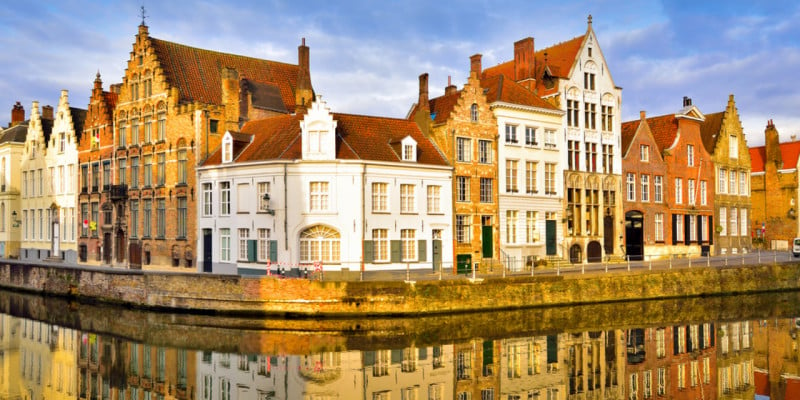
The housing market in Belgium
Most expats opt for renting when they settle in Belgium. However, some are drawn to the idea of investing in real estate due to the benefits of property acquisition in Belgium. Indeed, the Low Countries offer properties at lower prices compared to their neighbors.
After several years of continuous increase, real estate prices in Belgium began to stabilize starting in 2023. In 2024, the trend was confirmed: sales picked up again, and the average house price continued to rise, while apartment prices remained stable. Despite the pressure of interest rates, demand remains strong, particularly in major cities and around Brussels.
Good to know:
About 70% of the Belgian population owns their home.
Is real estate purchase accessible to foreigners in Belgium?
Foreigners can invest in real estate in Belgium (house, apartment, land, etc.). However, certain conditions apply regarding taxation, depending on whether you are a resident or not. Remember to seek additional information based on your situation and residency status.
Generally, there are three types of real estate:
- Residential buildings: classic houses, investment properties, villas, bungalows, country houses, apartments, studios, or parts of buildings for residential use;
- Non-residential buildings: commercial houses, hotels, inns, shops (or parts of buildings for commercial use), office buildings, industrial or miscellaneous buildings, agricultural and horticultural operations;
- Land: building plots, agricultural land, meadows, orchards, mixed-use land (agricultural or industrial), woods, non-exploitable or unclassified land, small plots, etc.
Below is an overview of the average real estate prices in Belgium in the first quarter of 2025:
- Houses: around €340,000
- Apartments: €264,139 → approximately €275,000 €
Read alsoTaxes in Belgium
Finding real estate in Belgium
Most properties for sale in Belgium have a sign outside the house or on the balcony. These signs are usually orange and display “on sale” (in English), “te koop” (in Dutch), or “à vendre” (in French).
You can also search for properties online. Many websites are dedicated to the sale and rental of real estate in Belgium. You can choose from platforms such as Century 21, Immoweb, Logic-Immo, and Zimmo. You may even be able to find houses for sale through groups and online forums, especially those for expats.
You can also seek help from real estate agencies (immokantoor in Dutch), but remember that this service comes at a cost. Agency fees range from €250 to €1,000, and sometimes more. Make sure to verify that the agent you use is accredited by visiting the Professional Institute of Real Estate Agents (IPI) website.
For a more targeted search, consider hiring real estate hunters. They are similar to real estate agents but offer a more personalized service. This also means higher fees.
Some properties in Belgium are sold at auction. They are publicly announced in newspapers with the sale details. They can be interesting opportunities for expats looking to become homeowners in Belgium.
Read alsoBuying real estate in Brussels
The procedures when buying property in Belgium
There are three phases in the real estate buying process in Belgium: the offer, the sales agreement, and the notarial deed.
The purchase offer
The purchase offer (koopintentie in Dutch) is a written proposal made by the buyer to the seller, with a proposed price and certain conditions. Contrary to what is sometimes believed, this offer binds the buyer once it is accepted by the seller. If you change your mind after acceptance, you risk penalties. The seller, meanwhile, is no longer free to accept another offer once they have signed.
Good to know:
Some agencies require a small deposit to reserve the property. This amount is not always refundable in case of withdrawal, so be cautious. Even though the purchase offer is not mandatory, it is widely used, especially in areas where competition is strong.
It is in your interest to offer between 5 and 15% less than the asking price for your bid.
If you are taking out a mortgage in Belgium, the lending institution may require a property valuation. Even if some do not require it, it is always a good idea to have one done as it could reveal defects in the property that you might have missed during your first visit. If this is the case, you can then lower your offer. Valuation surveys generally cost around €200, plus VAT. You can either find a surveyor through a real estate agent or search via the Royal Institute of Chartered Surveyors (RICS).
The sales agreement
The sales agreement, also known as verkoopcompromis in Dutch or sales agreement in English, is the document that displays all the details of the potential sales contract.
If you do not speak the language in which the document is written, your real estate agent or notary can have it translated for you. Otherwise, you have the right to hire and bring a translator.
Once the buyer and seller have signed this contract, it becomes binding. The seller can no longer withdraw or accept a higher offer and reject yours.
At this stage, the buyer will need to pay about 10% of the total amount into a trust account or to the notary (for those with a mortgage, the lender will handle this). This amount cannot be given to the real estate agency or the seller.
The usual deadline for signing the authentic deed with the notary is a maximum of four months, although it is often set at three months in practice.
The notarial deed
The deed or notariële akte in Dutch is the document that certifies the transfer of ownership. It must be completed within four months following the sales agreement by a notary.
During this period, the notary performs the necessary legal checks (charges, mortgages, urban planning, etc.). A property valuation by an expert (architect or surveyor) can also be carried out, especially if you are taking out a mortgage. The deed is then officially registered.
In total, about 11 to 15% of the property's price will go towards various sale-related costs. These will be borne by the buyers (for new constructions, this will rise to about 22%). These costs include:
- Registration fees:
- 6% in Flanders (reduced rate under conditions);
- 12.5% in Wallonia and Brussels (standard);
- Some reductions or exemptions exist depending on the region, the type of property, or your status.
- VAT: 21% of the purchase price (only for properties built less than two years ago).
- Notary fees: They vary from 0.2 to 4% of the purchase price, with an average of 1.6%. The percentage is predetermined by law, based on the sale amount.
- Mortgage: Administrative fees vary depending on the lending institution and the type of mortgage you take out.
- Agency fees: between €200 and €1,000.
- A home insurance is required by banks if you finance the property with a mortgage. A remaining balance insurance is also recommended.