

Due to the presence of European institutions and organizations such as NATO, the Belgian capital hosts numerous expatriates from all walks of life every year. Although they often live and work there for decades, just as many people return to their home countries at the end of their contracts. As a result, finding available housing is never too difficult. Apartments and houses become vacant and are continually put back on the market throughout the city.
Housing in Brussels
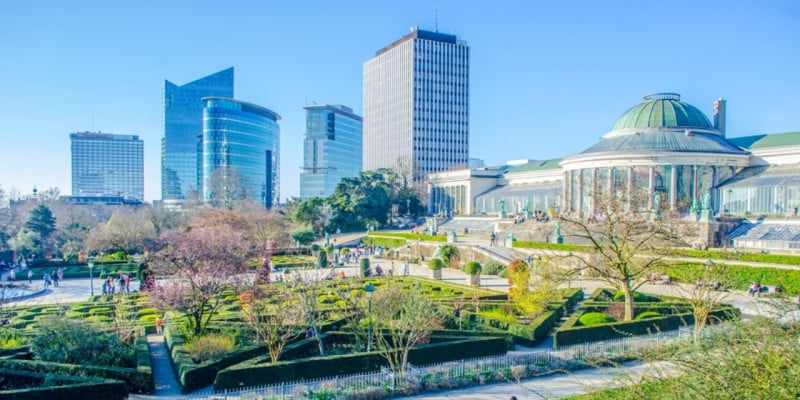 © Shutterstock.com
Brussels attracts many expats thanks to its multicultural environment, dynamic job market, and affordable cost of living. With its 19 communities offering varied atmospheres, the city offers a wide range of accommodation, from student housing to family homes. This guide helps you get to know the neighborhoods, prices, rental conditions, and the best tips for finding accommodation safely.
In this article
Looking for your dream home in Brussels?
Find a real estate agencyAtmosphere and cultures in Brussels
As one of the most cosmopolitan cities in the world, Brussels is a true "melting pot" where people, cultures, and languages from diverse backgrounds mingle. Residents enjoy a very high standard of living, and it's a city where you can have a fulfilling career without compromising your work-life balance.
The atmosphere is very relaxed and inclusive, with each of its nineteen districts having its own unique characteristics and ambiance. There's always something happening in Brussels as the cultural scene is dynamic and diverse. This is largely thanks to the presence of the European Union (EU) and the various nationalities working for the many international institutions based there.
In the city, everyone will feel a bit at home, as you stroll through its streets, you'll encounter everything: from Congolese communities to the Brazilian district, through Middle Eastern markets or classic Belgian bars and restaurants.
The Brussels expat guide
Updated in 2025, comprehensive and free
Read it now
Popular districts in Brussels
After deciding to settle in Brussels, your priority will be to find housing in this city of over 1.2 million inhabitants. In total, Brussels is made up of nineteen different districts, each with its own ambiance, always offering something different.
Here are some of the most popular districts in Brussels:
Brussels City
One of the most popular districts in Brussels is undoubtedly Brussels City, the historic center of the Belgian capital. You'll find many tourist attractions there, as well as a multitude of bars and restaurants for your dining pleasure.
Located in the heart of the capital, Brussels City benefits from an excellent transport network. Thus, you can reach most other regions of Brussels in no time. Unfortunately, this great popularity means that finding housing there can be a bit more complicated, and administrative services often have long waiting times.
Ixelles
Ixelles is another Brussels district, very popular among expatriates. It's very trendy and brimming with restaurants, shops, and entertainment options like cinemas, among others.
This district is very diverse, making it perfect for families wanting to live in a vibrant melting pot. For example, within the district, there are areas like the African Quarter of Matonge and Place de Châtelaine. In fact, you'll find people from all walks of life in Ixelles!
Lastly, note that Ixelles has an excellent transport network to the rest of the city.
Etterbeek
Etterbeek is yet another trendy district to consider, especially if you have young children. Many expatriate families consider this district the best for living in Brussels. It indeed has the highest number of schools and universities in all of Brussels! Additionally, Etterbeek boasts beautiful 20th-century townhouses, perfect for small families.
This doesn't mean Etterbeek isn't suitable for young professionals. In fact, there are also many small apartments ideal for singles. Moreover, with plenty to do at night, boredom is not an option. And if you ever wish to venture out for an exciting night out in the rest of Brussels, Etterbeek offers many efficient transport facilities to get you around the Belgian capital.
Saint Gilles
If you want to experience the local lifestyle of a trendy district, consider Saint-Gilles. You'll find fantastic restaurants, cafes, and superb shops there. Also, discover its cinemas, art galleries, and even Turkish baths. Note that this district also has a rich nightlife.
With the Gare du Midi located in Saint-Gilles, it goes without saying that you'll benefit from an excellent public transport network in this district.
Woluwe-Saint-Lambert
Woluwe-Saint-Lambert is located on the outskirts of Brussels, so if you want to live in a slightly quieter place, it's the ideal option.
Woluwe-Saint-Lambert has practically everything you might need, making it the ideal district for those who don't like to travel far. You'll find numerous public facilities and plenty of green spaces.
Woluwe-Saint-Pierre
Woluwe-Saint-Pierre is somewhat similar to Woluwe-Saint-Lambert in that it's a self-sufficient district where you'll easily find all the amenities you need.
It's another district on the outskirts of Brussels. There are large houses with gardens where children can play, making it the perfect district for large families. But if you're looking for apartments or townhouses, the district has those too.
Schaerbeek
A district not far from downtown Brussels, Schaerbeek is a rich melting pot of culture, gastronomy, and art. 140 different nationalities live there!
As it's very lively, we can only suggest it if you want an exciting life where you can discover the typical Art Deco and Art Nouveau architecture of Schaerbeek while enjoying the green spaces.
Uccle
This is also a district to consider if you have a family and are looking for a large house. Uccle is perfect for expatriates as there are many international schools and a huge cosmopolitan community.
Despite its large expatriate population, Uccle enjoys a small-town atmosphere, making it perfect for those wanting to escape the hustle and bustle of the big city.
Watermael-Boitsfort
Located next to Ixelles, the area has excellent access to downtown Brussels. Despite its central location, Watermael-Boitsfort actually has many rural houses and villas, allowing you to enjoy a country atmosphere.
And if you have children, know that the International School of Brussels is located there.
Saint-Josse-ten-Noode
Saint-Josse-ten-Noode is the smallest district in Brussels. But don't be fooled! It's actually one of the most densely populated, making it a very rich melting pot. And that's why you'll never need to go far to, in a way, "travel" the world. You'll mostly find many expatriates from Turkey and the Middle East, and if you're from these regions, you'll feel at home.
If you're a fan of inspiring architecture, then Saint-Josse-ten-Noode is a place that will attract you. This district has many interesting neoclassical gardens and greenhouses to see and visit.
Other notable districts in Brussels
Integral parts of Brussels, the towns of Forest and Molenbeek-Saint-Jean are located not far from downtown and host a multicultural population. But as they are not as popular as the neighborhoods mentioned above, you can find affordable housing there and many hidden gems.
On the outskirts of Brussels are the more residential neighborhoods of Auderghem and Anderlecht. They both offer many green spaces and are much quieter and more peaceful than areas near downtown.
Grouped in the northwest of Brussels are the neighborhoods of Berchem-Saint-Agathe, Jette, Ganshoren, and Koekelberg. Relatively unknown to most expatriates, they offer very affordable housing, partly because of their distance from the center of Brussels. In this regard, they are very similar to Evere, where NATO is based, east of the city.
While most expatriates working in Brussels reside in the city itself, the country's transport networks and short distances mean that many people come to work there daily from other cities like Antwerp, Ghent, and Leuven, which, by the way, are also very pleasant places to live.
Join the Brussels community
Get regular tips and advice to make the most of your expat life
Safety in Brussels
In terms of safety, Belgium and Brussels are relatively safe places to live and get around. The crime rate is modest, which is rare for a European capital. You'll feel safe and almost relaxed when walking almost anywhere in the city, although there are certain areas to avoid at night. Serious crimes are thankfully sporadic. You should mainly be more cautious of petty crimes like pickpocketing or muggings, even though they are relatively rare.
The areas where you should pay particular attention to your belongings are around the three main stations: Gare du Nord, Gare Centrale, and Gare du Midi, where pickpockets mainly operate. At night, the areas to avoid or at least where to be extra cautious are Anderlecht, Brussels North, Molenbeek, Schaerbeek, and Saint-Josse.
Statistics collected by Statistics Brussels show that between 2012 and 2022, the crime rate has generally decreased in the city, making Brussels increasingly safe. However, home burglaries in Brussels have increased in recent years, and it's a good idea not to leave anything valuable in your car when you park.
Types of housing in Brussels
When it comes to the types of housing offered in Brussels, you'll find everything: from elegant townhouses for rent to student housing, including shared apartments. For short stays, you also have a choice among the many hotels, hostels, aparthotels, and Airbnb rentals scattered throughout the city.
As you can see, each area of Brussels has its own characteristics, pros, and cons. It will therefore be wise for you to consider your priorities when choosing your place to stay in Belgium.
Rent prices in Brussels
For a capital that hosts so many powerful and prestigious international organizations, Brussels is a remarkably affordable place to live. Rent prices are not that high. For a two-bedroom apartment close to downtown, you'll generally pay between €1,000 and €1,500 per month. However, keep in mind that you'll also need to pay for gas, electricity, and water in addition.
Rents decrease as you move away from the center of Brussels and mainly depend on whether the property to rent is fully furnished or not.
Shared accommodation is also very common and is the most easily accessible form of housing if you wish to stay at a lower cost. Student housing, on the other hand, is the cheapest and most basic. Some individual rooms will cost barely €300 per month. However, with the inflation of the cost of living, the budget generally expected for a "kot" is between €400 and €450.
Rental conditions in Brussels
When renting an apartment in Brussels, there are several essential things to consider, such as the lease. Many people arriving in the city for the first time will be surprised to find that most rental contracts are offered on a 3-6-9 basis. This simply means that a rental contract in Brussels can last from three to nine years!
While this may seem a bit crazy to some people, it's mainly a guarantee of stability that grants even more freedom and rights to tenants, unlike what is practiced in some other Belgian cities.
In Brussels, you can terminate the contract at the end of your professional contract or if you need to move unexpectedly. However, keep in mind that you'll have to pay the landlord compensation equivalent to three months' rent if you need to break the contract during the first year.
Due to the Belgian preference for this real estate rental system, it can be a bit difficult to find short-term accommodation in Brussels, although it remains certainly possible.
In anticipation of the signing of a rental contract in Brussels, the landlord and prospective tenant generally schedule a visit to the property. They then proceed to a condition report to draw up an inventory that both parties must agree upon and sign. This helps determine the initial condition of the property and list any existing issues, so that both parties do not disagree on anything when it comes time for the tenant to move out. A security deposit of up to three months' rent is usually required. The amount will then be held in escrow in a Belgian bank account in the tenant's name.
During the lease period, the responsibility for the condition of the property lies with the tenant, and while this means you'll need to keep the place clean and in good condition, it also gives you more freedom to arrange it to your taste and feel at home. However, at the end of the rental contract, you must return the property in the condition you found it when you moved in.
While tenants are responsible for everything they use in the apartment, it is the landlord who is responsible for structural maintenance and resolving any issues that may arise with plumbing, electricity, or heating systems, for example.
Before the lease agreement is signed, at the landlord's request, the tenant may be required to present proof of identity, proof of income, proof of address, a tax return, bank and/or professional references.
The Belgium expat guide
Updated in 2026, comprehensive and free
Read it now
Finding accommodation in Brussels
When it comes to finding accommodation in Brussels, there are many ways to go about it. Many websites offer properties to visit, and many expatriates often find their apartment or house on Immovlan.be or Immoweb.be.
Although scams on websites are relatively rare, it's always good to be very attentive.
Attention:
Never pay a deposit before visiting the apartment and signing the lease.
To help you in your search, prioritize the real estate agent. You will find a list for all Brussels districts on the Zimmo website.
For those of you who have a little more time, it might be to your advantage to stroll through one of the neighborhoods whose atmosphere you might have liked. You'll surely find signs with the words "for rent" or "te huur" (in Dutch) displayed outside properties or in apartment windows. If you come across a property that appeals to you, simply call the number displayed and schedule a visit with the owner.
Another excellent way to find accommodation in Brussels is to turn to social networks. For example, many Facebook groups offer roommate opportunities and properties for rent. However, be aware that many scammers target expatriates in these groups. Keep your wits about you, and if something seems too good to be true, be cautious! Again, never pay a deposit before seeing the apartment and having the keys in hand.
ℹ️
We do our best to provide accurate and up to date information. However, if you have noticed any inaccuracies in this article, please let us know in the comments section below.
Comments
 GFiamingo9 years ago(Modified)Another really nice and green neighborhood is the Auderghem commune, located south, served by metro (Herman Debroux terminus) and is at the edge of the huge Forêt de Soignes, with the Rouge Cloitre amenity space.
Essential services for your expat journey

Choose the best health insurance
Protect your health and get easy access to treatment for expats in Brussels.

Plan your international move
Facilitate your move to Brussels by getting a quote from our top rated movers.

Open a bank account that suits you
Discover the best international banks to manage your money securely.

International life insurance
Simple term-life insurance covering you & your family across borders
Further reading
Find a job in Brussels
Brussels, a multicultural city and the seat of major European institutions such as the EU or NATO, offers a ...
Universities and student life in Brussels
Brussels is a wonderful city to live and work in. Consequently, it has a lot to offer students, whether it is ...
Sporting activities in Brussels
Every day, Brussels buzzes with people practicing their favorite sports. There are many clubs and various courses ...
How to develop your social and professional circle in Brussels
Brussels, a cosmopolitan capital and home to many international institutions, is a city where social and ...
What to expect when living in Brussels
Brussels, one of the most cosmopolitan cities in the world, is regularly ranked among the best places for expats ...
Discover more
Join the Brussels community
Get regular tips and advice to make the most of your expat life
Hot topics on the Brussels forum
- What is domiciliation ?
- temporary place to stay
- Open a blocked account for rental guarantee locative
- Housing in Vilvoorde-concerns
- Buying furniture in Brussels -your advice!
- Buying a house in Belgium (Brussels area)
- Work at the Brussels airport. Where to rent apartment?
- Mold in the apartment
- perfect location in south of Brussels
- Rent reduction due to major repairs
- Anyone familiar with the Woluwe area?
- short term rent
- nivelles?
- Where is the best place to live if your work place is in Zaventem?
- i need to rent a small studio or flat
- REGISTRATION IN THE COMMUNE OF ANDERLECHT
- Where to live in Brussels with a baby
- Neighborhood suggestions