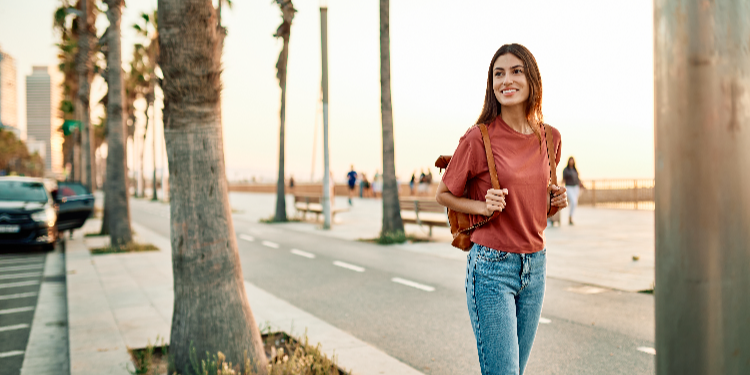
Goodbye endless paperwork, perpetually delayed trains, traffic jams that seem to go on forever, and the stress of watching your grocery bill climb at the checkout. For many expats, moving abroad means more than just a change of scenery. It also means leaving behind everyday frustrations they had long accepted as normal. From habits shaped by necessity to routines they never thought to question, living in another country has shown them that life can be different, and sometimes, a whole lot better. Expats share the things they certainly don't miss about their old lives.
Paperwork is one of those daily chores most of us could happily live without. Countries like Germany, Spain, Italy, Turkey, and France have a well-earned reputation for heavy bureaucracy. Would-be expats voice their concerns on social media, including one person preparing to move to Spain who summed it up bluntly: "From what I've heard, it's a nightmare." Citizens from notoriously bureaucratic countries agree. Leaving all that paperwork behind comes as a genuine relief. Many report that moving to Ireland or Japan meant dealing with far less of it. As one expat put it: "Germany was tough for me, mostly because of the time it took and the endless waiting. Japan was so much simpler."
That said, even countries with a reputation for red tape are changing. One expat had no trouble at all getting her residence permit in France, though she found the process in Germany "extremely complicated." Still, expats tend to agree on one thing: wherever you go, bureaucracy, with its "endless registration forms" and "lack of efficiency," can be brutal. It's no surprise that it ranks among the things expats are most relieved to leave behind.
Is life without a car even possible? For many people used to relying on one for everything, the answer feels like a hard no. Some cities were practically built around the car: Dubai, Los Angeles, Kuwait City, Manila, and Riyadh are prime examples. Public transport exists in these places, but it rarely covers everything you need. When you're exploring a sprawling metropolis, a car quickly becomes a necessity. It's a habit that's hard to break, and in an era of climate change, an increasingly problematic one. Electric vehicles help, but they're not the whole answer. Even the most car-dependent expats, though, have discovered a different way of living. "I couldn't imagine life without my car. I even looked into shipping it abroad. Then I discovered the joys of public transport."
Zurich, Hong Kong, Prague, Tokyo, Seoul, Singapore, Vienna, Berlin, Stockholm, Amsterdam, and Copenhagen are among the world's best cities for public transport. The cost can be high (Japan being a notable example), but the quality of life makes it worthwhile, especially when parking is scarce and stressful. In the end, expats say they're glad to have traded their car-dependent habits for a calmer lifestyle, with public transport that is "punctual and clean."
Join the community
Get regular tips and advice to make the most of your expat life
Less daily anxiety, more peace of mind
"Since leaving the United States, I'm no longer stressed. Back when I lived in the city, I was constantly in survival mode." Stories like this are common among expats who have swapped a high-pressure environment for somewhere more relaxed. City life tends to be more stressful than rural life, but expats who have made a radical change of scenery are unanimous: they've shed daily habits they didn't even realize were weighing on them and learned to enjoy a gentler pace of life in their new home. One expat in Uruguay appreciates the calm and the "family spirit" of his adopted city. He feels part of a community without feeling suffocated by it, and says this new sense of ease has genuinely improved his day-to-day life.
When the city stops feeling like hostile territory
That sense of calm also shows up in something subtler: being less on guard. Expats describe the shift vividly. "Before, I was living as if I were in hostile territory, but I was so used to it that I didn't even notice. Public transport was stressful. Even the way people looked at you in the street." Some parents describe feeling compelled to be overprotective of their children, living with a constant, low-level fear that something might happen to them. "That's just what life in the United States is like. You carry this fear around and it never really goes away." Of course, no country is entirely safe, and zero risk doesn't exist anywhere. But expats notice that moving abroad has changed their habits, for the better. "Abroad, I discovered small thoughtful touches, like free electric air pumps for bike tires." Others highlight how cities share their space more fairly, with pedestrian zones, cycle lanes, parks... These details, they say, add up and genuinely improve daily life. They feel safer, and they're building new habits to match. "I've learned to trust myself more, and to trust other people more too," one expat concludes.
Less stress on your wallet, even when buying fruit and vegetables
The global economic crisis is creating uncertainty and putting real pressure on expats' finances. Buying groceries and eating out can be a genuine source of stress, particularly in major cities. One expat working in banking shared her experience: "I was based in Paris, then transferred to New York. The reality hit fast. Even with a higher salary, it was hard. I wasn't used to spending hours planning my grocery shopping, but I had no choice; I had to count every penny." Back in France, she says she's happy to have her old habits back. "The cost of living is still more manageable in France. Even in Paris, you can make it work."
Another expat had the opposite experience. Used to "counting everything" at the supermarket, "especially when it came to fruit, vegetables, and fresh produce," she moved to a country with a significantly lower cost of living. "I was practically starving myself to avoid going into the red at the end of the month. It was rough. Since I left, grocery shopping is stress-free! I actually earn less than before, but here, things are just cheaper. Even fruit and vegetables." She says she eats better and more healthily, for less money. A win-win, and she has no plans to go back.
Who hasn't been caught outside with an urgent need and nowhere to go? There are workarounds, of course, including devices like the stand-to-pee funnel, which does exactly what it sounds like and lets women urinate standing up without the mess. Many women, travelers or not, have made it a habit to go out prepared. But these solutions don't replace actual toilets, and for many expats, finding one is a real ordeal. One expat who returned to Japan after years of living in the United States and Europe put it plainly: "The stress of always having to track down a clean toilet... I know it might sound trivial, but there are moments when you genuinely wonder why countries don't invest more in making everyday life easier."
Far from trivial, the sentiment resonates with locals too. Finding a clean, free public toilet can be a real challenge. In some cities, they simply don't exist. In others, you pay for facilities that are barely adequate. At the other end of the spectrum, some cities have toilets almost everywhere: metro stations, train stations (even small rural ones), convenience stores, public parks, and more. It's easy to understand why an expat accustomed to reliable facilities finds it stressful to land somewhere with none. Conversely, those who grew up making do are delighted to stop worrying about it altogether.
Freelance web writer specializing in political and socioeconomic news, Asaël Häzaq analyses about international economic trends. Thanks to her experience as an expat in Japan, she offers advices about living abroad : visa, studies, job search, working life, language, country. Holding a Master's degree in Law and Political Science, she has also experienced life as a digital nomad.