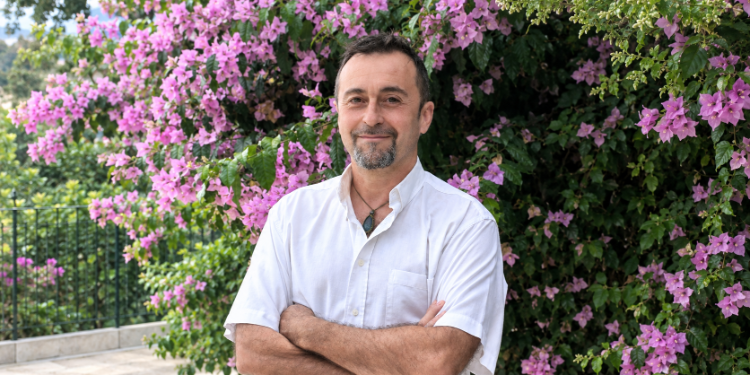
What if the dream of starting a new life abroad turns out to be very different from what you imagined? In 2011, Didier Vergez, his wife Myriam, and their daughter left southwestern France behind to start a new chapter in Costa Rica. Captivated by its breathtaking landscapes, lush nature, and welcoming people, they had little idea of the challenges and surprises that lay ahead. Fifteen years later, their journey has been anything but straightforward, marked by career changes, unexpected opportunities, and moments of self-reflection. Now settled in Atenas, where he works in real estate, Didier shares with Expat.com the highs and lows of his family's adventure, what it really takes to build a life abroad, and why life overseas isn't always as picture-perfect as it seems.
You left southwest France in 2011 with your family. What made you want to go?
We wanted a fresh start. We felt the need to discover something new, break out of a daily routine that had started to feel monotonous, and experience something more exciting.
We also wanted to open our daughter's eyes to a different environment, culture, and way of life. Leaving was our way of embarking on a family adventure and seeing what life had to offer somewhere else.
We had visited Costa Rica several times before moving there, and every single time, the country left us in awe.
We were particularly struck by how welcoming the locals were, always warm and friendly toward us and our daughter. And the nature... It's simply breathtaking. The landscapes, the vegetation, the wildlife: it all made a deep impression on us. Over the course of those trips, we started to wonder whether we could actually live there.
Join the Costa Rica community
Get regular tips and advice to make the most of your expat life
How did you prepare for the move as a family?
With quite a bit of stress, to be honest! Once we made an offer on a property in Costa Rica and it was accepted, everything moved fast. We had about three months to wrap up our lives in France and get ready to leave.
It was an intense period. We had so many things to manage at once, all while coming to terms with the fact that we were really leaving our life in France behind. There was genuine excitement about the adventure ahead, but also a lot of stress with everything still left to do.
It's a very particular time, because everything is new and you have to learn to find your footing in a completely different environment.
In our case, we figured it all out on our own, without any outside help. We had to learn a language, navigate administrative processes that sometimes seemed illogical and unnecessarily complicated, adapt to a different way of living and consuming, and get used to nature being everywhere around us.
Building new connections, especially with locals, was part of it too. That wasn't always easy, but it's also what made that period so special: there was so much to discover and learn at every turn.
What brought you to Atenas, and what does your daily life look like there now?
After selling our property in San Mateo, we decided to settle in Atenas and launch a new real estate venture. We already knew people living there, and it seemed like a strong market, partly because of the large expat community.
Today, we make a good living from it. The work also brings us into contact with people from all over the world, each with their own background and life plans. That's something we genuinely enjoy about our day-to-day.
I think relocating abroad as a family is an intense experience for everyone involved. You leave behind everything familiar, you question a lot of things, and as a couple, you have to learn to navigate the unknown together.
For our daughter, it was also an opportunity to discover a new environment and culture. I believe it's the kind of experience that broadens your perspective, even if it also requires real adaptation.
As expats, we often find ourselves making comparisons, sometimes without even realizing it. Some aspects of our new life feel far richer than what we had before, while others are less appealing. After talking with many people in similar situations, I've come to think that's pretty normal when you live in another country.
What has your career path looked like, and what do you do in Costa Rica today?
Back in France, my wife Myriam and I ran a small company. We started in general electrical work, then gradually shifted toward solar energy.
When we arrived in Costa Rica, we opened a small lodge. I also worked in tourism for a French-speaking group on the side, before we eventually moved into real estate, which is what we do today.
It's actually something I write about in my book. Living abroad made us much more open to opportunities as they came along. You lose that sense of "professional security," the idea that you have a job you'll keep until retirement. You have to accept that things change, sometimes in directions you never anticipated.
In my view, that requires an open mindset and a real capacity to adapt. It's also part of why I don't think expat life is right for everyone.
What did you have to learn to work locally and serve an international clientele?
The first thing was becoming genuinely comfortable in both English and Spanish, in everyday life as much as at work. Knowing a few words of a language is one thing; using it to communicate with clients and guide them through major decisions is something else entirely.
Client relations, on the other hand, didn't feel like a huge challenge. I had occasionally worked with foreign clients back in France, and I'd been self-employed since starting my company in 2004. That experience served me well, even as I adapted to a new country and a much more diverse range of people.
Since arriving in 2011, what changes have shaped your life in Costa Rica the most?
I'd say we've lived through several distinct chapters, with multiple career shifts along the way. We've moved from one activity to another, and over time our whole approach to life has evolved from what it was in France.
I don't think there's one single defining moment that stands out above the rest. I see our experience more as a path that keeps building and shifting over the years, shaped by discoveries, changes, and moments of questioning.
Through your work, you meet foreigners looking to settle in Costa Rica. What drives them, and what worries them?
Many come looking for a peaceful retirement in a country with a pleasant climate, stunning nature, and a population that seems far less stressed than in more developed countries.
But we're also seeing more and more people who are still working and simply want a new adventure, as a couple or as a family. They want a change of scenery and a different way of life.
That said, settling in can be unsettling. In those first months, you have to find your bearings, understand how things work, and accept that not everything will function the way it does back home. Some people realize fairly quickly that this new life isn't for them and head back. That's part of why I think it's so important to think your project through carefully: living in another country isn't for everyone.
What misconceptions about life in Costa Rica do you most often hear from people planning to move there?
Some people hold onto a postcard image and assume life in Costa Rica is paradise by default. There are genuinely wonderful moments, and the setting can be exceptional. But daily reality has less appealing sides, too.
Administrative procedures, taxes, and cultural differences all take time and patience. It's also worth remembering that we are guests in their country, which means the effort to understand and adapt to how things work there falls on us.
What advice would you give someone choosing where to live abroad?
I think expat life should remain the fulfillment of a dream, but you also need to keep your feet on the ground. Before settling on a place, it's worth thinking seriously about what you'll actually do there professionally, if you still need to work.
For those moving into retirement, the practical side matters just as much: what amenities are nearby? Does the climate and lifestyle genuinely match what you want from everyday life?
A lot of people are drawn to the coast, for example, and buy a property only to discover they can't handle the climate, or that the atmosphere, which can be quite lively, isn't really their scene. A place you love on holiday doesn't necessarily suit the life you want to live year-round.
After all these years, what do you love most about Costa Rica, and what still feels difficult?
After 15 years here, we're still amazed by the lush nature, the landscapes, and the tropical climate. That sense of wonder hasn't faded, and it remains one of the things that drew us here in the first place.
Over time, we've also come to know the country and its culture much better. There are aspects we find harder to embrace, things that can still be difficult to accept. That's part of the reality of life abroad: even after many years, you don't necessarily feel at home with everything.
I think those reflections are also part of why we're now considering a new chapter somewhere else.
A journalist, holder of the DALF C1 and C2 and a diploma from the University of Mauritius, I have nearly twenty years of writing experience. After six years in the Mauritian press, I joined Expat.com, where I have been working for over a decade, including five years as editorial assistant, and now as editorial manager.