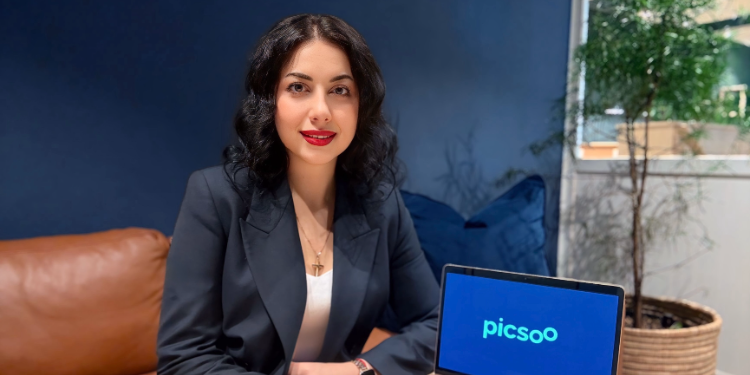
Building a business while settling into a new country means learning on two fronts. For Lolitta Paroniants, a French entrepreneur of Armenian heritage, moving to Mauritius meant building a network, earning the trust of local professionals and accepting that progress takes time. The co-founder and CEO of Picsoo Mauritius reflects on finding her feet, the people who helped her along the way and what she wishes she had known before getting started.
Can you introduce yourself and tell us about your background before moving to Mauritius?
My name is Lolitta Paroniants. I'm French with Armenian roots, and I'm the CEO and co-founder of Picsoo Mauritius.
After studying auditing and management control at INSEEC Business School, I moved into business management and entrepreneurial support, working across accounting, administration, and business development.
What has always driven me is understanding how businesses work, finding solutions, and being part of their growth.
Growing up in a multicultural environment, I was always drawn to the international world. Moving to Mauritius turned out to be the perfect way to combine my professional ambitions with my desire to experience something new.
Mauritius first caught my attention for its international atmosphere, cultural diversity, and quality of life. But I quickly discovered it also offered real opportunities for entrepreneurs. After speaking with local professionals, I realized there was real potential to help businesses go digital, particularly in accounting and management.
On a personal level, I was ready for a change. I wanted to experience a different way of life and take on a new challenge.
Today, I think Mauritius strikes a great balance between professional opportunity and personal fulfillment.
Join the Mauritius community
Get regular tips and advice to make the most of your expat life
Can you tell us about your business and your role within it?
I'm the CEO and co-founder of Picsoo Mauritius, a company that provides accounting and management software solutions for accounting firms, management companies, and businesses.
Picsoo is a Belgian-developed platform with over 35,000 clients across Europe. I'm building this business in Mauritius with Philippe Druez and Jean-Claude Gelin, two seasoned entrepreneurs who helped develop solutions like Ciel and Sage in Belgium.
My role is primarily to grow Picsoo in the Mauritian market: meeting professionals, building partnerships, and gathering feedback to adapt our solution to local needs.
What I love about my work is that no two days are the same. I move between strategic meetings, conversations with entrepreneurs, and live software demonstrations.
How did you go from idea to launch? What were the first concrete steps?
The idea was to bring a solution to Mauritius that had already proven itself in Europe, but tailored to what local professionals actually need.
Before launching, we took time to speak with accounting firms and businesses to understand how they work and what they were looking for.
Building our professional network was an essential first step. When you enter a new market, getting your name out there and earning people's trust has to come before everything else.
What was it like to navigate a new country while building a business?
It was as exciting as it was intense. When you move to a new country, you have to rebuild your routines, your environment, and your network from scratch. Doing that while launching a business added another layer of challenge.
There were moments of doubt and unexpected setbacks, but I don't give up easily. When I set a goal, I focus on finding a way forward. The people I met in Mauritius made a real difference. I found a welcoming, supportive community that helped me find my footing, step by step.
What challenges did you face early on, and how did you overcome them?
One of the biggest challenges was understanding the specifics of the Mauritian market. You can't simply replicate what works in Europe, because professional habits and expectations are different here.
Getting Picsoo known and earning the trust of local professionals also took real effort. My approach was to get out in the field, meet accounting firms directly, and attend professional events.
I also learned to accept that things sometimes take longer than planned. The key is to stay open, keep adapting, and not lose momentum.
When you bring a foreign-developed solution to Mauritius, what needs to be rethought to make it work locally?
That's one of our core challenges with Picsoo. A software product can work perfectly in Europe and still not meet Mauritian businesses' immediate needs. We had to account for local specifics: the chart of accounts, tax regulations, reporting requirements, and multi-currency management.
But beyond the technical side, you also need to understand how professionals work and what they expect. That's why we stay in regular contact with accounting firms and businesses. Our goal isn't to offer a European software product and call it done. It's to deliver a solution that genuinely fits the Mauritian market.
What have you learned about working and building business relationships in Mauritius?
Above all, I've learned how much personal relationships matter. In Mauritius, taking the time to get to know people and build trust is essential, not optional.
Professional networking also plays a significant role. Attending events and connecting with other entrepreneurs opens up real opportunities. I'm particularly active in the France Maurice Chamber of Commerce and Industry network, which has led to many valuable connections.
What I appreciate most is that some professional relationships gradually become genuine friendships.
How did you choose the partners and professionals around you, and what advice would you give a newcomer about building the right team?
For me, trust and complementary skills are non-negotiable. I'm fortunate to work with experienced people who share the same vision and ambitions. I think it's important to recognize your own limits and surround yourself with professionals who bring real expertise to the table.
For anyone looking to start a business in Mauritius, I'd say: take your time choosing your partners, especially for legal, accounting, and administrative matters. A good partner isn't just someone competent. It's someone you can speak with openly and build a lasting relationship with.
What mistakes do foreign entrepreneurs most commonly make when setting up in Mauritius?
One common mistake is assuming the rules and management practices from their home country apply here. They don't.
Some entrepreneurs pour everything into business development and neglect the administrative and accounting side early on. But understanding your tax obligations, tracking cash flow, and setting up proper invoicing from day one matter just as much.
I also see many people still relying on multiple Excel spreadsheets and disconnected tools that don't talk to each other.
My advice: put a structured system in place from the start, and work with professionals who know Mauritian regulations well.
Has being a young woman entrepreneur in Mauritius shaped your experience, in terms of both opportunities and obstacles?
Being a young woman in business sometimes means having to prove yourself more, especially when dealing with executives who have far more experience. But I've never seen that as a barrier. If anything, it pushed me to be more assertive, stand behind my ideas, and build confidence in myself.
I've also met some truly inspiring female entrepreneurs in Mauritius who show that ambitious projects are absolutely within reach.
For me, success has nothing to do with age or gender. It comes down to hard work, determination, and believing in what you're building.
How do you make room for your personal life alongside running a business?
I won't pretend that balance is always easy to find. When you're building a company, work naturally takes up a lot of space, especially at the beginning. But I make a point of protecting time for myself, for the people I care about, and for enjoying life in Mauritius. I love exploring new places, spending time by the sea, and simply switching off.
I'm ambitious professionally, but I don't think success is measured only by what you achieve at work. For me, it also means building a fulfilling personal life and making space for the moments that truly matter.
Looking back, what do you wish you'd known before starting out, and what would you tell someone preparing a similar move today?
I wish I'd understood just how important patience is when you're building something in a new country. You arrive full of ideas and wanting everything to move fast, but some things simply take time, and you have to make peace with that.
My advice would be to prepare thoroughly, understand the local market, and surround yourself with the right people. But I'd also say: don't wait for perfect conditions before you start, because they'll probably never come.
This experience has made me more independent, more adaptable, and far more confident in myself.
In the end, building a business abroad isn't just about growing a company. It's also about learning a great deal about who you are.
A journalist, holder of the DALF C1 and C2 and a diploma from the University of Mauritius, I have nearly twenty years of writing experience. After six years in the Mauritian press, I joined Expat.com, where I have been working for over a decade, including five years as editorial assistant, and now as editorial manager.