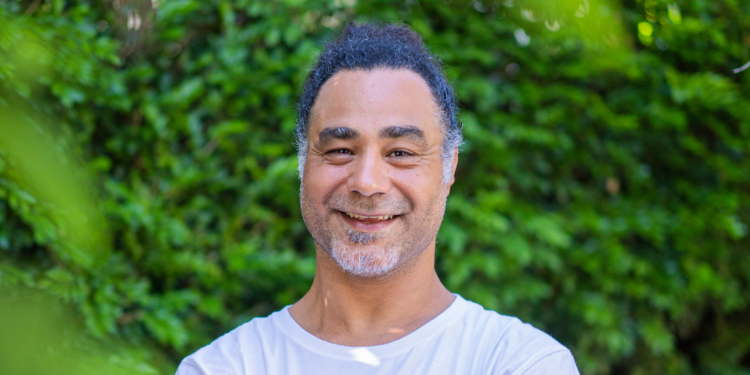
A tech entrepreneur for more than twenty years and based in Mauritius for the past five, Breno Le Gal has built a career that bridges digital innovation, craftsmanship and local entrepreneurship. After founding Ewa's Kitchen, an artisanal business born from a deeply personal journey, he went on to create Crafty, an AI-powered management solution designed to support artisans and independent creators. In this interview, Breno shares his entrepreneurial journey, his perspective on the challenges facing Mauritian artisans, and his vision for a more accessible digital future for small businesses.
You've been building startups for over 20 years. What first drew you to entrepreneurship?
I've always had a vivid imagination and a deep desire to bring my own ideas to life. When you want to turn your visions into reality and see them through, there's nothing more exciting or rewarding than doing it yourself and owning the entire creative process. That freedom to build from a blank page is what has driven me from the start.
Why did you choose to settle in Mauritius five years ago?
I had been living in Spain for eight years, and during my very first year there, I came to Mauritius for a month-long holiday. The unique hospitality, the genuine warmth of the Mauritian people, and the breathtaking beauty of the landscapes made an immediate impression on us and stayed with us ever since. So when the time came to choose a new chapter and a new place to live as a family, we didn't hesitate for long: moving to Mauritius was the obvious choice.
Join the Mauritius community
Get regular tips and advice to make the most of your expat life
You describe yourself as both a tech entrepreneur and a craftsman. How did these two worlds come together in your journey?
Life sometimes takes unexpected turns. After a major personal upheaval a few years ago, I felt a deep need to shift toward something more tangible, more grounded in the real world. A mix of chance and opportunity led me to craftsmanship after 20 years spent exclusively in the tech world.
That said, whether it's lines of code or handmade products, entrepreneurship is entrepreneurship. The challenges vary from one field to another, but the mindset stays the same. Being naturally curious, I've found enormous satisfaction in gaining experience in these two worlds that, on the surface, seem completely unrelated but now feed into each other every day.
Three years ago, you launched Ewa's Kitchen. What inspired you?
Ewa's Kitchen was born of a happy coincidence as I was looking to rebuild my life after an unexpected life event. I wanted to step away from the virtual and launch a strong, healthy local product: the richest, most nutritious bone broth possible.
The real turning point came when I shared our broth with a friend who was severely weakened. Thanks to the natural collagen and amino acids in the broth, her transformation was remarkable, and she quickly regained her mobility. That tangible impact sparked incredible word-of-mouth. Within a few months, we went from a purely family-based production to an explosion of regular orders, propelling us fully into this artisanal adventure.
What challenges have you faced as a small artisan entrepreneur in Mauritius?
The first major challenge, when you put absolute quality before quantity, is sourcing: finding local suppliers who can consistently maintain that level of quality is tough. Then, even though word of mouth is a powerful way to get started, getting your products into stores is a real uphill battle. Without direct access to decision-makers, it's almost mission impossible. Finally, there's the operational loneliness. As a small artisan, you have to be extremely versatile and juggle everything at once: from raw production to marketing, logistics, and distribution.
Was there a specific moment when you realized that existing management tools weren't suited to artisans in Mauritius?
Absolutely. As soon as we passed the threshold of a few daily orders with Ewa's Kitchen, the situation overwhelmed us, and a management tool became essential to keep going and structure our growth. Coming from a tech background, I tested dozens of existing solutions. But the sticking point was very personal: my wife, who runs the business with me, isn't tech-savvy at all. The traditional tools felt too complex for her, and she just wasn't using them day-to-day.
What's the vision behind Crafty? What problems are you trying to solve for artisans and independent creators?
The reality is clear: artisans are incredibly talented. They start out of pure passion or thanks to a unique skill, and word of mouth quickly does the rest. But very soon, they become victims of their own success. Overwhelmed by operations, they end up spending 90% of their time on heavy administrative tasks, at the expense of what they actually do best: creating and producing. Without a system designed to support them, many eventually give up.
The vision behind Crafty, incubated at La Plage Factory in 2025, is to give creators that precious time back. With AI agents working as a team, Crafty integrates directly into WhatsApp, the tool they already use every day, to automate every aspect of their management (orders, inventory, production, communication, marketing) and let them grow their business with peace of mind.
Many creators in Mauritius struggle with the "mental load" that comes with entrepreneurship. What does this expression mean to you?
It's a very real psychological and physical problem. For a solo entrepreneur, the mental load means having to think about absolutely everything, all the time: production, delivery, customers, invoicing. That constant hypervigilance is exhausting. Before long, you live with the ongoing fear of forgetting a critical detail. In the end, the project that started as a source of joy and passion turns into a daily source of anxiety.
Which aspects of running a small creative business are the hardest for artisans in Mauritius today?
It's mainly the curse of unstructured multitasking. An artisan ends up constantly fragmenting their day into a stream of micro-tasks with no real thread: replying to a customer message, checking stock, preparing a parcel, then trying to get back to their craft. This lack of structure breaks concentration and makes daily management extremely heavy, a reality shared by almost everyone who works alone.
Artificial intelligence is often associated with large companies and advanced uses. How can we make AI accessible to everyday entrepreneurs?
Right now, AI is mainly designed for advanced users or large organizations. Our approach with Crafty takes the complete opposite stance: we deploy AI agents dedicated to very specific tasks that work in the background like genuine virtual assistants, without the artisan having to change the way they work. By gradually freeing them from 90% of those time-consuming administrative tasks, we refocus them on the real value of their craft and give them time to grow their business. In short, the goal is to help them work less while earning more!
In your view, what are the risks if artisans and small creators in Mauritius stay on the sidelines of the digital transition?
The biggest risk is falling behind or burning out. Most digital tools today come with barriers to entry: complex dashboards and interfaces that don't match the reality of a workshop. Our approach is radically different: rather than forcing the artisan to adapt to complex technology, the technology adapts to them. We stay within the environment they already know inside out, namely WhatsApp, and we favor the most natural way of interacting: conversation. If tools don't move toward this kind of simplicity, the digital gap for small creators will only widen.
How would you describe the startup ecosystem in Mauritius?
It's an ecosystem that's still very young, but particularly creative and full of promise. The main challenge lies in the local culture, which has traditionally leaned heavily toward building a career within large, established groups. Sometimes, the entrepreneur is still seen as someone who has chosen a marginal path by default, rather than as an innovator eager to shift things and create value for the country. Fortunately, thanks to new initiatives, mindsets are gradually shifting in a positive direction.
What opportunities does Mauritius offer entrepreneurs and innovators? And what are the main obstacles startups still face on the island?
Mauritius offers tremendous opportunities at the ideation stage, with plenty of support structures when you're launching an idea. However, the real bottleneck appears when it's time to move into execution, especially when it comes to seed funding. While there's a clear willingness to build public-private synergy, there's still a lack of real incentives (particularly tax-related) to push private capital to invest heavily in tech innovation alongside the public sector. The ambition to become a "Startup Nation" is gaining ground, but securing seed funding remains an uphill battle today, even an almost impossible mission for founders.
How important are local entrepreneurial communities and networks, such as Mo Angels, for startup founders?
These networks are simply vital. I personally had the chance to benefit from the Mo Angels' support during my fundraising round. It's a wonderful private initiative that's working to shift mindsets around local impact investing. Things are moving in the right direction, since I now have the privilege of having an institutional investor that co-invested alongside them. It's crucial to encourage, scale, and sustain this hybrid format to structure access to capital for young startups.
What advice would you give to prospective entrepreneurs in Mauritius?
Dare, fail, and start again without hesitation! Failure isn't the end; it's an integral part of every successful entrepreneur's journey. Mauritius is a land of exceptional opportunity, ideally positioned at the crossroads of Africa and Asia, while keeping strong connections with Europe. Finally, my last piece of advice: talk about your project with the people around you. If you keep your idea secret out of fear that someone will steal it, there's a 100% chance it will never see the light of day.
A journalist, holder of the DALF C1 and C2 and a diploma from the University of Mauritius, I have nearly twenty years of writing experience. After six years in the Mauritian press, I joined Expat.com, where I have been working for over a decade, including five years as editorial assistant, and now as editorial manager.