Moving abroad: A story of men and women
The image of moving abroad as an exclusively male affair is long gone. The stereotype of the executive relocated overseas by his company is long gone. For many years now, this journey has had a female face too. Today, women are thought to slightly outnumber men among those who live abroad. Like their male counterparts, women who relocate tend to be highly educated, and more and more of them are choosing to go it alone.
In the past, "forced relocations" were far more common: a trailing spouse, usually a woman, would follow the partner holding the work visa. This image of women as inevitable "followers" helped entrench the stereotype of international relocation as a male-driven affair.
Are these shifts helping to redistribute roles? The growing number of women choosing to live abroad is indeed helping to democratize this experience. Networks of women living overseas are organizing at every level, from finding housing to building professional connections, and this progress is most visible in the latter.
How women expats are encouraging future generations
Women already working abroad are well aware of the challenges of female expatriation, but also of the real opportunities it offers. To encourage more women to take the leap, women expats are organizing: business leaders, executives and professionals abroad have created international networks dedicated to women (Professional Women's Network, Female Venture, Worldwide Women's Network, The Expat Woman…). Global networks focused on specific industries also exist, such as Women in Tech, which is holding an international conference in May 2027. Other networks are organized by profession and socio-professional category, such as CEO-Women, which runs an annual conference on leadership and investment (with its next edition in October 2026).
Many women expats are also sharing their stories, particularly through the press and social media. They're executives in Singapore, entrepreneurs in Spain or Brazil, engineers in Japan, and software developers in the United States. What their stories have in common: a willingness to take risks and a positive outlook on expatriation. Their message to women hoping to work abroad? Don't let gender stereotypes hold you back; focus instead on your skills to reach your goals. A career abroad is possible, even in countries known for their gender stereotypes. In truth, very few countries offer exactly the same opportunities to women and men. Even in the most progressive nations, bias still exists.
For these women who've succeeded abroad, relocation has opened up new possibilities. Many quickly landed leadership positions overseas that they wouldn't have secured back home. Some have started their own businesses. Others have moved into teaching, coaching and training. All of them are, in their own way, working to encourage other women to take the plunge and move abroad.
Does international relocation open every door?
With all these strategies aimed at expanding opportunities for women abroad, you might assume that relocation erases gender stereotypes altogether. The reality is more nuanced.
Does studying abroad mirror gender disparities?
Is studying abroad more of a women's game? Several studies suggest that more women than men choose to study overseas. Girls' higher levels of educational achievement is often cited as one of the main reasons. In many countries, studies show that girls tend to outperform boys academically. Another possible explanation is that women may be more inclined to take risks by pursuing their studies abroad. They also tend to view international mobility more positively, not just as a boost to their budding careers, but as a form of personal growth (learning a new language, discovering a new culture, making new friends, and so on).
This gender gap in international education isn't new. Back in the 2000s, studies focused on American students abroad already noted higher numbers of female exchange students compared to male ones. Other factors were cited too, particularly choice of subject: at the time, study-abroad programs tended to focus more on the humanities, fields where women outnumbered men.
Of course, this observation can't be applied to the rest of the world. Especially since today, countless study-abroad programs exist across science, engineering, mathematics, advanced technology, and more. While men still dominate these fields traditionally seen as "masculine" (again, due to gender stereotypes), more and more women are entering the sciences. Some governments have even introduced initiatives to correct gender inequality and make it easier for women to access scientific fields. Here too, qualities often associated with women (academic excellence, a taste for risk, curiosity about other cultures) help explain their growing presence in institutions abroad.
International mobility is creating real new opportunities for women...
Welding, mechanics, repair work, heavy equipment installation, electrical work, plumbing: these are just some of the industrial trades facing chronic labor shortages. Manufacturers are hiring from China to France, from Japan to the United States, and in South Africa, Morocco and Australia. The crisis in the manufacturing sector persists, despite sometimes high unemployment rates. The culprit: a lack of skilled workers.
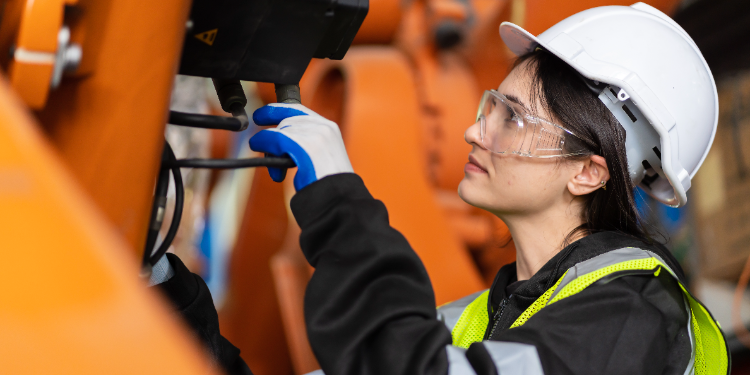
It's precisely to meet this need that all-female repair businesses are booming. Take China, where women are increasingly turning to trades traditionally seen as "men's work". The construction and repair industry there remains overwhelmingly male. Old stereotypes die hard, pointing to supposed "shortcomings" in women's abilities. Their skills are questioned by men and women alike. But that hasn't dampened the spirits of these female entrepreneurs, who encourage women to join their training programs. And it's working: classes are filling up fast. Members say they're relieved to no longer have to rely on repairmen whose behavior can sometimes feel unsettling. Other women refuse to be confined to so-called "women's trades" and are carving out their place in the broader job market. Despite lingering stereotypes, they say they're finding their customers, women, in particular, who are happy to hand over the keys to their homes to other women.
The Chinese example is playing out elsewhere too. Expat business leaders, engineers, managers and cybersecurity experts alike point to the opportunities that relocation brings. For some, the leadership role they landed abroad simply wouldn't have been possible back home. For others, moving abroad has been a way to break through the glass ceiling and go where no one expected them to.
... in a world still grappling with old stereotypes
These gains for women expats come against the backdrop of a world still shaped by gender stereotypes. In China, 30% of working women report having faced gender-based discrimination. In Germany, women still earn about 15.6% less than men. That gap widens to an average of 18% in the United States and 20% in Canada, while it narrows to 11.3% in Australia. This discrimination comes hand in hand with other cultural stereotypes. Notions of "women's work" and "men's work" persist, and they cross borders freely.
Male expats who venture into fields traditionally seen as feminine face discrimination too. In the United States, France, China and Brazil, male childcare workers remain rare, and even more so among expats. The profession is still widely seen as "women's work". Babies, of course, don't distinguish between men and women. Adults, however, remain largely reluctant to entrust their infant to a man. The same old stereotypes come up time and again (that men simply wouldn't know how to care for a child), along with unfounded fears fueled by unsettling news stories (concerns about inappropriate behavior). Just like the female repair workers in China, these stereotypes call into question workers' technical and social competence.
Could international mobility help break down gender stereotypes?
In many major expat destinations, governments are taking steps to close the pay gap between men and women. Measures are also being introduced to boost female employment. In recent years, Spain has rolled out a growing number of policies to support women in the workplace and shift mindsets in the professional world. In 2025, the Feminist Cooperation Strategy of Spanish Cooperation was launched. Its main goal is to turn political statements into concrete action. The global labor shortage could also help move past old stereotypes. Immigration policies increasingly favor foreign workers in high-demand sectors.
To help resolve the crisis, many countries are encouraging businesses to hire more women, particularly in fields traditionally dominated by men. Women who move abroad often report better working conditions, especially highly skilled expats working in sought-after industries. The growing number of initiatives at the international, institutional and professional level (particularly networks fighting gender stereotypes) could well be the key to unlocking new opportunities for expats, whatever their gender.