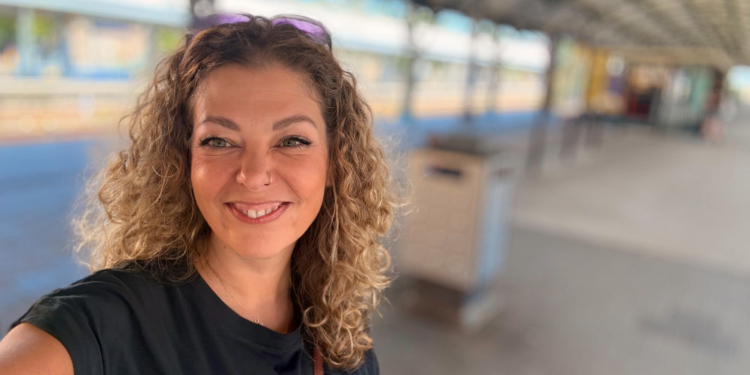
Moving abroad for work is one thing; choosing to put down roots is another. When international education leader Edith van der Linden moved from the Netherlands to Mauritius in 2024, she embraced the island as a place to learn, build meaningful relationships and become part of a diverse community. In this interview, Edith discusses her experience as a woman in school leadership, the benefits of international education for children and the realities of running a school on an island. She also shares how she adapted to life in Mauritius, built a trusted support network and found a sense of belonging beyond the traditional expat circle.
Can you tell us a bit about your journey, what brought you from the Netherlands to Mauritius?
As someone who has always worked in international education in a range of leadership roles, this opportunity came my way in 2024. Visiting the island for the first time prior to settling showed me its rich diversity and the sheer natural beauty of the island and its people, and this attracted me to continue my own learning journey here.
What were your first impressions of Mauritius as a place to live and work?
Mauritius is an amazing place to live and work. Working at a local international school has given me insight into the rich diversity that is Mauritius, and the way in which communities live together on the island is something other countries can learn from.
Join the Mauritius community
Get regular tips and advice to make the most of your expat life
How has your personal journey shaped the life you've built here as an important member of the expat community?
When you arrive somewhere new, you have a choice: you can hold yourself at arm's length, or you can properly root in. I intentionally chose the second option, and that has meant saying yes to things outside my comfort zone, building friendships that go deeper than the usual expat bubble and allowing this place to change me rather than just passing through it. I have built a life, a career and a genuine community. Albeit slowly, I am learning both French and Mauritian Creole, a way of showing genuine respect for the culture and community that has welcomed me here.
How does working in an international school in Mauritius compare to other countries?
The IB learning framework itself travels well; the standards, the pedagogy, and the language of learning are consistent whether you are in Europe, Africa, or the Middle East. What differs here is the texture of daily life around the school, the pace, the relationships with parents and the sheer diversity packed into a relatively small community. Mauritius also sits at an interesting crossroads of African, Asian and European influence, and that shows up in the classroom in many different ways, infusing the learning that happens there. International mindedness is not just a phrase here; it is lived daily, and the definition of international mindedness is simply understanding yourself and genuinely understanding others.
What does a typical day in an international school look like for a student?
A student's day is structured: morning form tutor time, a run of subject lessons across the IB or IGCSE curriculum, breaks that double as genuine social time, and increasingly, time built in for well-being and personal growth beyond the classroom. The rhythm will look familiar to any parent from any country. The real difference is that ours is a not-for-profit, local international school that prides itself on high standards as well as educating the whole child.
Different nationalities are represented in an international school. How does this shape an expat child's education and exposure to the global stage, different cultures and languages?
This is one of the quiet gifts of international schooling: a child does not learn about cultural differences from a textbook; they learn it from the child sitting next to them at lunch. They absorb, without ever being taught it directly, that there is more than one right way to celebrate a festival, structure a family or greet an adult. Multilingualism becomes normal rather than exceptional, and that comfort with difference tends to stay with them for life.
How does an education in an international school prepare a child for further education and building a career?
The IB in particular is designed around exactly the skills universities and employers want: independent inquiry, the ability to hold two conflicting ideas at once, genuine written and oral communication, and comfort operating across cultures and languages. A student who has navigated inquiry in the age of AI, alongside a demanding academic framework, arrives at university, and later at work, with a head start in adaptability that a single cultural context cannot replicate.
What are some of the biggest challenges and strengths you've experienced working here?
As the first woman in a leadership role in this international school, it has been both a strength and a challenge to lead. Leading for clarity and consistency, navigating the differences between local expectations of leadership and an international outlook has ultimately made me a stronger and intentional leader.
How did you find adapting to a new life in Mauritius?
It always takes time to truly adapt and learn about life whenever you move to a new country and the same applies here in Mauritius. I am still learning the island in its many cultural facets, and I feel truly supported by my school community and the network of friends I have built here, whether that is with practical matters or learning about traditions and cultural diversity.
Moving to a new country can be isolating. How did you go about building a support system, friendship group and community in Mauritius as a solo woman?
I made a deliberate decision early on to be open and proactive in building my own community here. That meant saying yes to invitations, showing up consistently in the places I came to love, and being genuine with people from the start rather than keeping things surface level. Some of my closest friendships here came from exactly that approach, showing up consistently and letting people in to learn from and grow with. As a solo woman, I also learned the value of a small, trusted circle.
What does a typical day look like for you in Mauritius?
A typical day starts with an early rise, at 5.30, and a drive from the west to our school campus. Welcoming staff and students in the morning is a highlight of my day, it makes me feel part of a community. The day unfolds with set times for meetings, connections and anything that crops up along the way. My school day usually ends in the late afternoon, followed by evening work or a workout, which I treasure as part of keeping strong and healthy.
What aspects of Mauritian culture, traditions or daily life have influenced your lifestyle?
I love the way resilience is built into the fabric of the island, and how people support one another and show up, whether that is within a school community or a friend community. I have also learned to slow down, both at work and outside it, to let go of things I cannot control and to meet people where they are.
What do you love most about living here? And what has been the hardest adjustment?
Having the opportunity to live in one of the most beautiful places on earth gives me a sense of peace, a walk on the beach or being near the sea after a long day at work. The hardest adjustment has been the structural challenges of running an international school on an island, recruitment and retention of specialist staff, and balancing local regulation with international standards.
For someone considering a move to Mauritius with children, what should they prepare for when it comes to international schooling?
Do your research early on and visit different schools if you possibly can, school culture varies more between institutions here than you might expect. Think about continuity, if there is any chance of moving again, a recognised international curriculum will make transitions far easier for your child. And prepare your child, not just yourself, for the adjustment; the diversity is a huge asset, but it does take a little time to settle into such a richly international classroom.
Hi, I'm Sophie Luminara and I moved to Mauritius from London in 2015. I left the island "for good" at the end of 2024, moving back to Liverpool in England, but less than 7 months later I was back! I'd missed Mauritius far too much and this magical place is definitely the love of my life!
I am an online life and work coach, content creator and writer.
I offer 1-2-1 coaching in English and in French. I created and I run the online programme and community Life Reboot Camp and I am Sophie of Mauritius is Paradise on TikTok ;-)
I am happily divorced and solo mum of two older kids.
I LOVE walking in Black River gorges or along the beach at sunrise. At the end of the day I love to catch sunset on the beach with friends or by myself.
I'm a big fan of the live music scene in Mauritius, especially the local bands and I love to go out dancing with friends too.