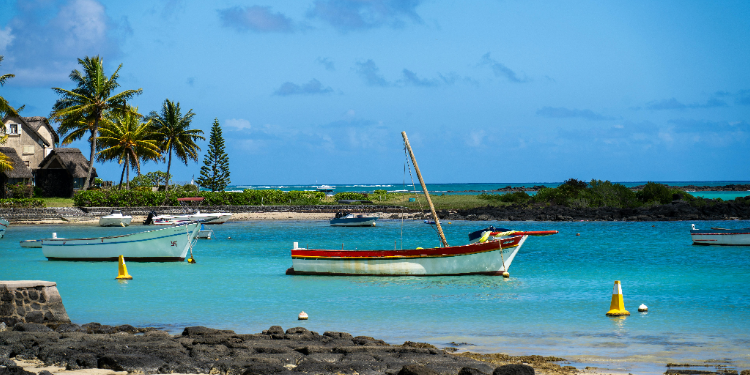
A very real taboo
On the surface, everything looks perfect. You've left behind the grey skies and the daily grind for Mauritius. You're living in a postcard setting. And yet, something feels off. That nagging sense of unease isn't a whim. It's a delayed culture shock. A common experience that almost no one talks about.
The blues creep in quietly. Through a missed phone call. A family celebration you couldn't be part of. A song or a smell that takes you straight back home. Little by little, the things that gave your old life its flavor start resurfacing, and suddenly your footing feels less sure.
"I was ashamed to complain. I was living in a dream setting, but I'd never felt so alone," says Marine, a French expat living in Grand Baie.
Moving abroad is a turning point. Sometimes a sharp one. You have to relearn everything: social norms, how people relate to each other, the pace of life, the way things are done, the humor...
In this new world, all your familiar reference points are gone. No baker who knows your name. No family doctor. No neighbors you've grown fond of. No spontaneous conversations. Everything has to be rebuilt from scratch, and that takes time. As Alexia, who now lives in Flic en Flac, puts it: "I hadn't anticipated how hard it would be to make real friends. I had acquaintances, but no real closeness. No depth. No one to share my fears and problems with."
One of the biggest traps is the quiet pressure to be happy at all costs. After all, you chose this life. You may have even shown it off on social media. So you're not allowed to stumble! And yet... happiness can't be forced. Living in the tropics doesn't automatically make you a more fulfilled person.
When your body and mind start sending warning signs
It's not depression. It's not burnout either. Nor just a passing rough patch. It's something else entirely. The feeling of being there without really being present. Smiling at people without truly feeling connected. Changing your surroundings but never quite finding your balance. This blues can hit after just a few weeks or after several years. And it often catches people completely off guard.
Everything seems fine on the outside. But inside, something is slowly withering. You start dragging yourself out of bed in the morning. You lose your drive. Even the most stunning landscapes no longer spark any curiosity. Your appetite goes off for no apparent reason: too much or too little. You sleep badly, or you sleep too much. The desire to socialize quietly fades. You'd rather stay home, shut the world out. Your nerves feel raw.
At first, you tell yourself it's the heat. The change of season. The moon cycle. You make excuses. Then you realize it's neither physical nor temporary. It runs deeper than that. It's a sense of misalignment.
Expats share how they feel
When you dig a little deeper, the stories come flooding in. Almost every expat has been through it at some point. Even those who have had a "successful" transition.
"I've been in Mauritius for three years. At first, I loved everything: the people, the scenery, the culture. But once the honeymoon phase was over, I went through real low periods and moments of extreme loneliness. People here are so warm and welcoming that you think you'll make friends quickly. But turning acquaintances into real friends takes a long time," says Jean-Baptiste from Grand Gaube.
Nathalie, another expat, adds: "I've been living in Mauritius for six years. I still sometimes cry listening to an old French song that brings back memories of people I love. But I've learned to welcome the blues when it comes. It's part of the package."
"I felt incredibly guilty. I was supposed to be living my dream, and all I wanted was to go home. But I didn't dare. Going back felt like failure to me. So I gave myself time, and thankfully, I did, because today I'm genuinely happy here. The thought of having to live in Europe again actually scares me," Léa tells us.
The roots of homesickness
People often assume that expat unhappiness hits right away, like a sudden blow. In reality, it slips into the cracks of everyday life and doesn't announce itself straight away. It starts as a vague feeling. A void, not quite painful. But present enough to slowly chip away at your enthusiasm.
Even when you leave with a light heart, voluntarily, driven by a desire for something new, something still clings to your heels. That something is your connection to everything you've left behind: a grandmother you no longer hug as often, friends you no longer see, familiar touchstones so ordinary you never realized how much they mattered. This loss doesn't make a sound. But it hollows you out.
Sometimes your own expectations set the trap. You left to experience "something different," to break free, to breathe new air. And at first, everything seems to match that promise. The colors are more vivid, the people more cheerful. You almost feel like you've been reset. Until routine sets in again. Until administrative headaches remind you that life abroad has its own frustrations. That the dream of a seamless daily existence is, precisely, a dream. The gap between the fantasy you had when you left and the reality on the ground can be jarring. Not always. But often enough to leave a bitter taste.
There's also a strange paradox: meeting plenty of people and still feeling alone. In the first few weeks, you collect new contacts and join WhatsApp groups. You talk, you laugh, you almost feel like you belong. But beneath the surface? That's a different story. What's missing is the sincerity of bonds built over time. The kind of trust that takes months, years, to develop. So you surround yourself with people without really leaning on anyone. And that lack of genuine connection can weigh more heavily than loneliness itself.
Fatigue plays a role, too. Not physical, not always visible. It's the exhaustion that comes from constantly decoding things that would have been second nature back home. How to say hello, how to negotiate, how to joke without causing offense. How to ask for a favor, how to read what's left unsaid. Living in another culture is fascinating. But it can also be draining.
Sometimes, it's not loneliness or culture shock that weighs most heavily. It's a loss of meaning. The feeling of having everything you wanted: the sunshine, the space, a certain comfort. But no longer knowing why you're there. Time passes, and you start wondering what you're really building. What you're contributing. What you're passing on. What mark you're leaving. These questions eventually erode your enthusiasm.
And then there's comparison. It seeps in everywhere, even when you think you've risen above it. You compare your experience to that of locals, who seem so naturally at ease in their environment. To other expats showcasing their happiness on Instagram, their achievements, and their projects moving forward. And above all, you measure yourself against the image you wanted to project when you left: someone fulfilled, radiant and free. When that image starts drifting too far from reality, a sense of unease sets in. You feel out of step. You go quiet. And sometimes, you judge yourself harshly.
This particular blues doesn't get talked about much. Because you're "lucky." Because you live in the sunshine. Because from the outside, you have everything you need to be happy. And yet it exists. It's real. And most importantly, it's completely legitimate.
How to find your way through
Fortunately, this blues isn't inevitable. It's not there to ruin your experience, but perhaps to invite you to refocus and shift your perspective. And sometimes, all it takes is one small step sideways for things to start moving again.
That first step is simply talking about it. To someone who understands. Another expat, a friend back home, a therapist who will listen. Putting words to what you're feeling is already a way of honoring the part of yourself you'd been suppressing. It's not complaining. It's giving yourself permission to be human, in an adventure that, despite the paradise photos, can be overwhelming.
Building real connections also means being willing to go beyond the surface. Moving past "where are you from?" towards conversations that actually warm you up. Yes, early connections can feel shallow, but they can deepen if you give them time. Getting involved in a local association, joining workshops, volunteering, taking a course that genuinely excites you: these are all ways to put down roots, to step out of isolation without having to put on a performance.
Then there's the invisible pressure to "make the most of it." See everything, do everything, experience everything. But why the rush? Living abroad isn't a race, it's a journey. And sometimes that journey needs to slow down. A morning with no agenda. An unexpected detour. A moment of productive boredom. Give yourself permission to not be productive. You have nothing to prove.
It's easy to idealize home when things aren't going well. But remember: you left for a reason. There was a calling, a need, a pull. Don't let the rose-tinted filter of memory erase the deeper reasons behind your choice. And above all, accept that these grey areas are part of the journey. That living abroad isn't a straight line, but an inner transformation. There will be low periods, doubts, and moments of uncertainty. That's normal. It's even healthy! It's part of the process. Sit with the discomfort without letting it consume you. It's telling you something about yourself, your needs, your vulnerabilities. And your ability to reinvent yourself.
Sunshine isn't always enough. Sometimes the blues pass. It was just a transitional phase. Other times it lingers, despite your best efforts. And in that case, leaving isn't failure. It's a courageous decision.
Some expats choose to return home or move somewhere new. Others learn to live with the duality, balancing the joy of a change of scenery with a persistent sense of longing.
Moving to another country turns your world upside down. Even when it's your choice. Even when everything seems fine. The setting isn't everything. Under the palm trees, there are tears too. But there are also life lessons, precious connections and moments of rare intensity.