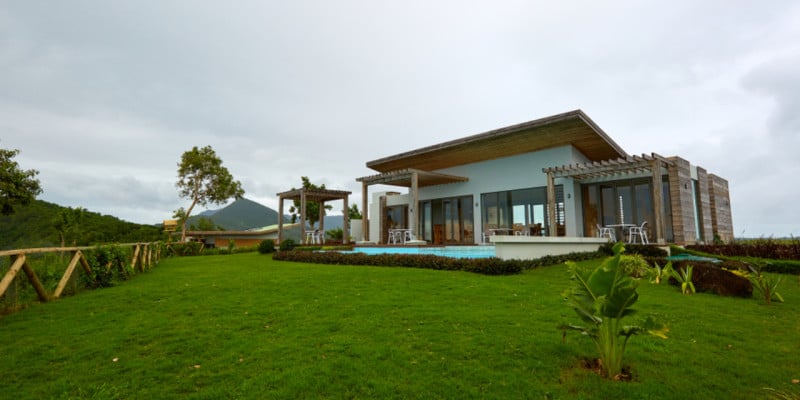
Thanks to its idyllic setting, and its proximity to Africa, India, Australia and Asia in general, this small, independent and prosperous republic attracts, every year, many foreigners seeking a high quality of life. If you're looking to make the move, accommodation should be a priority for you. Here is what you should know if you are looking for a place to live.
Temporary accommodation: a useful step before settling in Mauritius
Upon arrival, it may be wise to choose temporary accommodation before deciding on your long-term neighborhood. This adjustment period allows you to discover the island at your own pace, observe the atmosphere of different areas, test daily commutes, and better understand the climate and environment.
The most common solutions are:
Airbnb: convenient for the first days or weeks. Properties are fully equipped, ready to use, and usually located in central or tourist-friendly areas.
Flatshares: very common in popular regions such as Grand Baie, Tamarin, Flic-en-Flac or Moka. This is an economical option and ideal for expanding your social circle quickly.
Furnished studios or guesthouses: some landlords offer monthly rentals, sometimes with reduced rates if you stay longer.
Hotel residences: a comfortable choice if you want included services (security, maintenance, reception). This can make the first weeks easier, especially for families.
However, make sure that the accommodation has a good internet connection. Fiber is not yet available everywhere, and installation times vary from one area to another.
Houses, villas, studios and apartments are available in Mauritius. As a general rule, accommodations are furnished and equipped with appliances. The leases are usually established for one year, with tacit renewal. For a smooth rental, it is advisable to check with the owner or the rental agency before the end of the written lease.
The payment of 1 or 2 months' deposit is often required. Remember to have an inventory of fixtures drawn up before signing the lease. Do not hesitate to take pictures during your visit.
Water (CWA) and electricity (CEB) are sometimes included in the rent, although this practice tends to disappear these days. Heating is not necessary in Mauritius, except maybe for accommodation on the Central Plateau where you will be able to find electric heaters. Air conditioning is not always necessary, but it can be very pleasant during summer. On this last point, the electricity bill can rise very quickly if you use such an appliance.
If you go through a real estate agency when renting, note that the commission, shared between the owner and the tenant, generally represents one month's rent plus VAT (15%).
Rents in general
Prices are very variable, depending on the preferences of each and everyone (view, proximity to beaches or centers, leisure facilities, swimming pool, garden, security services, furnishings, equipment, etc.).
The rental market is rapidly changing in Mauritius. Houses, apartments, studios, aparthotels, PDS villas and units with the Invest Hotel Scheme (IHS) are now available for rent.
Luxury homes are no exception, with second-home owners renting out their properties for part of the year.
Average rents in attractive areas for expats
As a general guideline, in the areas most popular with expats, rental prices have risen significantly in recent years. A one- to two-bedroom apartment in the North now rents for between Rs 25,000 and Rs 45,000 per month. For a standard three-bedroom apartment or house with a garden or small pool in the North or the West, you should expect a budget between Rs 80,000 and Rs 100,000. Family homes with three to four bedrooms in the West generally range from Rs 90,000 to Rs 130,000, depending on location and amenities.
If you are looking for a beachfront villa, prices can reach Rs 150,000 and may even go up to Rs 190,000 per month for the most high-end properties. For housing located inland or in less sought-after areas, rents remain more affordable, between Rs 15,000 and Rs 35,000 per month.
These price ranges reflect the rising cost of living, strong expatriate demand, and the growing attractiveness of the North and West, all of which have contributed to pushing prices upward. It's important to note that these prices serve as a reference and may vary based on the property owner and specific features of each residence.
The North of Mauritius is undoubtedly a hub for expats looking for a lifestyle that naturally oscillates between a relaxed lifestyle and convenience. The varied shops, proximity to the schools, located in and around Mapou for most, availability of buses (Triolet Bus Service – TBS network), cabs and freeway make the North of the island conducive to a serene life.
Pros:
The North of the island is well served by public transport and the road infrastructure is well-developed and connects this region to the rest of the world.
The area is home to shopping centers, businesses, schools, and numerous offices and workspaces.
Many Northern beaches are among the most beautiful on the island.
Cons:
If what you want is to be away from it all, the North is not for you. The region is very popular with tourists as well as Mauritians who love this area for its beaches and its nightlife. Moreover, the summers are particularly hot.
Among the most famous villages are:
Grand Baie: This seaside town is home to all the necessary amenities, a lively nightlife, while being located 15 minutes from international schools and 30 minutes from Port-Louis, the capital. Its climate is sunny all year round, with light winds and pleasant temperatures.
Pereybère: Beyond the Grand Bay coastline in the North of Mauritius, Pereybère was once a small fishing village that has changed a lot, while keeping an appreciable authentic side. Less touristy, it has all the essential amenities. As for the climate, you will enjoy very hot summers (November to March) and mild winters, while being sheltered from the wind.
Calodyne: In the North-East of Mauritius, it is a small preserved region, a haven of peace. It is close to the beach, which is why it is appreciated by expats looking for tranquility, without being cut off from the world. As for the weather, Calodyne enjoys a tropical climate with rainfall and a short dry season.
The West
This region is also touristy, with many amenities, and has a particularly lively nightlife while being child-friendly. Its beaches are popular all year round.
Pros:
To keep up with the influx of tourists and expats, more and more schools, shopping malls, gyms, shops and other developments are being built in this area.
The beaches are never far away, especially those of Flic-en-Flac, Tamarin and La Preneuse.
Mountains and other hiking trails are easily accessible, including the Black River National Park.
It is easier to find peace and quiet in this area, unless you are in Flic-en-Flac.
Cons:
The Center, and even Port-Louis, are less accessible from the West than from the North, for example.
Summers are hot, but less than in the North of the island.
Popular villages in the West are:
Tamarin: Tamarin is the seaside region, ideal for families, couples and solo expats. Away from the hustle and bustle of tourism, its climate is dry in winter and rather rainy in summer. There are all the amenities, stores, banks, pharmacies, supermarkets, and sports clubs with tennis courts, beach volleyball and a swimming pool. For children, there is the Paul et Virginie School (kindergarten and primary school, part of the local network of French Program Establishments in Mauritius) as well as the Telfair International Primary School.
Flic-en-Flac: Located on the West coast of the island, it is the second seaside hub of Mauritius, therefore animated and touristy with bars, restaurants, nightclubs, and casinos. The beauty of its beaches is breathtaking. During the week, Flic-en-Flac is quiet, allowing you to enjoy the beaches and the numerous water activities, such as scuba diving or windsurfing.
The Center
The Center, largely shaped by Moka Smart City's growth, has been undergoing rapid transformation. In recent years, Moka has evolved from a quiet residential area into a modern, well-structured urban hub built around sustainable planning, green spaces, and well-designed infrastructure.
Pros:
Many expats working in technology, financial services, or BPO choose to live in Moka to reduce commuting time. The town is only 10–15 minutes from Ébène, which is a significant advantage compared with living in the north or the west.
The region offers modern, secure housing options, often located within planned neighborhoods such as Helvétia, Courchamps, or Telfair. These areas provide an organized environment that is particularly appealing to expatriate families.
Moka blends natural surroundings, including mountains, hiking trails, and parks, with urban conveniences such as schools, shops, sports centers, and cafés.
The proximity to reputable or international schools (such as Le Bocage and École du Nord, with a Moka campus in development, among others) is a major draw for families relocating to the island.
In short, Moka acts as a central crossroads, strategically positioned between the north, center, east, and west. For expatriates working across multiple economic hubs, this centrality is a real advantage.
Cons:
Rental and property prices have risen. Modern apartments and houses, often located in secure neighborhoods, remain attractive but can be more expensive than in other inland areas.
Those seeking a livelier atmosphere or a beach-oriented lifestyle may find Moka less vibrant than the tourist zones. The overall feel is more professional, oriented toward families and working professionals.
Because it is inland, Moka has no direct access to the sea. Beach outings, water activities, seaside restaurants, and the typical lifestyle offered in the north (Grand Baie) or the west (Tamarin, Flic-en-Flac) require a 20- to 40-minute drive depending on the destination.
The South
This region of the island is untouched, less touristy, with different landscapes, sometimes steep. If you are a nature lover and you do not have to travel frequently to the capital and its surroundings, the South of Mauritius is the perfect region to live fully immersed in the Mauritian way of life.
Pros:
The South of the island is far from everything; it offers the serenity and tranquility not accessible anywhere else on the island.
The South is literally between the mountains and the sea, so you don't have to choose.
Some of the most beautiful beaches on the island are in the South, including Le Morne in the Southwest and Blue Bay in the South East.
Cons:
The South is far from everything, with not many shopping centers, schools, or shops around.
The South is not well served by transportation, and road infrastructure is limited.
A popular village is:
Mahébourg: In the South-East of the island, Mahébourg and the surrounding villages, Blue Bay and Pointe-d'Esny, can be interesting options for solo expats or those without children. The village is served by a highway connecting it to the center of the island, it is only a few minutes from the airport and the beaches of Pointe d'Esny and Blue Bay, which are among the most beautiful on the island. There is also a shopping mall a few minutes' drive from the village and many small and varied shops and typical restaurants.
The East
This region is home to some of the most beautiful beaches of the island, such as Belle Mare or Trou d'Eau Douce. Its peaceful environment, its village atmosphere, its lagoon, and its wonderful bays offer an authentic atmosphere. Furthermore, golfers will find breathtaking courses, such as the Constance Belle Mare Plage.
Pros:
There are beautiful beaches in the East of the island.
While it is close to Flacq, which is home to shopping centers and other facilities, it is still possible to find serenity in the East of the island since it is less accessible and busy.
Cons:
The area remains difficult to access from the Center of the island, although developments are underway to remedy this.
Schools, especially private ones, and administrative offices are not well represented in this part of the island.
A popular village is:
Poste Lafayette: This is the most affluent part of the area and is home to a large expat community that has chosen to live by the sea. You will find many villas with private access to the beach. As for the climate, although sunny most of the time, it is quite windy.
Join the Mauritius community
Get regular tips and advice to make the most of your expat life
Buying a property in Mauritius
The Economic Development Board (EDB) reminds us that any non-citizen, whether an individual or an investor, is allowed to hold/buy/acquire real estate in Mauritius.
In the case of an individual, such acquisition requires the approval of the Prime Minister's Office (PMO).
In the case of an investor, such an acquisition requires the approval of the EDB.
For this purpose, various schemes for the acquisition of residential property approved and administered by the EDB have been developed:
Property Development Scheme (PDS) / Merger of IRS and RES
Any investment of more than USD 375,000 entitles the purchaser and his or her dependents to a residence permit, valid for the duration of the property's ownership. As the owner of a PDS property, he does not need to obtain an occupation or work permit to invest or work in Mauritius.
Integrated Resort Scheme (IRS)
The purchaser and his dependents can obtain a residence permit against an investment of at least USD 375,000. The individual buyer is free to rent out the property and is not subject to any tax restrictions. As a holder of a residence permit under the IRS, they do not need a work or occupation permit to work in Mauritius.
Real Estate Scheme (RES)
The benefits are similar to those granted by the real estate purchase in IRS.
Smart City Scheme
This scheme allows non-residents to purchase a residential unit, villa, apartment, penthouse, townhouse or duplex in Mauritius. Non-residents holding a residence permit, occupation permit or permanent residence permit can purchase a serviced plot of land of 2,100 square meters in a residential subdivision located in an EDB-approved Smart City development for the purpose of building a residence.
Ground +2 apartments
Non-citizens who purchase an apartment located in a building with at least 2 upper floors for a minimum amount of USD 375,000 or its equivalent in other currencies are granted a residence permit. The permit remains valid as long as they own the property.
They may also purchase an apartment in a subdivision outside the approved residential programs. However, the apartment must be in a condominium with at least 2 floors above ground, and the minimum purchase price must be Rs 6 million or its equivalent in other currencies.
Good to know:
Classified ads and word-of-mouth can help in finding long-term rental that meets your expectations. For new expats, it is preferable to first rent a seasonal property for a short period of time and then take the time to visit different properties and make a choice for the long term.
Turning your Mauritian house into a home
When you moved to Mauritius, you probably left behind some of the things that made your house a home. To make this new life as sweet and pleasant as possible, the island has no shortage of shops specially dedicated to furnishing, DIY, decoration, etc., such as Macumba Ltd, Espace Maison et Jardin, Teak World, Mr Bricolage, La Foir'Fouille, Roche Bobois and Moodesign. If you want to remain eco-friendly while furnishing and decorating your home, The Good Shop is a collaborative initiative, particularly oriented towards the circular economy. Three shops have opened so far, in Calebasses, Curepipe and Moka, respectively.
In Mauritius, it is also common to have your furniture made by local cabinet makers. Ask around or visit the Mauritius forum for information and tips!
Note that most furniture stores offer free delivery and assemble the furniture for you. To take advantage of this, just ask when you visit the store.
Regarding the prices of products in store, most of them being imported, the prices can be slightly higher than in Europe, for example.
If you opted for a furnished or semi-furnished home, it may not be equipped the way you would like, especially if you are looking for European-style standards. Fortunately, Mauritius offers several budget-friendly solutions to furnish your home without overspending. You do not need to buy everything new. Several options are available:
Facebook groups and Marketplace: Join local groups (“Vente de Meubles à Maurice”, “Vide-Grenier Île Maurice”, “Mauritius Antiques Sale”, etc.) to find sofas, tables, chairs, sideboards and more for cheap. Facebook Marketplace also allows you to filter by region (e.g., Tamarin) to find furniture near your home. This is a good way to furnish with unique pieces at a lower cost, while also choosing a more sustainable lifestyle.
Garage sales/flea markets: You can find furniture, decorative items, vintage tableware and more at affordable prices—perfect for temporary housing or the early stages of settling in. A popular tip is the monthly Tamarin flea market, held on the first Sunday of each month at “Cap Tamarin”. Subscribe to Facebook groups for your area (North/West/inland) to be quickly informed of good deals in your neighbourhood.
Before making any purchases, carefully check the condition of items (termites, humidity, corrosion, tropical moisture), negotiate transport or delivery if the item is large, and make sure the piece fits the dimensions of your home (often smaller than expected).
Securing your home in Mauritius
Ensuring the security of your home is a priority for many expat families, especially when discovering a new environment or in the case of frequent or extended trips abroad. While the country is generally safe, certain precautions can help strengthen peace of mind daily.
The first step is to check the security of all access points: window and door grilles, solid doors and multipoint locks. These features provide effective and reassuring protection. For sliding glass doors, it is often useful to add a lock, a sliding blocker, or an anti-shatter security film. During property visits, families often negotiate the improvement or repair of specific elements before moving in.
Outdoor lighting also plays an important role, particularly for households returning home late after school activities. Motion detectors at the front and back of the house help reduce dark areas and limit blind spots. They are also practical for children. This can be complemented by a video surveillance system: even a simple smart camera or alarm adds an extra layer of security, especially for expatriates who travel frequently. Cameras connected to a smartphone are highly appreciated, as they allow you to monitor your home remotely. You can purchase and install your own security devices or hire professionals such as Brinks.
For families with children, a fenced yard and secure gate are essential. They help prevent intrusions but also avoid accidental exits onto the street.
Neighborhood relations also play an important role. Introducing yourself upon arrival, exchanging WhatsApp numbers, and building trust create a vigilant and supportive environment.
On a daily basis, a few practical habits enhance safety, especially in a household with children: bringing bikes and outdoor toys inside, keeping keys out of their reach, checking the condition of locks and grilles regularly, and reminding the nanny or domestic helper of the home's locking procedures.
Home insurance in Mauritius
Finally, although not always mandatory, home insurance is strongly recommended in Mauritius. Two types of coverage exist: home insurance, which covers damage to the property and your belongings (fire, theft, water damage, domestic incidents), and liability insurance, which is essential for protection in case of damage caused to third parties.
Several local companies, such as Swan, MAI, Island Life, and Lamco, offer policies adapted to foreign residents. It is important to check that the insurance includes coverage for cyclones and other natural hazards, particularly between December and April.
Mauritians rarely speak in square meters. Thus, you will probably hear about square feet, perch and toise:
10.7641 square feet = 1 square meter
1 perch = 42.21 m² (42.21 sq. ft.)
1 toise = 3.80 m² (3.8 sq. ft.)
1 arpent = 100 perches
1 perch = 11.11 toises
1 arpent = 1,111 toises
ℹ️
We do our best to provide accurate and up to date information. However, if you have noticed any inaccuracies in this article, please let us know in the comments section below.
A journalist, holder of the DALF C1 and C2 and a diploma from the University of Mauritius, I have nearly twenty years of writing experience. After six years in the Mauritian press, I joined Expat.com, where I have been working for over a decade, including five years as editorial assistant, and now as editorial manager.
L'express Property have a new Tenant's Guide:
ll you need to know about property rental, rights and obligations of tenants and download our lease agreement model.
https://www.lexpressproperty.com/en/news-advices/accommodation/our-files/rent-tenants/
There is plenty of choice of properties in Mauritius, expat and non-expat specific. For those of you who prefer authentic Mauritian living, I would recommend renting inland which is likely to provide you with significant savings in price.
I currently live in Mauritius and would like to update that the apartments in Flic En Flac will cost you 15.000 to 35.000 depending on the complex, facilities, furniture and location. I failed to find a good appointment for less than the mentioned number in 2 months time period.