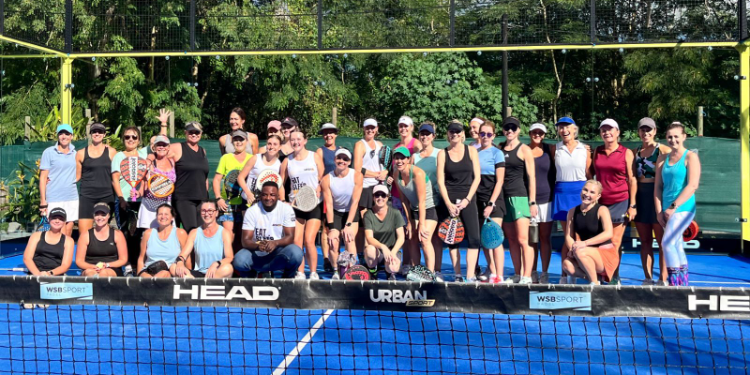
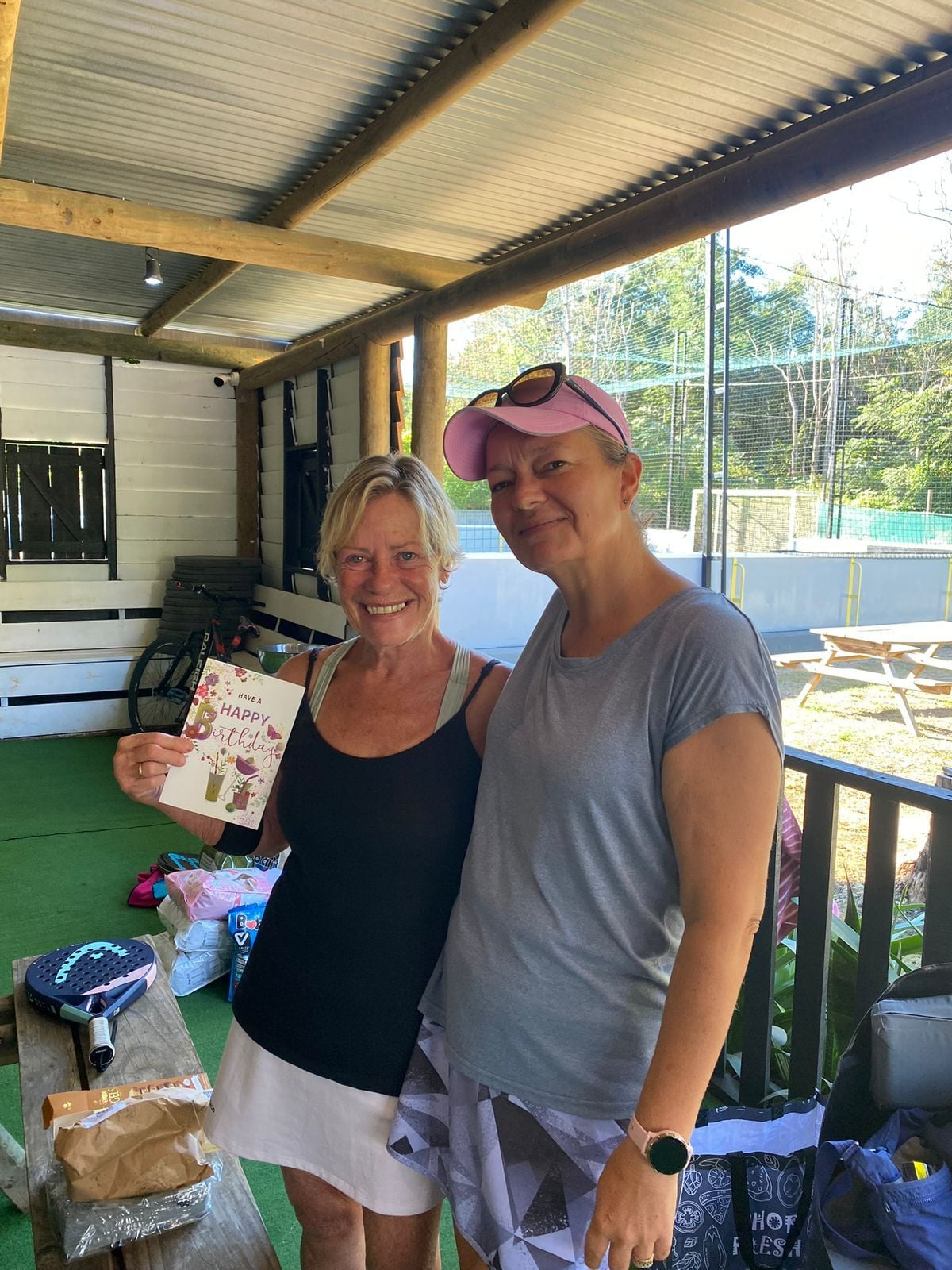
In Mauritius, padel is experiencing a spectacular boom. Courts are multiplying, tournaments are being organized, and communities are growing. But beyond the trend, this sport plays a particular role in expats' lives. More than just a leisure activity, it has become an anchor point, a catalyst for meeting people, and sometimes even a genuine tool for integration.
Katia, a French expat who has lived in Black River since 2015, has watched this phenomenon emerge and evolve. "We arrived in July 2015, coming from France, where we had a farm near Toulouse. My husband ran a management coaching and training consultancy, and we worked together. After the death of his father and then his best friend, he decided to take early retirement. We sold everything, closed the company, and had a house built in Black River. We turned up with our two suitcases and our two dogs. And off we went!"
A few years later, a free-trial week offered at the opening of new courts on the Route des Gorges changed their daily lives. "We tried it, loved it… and became hooked! Very quickly, we needed to find players. I went out to meet the women who were starting out. That's how the Fun Girl group was born. Then we created women's tournaments every two months. It was an opportunity to bring together people from very different backgrounds, nationalities and cultures. A real joy."
Her involvement led her to become an ambassador for the club. She has also observed the gradual structuring of padel at a national level. "Over the past two years, it has become more professional. A national league has been created, and national tournaments have been set up with a ranking system. The players are no longer content with just playing — they train, they seek to improve. Sometimes this can overshadow the simple pleasure of the game."
Despite this evolution, the essence of padel remains deeply social. "It's a sport played in fours. You play with someone and against another team. Yesterday's opponent can become tomorrow's partner. You learn to adapt. At the end of a match, you share laughs, sometimes a coffee or a beer. It's all about connection."
This social dimension is reflected in other expat journeys. Originally from South Africa, Melody has been living in Mauritius for several years. She left her country to offer her children a safer environment. "We moved here to give our children a more peaceful life, and what started as an adventure quickly became our home."
An entrepreneur (and founder of Biolink Mauritius), she helps children and teenagers develop their focus and self-confidence. In her busy daily life, padel has taken on a special place. "Since moving abroad, padel has played an important role in my life. It's more than a sport—it's a social bond. It allowed me to instantly find a community and a space where I could naturally integrate into island life."
On the court, differences fade away. "On the court, backgrounds, language and culture disappear, making way for teamwork and laughter. Sport has its own universal language."
Get regular tips and advice to make the most of your expat life
A community that goes beyond the game
For many expats, the relationships formed around padel quickly extend beyond the sporting context. In Black River, a true community has taken shape. "Friendships have been formed, business deals have been struck, and help has been found. Today, my closest friends are Mauritian, Russian, South African and French. In the group, we look for and find an apartment for someone's daughter in Brussels, a family for a stray dog, a childminder…"
For her part, Melody also highlights this dimension of personal balance. "Beyond the game itself, padel gives me balance. As a business owner, wife and mother of two, it's my space to recharge, challenge myself, have fun… and sleep well!"
She also recalls a turning point. "One of the most meaningful moments for me was realizing that I no longer felt like 'the new expat.'"
When sports become a natural integration tool
Friendliness, mutual support, team spirit and respect are the values most frequently mentioned on the courts. Of course, as in any community, tensions can sometimes arise, but the overall atmosphere remains welcoming. "You want to meet people, make contacts, find a community? Come play padel!"
For mothers in particular, it is also a space to take a breather, build connections and take a moment for themselves.
While Black River has established itself as one of the dynamic hubs for padel on the west coast, the sport has expanded considerably across the island in recent years. In the North, several clubs welcome an active international community, particularly in the Grand Baie and Mont Choisy areas, where expats and Mauritians regularly come together for friendly matches and tournaments. Among the best known, you'll find Caña Padel in Beau Plan, Isla Padel, Urban Sport Grand Baie and Labourdonnais Sports Club.
On the West Coast, beyond Black River, other facilities offer the chance to play in a natural setting that is particularly popular with residents. In the Centre and towards Moka, new courts have also been built, making padel more accessible for those who live or work in this more central area.
This geographical spread is helping to make padel an accessible sport across the entire island, fostering exchanges between different communities of expats and Mauritians.
In Mauritius, padel is therefore not just a trendy sport. For many expats of all nationalities, it has become a ground for integration, encounters, and sometimes even personal transformation. On the island, the little yellow ball seems to have found much more than an audience—it has found a community.
Based in Mauritius, Nora designs responsible travel experiences focused on people, nature and purpose, and develops ethical, accessible and sustainable training programmes. She also works with Expat.com, where she shares expat journeys, highlights inspiring initiatives and gives a voice to those driving change—both in Mauritius and beyond.