Born in the heart of Silicon Valley, Holberton School has quickly established itself as a major international player in digital skills training. Its intensive, practice-driven model is built almost entirely around hands-on work and real-world projects, aiming to align learning as closely as possible with professional realities. Now present in around twenty countries, Holberton opened its Mauritius campus in 2025 with a clear goal: to train job-ready tech professionals locally and meet the growing needs of the Mauritian and regional tech ecosystem. In this interview, Frédéric Waeber, cofounder of Holberton Mauritius, reflects on the school's educational philosophy, the rationale for its launch on the island, the challenges it has faced since its inception, and the opportunities emerging for students in a fast-changing sector.
Can you introduce Holberton and explain what sets it apart from other schools?
Holberton School is a higher education institution specializing in computer science and digital technologies, offering programs focused on software development and other technical fields. Founded in 2015 in San Francisco by four French entrepreneurs, Holberton's mission is to make computer science education accessible to a broad audience and to prepare students for careers in the tech industry.
Today, the Holberton network is one of the most dynamic worldwide. It operates 36 campuses across 20 countries, and more than 9,000 students have already been trained globally.
What truly distinguishes Holberton from traditional schools and universities is its deliberately non-academic, practice-driven teaching approach. Learning is project-based, accounting for around 95% of the curriculum, within a collaborative environment inspired by how tech companies actually operate.
Students learn by doing: building projects, observing, working in teams and adapting to situations that closely mirror real professional contexts. This allows them to develop skills progressively and in a way that is immediately applicable in the workplace.
Holberton also stands out for the duration and recognition of its program. It offers a two-year, full-time intensive course aligned with European standards and validated by a Bachelor of Science degree. The program represents 180 ECTS credits (European Credit Transfer and Accumulation System).
It covers core computer science fundamentals before allowing students to gradually specialize in areas such as cybersecurity, data science or artificial intelligence. This learning pathway enables students to enter the job market faster than through a traditional academic route.
What motivated you to open a Holberton campus in Mauritius? Did you benefit from partnerships or institutional support?
As an entrepreneur for the past 17 years, including nearly 11 years in Mauritius, I have observed, like many local economic players, the persistent shortage of tech talent on the island. Too few graduates leave university with a sufficient level of operational readiness, and companies often need to invest significant time and resources to help new hires become productive.
The idea of establishing a Holberton campus in Mauritius, initiated in 2022, was a direct response to this reality. The Holberton model places equal emphasis on technical excellence and professional behaviour.
Beyond technical skills, students are trained in teamwork, meeting deadlines, punctuality and public speaking, all essential elements for rapid integration into the workplace. At Holberton, these soft skills are an integral part of the training and are assessed throughout the program, as they are key to professional success.
The project was supported for eight months by the La Plage Factory incubator, which played a decisive role in helping structure the business model.
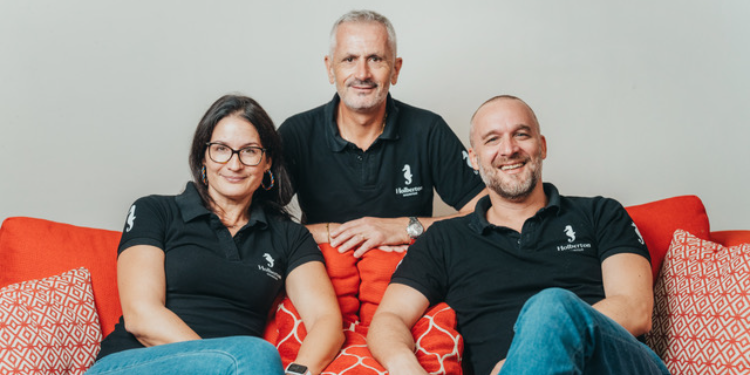
In 2024, the team expanded with the arrival of Patricia Louvet as Head of Talents & Success, followed by Cyril Quintyn as Campus Director. In 2025, Ignacio Peralta joined as a Software Engineer Educator after previously working at Holberton's Montevideo campus in Uruguay. With the support of the BIRGER Group and its CEO, Jacques Harel, we were able to open the campus in the heart of Port Louis in May 2025 and welcome our first students in June.
Join the Mauritius community
Get regular tips and advice to make the most of your expat life
What challenges did you face when launching Holberton in Mauritius?
Several challenges marked the launch of the campus.
The first was explaining Holberton's pedagogical principles to the Mauritian authorities: admissions based on potential rather than academic background, project-based learning, continuous assessment and the use of a digital learning platform.
The second challenge was funding. As an EdTech startup, the project had to grow without institutional investors, in an environment where evaluation criteria are often designed for already established organizations.
The final, and perhaps most significant, challenge was brand awareness. Although Holberton is internationally recognized as an elite school born in Silicon Valley and open to ambitious students from all backgrounds, it remains relatively young in Mauritius.
The first local graduates will enter the job market from 2027 onwards, which means sustained awareness-raising efforts are needed among companies, students and families.
To address this, we will be offering two European Bachelor of Science programmes to students in the first half of 2026: Machine Learning Engineering & MLOps and Cybersecurity Engineering & Threat Operations. Two additional programs will follow before the end of the year.
How does Holberton position itself compared to engineering schools or traditional bootcamps? Who are the target student profiles?
Holberton positions itself as a complementary alternative to engineering schools and traditional universities. It offers a long, degree-awarding Bachelor-level programme that is highly practice-oriented and designed for rapid entry into the workforce, while still allowing graduates to pursue a Master's degree if they wish.
Unlike bootcamps, which focus on short, certificate-based courses, Holberton provides a structured and intensive two-year, full-time program with consistent academic and professional standards throughout. This approach results in very high employability for graduates in Mauritius, supported by strong partnerships with local companies that facilitate job placement.
Student profiles are diverse. There is no age requirement beyond 16 years old in Mauritius, and no specific prior diploma is required. Admissions are based on demanding online tests in English that primarily assess problem-solving ability, logical reasoning, rigour and motivation to learn.
What local or regional need does this campus address? Is Holberton focused on talent retention or export?
For several years, Mauritius has been facing a structural shortage of tech talent. Many companies have opened centres of excellence in the region, particularly in Madagascar, to meet their needs.
The need is therefore clear: to train, within two years, tech professionals who can quickly meet market expectations. Holberton's approach is firmly focused on retaining talent locally, with the aim of contributing to Mauritius' economic development and that of the wider region.
How do you view the Mauritian tech ecosystem? What opportunities exist for students, professionals and investors?
The Mauritian tech ecosystem is dynamic, with a wide range of public and private stakeholders: incubators such as La Plage Factory and La Turbine; associations like French Tech, CCIFM, MCCI and OTAM; and public bodies including MRIC, the Ministry of Information Technology, Communication and Innovation, IFM, Alliance Française, the American Embassy and many others working behind the scenes.
The ecosystem is very active in terms of announcements, events, white papers and strategic roadmaps. However, despite this momentum, two structural issues still need strengthening to sustainably support Mauritius' technological ambitions: startup funding and talent training.
Today, companies are looking for profiles that can learn quickly, adapt and demonstrate critical thinking in the face of constant technological change.
What are Mauritius' strengths and weaknesses when it comes to training digital talent?
Mauritius' greatest strength is its people. This is not a marketing slogan but a reality. When placed in the right educational environment, young Mauritians demonstrate remarkable abilities.
The main limitations are administrative and financial. While ensuring the quality of training programs is legitimate and necessary, this effort would benefit from mechanisms that make it easier to finance technology studies.
When higher education institutions provide the right context, the right educational approach and modern teaching methods adapted to today's world, young people are capable of extraordinary results.
We see this every day at Holberton. Students who often sit outside traditional systems reveal unexpected talent, and their results are impressive. We are eager to see them enter the job market, especially since they have already secured employment upon completing their second-year specialization.
Administrative constraints remain the main weakness. It is entirely legitimate for authorities, families and the market to be attentive to the quality and international standing of training programs.
In this context, dialogue between innovative institutions and regulatory bodies can be demanding and time-consuming, requiring long-term commitment and persistence, qualities that are deeply embedded in Holberton's DNA.
As for financing tech studies, which should be made easier, Holberton aims for 100% employability upon graduation. Despite this, some students still struggle to fund their education.
Financial institutions have a crucial role to play in supporting the next generation of tech talent, whose skills directly contribute to the island's economic development. Risk-sharing mechanisms, such as education-focused guarantee funds, could help facilitate access to funding while limiting public financial exposure, within a high-impact economic and social investment framework.
What is still missing for Mauritius to become a true regional hub for digital talent?
What is needed is a multidisciplinary task force bringing together education, training and finance, and a multisectoral one, involving industry, tech, insurance, banking, tourism and the public sector. This body would act as a single, unified voice for Mauritius. It would be similar to the EDB, but fully dedicated to developing digital talent in Mauritius, for Mauritius and for the entire region.
Do you have a message for young people interested in digital careers?
Take the time to inform yourselves properly.
Every sector is already being affected, or will soon be, by digital transformation. All professions are changing, and more than 50% of the jobs that will exist in 2030, across all sectors, do not yet exist today.
Choose studies that teach you how to think. Programs that go beyond the “how” to explain the “why”, that help you learn how to adapt and that develop your critical thinking.
In the age of artificial intelligence, it is more urgent than ever for education systems to evolve so that young people learn to understand and use AI intelligently.
What are your objectives for the next five years? Are you planning to expand to other countries in the region?
Our priority is to establish Holberton School Mauritius as a reference institution for higher-level tech education on the island. We aim to become a leading player in academic tech training through our four two-year Bachelor programs.
The school also plans to develop shorter professional training programs focused on reskilling and upskilling to support the digital transformation of local businesses.
In the medium term, Holberton intends to progressively open additional campuses in the Indian Ocean region and across Africa, in partnership with local stakeholders who share an inclusive vision of education.
Our ambition is to open one new campus per year from 2026 onwards. We already have strong leads in Madagascar, the Comoros, Mozambique and Kenya. There is much to be done, and we are very confident.
Initially, we want to attract international students to our Port Louis campus, in line with the Mauritian government's stated objectives. Later, as new campuses open, students will be able either to complete their second year elsewhere or remain in Mauritius.
All of this requires partners. We are actively seeking individuals, foundations and family offices with both an inclusive, philanthropic mindset and an investment-driven approach to support the development and operation of our campuses.
Patricia, Cyril and I share a strong conviction: in many regions, particularly in Africa, access to quality education is as fundamental a driver of transformation as access to vital resources.
A journalist, holder of the DALF C1 and C2 and a diploma from the University of Mauritius, I have nearly twenty years of writing experience. After six years in the Mauritian press, I joined Expat.com, where I have been working for over a decade, including five years as editorial assistant, and now as editorial manager.