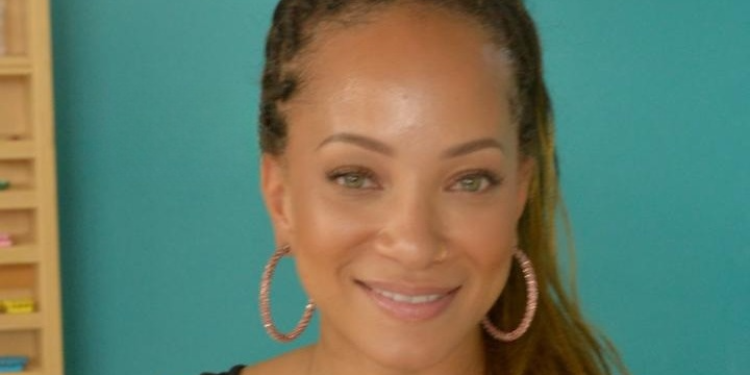
After founding several successful Montessori schools on Réunion Island, Stéphanie Payet and her husband are expanding their vision with a new project in Mauritius. Once an HR professional, Stéphanie is now fully committed to education, working to create a school that blends academic rigor, independence, and international-mindedness. In this interview, she shares the story behind the project, her journey, and the principles that guide her work.
Can you introduce yourself and tell us a bit about your background?
My name is Stéphanie Payet. I'm a mother of three and deeply passionate about education. With my husband, a certified Montessori educator for 6–12-year-olds, we've been building what has become a full-on family adventure. Since 2018, we've founded several Montessori schools in Réunion, where our three children have grown up—and where two of them are still enrolled today. They're our daily motivation and living proof of what this project means.
You started your career in HR before returning to your first love: education. What triggered that decision?
My children were the spark. I wanted something different for them—an education that respected their pace, their personality. When I discovered Montessori, it felt like I had finally found what I was looking for: a method that's both structured and nurturing. For my husband and me, the choice was clear—we wanted to create a learning environment where not just our children, but others too, could truly thrive.
Join the Mauritius community
Get regular tips and advice to make the most of your expat life
Why choose Mauritius to open a new Montessori school?
Mauritius is a unique place—vibrant, multicultural, and globally minded. It aligns perfectly with the Montessori spirit. As a family, we felt ready to take our project beyond Réunion, and Mauritius offered the ideal mix of openness, dynamism, and quality of life. We were particularly drawn to the northern part of the island, which offers an international outlook that suits our vision for this next chapter.
How would you explain the Montessori philosophy to parents who are new to it?
Montessori is a child-centered educational approach. In a carefully prepared environment, children learn by doing—through hands-on activities that foster independence, curiosity, and self-confidence. The adult's role is to guide, not dictate. The key difference from traditional schooling is this balance of freedom and structure—it nurtures a natural desire to learn, to explore, and to grow.
How do you see Mauritius' cultural diversity as an asset for Montessori education?
Mauritius is incredibly rich in cultures and languages, and that's a huge advantage. Growing up surrounded by diversity mirrors one of Montessori's core values: openness to others. Children here have the rare chance to grow up multilingual, respectful of differences, and naturally connected to the world around them. It's a perfect match.
What age groups will the school serve, and what can parents expect in terms of support?
We'll start welcoming children from age 2 through primary school, with plans to expand further. Parents can expect a school that supports them just as much as it supports their children—personalized follow-up, regular parent-teacher meetings, and workshops to understand Montessori education better. We aim to build a true educational community, where families and staff move forward together.
Have you noticed any specific aspects of the Mauritian education system you want to adapt to or address?
Yes. The Mauritian system is known for its strong academic focus and emphasis on exams, which is a strength. What we want to offer is a complementary approach: solid foundations in reading, writing, and math, paired with confidence, independence, and a lifelong love of learning. That's what sets Montessori apart.
What are the main challenges you foresee in bringing Montessori to Mauritius?
The first challenge is helping people understand the full depth of the Montessori method—moving past the surface-level clichés. The second is building a passionate, well-trained team that can uphold our high standards. And finally, we'll need to adapt to local realities, which takes time and commitment. But that's also what makes the journey so exciting.
What are your short- and medium-term goals for this new school?
Our short-term goal is to open the primary section by 2026, welcoming children aged 6 to 11 in a warm, structured environment. In the medium term, we hope to grow into a full middle school, offering a seamless educational path. This project is the natural continuation of our family and professional journey, with the ambition of becoming a Montessori benchmark in Mauritius.
You emphasize the importance of AMI-certified educators. What difference does that make in the classroom, and how do you recruit?
An AMI certification ensures deep expertise, a strong understanding of the child, and a faithful application of Montessori principles. It transforms the classroom experience through careful observation, tailored support, and a clear path of progression. When recruiting, we look at credentials, of course, but also passion for education and alignment with our values. Every team member must have experience in international Montessori settings and be bilingual. We place particular emphasis on language learning, educational excellence, and a strong command of written and spoken French. These are all things parents will experience firsthand as the project unfolds.
Montessori education is highly regarded around the world and backed by science. How do you measure success in your schools in Réunion?
Montessori is popular worldwide because it blends academic rigor with personal development. Even in preschool, children dive into reading, writing, early grammar, math, but also biology, zoology, and botany, often at levels beyond national standards. Neuroscience research backs it up: active learning builds focus, curiosity, and intrinsic motivation.
Montessori's global network is also a huge plus—families moving between countries can easily continue their child's education with no disruption. And because we align with the French national curriculum, our students can return to traditional schools without falling behind—often with a head start.
Our results in Réunion speak for themselves. For the past two years, all of our middle schoolers passed the Diplôme National du Brevet with honors. That's a point of pride, but more importantly, it shows that when applied with care and high standards, Montessori truly delivers both academic excellence and personal growth.
Finally, what message would you like to share with Mauritian families curious about Montessori?
We'd like them to know that Montessori is more than just an educational method—it's a philosophy of life. It offers children a nurturing yet demanding environment where they can grow happy, independent, and confident. Our project is built by a passionate family, and it's here to meet the needs of other parents who want to give their children the very best. Joining our Montessori network means entering a vibrant, international educational community where every child can shine and every family feels they belong.
A journalist, holder of the DALF C1 and C2 and a diploma from the University of Mauritius, I have nearly twenty years of writing experience. After six years in the Mauritian press, I joined Expat.com, where I have been working for over a decade, including five years as editorial assistant, and now as editorial manager.