

 Prepared by Julien Faliu on 08 September 2026
Switzerland, officially the Swiss Confederation, has a reputation for financial stability, precision engineering, breathtaking natural landscapes and an unparalleled quality of life. Unlike many unified European nations, it operates under a highly decentralized federalist structure, where the 26 constituent cantons hold significant autonomy over taxation, education and healthcare.
Switzerland consistently ranks among the top countries globally for quality of life, economic stability and safety. Its unique position as a central European hub, while remaining outside of the European Union (EU), creates distinct opportunities and challenges for newcomers.
Five compelling reasons to live in Switzerland
Exceptional quality of life and safety: Swiss cities boast low crime rates, pristine environments, and efficient infrastructure, leading to some of the highest well-being scores in the world.
Highest salaries in Europe: While the cost of living is high, salaries—especially in high-skilled sectors—are correspondingly high, ensuring strong purchasing power for residents. The median gross monthly salary often exceeds CHF 6,700 for full-time employees.
World-class healthcare: The mandatory, but privately run, health insurance system (KVG/LAMal) ensures every resident has access to state-of-the-art medical care and technology.
Centrality and connectivity: Situated at the heart of Europe, Switzerland offers easy access to France, Germany, Italy, and Austria, complemented by one of the most reliable and punctual public transport systems (SBB) globally.
Linguistic and cultural diversity: The coexistence of four official languages (German, French, Italian and Romansh) within a single confederation fosters a cosmopolitan atmosphere, particularly in the major urban centers.
Your setup journey
Guide in 13 steps. Click any step below to jump directly to the section you need.
01Where to live in Switzerland
Choosing a location in Switzerland isn't simply about picking a city; it's a critical decision that means selecting a canton and a corresponding language region. Where you live directly determines your local tax rate, the regulations you follow and your daily cultural environment.
The major economic hubs
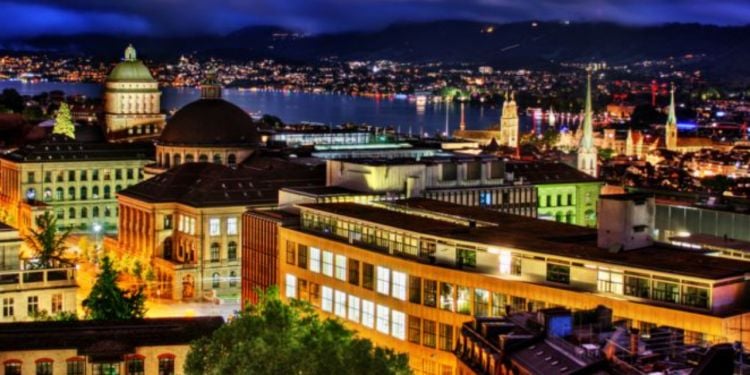
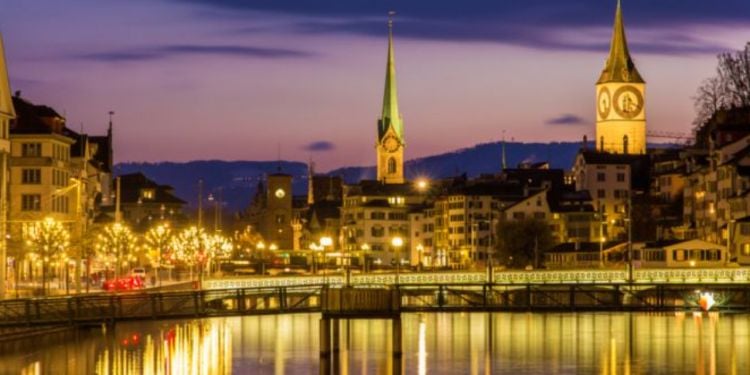
Zurich (German-speaking): Zurich is Switzerland’s leading financial center and its most populous city. It offers numerous employment opportunities in banking, insurance, technology and business services. German is the canton’s official language, while Swiss German predominates in everyday conversation. Housing costs are among the highest in Switzerland.
Geneva (French-speaking): Geneva is home to numerous international organizations, including the United Nations, the World Health Organization and the International Committee of the Red Cross. Its economy is driven primarily by diplomacy, international trade, finance and watchmaking. Since 1 January 2026, the gross cantonal minimum wage has been CHF 24.59 per hour.
Basel (German-speaking): Located on the border with France and Germany, Basel is one of Europe’s leading centers for the pharmaceutical and life sciences industries. Roche and Novartis are both headquartered there. German is the official language, although French and English are commonly used in international companies.
The political and regional centers
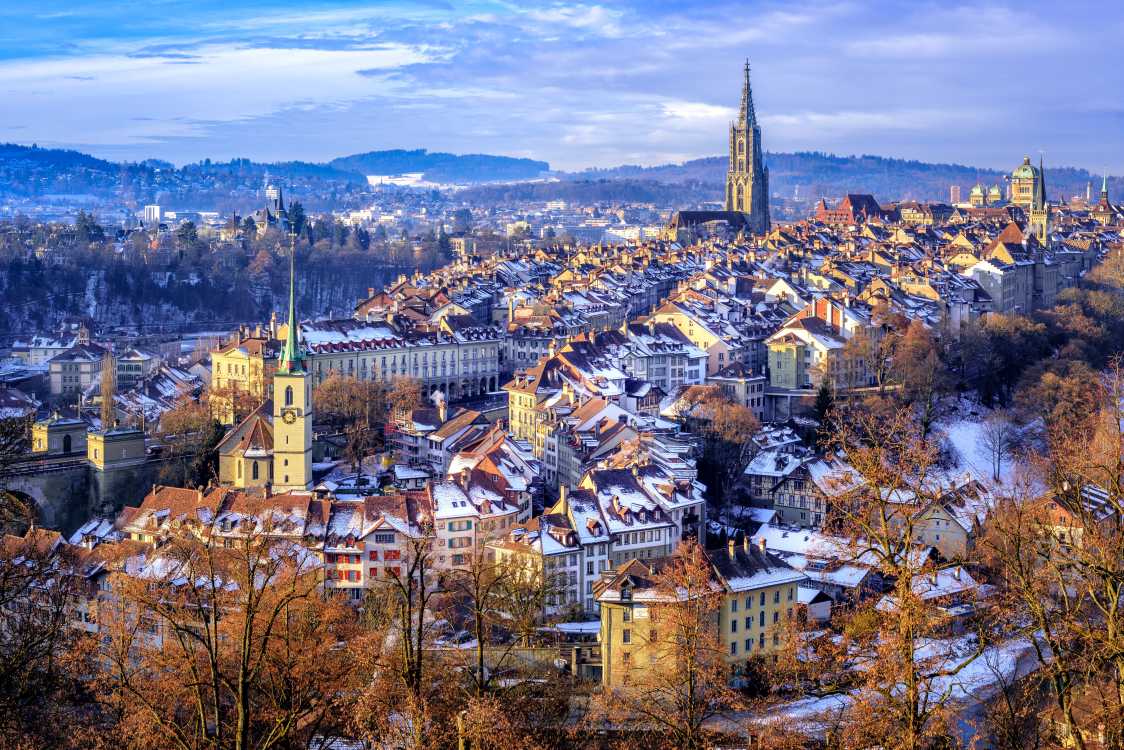
Berne (predominantly German-speaking): The federal capital. More relaxed, medieval and bureaucratic, offering slightly more affordable housing than the major hubs.
Lausanne (French-speaking): Lausanne is a major academic, technological and sporting center. It is home to the Swiss Federal Institute of Technology Lausanne and the headquarters of the International Olympic Committee. Its employment market is driven by education, research, technology and services.
Lugano (Italian-speaking): The primary city in Canton Ticino. Offers a Mediterranean lifestyle with strong ties to Italy but with Swiss stability and infrastructure. Salaries tend to be lower than in the German and French regions.
Rural and affordable options (lower cost)
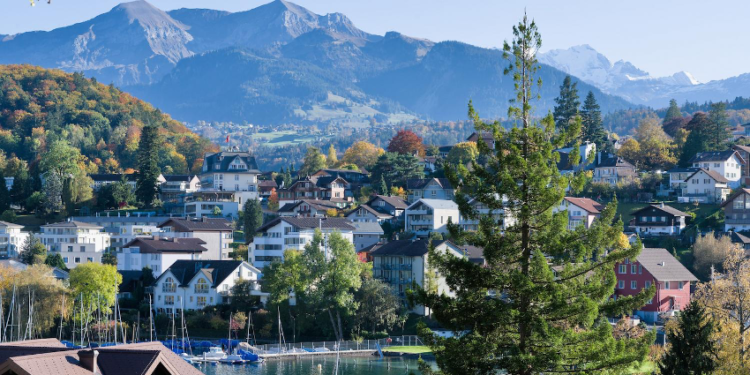
To offset the high costs of the main cities, many residents opt for homes in adjacent, smaller towns within the same canton (e.g., Winterthur near Zurich) or choose to live in neighboring, lower-tax cantons (e.g., Zug or Schwyz or those working in Lausanne/Geneva) and commute. The quality of life remains excellent across nearly all rural areas.
02Formalities and visas in Switzerland
Citizens of the European Union and the European Free Trade Association benefit from the Agreement on the Free Movement of Persons. They may enter Switzerland with a valid identity document and look for work for up to three months without a residence permit. To work in Switzerland for more than three months, they must have an employment contract and apply for a residence permit. They must register with their municipality within 14 days of arriving and before starting work. People who wish to settle in Switzerland without working must have sufficient financial resources and health insurance covering risks in Switzerland. Free movement therefore does not provide an entirely unconditional right of residence.
For all other non-EU/EFTA citizens, the general visa requirements for Switzerland are highly restrictive, involving annual quotas and a strict labor market test. You must secure prior approval and a job offer from a Swiss employer, who must demonstrate that no suitable Swiss or EU candidate could be found.
Tips:
- You must register with the local commune within 14 days of arrival, regardless of nationality or permit status.
- Be prepared to provide financial evidence, either in the form of a bank statement or a declaration of financial support.
- Gather necessary documents, which will include proof of your job contract or sufficient funds, depending on your status.
- Note that non-EU permits are typically reserved for highly qualified specialists, managers and senior staff.
- Your documents, if not in German, French, or Italian, must be accompanied by certified translations into the local language of the commune for your application.
- Be patient: The application process is decentralized. Allow several months for work permit applications, especially for non-EU/EFTA permits, as they must pass through cantonal, then federal, review.
Source:
Discover more

Join the discussion on the forum
03Working in Switzerland
With industry-leading companies, low unemployment and a stable economy, the Swiss labor market is highly attractive. Salaries are among the highest in Europe, but so is the cost of living, so it pays to research carefully before making the move.
To work in Switzerland, you will generally need a Swiss-style CV, which is concise, skills-focused, and sometimes includes a professional headshot. Non-EU/EFTA nationals typically require a work permit, which is granted only if no suitable Swiss or EU candidate is available. Permits are usually tied to a specific job offer and must be sponsored by an employer.
In-demand jobs
Some of the most sought-after roles in Switzerland include IT professionals (software engineers, cybersecurity experts), healthcare workers (doctors, nurses, caregivers), finance specialists (accountants, analysts, auditors), and engineers in biotech, mechanical, and civil fields. Skilled workers in hospitality and tourism are also valued, particularly in alpine regions.
Tips:
- Temporary or short-term contracts can help you get local experience and build your reputation.
- Networking is key: many roles are filled through personal connections, so consider joining local professional groups or expat associations.
- Recruitment agencies specializing in finance, pharma, or IT can be a strong gateway into the market.
Facts & figures
In July 2026, Switzerland had 139,276 registered unemployed people. The unemployment rate stood at 3.0%, compared with 2.7% one year earlier. When adjusted for seasonal variations, it stood at 3.1%.
Unemployment remains higher among foreign nationals. In July 2026, their unemployment rate was 5.1%, compared with 2.1% among Swiss citizens. These statistics are based on nationality and therefore do not correspond precisely to the definition of an expatriate.
Despite this slowdown, 45,156 vacancies were registered with regional employment centers in July 2026, representing an increase of 13.4% compared with the previous year. Demand remains high in healthcare, life sciences, certain technical professions, engineering and several skilled trades.
Useful link:
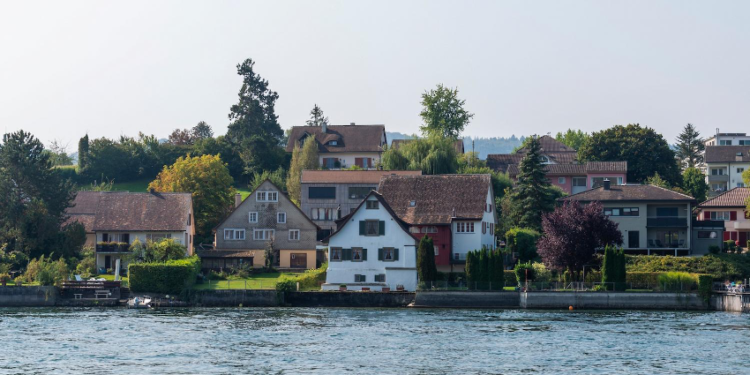
04Accommodation in Switzerland
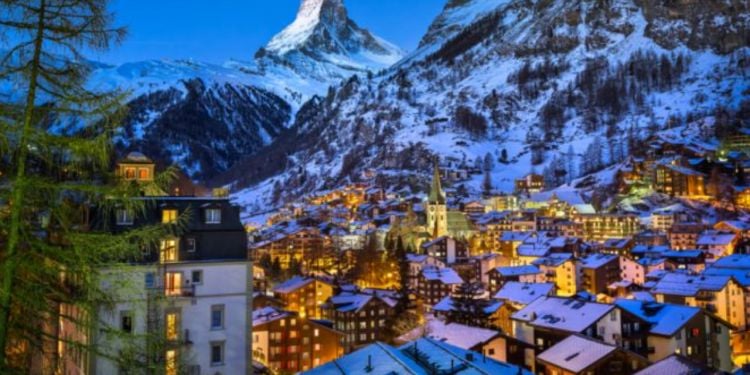
From sleek Zurich apartments to traditional chalets in the Alps, accommodation in Switzerland caters to a variety of tastes and budgets. Renting is the most common option for both Swiss nationals and newcomers, as the real estate market is highly regulated and property prices are generally high. A standard lease is often for an indefinite period with a statutory minimum notice of three months, though a longer notice period or fixed lease can be agreed upon. You will be required to provide a security deposit, typically equivalent to three months' rent, which must be held in a dedicated, blocked savings account.
Buying property for foreigners is strictly controlled by the federal Lex Koller law, which aims to limit foreign ownership of residential property. Non-resident foreigners generally require special permits and are restricted to purchasing holiday homes in designated tourist areas. EU/EFTA nationals with a residence permit (B or C) can typically purchase a primary residence with the same rights as Swiss citizens. Non-EU/EFTA nationals with a B permit can also buy a primary residence, but they must live in it and are restricted from renting it out. C Permit (permanent residence) holders have the same property rights as Swiss citizens, regardless of nationality.
Tips:
- When renting, assemble a comprehensive application with documents like your residence permit, employment contract, and debt collection register extract (required in many cantons).
- Budget for all costs. Rents are commonly advertised as "cold rent" (kaltmiete). Factor in nebenkosten (ancillary costs/utilities), which are paid separately and are estimated upfront.
- Start early. The rental market is competitive. You may need to attend group viewings and apply immediately to secure a desirable property.
- Buying costs vary significantly. When purchasing, budget for additional expenses, which typically range from 2.5% to 5% of the purchase price, but this varies widely by canton. These costs include transfer tax and notary/registry fees.
Useful links:
Join the discussion on the forum
05Cost of living in Switzerland
Switzerland is consistently ranked as one of the most expensive countries globally, with cities like Zurich and Geneva often topping lists for the highest cost of living. While salaries are also among the world's highest, the cost of housing, groceries, and especially mandatory health insurance is significant. Costs can vary substantially between major cities and smaller, more rural cantons.
Here is a general breakdown of average monthly expenses for different household types, including rent.
Monthly expenses
Category | Single expat (per month) | Family of four (per month) |
Average total expenses (excl. health insurance) | CHF 2,200 – CHF 4,000 | CHF 6,000 – CHF 8,500 |
Rent (outside major cities) | CHF 1,000 – CHF 1,700 | CHF 2,500 – CHF 3,500 |
Rent (Zurich/Geneva) | CHF 1,800 – CHF 2,500+ | CHF 3,500 – CHF 5,000+ |
Mandatory health insurance (est.) | CHF 300 – CHF 500 | CHF 1,400 – CHF 2,200 |
Utilities (gas, electric, insurance) | CHF 100 – CHF 200 | CHF 300 – CHF 400 |
Groceries | CHF 450 – CHF 700 | CHF 1,000 – CHF 1,500 |
Transport (monthly pass) | CHF 80 – CHF 150 | CHF 150 – CHF 350 |
Data accurate as of October 2025
Sources: Livingcost.org, Wise, Packimpex
06Healthcare in Switzerland
Switzerland operates a system of universal, mandatory health insurance (KVG/LAMal) provided by private insurers. Every resident must have basic insurance to access the Swiss healthcare system. These basic policies are regulated by law and must be offered on a non-profit basis, although insurers may profit from optional supplementary plans.
What you need to know
In case of a medical emergency, dial 144.
All new residents must purchase a basic health insurance policy from an authorized Swiss insurer within three months of registering their residence.
Coverage is retroactive to the date of arrival in Switzerland. If you register in month three, you must pay premiums for all three months.
Premiums are individual (not family-based). They vary by age, canton of residence, and chosen insurer, but are not based on income or prior health status for the basic plan.
Sources:



07Finance and banks in Switzerland
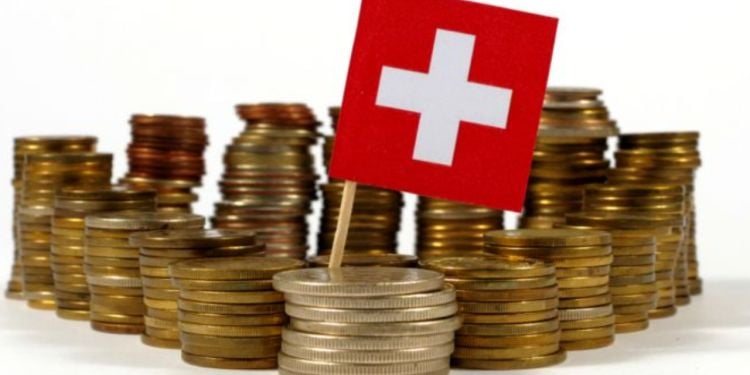
The banking and finance sectors in Switzerland are renowned for their stability and high-quality services. While the era of strict banking secrecy has shifted toward greater transparency under international tax agreements, Swiss banks remain trusted institutions for residents and businesses alike.
To open a bank account in Switzerland, you’ll typically need a valid passport or ID card, proof of residence (residence permit or registration confirmation from your commune), and proof of employment or income (for salary accounts). Major retail banks include UBS (which now incorporates Credit Suisse), Raiffeisen, and the Cantonal Banks (such as Zürcher Kantonalbank), which often have extensive branch networks. Digital options like Neon, Zak, or Yuh are increasingly popular.
Tips:
- Compare account fees and included services carefully—they vary widely.
- Choose based on your needs: cantonal banks are strong locally, while UBS offers international coverage.
- For convenience and lower costs, consider a mobile-first digital bank with quick online setup.
Source:
08Studying in Switzerland
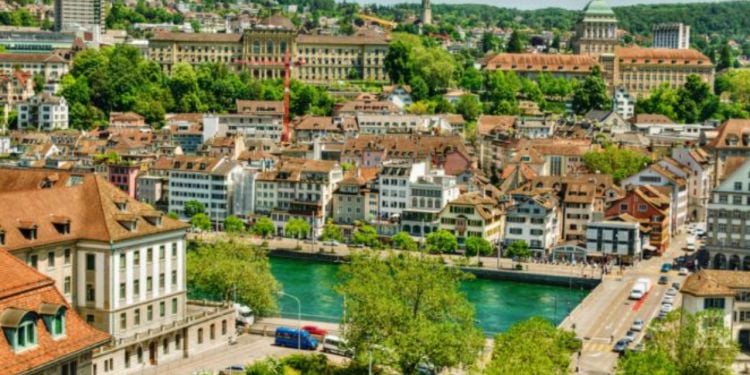
Known for academic excellence, innovation, and a truly international environment, Switzerland is a top choice for students seeking quality education in the heart of Europe. With world-class universities, multilingual programs, and a strong research culture, it offers an ideal setting for both academic and personal growth.
Why study in Switzerland?
Universities in Switzerland consistently rank among the best worldwide, with institutions such as ETH Zurich and the University of Geneva recognized for research and teaching. Many programs are offered in English, particularly at the postgraduate level.
Tuition fees vary considerably by institution and by the student’s circumstances. Since the autumn semester of 2025, certain foreign students who move to Switzerland primarily to study at ETH Zurich or EPFL have been required to pay three times the standard tuition fees. They pay CHF 2,190 per semester, in addition to other semester contributions. Exemptions and transitional rules apply depending on the student’s circumstances.
Tips:
- If your studies exceed three months, you will need a student visa. Admission from a recognized Swiss institution is required before applying.
- You must provide proof of financial means to support yourself during your stay, along with valid health insurance coverage.
- Housing in university cities can be competitive, so arrange accommodation early, either through student residences or private rentals.
- Learn some local language basics. Even if your program is in English, everyday life in Switzerland often requires some French, German, or Italian, depending on the region.
- Take advantage of student discounts. Public transport passes, cultural events, and even ski resorts often offer reduced rates for students, which can make a big difference given Switzerland's high cost of living.
Discover more
09Education and schools in Switzerland
Relocating to Switzerland with children means navigating an excellent yet complex education system. It's highly decentralized, with each of the 26 cantons setting its own curriculum, calendar, and language of instruction. This decentralization means that a family moving just a few kilometers across a cantonal border may find themselves navigating a different system, a different language, and a different school calendar.
Types of schools
Public schools (écoles publiques): Free of charge, funded by taxes. Instruction is in the local language (German, French, or Italian). School days are often non-continuous, with children returning home for lunch.
Bilingual Schools (écoles bilingues): Teach the Swiss curriculum in two languages (typically the local language and English). These can offer a smooth transition, but fees are high, often exceeding CHF 20,000 annually.
Private/international schools (écoles privées/internationales): Charge substantial tuition fees. Offer full-day schedules and internationally recognized curricula (IB, A-Levels, etc.).
School holidays
The scheduling of school holidays is set individually by each of the 26 cantons, which means dates vary significantly across Switzerland. However, most cantons have approximately 13 weeks of holidays annually, generally divided into:
Autumn holidays: Usually two weeks in late September or October.
Christmas holidays: About two weeks, covering Christmas and New Year.
February/sport break: Typically one week in February, often coinciding with local carnival or ski season.
Spring/easter holidays: Usually one to two weeks, often around Easter.
Summer holidays: The longest break, usually five to seven weeks, beginning between late June and mid-July.
Tips:
- Public school days are often short and have a long midday break. Secure spots in after-school care (tagesstruktur/parascolaire) early, as they are separate entities and demand is high.
- Connect with other parents through local clubs and associations (vereine). This is a great way to understand community norms and arrange playdates, bridging the gap between school and community life.
Discover more

10Planning your move to Switzerland
Switzerland, with its high quality of life and stunning landscapes, is a dream destination for many expats. A successful move relies on meticulous preparation to navigate the unique administrative requirements of the Swiss cantons. Here are a few tips to help ensure your relocation to Switzerland is a smooth one.
- Secure residency first: Non-EU/EFTA citizens must finalize their long-term D-visa and residence permit (up to six months processing) before moving, as this is required to legally reside and work in Switzerland.
- Sort out your finances early: Start the process to secure your Swiss bank account early. A common hurdle is needing an address for a bank account and a bank account for a lease.
- Begin the house hunt immediately: The rental market is highly competitive. Prepare your application documents, including your work contract and the debt collection register extract (obtainable after arrival).
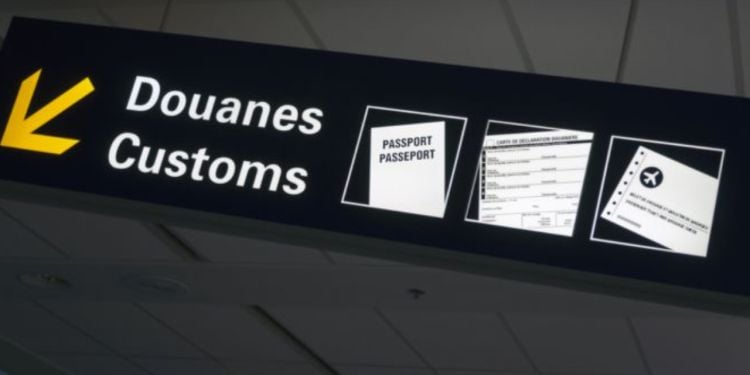
- Prepare customs documentation: For duty-free import of household goods, complete and sign Customs Form 18.44. Items must have been owned for at least six months.
- Hire expert movers: Choose an international moving company with proven expertise in Swiss customs, as clearance must be done at a commercial office.
- Obtain Swiss compulsory basic health insurance within three months of moving. Failure to do so will result in you being automatically assigned an insurer by the canton.
Source:
The International Federation of Moving Companies (FIDI) Global Alliance
Join the discussion on the forum
11Everyday life in Switzerland
Swiss culture prioritizes respect for privacy, order, and collective harmony, values that are clearly seen in a strong adherence to rules and punctuality.
Politeness and formality
Greetings: A firm handshake and direct eye contact are standard in both social and business settings. In French-speaking regions, close acquaintances may exchange three air kisses (right, left, right).
Formal address: Always use the formal address (surname and title) until explicitly invited to use the first name.
Punctuality: Punctuality is viewed as a sign of respect. Being late, even socially, is frowned upon without prior notification.
Rules and Neighbors
Silence (ruhezeiten): Respect for neighbors is paramount. Strict "quiet hours" are enforced, particularly between 10 PM and 7 AM on weekdays, and often throughout the entire day on Sundays. This includes avoiding loud activities like using lawnmowers, vacuuming, or running washing machines.
Recycling: Switzerland has one of the world's highest recycling rates. Residents are expected to separate waste, and waste disposal is often based on the polluter pays principle (special taxed bags, Zürichsäcke, must be used for general waste). Littering is severely penalized.
Safety: The country is extremely safe, and while carrying official identification (passport or residence permit) is legally required, locals are seldom checked.
Discover more






12Leisure in Switzerland
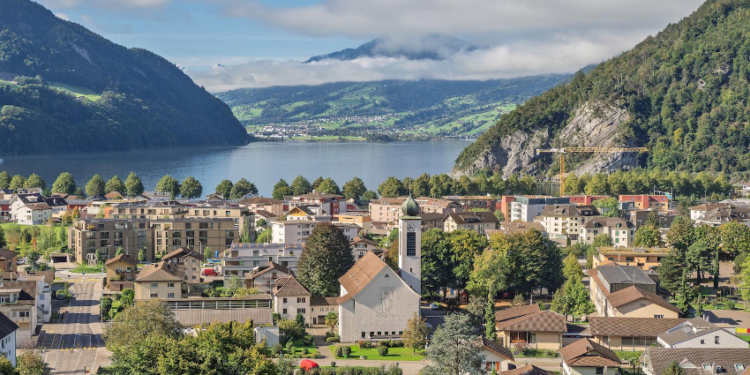
For the Swiss, free time is synonymous with the outdoors. The nation treats its spectacular Alps, crystalline lakes, and clean rivers as a massive, accessible playground throughout the year. The country’s famously efficient infrastructure makes it easy to get out and enjoy it all.
The Alps and hiking: Hiking (wandern/randonnée) is the national pastime. The country is crisscrossed by meticulously maintained, color-coded hiking trails, ranging from easy valley walks to high-altitude mountain passes.
Lakes and rivers: In summer, swimming in the pristine lakes (Zurich, Geneva, Lucerne) and rivers (like the Aare in Bern) is popular.
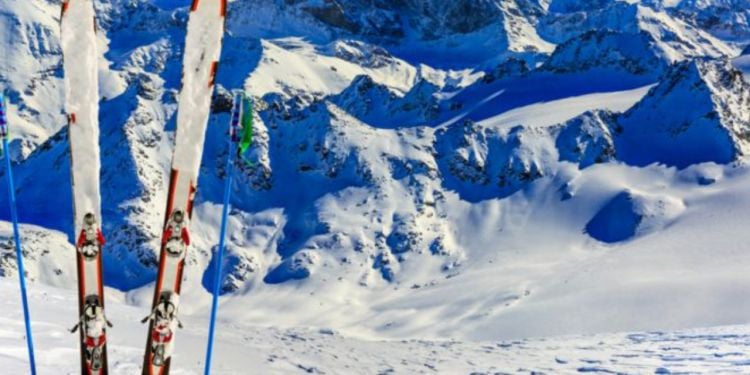
Winter sports: Skiing, snowboarding, and cross-country skiing are hugely popular, with world-famous resorts like Zermatt and St. Moritz.
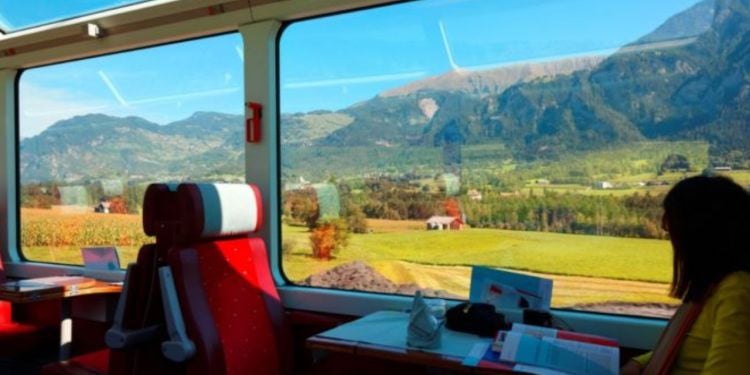
Public transport (SBB): The Swiss Federal Railways (SBB/CFF/FFS) network is a convenient and easy way to get around. The half-fare card (Halbtax) is a good investment that gives 50% off most train, bus, and boat tickets.

13The essentials to remember
You will have a lot on your mind when planning your move to Switzerland, so the earlier you start, the better. Tackle essential tasks first: this means mastering the mandatory health insurance system, decoding your new canton's tax structure and securing housing.
Be sure to explore our comprehensive guide on Living in Switzerland, which is filled with useful information on topics such as finding a home, the job market, healthcare, education and enjoying your free time. If you have any questions about starting a new life in the country, be sure to visit our Switzerland forum, where our members can share insights from their own experiences.
Join the Switzerland community
Get regular tips and advice to make the most of your expat life
Essential services for your expat journey







Forum topics on living in Switzerland
Discover forums topics on expat life in Switzerland: join the conversation, ask your questions, get advice and share your experience.
- Pillar 3a retirement savings account
- Where do you get your British groceries in Switzerland?
- Quality of customer service in Switzerland
- Cost of living in Switzerland in 2026
- Ways to lower your expenses/best deals (expats in Switzerland)?
- Working as a nurse in Swiss
- Day trading in Switzerland... taxes :(
- Geneva city or Nyon ?