

The Mauritian government is aware of the environmental challenges. Faced with the various international calls regarding climate change, Mauritius is committed to becoming a model for countries with inclusive development to ensure its sustainability. The focus will be on sustainable development with the long-term goal of carbon neutrality by 2030.
Sustainable development: Towards becoming a carbon neutral island?
 © Photoagriculture / Shutterstock.com
While economic independence remains the government's key strategy for recovery, sustainable development is no less a concern for Mauritius. A series of measures were announced and should be put in place to allow the country to reduce its carbon emissions to achieve the much sought after neutrality.
In this article
Join the Mauritius community
Get regular tips and advice to make the most of your expat life
Renewable energy
To reduce our over-dependence on fossil fuels, the government intends to accelerate the transition to cleaner energy production. A Green Transformation Package has been announced to enable the production of an additional 200 MW of electricity by 2025. This will bring the share of renewable energy to 40%, representing two-thirds of the 60% target. Power generation from hybrid renewable sources, electric vehicles (see below), energy demand management and the transition to a carbon neutral manufacturing sector are key measures identified in pursuit of this goal. The Green Transformation Package is expected to increase GDP by 2.25%.
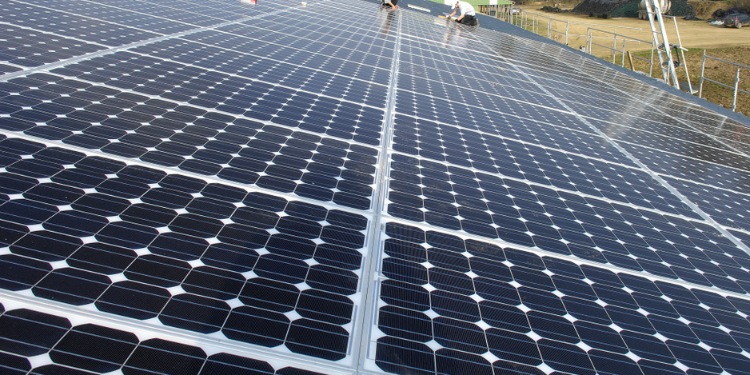
Investment in solar farms is among the measures announced. The Central Electricity Board (CEB) is in the process of developing an 8 MW solar farm in Henrietta. Collaboration with the private sector is key to this strategy. New partners will be sought in this regard. Airports of Mauritius Ltd is responsible for a photovoltaic panel project around the green zone of the SSRN airport in Plaisance.
The government also plans to distribute some 5,000 solar panel kits with a total capacity of 9 MW to households, non-governmental organizations and charitable organizations. Bank loans will also be available from the Development Bank.
Carbon neutrality in the manufacturing sector
Carbon neutrality by 2030 is the aim for this current government. To do so, a reform of the manufacturing sector is important. Especially since this industry is a large energy consumer. Thus, the government has announced that a transition framework for renewable energy is currently being implemented. This includes the generation of electricity up to 150% of the current consumption of industrial users; the provision of an agreed feed-in tariff of Rs 4.20 for industrial users by the CEB; allowing industries to set up on-site and off-site photovoltaic installations; and finally the introduction of a seven-year carbon-neutral loan program by IFCM at a preferential rate of 3%.
Thus, by 2025, an additional 200 MW will be generated from renewable sources. This program is expected to generate at least Rs 20 billion in private investment over the next 3 years.
Transition to electric vehicles
All hybrid and electric vehicles will be duty-free from July 1. This announcement did not go unnoticed during the presentation of the 2022-23 Budget by Minister Renganaden Padayachy. A negative excise duty of 10% for the purchase of electric vehicles up to a maximum of Rs 200,000 will also be introduced.
A series of measures have been announced to accelerate the transition to electric vehicles. The Metro Express Ltd will set up photovoltaic farms at its Richelieu depot, Barkly and Ebene Recreation Park to meet its electricity needs.
The Industrial Finance Corporation of Mauritius (IFCM) will provide loan facilities at 3% per annum for 10 years to transport operators for the acquisition of electric vehicles and charging stations. This entity will offer loan facilities at a preferential rate of 3.5% per annum to companies that renew their fleet of company vehicles to make them exclusively electric.
The NTC will acquire 200 electric buses to renew half of its fleet. A "Bus Modernisation Scheme" will be introduced and will apply only to electric buses.
The DBM will provide loans at 0.5% to cab and van operators, up to a maximum of Rs. 3 million over a period of 7 years, for the purchase of electric vehicles.
Comments
Essential services for your expat journey

Choose the best health insurance
Protect your health and get easy access to treatment for expats in Mauritius.

Plan your international move
Facilitate your move to Mauritius by getting a quote from our top rated movers.

Open a bank account that suits you
Discover the best international banks to manage your money securely.

Personalized relocation assistance in Mauritius
For your housing search and all administrative formalities.
Further reading
Mauritius: A paradise, with all the realities that come with it
Can Mauritius become a medical tourism hub?
Work From Home with greater peace of mind
What it's like for expats to raise children in Mauritius
Why coastal erosion is accelerating in Mauritius
Expat blues in Mauritius: When the sun isn't enough
Top events in Mauritius in May
Mauritius to regulate smartphone use in schools
From expat to expert: Anaïs Honorez's journey in Mauritius
Join the Mauritius community
Get regular tips and advice to make the most of your expat life