

In the UK, the new normal was expected in June, but it seems like Britons and expats will have to wait a little longer. The lockdown has been extended until at least July 19 due to the spread of the Delta variant. According to experts, more than 90% of new cases reported in the UK are currently linked to the Delta variant. The country had initially planned to lift restrictions, such as social distancing, on June 21 following its gradual reopening.
Since early June, Britons and expats were able to breathe again and reunite with their friends and family after several months of lockdown. As a result, gatherings, including weddings and other events, are no longer limited to 30 people. Moreover, the Euro 2020 competition is still on despite the spread of the new variant. Restrictions could be lifted around July 19 to allow a more significant proportion of the population to be vaccinated against COVID-19. To date, nearly 42 million people have already received their first jab. It's worth noting that people who are at least 18 years old can now get vaccinated in the UK.
Scotland has also delayed its reopening until at least mid-July, while Northern Ireland plans to reopen on July 5. However, according to health experts, there is the risk of a new wave in winter, which could lead to another lockdown. Besides, Prime Minister Boris Johnson has already warned that international travel won't return to normal until next year. This implies the extension of travel restrictions, including self-isolation for people coming from red and orange countries. For now, only ten countries are part of the green category, which means that their citizens are exempt from quarantine on arrival. The national interest is the British government's priority for the moment, although this has aroused many issues.
Davina, a young expat in the United Kingdom, has been waiting for the reopening of borders for months so that her retired parents can finally come and visit her. "They usually stay with us for a couple of months every year, but this time we did not want to take any risks. But I can't wait for my parents to finally see my newborn daughter. So far, they have only been able to see her through our video calls". Sweetie is also waiting for the reopening and the easing of entry conditions in Mauritius, her home country. “Both my husband and I have been inoculated, but we do not want to take any risk, especially for our family as we will be staying with them".
COVID-19: delayed border reopenings and expats stranded abroad
 © Shutterstock.com
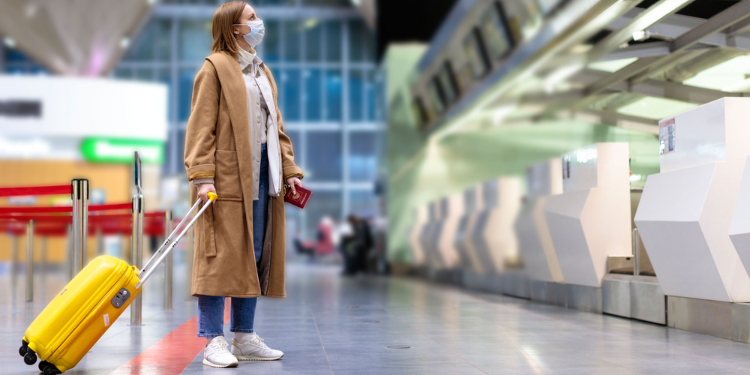
As several countries, especially those in Europe, are gradually reopening their borders to foreign nationals, others are still hesitant. The United Kingdom, for example, has delayed its reopening due to the new Delta variant.
Join the community
Get regular tips and advice to make the most of your expat life
Australia in no hurry to reopen its borders
According to recent statements made by Tourism Minister Dan Tehan to the media, Australia is not likely to reopen its borders anytime soon. Initially, the country had planned to reopen its borders in January 2021. But given the evolution of the pandemic around the world, the Australian government prefers to remain cautious. Moreover, strict measures have been introduced, including compulsory quarantine for anyone entering the country. While thousands of Australian expatriates remain stranded abroad, especially in India, where the pandemic has been a real disaster in recent months, and in other countries, the government is considering taking even more drastic measures: prohibiting permanent residents from leaving the country.
This has obviously become a serious issue for the large expat community in Australia, as evidenced by their posts on social media. “It's been almost two years since I last saw my parents,” says Jen, an expat from the United States. “I was supposed to travel to the US last year but I couldn't, and things are getting more complicated with these new restrictions. Besides, they can't join me here for the time being". Many other expats are seeking answers and reactions on social media, or at least some comfort. “I'm Australian, and I was planning to reunite with my parents at the end of 2021 with my girlfriend, who intends to study in Australia. But these new conditions look quite tricky, ”says Kenny.
While expats feel lonely for being away from their family for so long, they should keep in mind that Australia is not planning to reopen its borders until June 2022.
Expats in China in limbo
China is home to a large expat community of different origins. Of these 845,000 foreigners, only some 200,000 had already been inoculated in early June. The worst part is that Chinese vaccines, even those recognized by the World Health Organization (WHO), such as Sinopharm, are not accepted by many countries, especially in the European Union. Many expats, including Americans, have contacted their embassies to request foreign vaccines that would allow them to travel without the need to quarantine. Meanwhile, China is in no hurry to reopen its borders, let alone approve the use of foreign vaccines.
Canada grants access for eligible persons only
Canada has announced its first phase of border reopening as of July 5, but this will be done under strict conditions as the population's health and safety come first. Initially, only fully vaccinated citizens, residents and other eligible persons are concerned by this first phase. Non-essential travel should not be allowed until at least July 21. The country aims to vaccinate at least 75% of its population as quickly as possible to achieve herd immunity.

Comments
 External5 years ago(Modified)
As far as canada is concerned, only those vaccinated with Pfizer, Moderna, AstraZeneca/Oxford and Janssen ( J&J) will be allowed in without having to do the confinement in a hotel. Sputnik, sinopharm , Covadin/ covidshield are not admissible.
 Adam De5 years ago(Modified)
Hi, In regards to Australia, or as some commentators now refer to it “ Hermit Kingdom version 2, the international borders HAVE been locked, for approximately the past 15 months during which time Australian PERMANENT residents have been blocked from travelling abroad, unless able to obtain special exit permission, most applicants are rejected. In effect ANY person classified as being a PERMANENT resident is prohibited from travelling abroad, even if FULLY vaccinated
Essential services for your expat journey




Further reading
Expat family life: Letting go of home without losing your roots
Moving abroad: Escape or a fresh start?
Living in Mauritius is simpler, but not always cheaper
Why you shouldn't be afraid to retire abroad
What are your rights as an LGBT couple moving to Mauritius?
How social media shapes culture shock for Gen Z
Moving abroad to earn more: Is it really worth it?
Why Mauritius is attracting a new generation of expat content creators
Mauritius' chikungunya risk remains in winter
Join the community
Get regular tips and advice to make the most of your expat life