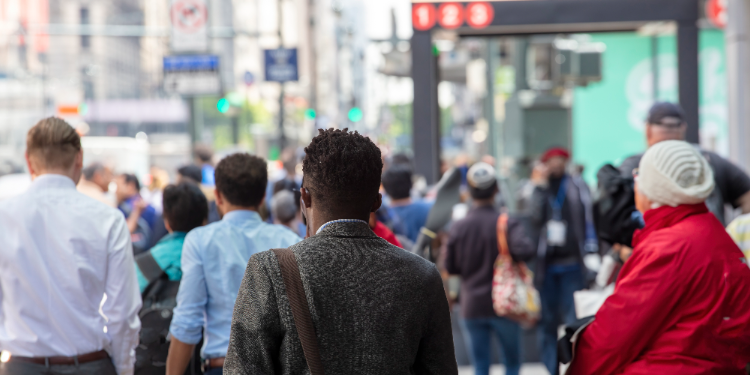
Just a few years ago, living in a big city seemed to be a direct association with success. And so was moving to a big city. And a lot of expats, when relocating, were more driven towards big cities for this reason too. But things seem to be changing. If social media is to be believed (and yes, this is very debatable), a lot of people now prefer, given the choice, to settle away from the noise of a big city. Smaller sustainable communities are starting to emerge.
Now, a lot of cities can be called "big". But a megacity is something different. In linguistic terms, a megacity is a city with a population of over ten million people. But modern megacities like Jakarta, Dhaka, or Delhi are home to tens of millions: 41.9, 36.6, and 30.2, respectively. Jakarta is the most populated city in the world. To put it in perspective, it is basically home to five Switzerlands.
And in developing nations like Indonesia, Bangladesh, and India, it translates into a severe lack of infrastructure.
The cities simply can't keep up with the huge numbers of residents. Basic services are overwhelmed, there is chronic congestion, and commutes are unreasonably long – as a result, the quality of life for residents keeps declining.
The most obvious example of this is Jakarta, now one of the most congested cities in the world. In Dhaka, rapid urbanization has left large informal settlements without a reliable water supply. You've probably heard of the slums of Mumbai. These are also the result of the sheer density of population in the city.
The above are the most dramatic examples of megacity problems. But not too many expats relocate to Mumbai or Dhaka. But they do relocate to Mexico City (home to 22 million people). On the surface, the city offers a great quality of life, everything a lot of expats may be looking for: warm climate, sunny beaches, food, art, etc. But traffic congestion here is one of the worst in the world. Traveling for short distances can take hours. You will also be dealing with air pollution and water shortages.
Manila (a city of 14 million people) suffers from similar problems. It's a big hub for international business, but its transport system is heavily outweighed by the population. Manila's traffic jams are infamous. Add to that the often non-existent sidewalks, and getting around the city becomes really problematic. For expats, this usually means carefully choosing their neighborhoods to avoid lengthy commutes.
In Cairo (with 20+ million residents), the big-city challenges are even more fundamental. The city's population continues to grow, putting significant pressure on housing, sanitation, and the environment. Because real estate is expensive and unaffordable for many people, informal settlements expand. For expats, this means contrast: a clean gated community they live in feels nice, but as you explore the city, the wealth and infrastructure gap catches up with you on every corner.
The largest city in South America is São Paulo (23 million people). Here, population density has also created inequality. Living in certain neighborhoods comes with a great quality of life: access to cultural life, dining, healthcare, clean, organized streets, etc. But other neighborhoods make you feel unsafe in the late hours, are overcrowded, polluted, and have an unreliable public sector.
Sure, huge cities in developing countries naturally run into problems. There may simply not be enough resources to handle the arriving population. But in the countries we refer to as developed, big cities are not getting good reviews either.
The struggles here are not about a lack of access to services — those are often in over-supply. But here residents are looking at a different set of issues: high pressure, exhaustion, and unaffordability.
Los Angeles, a city of 3.88 million people, seems to have run out of livable space. It struggles with a problem that's harder to measure in statistics: it lacks walkable space where you can simply be. Even though the city is big, it's mostly made up of highways and intermittent commercial zones.
Shopping malls, offices, residential neighborhoods, gyms, and schools are physically separated by unwalkable highways. To get from one to another, you need a car. And when a city is designed for the comfort of cars rather than people, it naturally runs into issues. Congestion is one of them. But there is also the intangible problem of people being forced into cars and isolation.
Moving to Los Angeles from almost any European city will inevitably result in culture shock. No biking to work, no easy access to public transportation. If you do manage to catch a bus, you may be very disappointed in its overall vibe. In short, if you are not a driver in Los Angeles, you will have a very limited experience of what the city is.
Housing shortage is another major issue. The prices for real estate here are sky-high. This not only pushes a lot of middle-class Americans out of the city but also creates one of the most "in your face" homelessness crises in the developed world. In the city of Los Angeles alone, there are close to 45,000 people experiencing homelessness.
Worsening air quality, recurring droughts, wildfire risks… All of this makes LA feel less and less like a desirable place to live. And people are taking note. Following the pandemic, Los Angeles witnessed one of the country's most dramatic population movements: over 200,000 residents left the city for areas with lower costs of living. The trend continues today, with top choices for ex-LA dwellers being Austin, Houston, Phoenix, and others.
In London, the main crisis also revolves around housing. Property prices and rents have climbed so high that even well-settled middle-class professionals are starting to feel overwhelmed. A single tube ride into central London from the outer areas can cost around £5.80 at peak times (approximately €6.50)
Alongside the high cost of living, there is now the concern about crime. Knife attacks, phone snatching, and petty theft have become more common. There are now about 106.4 crimes per 1,000 people in the city – a clear upward trend compared to the previous decade. And while for many Londoners the city still offers opportunity, the cost of this opportunity is becoming unsustainable for some.
Let's take Paris as another example. The world's most romanticized city is struggling with a lot of things in the background. One of them is rigidity. Strict housing regulations limit new construction, drive up housing prices and rents, and push many people out of the city. Many families find themselves living in small apartments or commuting for long hours from outside the city. Regular strikes, transport disruptions, and overcrowded services also have a significant impact on everyday life.
Hong Kong is another instance of what happens when a big city runs out of space. The city covers just 1,106 square kilometers but is home to close to 7.4 million people. On paper, this already makes it one of the most densely populated cities in the world. But in practice, the situation is worse, as close to 75% of Hong Kong's land is undeveloped (it's mountains, country parks, or protected reservoirs). This makes Hong Kong one of the best hiking destinations, but it also means its large population is compressed into a tiny area. The average living space per person in the city is roughly 15 square meters (160 square feet). This is less than half of what a typical European city offers. And it's even worse for low-income residents: hundreds of thousands of people live in what they call "subdivided flats", where a single and already smallish apartment is further split into several micro units. Some of these can go as small as 70–100 square feet per person. And this is where Hong Kong's big paradox lies: it's one of the world's richest cities – but it has some of the least affordable housing anywhere.
Join the community
Get regular tips and advice to make the most of your expat life
Quiet living: Why people are liking big cities less
But beyond the scary statistics, there is probably a bigger reason why many people (including expats) are reconsidering big-city life. Remote and hybrid work have quietly reduced the need to live in a big city for career prospects. And a lot of big companies are now also seeing the benefits of having bases in smaller towns, opening branches in locations where their workers prefer to live – and enjoying lower rent prices as an extra perk. Because of this, the trade-offs people used to be willing to accept for higher salaries (traffic, pollution, pressure, crime, high prices, etc.) are no longer trade-offs – they are completely avoidable.
We are also slowly moving out of the go-getter era. In it, people were encouraged to "put it all on the line" for financial and career success. Wake up at 4am, show up at the office early, work late hours, repeat. We were all about productivity and efficiency – and big cities fit that perfectly. But now, many people are paying attention to other areas of life. The article in The Economist describes it as "rebalancing": people are now more interested in liveability rather than the density of opportunities. Smaller sustainable communities are the main beneficiaries of this trend. And megacities seem to have become the victims of their own scale.
Sure. Despite the growing narrative that big cities may be overrated, there are still large urban centers out there that offer a high quality of life. Just look at the Economist Intelligence Unit's 2025 Global Liveability Index. This is exactly what it does: evaluates cities on their liveability. It looks into stability, healthcare access, culture, education, and infrastructure, among other factors.
The top spot in the index goes to Copenhagen. It comes as no surprise, in a way, as 62% of the city's residents commute to work by bike. Yes, Copenhagen is also the world's most bicycle-friendly city. In general, it seems that whenever people talk about sustainability and balanced urban living, Copenhagen comes up. The city is praised for developing "people-first" infrastructure, with reliable public transport and a neighborhood-friendly structure.
Vienna and Zurich follow closely. Vienna gets points for affordable housing and stable rent prices, especially for a major EU capital. Zurich, though substantially more expensive, offers high public standards: the streets are clean, the transport is punctual, and you get access to stunningly beautiful nature just minutes from the center of the city.
Outside Europe, Osaka and Auckland are good examples that a dense population doesn't always mean chaos. Osaka is known for efficient public transport and meticulous urban management. Auckland, though geographically spread out, ranks high because of its easy access to green spaces and a strong focus on the environment.
Amsterdam, Helsinki, and Singapore stand out in the ranking, too. Amsterdam and Helsinki are high up because of social cohesion, public trust, and strong welfare systems. Singapore is a bit of a different story. The city is often called strict because of its heavy fines for littering and even gum chewing. But at the end of the day, the city is remarkably clean and committed to long-term functional urban planning.
When moving to a big city is overrated, and when it is not
Let's try to sum all of this up. Moving to a big city is probably overrated if the cost of access outweighs what you are getting in terms of opportunity. If you can get a similar salary and similar professional visibility in a smaller location. This will have you bringing in the same or similar benefits without the stress and expenses that come with living in an urban core.
Living in a big city also makes little sense if it doesn't deliver day-to-day livability, whatever that means to you. It could be an overly long commute, overcrowded public transport, lack of living space, rising crime… You may simply be craving a slower, less hectic way of living. If a big city starts to feel not exciting but rather draining, it may just not be a good fit for you.
For expats specifically, big cities may be overrated when they offer little local integration. Big international hubs are, of course, more convenient. But they also make it way too easy to stay inside an expat bubble and never experience “real” life.
With that said, sometimes a big city is the right choice. This is almost always the case when opportunity really depends on proximity. Certain industries still tend to cluster. Take Hong Kong for financing, Shenzhen for tech, Paris or New York for fashion—you get the idea. If you are still early in your career, a big city may offer unmatched opportunities in almost any field. You may be really rewarded for your physical presence. You will also be benefiting from the sheer density of professionals, potential mentors, collaborators, and entrepreneurs.
Big cities also make sense when well managed. As liveability indexes show, scale doesn't have to mean mayhem. If the public transport works, if rent is reasonable, if you have access to parks and green spaces, if you don't have to look over your shoulder as you walk the streets in the evening, a big city can actually be a pleasure to live in.
Finally, a big city or even a megacity is definitely not overrated if what you crave is intensity. Some of us genuinely want the pace, the noise, the chaos… Sometimes, and at certain times in life, this is what makes you feel alive.
Natallia holds a degree BA (Honours) in English Language and Simultaneous Interpreting and worked as a writer and editor for various publications and media channels in China for ten years.