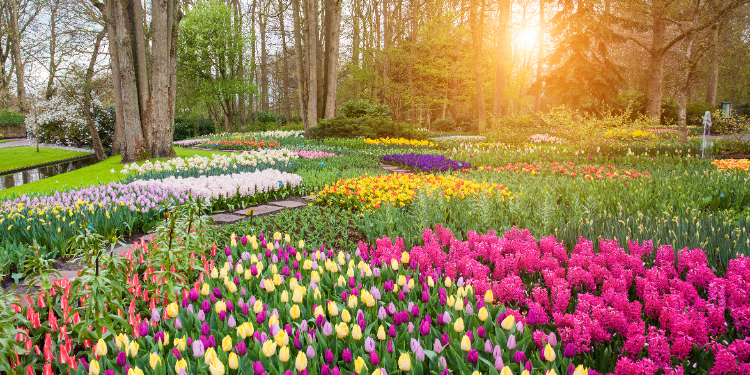
As winter fades, spring brings a sense of renewal and a return to nature. Around the world, its arrival is celebrated through vibrant traditions and meaningful rituals. For expats, this season offers a unique opportunity to see their host country differently and connect with its culture. Here are popular spring traditions from across the globe.
Also known as “Martenitsa,” Baba Marta is a celebration that marks the beginning of spring. Every year on March 1, Bulgarians exchange small red and white woolen ornaments called martenitsas, which they pin to their clothing. Tradition dictates that they wear them until they see the first signs of spring, such as budding trees.
The name “Baba Marta” refers to “Grandmother March,” a symbolic figure representing the arrival of spring. By wearing martenitsas, people hope to win her favor and encourage warmer days to come sooner.
Celebrated in Uzbekistan and across Central Asia, the Middle East, and parts of Southeastern Europe, Nowruz means “new day” in Persian. Its origins date back to the Persian Empire, where it marked a sacred celebration of nature's rebirth.
Nowruz also marks the New Year, which coincides with the spring equinox around March 21. Today, it remains a celebration of renewal, but also of unity, cultural diversity, and family ties. Recognized by UNESCO as intangible cultural heritage in 2009, Nowruz is celebrated by millions of people from different cultural backgrounds.
Join the community
Get regular tips and advice to make the most of your expat life
Čimburijada in Bosnia
What if celebrating spring meant sharing scrambled eggs outdoors? In Zenica, Bosnia, that's exactly the tradition. Each year at dawn, locals gather along the Bosna River for a communal breakfast in nature. Large pots, tents, and, of course, eggs are prepared in advance to welcome participants.
Although its origins remain unclear, the celebration has been going strong for over a century and now attracts international visitors. With music, dancing, singing, and games for all ages, Čimburijada proves that a simple meal can bring thousands of people together.
Literally meaning “the drowning of Marzanna,” this Polish tradition is rooted in Slavic mythology. Marzanna is the goddess of winter and death; her name even shares roots with the word “death” in several languages.
To symbolically end winter and welcome spring, people create a straw effigy of Marzanna, burn it, and then throw it into a river on the day of the spring equinox. Today, the tradition is mainly practiced by schoolchildren, but its symbolic meaning, leaving winter behind and embracing new life, remains strong.
Holi in India
Holi, often called the “Festival of Colors,” is one of India's most famous celebrations. Held each year in early March, it marks the arrival of spring, celebrates love, and coincides with the lunar New Year. The festival originates from Hindu mythology, particularly the legend of Holika, who perished in a fire while attempting to harm her nephew, who survived. The night before Holi, known as Holika Dahan, symbolizes the victory of good over evil.
During Holi, people throw brightly colored powders at each other. These colors symbolize equality; everyone becomes “multicolored,” regardless of social status. The celebration has spread far beyond India and is now observed in countries such as Nepal, Pakistan, Bangladesh, Mauritius, Suriname, Australia, and Canada.
In Mexico, people gather at the ancient site of Teotihuacán to celebrate the spring equinox. Dressed in white with red scarves, participants assemble at the Pyramid of the Sun at dawn. The celebration combines dance, music, and rituals, with many visitors raising their arms to “absorb” the sun's energy. This tradition has roots in ancient Aztec beliefs, where the equinox was thought to open a “cosmic gateway,” bringing illumination and supernatural energy. While human sacrifices are long gone, the spiritual symbolism and festive atmosphere remain.
Hanami in Japan
“Hanami” literally means “flower viewing.” This centuries-old Japanese tradition brings together millions of people each year to admire cherry blossoms, known as sakura. The timing is so important that Japan even has dedicated forecasts to track the trees' blooming.
Hanami dates back to the Heian period (794–1185), when members of the imperial court would gather under cherry trees to write poetry. Today, the tradition is more about enjoying the fleeting beauty of the blossoms. Families, friends, and colleagues gather in parks for picnics and quiet moments under the trees.
Tulip Festival in Canada
As spring nears its end, Canada bursts into color with its famous Tulip Festival, the largest of its kind in the world. Held each May over nearly two weeks, it attracts both locals and expatriates. The festival celebrates both the season and a historic symbol of friendship between Canada and the Netherlands. During World War II, Dutch Princess Juliana sought refuge in Ottawa. In gratitude, she later gifted Canada 100,000 tulip bulbs, giving rise to the festival. Visitors can enjoy exhibitions, family-friendly activities, performances, and, of course, stunning displays of tulips.
Tulip Festival in the Netherlands
Naturally, the Netherlands also celebrates its iconic flower. From mid-March to early May, tulip season transforms the country into a colorful landscape. Originally introduced from the Ottoman Empire in the 16th century, tulips quickly became a symbol of wealth and economic growth. However, this prosperity led to the famous “Tulip Mania,” a market bubble that eventually collapsed.
Today, the Tulip Festival celebrates both the country's horticultural expertise and the enduring appeal of nature's cycles, drawing visitors from around the world.
Lily of the Valley Day in France
In France, May 1st is not only Labor Day, but it's also a day to give lily of the valley (muguet). The tradition encourages people to offer small bouquets to loved ones as a symbol of good luck. Although widely associated with France, this custom also exists in Belgium, Switzerland, and Andorra.
The flower, originally from Japan, blooms in early spring and has long been associated with renewal. Its symbolic meaning blends Celtic traditions with Roman rites honoring Flora, the goddess of flowers. By the Renaissance, the lily of the valley had become a lucky charm and eventually the emblem of May Day in France.
Spring traditions around the world: A global experience
There are many more spring traditions across the globe: Sham El-Nessim in Egypt, Chunfen in China, Sechseläuten in Switzerland, Songkran in Thailand, Valborg in Sweden, Pahela Boishakh in Bangladesh, festivals in Peru, Australia's Floriade, sunrise at Stonehenge in the UK, and Las Fallas in Spain. For expats, these celebrations offer a unique way to discover their host country from a different perspective.
What all these traditions share is a common message: celebrating the renewal of nature is also about welcoming others, regardless of their origins. Whether through the vibrant colors of Holi, the beauty of tulips, or the convivial spirit of Čimburijada and Hanami, these festivals create simple yet powerful moments of cultural exchange.
Freelance web writer specializing in political and socioeconomic news, Asaël Häzaq analyses about international economic trends. Thanks to her experience as an expat in Japan, she offers advices about living abroad : visa, studies, job search, working life, language, country. Holding a Master's degree in Law and Political Science, she has also experienced life as a digital nomad.