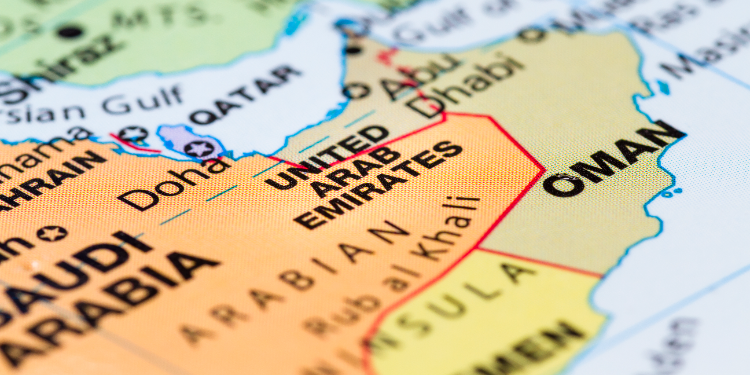
Since February 28, 2026, when joint US-Israeli strikes on Iran triggered sweeping retaliation from Tehran, millions of expatriates have been thrust into uncharted territory. Airports have shut down overnight, jobs have been thrown into question, evacuation plans have faltered, and the Gulf's long-standing reputation as a haven has come under strain. Here is a clear look at a crisis that is rapidly reshaping daily life for expat communities across the region.
Everything changed overnight between February 28 and March 1, 2026. Joint US-Israeli strikes on Iran, codenamed Operation Epic Fury, triggered an unprecedented wave of Iranian retaliation across the Gulf. Iranian missiles struck Dubai, setting a five-star hotel ablaze, threatening the world's tallest building, and killing one person while injuring seven others at Abu Dhabi's airport.
The images spread within minutes. Social media quickly filled with footage of a fire outside the Fairmont Hotel on the artificial island of Palm Jumeirah, flames climbing the façade of the Burj Al Arab, smoke rising near the Burj Khalifa, a blaze at Jebel Ali Port, the city's main maritime terminal, and damage at Dubai International Airport, where four employees were injured.
Iran's retaliatory strikes caused casualties across the region and in Israel, affecting both civilians and US military personnel. In a recent statement, US President Donald Trump said he expected the conflict to last “four weeks.” The prospect of a prolonged and tense confrontation has heightened anxiety, particularly among the many foreign nationals living and working in Gulf countries.
The impact on aviation was immediate and severe. On February 28, following the joint US-Israeli strikes and Tehran's response, eight countries closed their airspace to civilian flights: Iran, Israel, Iraq, Qatar, Kuwait, Bahrain, Syria, and, temporarily, the United Arab Emirates. The east–west corridor over Iraq, one of the busiest routes linking Europe and Asia, was left nearly empty.
The scale of disruption is reflected in the numbers: close to 2,800 flights were cancelled on Saturday, March 1; 3,156 on Sunday; and at least 1,239 by Monday morning. According to FlightAware, hundreds of thousands of passengers remained stranded in airports worldwide as of March 2.
Major airlines reacted swiftly. Emirates reported a 38% cancellation rate, while Qatar Airways reached 41%. Qatar Airways suspended all operations until further notice, as did Emirates and Etihad from their respective hubs in Doha, Dubai, and Abu Dhabi. Air France extended its suspension of flights to Dubai, Riyadh, Beirut, and Tel Aviv. The Lufthansa Group (Lufthansa, Swiss, Austrian Airlines, Brussels Airlines) halted services to Tel Aviv, Beirut, Amman, Erbil, and Tehran. Turkish Airlines suspended flights to ten Middle Eastern destinations, and KLM stopped flying over Iranian, Iraqi, Israeli, and several Gulf airspaces.
Industry analysts describe the simultaneous shutdown of the Gulf's three major transit hubs, Dubai, Doha, and Abu Dhabi, as unprecedented, comparable in scale to the disruption caused by the Covid-19 pandemic.
Join the community
Get regular tips and advice to make the most of your expat life
Expat communities under pressure
According to ETV Bharat, more than nine million Indians have made the Middle East their home, working in fields ranging from engineering to medicine. For many, the crisis has taken on a starkly personal dimension: the threat to their livelihoods. J. Fernandes, originally from Goa and currently stranded in Saudi Arabia, told Khaleej Times: “If this war drags on, I could lose my job.” His concern echoes that of many others.
International students in Iran also find themselves in limbo, including Indian students from Jammu and Kashmir. However, the Iranian Consulate General has indicated that international students may leave the country overland through certain border crossings, particularly via Afghanistan and Turkmenistan, provided they present a valid passport.
For wealthier expats, evacuation comes at a high cost: private flights priced at $200,000, private drivers, and hours of waiting at border checkpoints. It has been reported that Air Charter Services has arranged “several” evacuation flights from Muscat, Oman, mainly for individuals seeking to leave Dubai. The journey involves a five-hour drive followed by three to four hours of waiting at the Hatta border crossing.
In response to the scale of the crisis, governments have activated emergency plans to protect their nationals.
More than 102,000 British nationals in the region have registered their presence with the UK government since the start of hostilities. Foreign Secretary Yvette Cooper stated that the government is exploring “all possible options,” including evacuation.
The US State Department has urged American citizens to leave 14 Middle Eastern countries, including the United Arab Emirates, Saudi Arabia, Egypt, Jordan, Israel, Kuwait, Oman, and Qatar. Some US embassy staff in Gulf countries have also been withdrawn.
An estimated 150,000 French citizens live in the most exposed countries. The United Arab Emirates hosts the largest French community, with nearly 30,000 nationals, followed by Saudi Arabia (around 6,000) and Qatar (5,500). In Israel, there are approximately 180,000 dual nationals and expats, while Lebanon is home to nearly 20,000 French citizens.
Thailand, the Czech Republic, and Japan are also among the countries that have launched or planned evacuation flights.
Practical advice for expats in the Middle East
If you are currently in a Gulf country, rely on official sources for information and avoid misinformation circulating on social media. In the UAE, in particular, several official bodies have warned that footage shared by tourists and influencers does not necessarily reflect the day-to-day reality of expats on the ground.
For French nationals in the UAE or Qatar, the Foreign Ministry advises residents to “stay at home, keep away from windows, doors, and open areas, and follow official instructions closely.” It is essential to comply strictly with guidance issued by local authorities.
Do not attempt to head to the airport unless instructed to do so. Airlines are contacting passengers directly when departures are confirmed.
Prepare a basic emergency kit, also called a “go-bag”, containing passports, cash, and essential medications. In the current context, this is a prudent and reasonable precaution.
If you have not yet done so, register with your embassy.
Join expatriate community groups. National WhatsApp and Telegram groups are often the fastest source of information on the ground, sometimes even ahead of official announcements.
From a professional and legal standpoint, keep detailed records. Save proof of flight cancellations, airspace closures, and government advisories. These documents may be essential for discussions with your employer or for insurance claims. If you are stranded in a Gulf country, inform your employer promptly. In a case of force majeure that is so widely documented and global in scope, most companies are likely to be understanding. Remote work may serve as a temporary solution.
If you are considering a temporary or permanent departure, take time before making irreversible decisions. The situation is evolving by the hour, and many experts note that the UAE has consistently demonstrated strong economic resilience in the wake of past crises.
This crisis is a stark reminder that geopolitical instability can erupt anywhere, even in countries long seen as safe havens. Anyone planning to relocate to the region should adopt several essential precautions: register with their consulate upon arrival, secure comprehensive repatriation insurance, and monitor their government's official travel advisories.
If you are an expat currently in the region and would like to share your experience, visit our Middle East forums.
A journalist, holder of the DALF C1 and C2 and a diploma from the University of Mauritius, I have nearly twenty years of writing experience. After six years in the Mauritian press, I joined Expat.com, where I have been working for over a decade, including five years as editorial assistant, and now as editorial manager.