

Living in Miami: the ultimate expat guide
Everything you need to know for a successful life in Miami.
Miami is one of America's most dynamic and internationally connected cities, where tropical warmth meets cosmopolitan energy. Situated on Florida's southeastern coast along Biscayne Bay, Miami is a cultural melting pot that serves as the unofficial capital of Latin America while maintaining strong Caribbean and international ties. With year-round sunshine, world-class beaches, and a thriving economy driven by international trade, finance, tourism, and real estate, Miami offers expats a unique American experience infused with global flavors.
5 good reasons to move to Miami
- With average temperatures between 24°C and 32°C, Miami offers warm weather throughout the year.
- Florida has no state income tax, which means higher take-home pay compared to many other major U.S. cities.
- Miami serves as the primary gateway for trade between the United States and Latin America, offering exceptional career opportunities in finance, international trade, real estate, and technology.
- With residents from over 100 countries and a predominantly bilingual population, Miami provides a welcoming atmosphere where expats can easily integrate while maintaining connections to their home cultures.
- From Art Basel Miami Beach to world-class museums, theaters, and live music venues, Miami has a rich cultural scene that rivals any major international city.
Working in Miami
Miami has evolved from a tourism-dependent economy into a diversified powerhouse encompassing international banking, trade, real estate development, technology, healthcare, and creative industries. Major corporations have established their Latin American headquarters here, while startups are drawn to Miami's growing tech scene, affordable office space compared to Silicon Valley, and access to venture capital.
Key industries
Key industries driving employment include international trade and logistics, with Miami's port and airport serving as critical gateways; finance and banking, particularly for Latin American operations; real estate and construction, fueled by constant development; healthcare and life sciences, with major hospital systems and research facilities; technology and innovation, as Miami emerges as a tech hub; tourism and hospitality, supporting the millions of visitors annually; and creative industries, including advertising, design, and entertainment.
Work permits and procedures
Only U.S. citizens, permanent residents (Green Card holders), and foreign nationals with valid work authorization can legally work in the United States. Employers often need to file petitions with U.S. Citizenship and Immigration Services (USCIS) before foreign workers can begin employment.
Unemployment rate (Miami-Dade County) | 2.9% |
Average monthly wage (net) | $4,094 |
Top sectors | Trade, finance, healthcare, hospitality |
Data correct as of December 2025.
Sources: Trading Economics, Numbeo
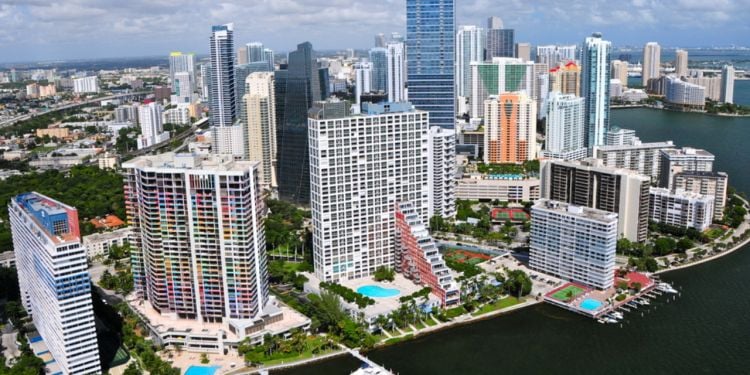
Work in Miami
Miami is well-known for its stunning coastline, and the city also has some of the most sought-after real estate in the South, as well as a busy port ...
Higher education & universities
Miami offers outstanding higher education opportunities through a mix of public and private institutions that attract students from around the world. Universities in Miami are known for their research programs, diverse student bodies, and strong connections to Latin American academia. Whether pursuing undergraduate, graduate, or professional degrees, international students will find programs taught in English with opportunities for cultural exchange and career development.
Major universities and programs
Miami is home to two prominent research universities. The University of Miami (UM), a prestigious private institution founded in 1925 in Coral Gables, is recognized for its world-class medical school, law school, business programs, and marine science research. Complementing this is Florida International University (FIU), a major public research university with two main campuses in Miami, which excels in fields like international business, hospitality management, engineering, and Latin American studies.
Admission process for international students
International applicants must submit several key documents: academic transcripts with official English translations, and proof of English proficiency via TOEFL (typically minimum 80 iBT) or IELTS (minimum 6.5) scores. Applicants must also provide letters of recommendation and personal statements. Finally, accepted students must demonstrate proof of financial support to cover expenses and obtain an F-1 student visa.
Sources: University of Miami, Florida International University
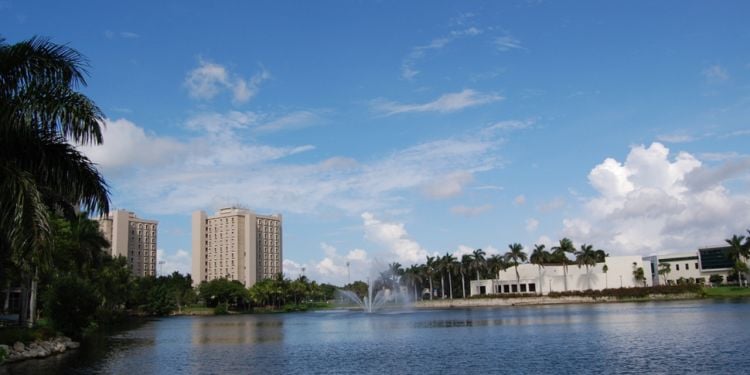
Study in Miami
If you're planning to study in Miami, you won't be short of options. There are over 35 higher institutions in the Miami metropolitan area for ...
Schooling for children
Families moving to Miami with children will find a range of educational options, from free public schools to elite private and international institutions. The Miami-Dade County Public Schools system is one of the largest in the United States, while numerous international schools cater specifically to expat families seeking globally recognized curricula.
Public and charter schools
Miami-Dade County Public Schools operates over 400 schools serving more than 330,000 students. Public schools are free for all residents, including expats with proper documentation. The quality varies significantly by neighborhood, with schools in wealthier areas typically having better facilities funded through local property taxes. The county also offers magnet schools that specialize in subjects such as arts, sciences, or languages.
Private and international schools
There are more than 500 private schools in Miami-Dade County. Prominent educational institutions include Gulliver Preparatory School, known for its strong STEM and IB offerings; Miami Country Day School, which emphasizes arts and athletics alongside academics; Carrollton School of the Sacred Heart, a highly-regarded all-girls Catholic school; and The Biltmore School, an IB World School pre-school through 8th grade. Most international schools require entrance exams, interviews, and application fees. Families should apply well in advance as spaces fill quickly.
Sources: Miami Country Day School, Gulliver Preparatory School, The Biltmore School

International schools in Miami
Miami, or the Magic City, is one of the most exciting cities in America. Shaped by its Latin American, Caribbean, and European communities, the ...
Housing & neighbourhoods
Miami's housing market is diverse, ranging from high-rise luxury condos in downtown to single-family homes in suburban areas. The market has experienced significant growth in recent years due to an influx of domestic and international buyers, making Miami one of the more expensive U.S. cities for housing.
Popular neighborhoods for expats
Miami offers diverse neighborhoods for every lifestyle. Brickell, the financial hub, attracts young professionals with its modern high-rises. Coral Gables appeals to families with its quiet, upscale suburban feel and top schools. Coconut Grove provides a bohemian vibe with waterfront charm. For vibrant nightlife and Art Deco, South Beach is iconic. The rapidly evolving Wynwood arts district draws creatives with galleries and new restaurants.
Rental market and costs
Most landlords require the first month's rent and a security deposit equal to one month's rent upfront. Credit checks and proof of income are standard. International tenants may need to provide additional documentation or higher deposits without U.S. credit history.
1-bedroom apartment in the city center | $2,500 - $4,000/month |
3-bedroom apartment in the city center | $4,000 - $7,500/month |
Data correct as of December 2025.
Source: Numbeo
🔍To learn more
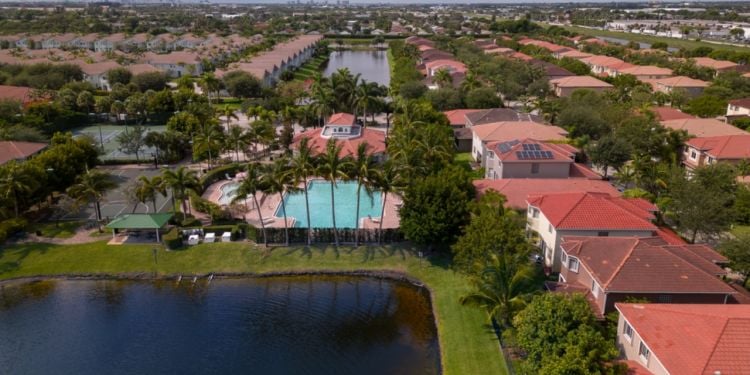

Leisure, culture & things to do
Miami offers an exceptional quality of life with endless opportunities for leisure, cultural enrichment, and entertainment.
Arts and cultural attractions
Miami's cultural scene has flourished in recent decades, earning international recognition. The Pérez Art Museum Miami (PAMM) showcases contemporary and modern art with a focus on the Americas. The Frost Museum of Science features interactive exhibits, a planetarium, and an aquarium. The Wynwood Walls outdoor museum displays large-scale works by some of the world's best-known street artists, transforming the neighborhood into an open-air gallery. Art Basel Miami Beach, held each December, is one of the most prestigious contemporary art fairs globally, attracting collectors, artists, and enthusiasts from around the world. The Adrienne Arsht Center for the Performing Arts hosts opera, ballet, Broadway shows, and concerts. Other popular draws are the Miami City Ballet and New World Symphony.
Beaches and nightlife
Miami's tropical climate and coastal location make it ideal for outdoor recreation. South Beach is Miami's most famous beach, stretching from 5th to 15th Street with its iconic Art Deco lifeguard stands. Key Biscayne offers quieter, family-friendly beaches at Bill Baggs Cape Florida State Park and Crandon Park. Water sports are extremely popular, including jet skiing, paddleboarding, kayaking, and sailing.
Miami's nightlife is legendary, especially in South Beach with clubs open until dawn. Upscale bars fill Brickell, while Wynwood offers craft breweries. The culinary scene is incredibly diverse, boasting top Cuban, Caribbean, and Latin restaurants, plus Michelin-starred dining.
🔍To learn more

Leisure activities in Miami
If you're wondering what you'll do for fun in Magic City, don't worry about lacking ...
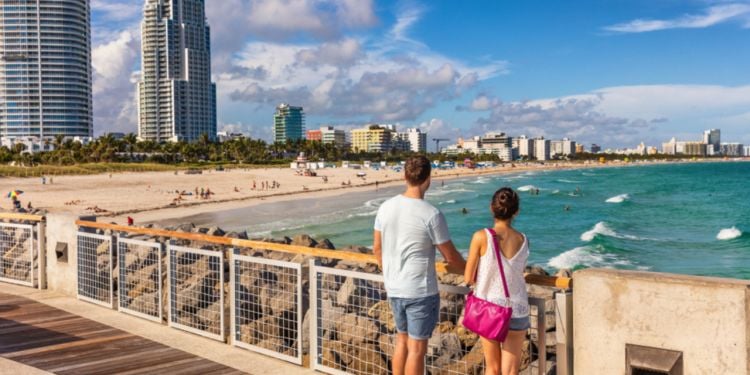
Sports and outdoor activities in Miami
The Magic City is more than just beautiful beaches and vibrant nightlife; it's also a sporting ...

The food scene in Miami
When you set foot in Miami for the first time, be prepared for an epicurean journey like no other. ...
Daily life
Miami city operates on a more relaxed schedule than many northern metropolises, with strong emphasis on outdoor activities, socializing, and enjoying warm weather year-round.
Getting around Miami
Miami's public transportation system includes Metrorail, a 25-mile elevated rapid transit system with 23 stations running from northwest suburbs through downtown to South Miami. Metromover is a free, automated people mover serving downtown, Brickell, and the Omni area with 21 stations, while Metrobus operates over 90 routes throughout Miami-Dade County.
Despite the many public transit options, Miami is a car-dependent city. Traffic congestion can be a problem, especially during rush hours. Cycling is growing in popularity, with bike lanes expanding in certain neighborhoods, though the hot, humid climate and traffic make cycling challenging.
Climate and lifestyle
Miami enjoys a tropical monsoon climate with year-round warm temperatures. Average highs range from 24°C in winter to 32°C in summer, with high humidity making it feel hotter. Hurricane season officially runs from June 1 to November 30, and peaks in August and September. The outdoor lifestyle is central to Miami culture, with beach activities, water sports, outdoor dining, and festivals. Miami operates on a late schedule compared to other U.S. cities, with dinner reservations often starting at 9 p.m. and nightlife continuing until early morning.
Source: Metrorail
🔍To learn more
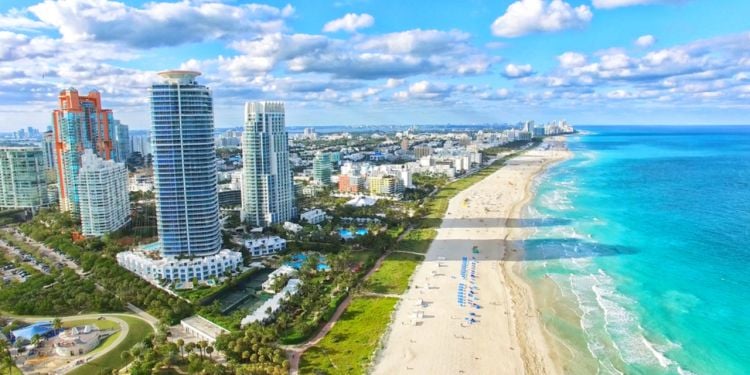
Living in Miami
Miami is known for being one of the most dynamic cities in the United States, a place where Latin ...

Networking in Miami
Moving to a new city can be daunting. Connecting with other people, whether socially or ...
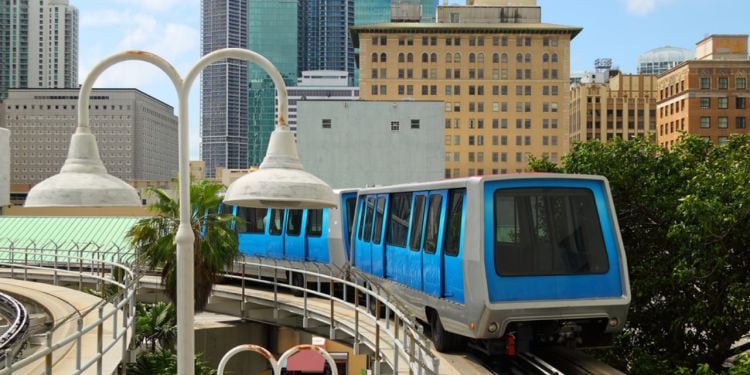
Getting around Miami
The Miami work commute can be quite challenging, and the traffic here is considered to be some of the worst in Florida. Getting to and from work, ...
Cost of living
The cost of living in Miami is higher than many other U.S. cities. Housing represents the largest expense, but groceries, dining out, and healthcare also contribute significantly to monthly budgets. However, the absence of state income tax in Florida helps offset some costs.
Monthly expenses for a single person
Rent of a 1-bedroom apartment in the city center | $2,500 - $4,000 |
Utilities | $100 - $300 |
Groceries | $400 - $500 |
Data correct as of December 2025.
Monthly expenses for a family of four
Rent of a 3-bedroom apartment in the city center | $4,000 - $7,000 |
Utilities | $400 - $700 |
Groceries | $1,200 - $1,600 |
Data correct as of December 2025.
Sources: Numbeo, Salary.com
In short
Miami offers expatriates a truly unique American experience, combining tropical living with big-city opportunities and multicultural charm. The city's strategic position as the gateway to Latin America creates exceptional career prospects, while year-round sunshine and world-class beaches provide an enviable lifestyle. With no state income tax, a thriving cultural scene, and welcoming international community, Miami balances professional ambition with leisure and relaxation. Whether you're drawn by business opportunities, educational excellence, or simply the allure of permanent summer, Miami delivers on its promise as the "Magic City." Ready to make the move? Join the Expat.com Miami forum to connect with fellow expatriates, ask questions, and get insider tips from those already living the Miami dream. Your tropical adventure awaits!
We do our best to provide accurate and up to date information. However, if you have noticed any inaccuracies in this content, please contact us.


News & testimonies

New visa questions could complicate your move to the US
Are US immigration rules about to get even stricter? New mandatory questions introduced by the State Department could complicate the process for those looking to move abroad, particularly potential asylum seekers.

2026 US expat taxes and retirement: New child retirement account and retirement strategies
Tax and retirement planning for US expats has never been simple—and 2026 adds a new twist. Alongside familiar considerations, the new Section 530A child savings accounts are entering the picture. The 530A program introduces a new opportunity for families abroad, adding to an already nuanced planning landscape.

How does the United States define “extraordinary talent”?
In 2026, the United States began enforcing a new set of measures aimed at “restricting the entry of foreign nationals and protecting the United States.” President Trump has once again tightened immigration policy: visa procedures have been frozen in more than 70 countries, and negotiations are underway to require visa applicants to disclose their social media accounts. When it comes to visas, a fresh wave of anxiety is spreading among those classified as “extraordinary talents.” Recent cases suggest that certain categories of applicants may now be favored over others. Here's a closer look at what's happening.

US suspends immigrant visas for nationals of 75 countries and introduces visa bonds
Immigrant visa suspension, visa bonds, tighter H-1B rules and higher entry barriers: the United States is pressing ahead with policies aimed at curbing both legal and illegal immigration. What will the “American Dream” look like in 2026, and what should expats expect?
Essential services for your expat journey