



Veedushi Bissessur
@Veedushi
Mauritian citizen
Forum posts
1643
Contacts
68
About me
Mauritian
Lives in Quatre Bornes
Speaks Français, anglais, créole, hindi
Registration: 02 April 2013
Articles written or translated by Veedushi Bissessur

Lima's metropolitan transport network carries millions of people daily across one of South America's largest cities, yet it remains a patchwork of formal and informal systems that rewards those who know how to navigate it. The flat S/1.50 (USD 0.44) fare on Metro Line 1 makes it one of the most affordable rail commutes on the continent, while the Metropolitano BRT spans the city's full north-south axis with dedicated lanes and card-only boarding. At the same time, Lima declared a metropolitan road emergency in 2026, reflecting chronic congestion that makes owning a car largely impractical for daily central-city life. For newcomers, the practical priority is clear: get the right transport cards on arrival, learn which formal corridors serve your commute, and save the car for weekend coastal trips.
28 July 2026
What visa do you actually need for Peru, and which government body handles it? The answer depends on two separate institutions: the Ministerio de Relaciones Exteriores publishes visa requirements and exemptions by nationality, while the Superintendencia Nacional de Migraciones manages all in-country procedures and issues the Carné de Extranjería (the foreign-resident identity card). Many nationalities enter visa-free and can change their immigration status from within Peru using the Agencia Digital Migraciones online portal, making the path to legal residence more direct than it first appears.
28 July 2026
Peru sits in an unusual position for short-stay travelers: most visitors from Western Europe, North America, and many other parts of the world arrive without a visa and receive their authorized stay at the border, determined on the spot by an immigration officer. That single fact carries a practical consequence that catches many people off guard: the number of days stamped or recorded in the system at entry is the figure that matters legally, not any assumed maximum tied to your nationality. Peru's Superintendencia Nacional de Migraciones actively enforces stay limits. Whether you are scouting Peru before a longer commitment, arriving as a location-independent worker, or simply planning a first visit, understanding exactly how entry authorization works here is the essential first step.
28 July 2026
Many expats who have moved to Peru with pets say the process felt manageable once they understood what it actually depends on: a correctly prepared and officially endorsed export health certificate from their country of origin. Peru does not impose routine quarantine on dogs and cats that arrive with complete documentation; instead, SENASA (Servicio Nacional de Sanidad Agraria, Peru's official animal health authority) inspects the animal and its paperwork at the port of entry and releases the pet the same day if everything is in order.
28 July 2026
What does getting around Peru look like once the initial excitement of arrival fades and the daily commute begins? The answer depends almost entirely on where you settle. Lima and Callao are the only cities in the country with a dedicated metropolitan transport authority, the Autoridad de Transporte Urbano para Lima y Callao (ATU), backed by two metro lines, a bus rapid transit network, and a rapidly expanding fleet of formal buses. Outside the capital, cities depend on intercity coaches, taxis, and informal services that vary considerably in reliability and safety. For expats in Lima's central and coastal districts, a car is rarely necessary; for anyone living elsewhere in Peru, planning daily mobility carefully from the start makes a real practical difference.
28 July 2026
You've settled in Peru, found an apartment, and started building a routine. What catches many newcomers off guard is that Peru's tax system draws no distinction between foreign nationals and locals once they cross a single threshold: more than 183 days in the country within any 12-month period triggers full tax domicile, meaning Peru taxes your worldwide income, including the salary from your foreign employer, your overseas investment returns, and your pension from abroad. The key concept is domicile, not immigration status, and those two can diverge significantly.
28 July 2026
Navigating university admission in Peru as a foreign student is not straightforward: there is no centralized application portal, no national entrance exam, and quality is regulated by a licensing body most international applicants have never heard of. The Superintendencia Nacional de Educación Superior Universitaria (SUNEDU) licenses all universities permitted to grant recognized degrees in Peru, and only institutions on its list count. Peru's largest concentration of licensed universities sits in Lima, with options in Arequipa and Cusco for students open to regional cities. The student visa process requires documents legalized or apostilled before arrival, and paid work is not automatically permitted under student immigration status.
28 July 2026
Peru's government-backed strategic investment portfolio exceeds USD 66 billion, spanning mining, infrastructure, and manufacturing sectors that together account for 12.1% of GDP. Foreign nationals can incorporate a company using the same legal structures available to Peruvian founders, with no universal local-partner requirement for general commercial activities. What surprises many newcomers is that company registration, tax registration, and the right to physically manage a business in the country are three entirely separate procedures, each handled by a different authority.
28 July 2026
Expats in Peru often say the first thing they sorted after finding an apartment was a local SIM card, and for good reason: internet connectivity in Peru has changed considerably in recent years. Fixed fiber-optic connections now account for more than 82% of all home internet lines nationwide (OSIPTEL), and independently measured urban speeds average above 240 Mbps. Yet the picture is uneven: household internet access stands at 64.6% in urban areas versus 20.5% in rural ones (ITU), and the gap between a well-served Lima apartment and a rural Andean address can be stark. For expats, the practical reality is that quality depends on your exact building, your chosen operator, and the technology available at your door, not just the city you are moving to.
28 July 2026
Expats assume that opening a bank account in Peru requires permanent residency status, a full set of notarized documents, and weeks of processing. The reality is more accessible than that: Peruvian regulations require banks to offer a basic savings account to any foreign national who presents a valid passport or foreign ID card, with no minimum deposit and no residency condition attached. What catches newcomers off guard is that the digital account-opening flows built by major private banks are almost entirely designed around the Peruvian national ID, which foreigners cannot hold, so a full savings account still requires a branch visit. Getting that right from the start saves time and avoids the frustration of hitting a wall mid-process.
28 July 2026
People planning a move to Peru tend to assume the country's relatively low cost of living translates into a straightforward relocation. The reality is more layered. Bureaucratic processes for immigration, housing, and banking rarely resolve in a single visit; household goods shipped to Peru are subject to a 12% customs tax regardless of whether they are new or used; and the experience of daily life differs sharply between Lima's upmarket districts, coastal cities, and Andean cities such as Cusco or Arequipa, which sit above 3,000 meters. Planning ahead, ideally starting at least six months before your target arrival date, is what separates a manageable transition from a chaotic one.
28 July 2026
Choosing a school is one of the first decisions families have to settle when moving to Córdoba, and the right pathway depends as much on language as on price. The city operates a substantial municipal school system alongside provincial public schools and a private sector that includes two IB World Schools, a German-Spanish program, an Italian-Argentine bicultural school, and a trilingual Cambridge and DELF institution. International school options are concentrated in three neighborhoods, which directly shapes where many expat families end up living.
22 July 2026
Expats arriving in Cordoba often say the hardest adjustment is not the food itself but the clock around it: dinner rarely starts before 21:00, and restaurants stay busy past midnight. The city has an expanding restaurant scene shaped by a large student population, gastronomic neighborhoods such as Guemes, Nueva Cordoba, Alta Cordoba, and General Paz, and an official municipal map of celiac-friendly venues that few cities of its size can match.
22 July 2026
International students who choose Cordoba say the appeal is academic depth at a low price point: undergraduate tuition at the city's public universities is free, and shared student accommodation in Nueva Cordoba are quite affordable. Behind this is a long university tradition. UNC, founded in 1610, is the fourth-oldest university in South America, and the city now hosts six to seven universities and around 200,000 students. The municipal Study Cordoba Capital program brings in students from more than 35 countries each year, with paperwork and Spanish immersion as the two main practical hurdles to navigate.
22 July 2026
Finding a way into local sport is one of the fastest routes to building a routine in a new city, and in Cordoba, the options are unusually well organized. Ten municipal polideportivos offer free or low-cost access to football, basketball, swimming, rugby, hockey, and gymnastics, while three top-flight football clubs, a Liga Nacional basketball champion, and a deep rugby scene anchor the spectator calendar.
22 July 2026
The first three months in Cordoba tend to define how well newcomers integrate professionally and socially, and a few early decisions carry most of the weight. Argentina's second-largest city runs on Spanish-language networking, splits cleanly between municipal entrepreneur programs and informal social meetups, and offers fewer dedicated expat business clubs than Buenos Aires. The free municipal Club de Emprendedores at Caseros 356, weekly Mundo Lingo language socials, and a calendar of sector expos in construction, technology, industry, and specialty coffee form the practical backbone for meeting new people.
22 July 2026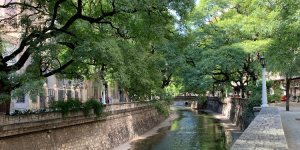
Expats who settle in Cordoba often say in hindsight that they wish they had taken Spanish more seriously before arriving. Argentina's second city, with around 1.5 million residents, runs on Spanish across leases, healthcare, banking, and local employment, and even the main university requires non-native speakers to prove their level before enrolling. Daily life is calmer than Buenos Aires but still urban and student-driven, with over 200,000 students shaping the rhythm of the central barrios. Costs are roughly 21% lower than in Buenos Aires, although inflation and ARS volatility make any peso budget a moving target. The result is a city that rewards integration and patience more than it rewards arriving with a fixed plan.
22 July 2026
Settling permanently in Argentina is a structured process, but it is one that the government has made increasingly accessible through an online application system that does not require a lawyer or intermediary. The Dirección Nacional de Migraciones (DNM) manages all residence applications, and the pathway you follow depends primarily on where you are from and how long you have already lived in the country. This article covers every stage of the process: who qualifies, what documents you need, how to apply through the RaDEx platform, what fees to expect, and what rules govern keeping your status once it is granted.
22 July 2026
Argentina has a structured legal framework around pregnancy and childbirth that applies equally in public hospitals and private clinics, giving expat parents a clear set of rights from the first prenatal appointment through to the postnatal period. Whether you are based in Buenos Aires, Jujuy, Río Negro, or any other province, this article covers what to expect at each stage: prenatal care schedules, your rights during labor, mandatory newborn screening, birth registration deadlines, maternity leave entitlements, and the steps needed to secure your child's citizenship documents.
22 July 2026
Argentina has an official legal pathway for remote workers: the "Residencia transitoria como Nómada Digital," a transitory residence permit that lets foreign nationals live and work remotely in the country for up to 180 days, extendable for a further 180. That formal framework, combined with competitive broadband speeds in major cities and a cost base that is lower than most Western capitals, makes Argentina a practical and increasingly documented choice for location-independent workers. This article covers the visa requirements, connectivity landscape, coworking options, accommodation costs, and the real challenges that come with basing yourself in Argentina as a remote worker.
22 July 2026
More than half of workers in Argentina say they have developed romantic feelings for a colleague at some point, which tells you something about how naturally Argentines weave social connections into everyday life. Whether you arrive in Buenos Aires, Córdoba, or anywhere in between, the dating scene here is shaped by a strong culture of in-person socializing, a well-established app ecosystem, and a genuine openness to meeting people from other countries. This article covers how people meet, which platforms dominate, what structured social events look like, how the LGBTQ+ community is organized, and what safety contacts to keep on hand.
22 July 2026
Knowing which number to call before an emergency happens is one of the most practical steps any expat can take after arriving in Argentina. The country operates a national emergency line alongside a network of specialized numbers covering everything from medical crises and fires to domestic violence and civil defense. Argentina's size and federal structure mean that some numbers vary by province, and understanding those differences can matter when seconds count. This article covers every key emergency service available to expats across Argentina, from Buenos Aires to Mendoza, along with consular contacts, useful apps, and guidance on what to do if your documents are lost or stolen.
22 July 2026
Argentina ranks 37th in the World Economic Forum's Global Gender Gap Report 2025, places Indigenous peoples across 58 distinct recognized groups, and maintains one of Latin America's more developed legal frameworks on anti-discrimination and LGBTQ+ rights. At the same time, Human Rights Watch documented significant cuts to public services affecting women, people with disabilities, and gender minorities in 2025. For expats planning to live or settle in Argentina, understanding how legal protections translate into daily reality across these dimensions is essential groundwork before arrival.
22 July 2026
With 18 million LinkedIn members and a business culture built on personal relationships, Argentina offers a dense and genuinely accessible professional network for expats willing to engage with it. Whether you are settling in Buenos Aires, Córdoba, or Rosario, understanding how Argentines build professional and social connections will shape how quickly you find your footing. This article covers the professional networking landscape, key events and platforms, social culture, and practical strategies for making friends and building community across the country.
22 July 2026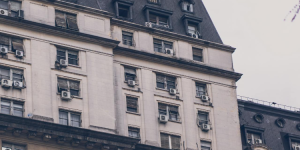
Argentina sells real estate in US dollars, title deeds are signed before a notary in a single closing session, and foreigners can buy urban apartments with no residency requirement. Those three facts alone set Argentina apart from most property markets in the region. Whether you are drawn to a Buenos Aires apartment, a Mendoza wine-country home, or a Patagonian lake property near Bariloche, this article covers ownership rules, transaction costs, required documents, and the practical steps that stand between you and a signed deed.
22 July 2026
Argentina's citizenship framework changed significantly in 2025, when a presidential decree reshaped two key pathways: the standard naturalization route now carries a strict no-exit rule during the required residency period, and a brand-new citizenship-by-investment pathway was created alongside a dedicated federal agency to administer it. Whether you are planning to naturalize after years of living in the country or exploring what the investment route means in practice, this article covers the legal basis for each pathway, the application process through the Dirección Nacional de Migraciones (DNM), the dual citizenship rules, and the document requirements every applicant needs to prepare.
22 July 2026
Argentina runs one of Latin America's most structured national education systems, with compulsory schooling starting at age 4 and continuing through the end of secondary school. For expat families relocating to Buenos Aires, Córdoba, Mendoza, or Rosario, the choice between public, private bilingual, and fully international schools is a real and consequential one. This article covers the structure of the system, how to enroll a child at each type of school, what fees to expect at named international schools, how the school year is organized across provinces, and what to do when you need foreign credentials recognized for onward study in Argentina.
22 July 2026
Sending a child to school in Buenos Aires starts with a jurisdictional question: is the campus inside the Ciudad Autónoma de Buenos Aires or in the surrounding Province? The answer shapes which enrolment platform applies, which calendar governs the school year, and which fee regulations apply. Several schools that bear "Buenos Aires" in their names are actually located in the northern suburbs. So if you're relocating to Buenos Aires and are looking to enroll your kids in a school, here's all you need to know.
22 July 2026
Buenos Aires combines the density of a global capital with the volatility of an economy in constant adjustment. The city covers just 200 km² but holds more than three million residents, while the wider AMBA concentrates 35% of Argentina's population. For newcomers, this means a high-amenity, late-schedule urban life inside Palermo, Recoleta, Belgrano, and a network of 48 official barrios, set against Spanish-first administration, monthly inflation of 2.6% in April 2026, and a rental market that shifts quickly.
22 July 2026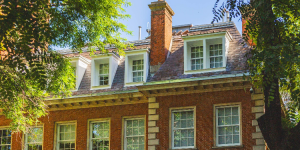
Buying property in Buenos Aires means navigating a market priced in US dollars within a country that runs on Argentine pesos. Apartments in the Ciudad Autónoma de Buenos Aires average around USD 2,460 per square meter, with foreigners free to acquire urban real estate once they obtain a CDI tax number. Notary procedures, stamp duty rules, and UVA-indexed mortgages each shape what a purchase actually costs, and a 2026 exemption now reshapes the bill for first-home buyers.
22 July 2026
Buenos Aires runs on a dense mix of colectivos, the Subte, and commuter rail, with walking and cycling filling the gaps. About 70% of trips in the city are made by these modes combined, and most residents settle into a daily routine that pairs a Subte ride with a bus or a short walk. The SUBE card, contactless payment on buses and the metro, and the BA Cómo Llego app form the basic toolkit for navigating the city.
22 July 2026
Building a professional and social circle in Buenos Aires takes a particular kind of patience. Relationships come before transactions, Spanish carries most local conversations, and WhatsApp quietly runs the logistics behind even the most formal events. The city offers dense entry points: binational chambers, sector conferences at venues like the CEC and La Rural, coworking communities, language exchanges in Palermo and Recoleta, and neighbourhood clubs registered with the City. Knowing how these layers connect is what turns a first encounter into a working relationship.
22 July 2026
Buenos Aires eats late, eats often, and treats the table as a social institution. Dinner rarely starts before 21:00, merienda bridges the long afternoon, and historic cafés sit under formal heritage protection alongside chef-driven openings in Chacarita and Palermo. Beyond the asado and parrilla reputation, the city's food identity runs through pizzerías, bodegones, indoor markets, immigrant neighbourhoods like Barrio Chino and Barrio Coreano.
22 July 2026
Sport is woven into everyday life in Buenos Aires. While football dominates the city's sporting identity, with Boca Juniors and River Plate attracting passionate crowds, residents also embrace a wide range of activities, from running and cycling to rugby, tennis, padel, swimming, and fitness training. For expats, the city offers plenty of opportunities to stay active, join local clubs, watch major sporting events, and enroll children in sports programs. This guide explores the main sports facilities, clubs, activities, and practical information newcomers need to navigate Buenos Aires' vibrant sporting scene.
22 July 2026
Buenos Aires runs on a late social rhythm, with dinner often starting around 21:00 and bars, theatres, and restaurants staying open past midnight. Leisure here is shaped by barrio: Palermo for parks and nightlife, San Telmo for tango and antiques, Recoleta for museums and luxury shopping, La Boca for street art and heritage. Free cultural infrastructure is meaningful, from the Museo Nacional de Bellas Artes to large parks along the Rio de la Plata, alongside paid options ranging from city museums to the Teatro Colón.
22 July 2026
Buenos Aires ranks first in Latin America and 32nd globally in the QS Best Student Cities 2026, with around 500,000 students enrolled across 42 universities in the metropolitan area. The city combines a large tuition-free public sector anchored by Universidad de Buenos Aires with a wide range of private institutions, from comprehensive universities to specialized tech, business, and health schools. Costs, language requirements, and onboarding procedures vary considerably between institutions, and international students navigate parallel visa, residency, and credential recognition tracks.
22 July 2026
Buenos Aires offers one of the most diverse rental markets in Latin America, with neighborhoods ranging from upscale waterfront districts to creative urban hubs and family-friendly residential areas. For expats, finding accommodation in the Argentine capital means navigating a market shaped by inflation, dual-currency pricing, changing regulations, and fast-moving demand. Understanding how rents, contracts, guarantees, and utilities work is essential before signing a lease. This article explains everything newcomers need to know about renting in Buenos Aires, from average prices and popular neighborhoods to the practical steps involved in securing a home.
22 July 2026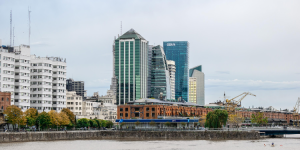
Buenos Aires concentrates Argentina's services economy, with private registered employment in the city standing at 1,670,456 jobs in August 2025 according to GCBA data. The job market leans heavily toward tertiary activity: real estate and business services, commerce, finance, and a growing technology cluster anchored in Parque Patricios. For expats, the most accessible openings tend to sit in multinationals, IT, shared services, and cross-border roles, while inflation running at 32.4% year-on-year shapes how salaries are negotiated and reviewed.
22 July 2026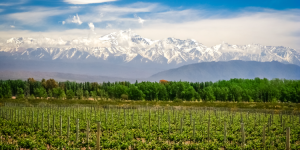
Mendoza is Argentina's wine capital and a city of around 122,840 people pressed against the Andes, with a wider provincial catchment of over 2 million. It is also a city of contrasts: monthly costs of around USD 1,155 sit alongside an unemployment rate of 6.7% in the metropolitan area, and a sunny semi-arid climate comes with winter days of only 10 hours of daylight. Public administration runs in Spanish, the cultural calendar revolves around wine and free municipal events, and Ciudad de Mendoza, Gran Mendoza, and Mendoza Province are three different things that newcomers will need to keep straight from day one.
22 July 2026
Eating in Mendoza is harder to separate from drinking than in most cities of comparable size. Wine sits at the center of the table, the calendar revolves around the grape harvest, and the city has secured 6 of the 10 Michelin stars awarded in Argentina. For expats, that means budgeting decisions, restaurant choices, and even grocery rhythms are shaped by a wine-and-food ecosystem that includes around 250 wineries open to tourism in the surrounding departments. Cafés, parrillas, alfajores, and seasonal produce fill in the daily picture.
22 July 2026
Getting around Mendoza is easier than newcomers tend to expect: the central city is compact and walkable, and the metropolitan network is integrated under a single platform, MendoTran, covering colectivos, the Metrotranvía light rail, and the BiciTRAN bike-share. The single most useful preparation for daily life is sorting out a SUBE card for buses and a Red Bus card for the Metrotranvía, since fares are low.
22 July 2026
Mendoza is a football city that recently won its first national title through Independiente Rivadavia, yet most of its sporting life happens outdoors, in parks, and through free municipal programs rather than in private gyms or members-only clubs. For expats, that combination matters: joining a running group, a pádel court rotation, or a children's football school costs little and rarely requires introductions, but most programs are in Spanish and are offered through public offices such as the municipal headquarters.
22 July 2026
Networking in Mendoza is driven by industry connections rather than traditional expat circles. From wine and technology to mining, real estate, and entrepreneurship, professionals build relationships through sector-specific events, business associations, coworking spaces, and investment forums. Whether you're relocating for work, launching a business, or looking to expand your professional network, understanding how networking works in Mendoza can help you connect with the right people and opportunities more quickly.
22 July 2026
It is your first month in Mendoza, the residency paperwork is in progress, and the school year has either just started or is about to end, depending on when you arrived. The Argentine academic calendar runs from late February to late December, opposite to Northern Hemisphere systems, and admissions to bilingual private schools and public schools are managed on a school-by-school basis under the provincial Dirección General de Escuelas. Inside the city itself, "international" education means bilingual Spanish-English programs with Cambridge, Trinity, or DELF exam pathways rather than a full foreign curriculum, which shapes how expat families approach school choice, neighborhood, and the language transition for their children.
22 July 2026
Settling in Mendoza means stepping into a calendar built around wine, public parks, and a dense schedule of municipal cultural events. The first months are when habits form: choosing which plaza to run in, which theater to follow, when to shop before a long weekend shuts the microcentro down. The City of Mendoza concentrates most of its leisure offer in free or low-cost programs run by the municipality, from outdoor classes to museum colonies, while paid options cover specialized sports, private wellness studios, and central nightlife venues.
22 July 2026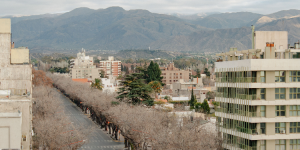
What does it actually take for a foreigner to buy an apartment in Mendoza? The legal answer is straightforward: Article 20 of the Argentine Constitution gives foreigners the same civil rights as nationals, so no residency is required to acquire urban property in the city. The practical answer is more layered. Buyers need an Argentine tax identifier obtained through a representative; mortgage finance for non-residents is effectively unavailable, and most transactions close in US dollars.
22 July 2026
Mendoza concentrates more than 70,000 university students in a compact Andean city, supported by an ecosystem of public and private universities and 64 provincial higher-education institutes. For international students, two practical realities define the experience: admissions and visa procedures run on parallel tracks, with student visas handled by Argentine consulates abroad and enrollment managed by each institution; and housing options cluster around the universities themselves rather than around a single student district.
22 July 2026
Mendoza has long been associated with vineyards and the Andes, yet for newcomers the city itself is what shapes daily life: a compact, walkable provincial capital with a distinct rental market and a tangle of neighboring municipalities often marketed under the same name. Renting here means navigating a market where contracts are highly negotiable, rent can legally be set in foreign currency, and broker fees of around 2.5% of the contract value are common. Furnished short-stays in the center, regulated through the PAT registration system, give arrivals a soft landing before they commit to a longer lease.
22 July 2026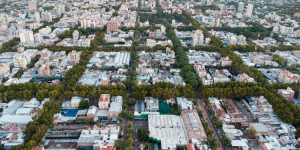
Mendoza is best known abroad for its vineyards and the Andes, but its job market is broader than wine alone: tourism, healthcare, construction, knowledge-economy services, and technical trades all hire steadily, while energy and mining are gaining ground. For expats, the practical reality is that hiring runs in Spanish, on locally bargained pay scales, and through a mix of municipal employment offices, sector recruiters, and online platforms. Almost half of Mendoza workers were in informal employment before Argentina's labor reform, which makes verifying contract status before accepting any role essential. The first months after arrival, and the first few decisions on where to look, tend to shape the entire experience.
22 July 2026
Most people assume that renting in Argentina is straightforward once you have found the right apartment. In Rosario, the reality is more layered: the city offers a genuine range of neighborhoods and apartment types, from waterfront towers in Puerto Norte to shared rooms near Universidad Nacional de Rosario campuses, but the rental process itself carries specific hurdles that catch foreign nationals off guard. The guarantor requirement alone, which typically demands a person who owns property in Argentina to act as your surety, eliminates the most common approach expats use in other markets.
22 July 2026