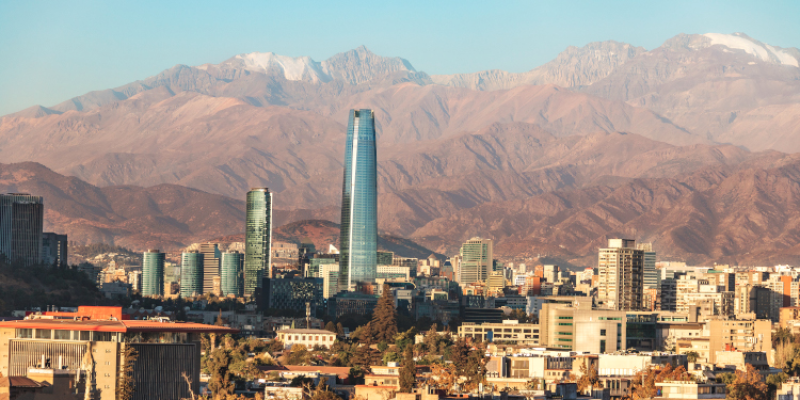
Nearly 6 million people live in Santiago, making it home to roughly one-third of Chile's entire population. That concentration of people, infrastructure, and economic activity shapes daily life in ways that catch many newcomers off guard: rents are quoted in inflation-linked units, Chilean Spanish takes time to decode even for fluent speakers, and the Andes sit close enough to the city that skiing on a weekend afternoon is a realistic plan. This article covers everything that matters for expats settling into Santiago, from choosing a neighborhood and managing costs to understanding the local pace of life and finding community.
Santiago sits in a valley enclosed by the Andes Mountains, a setting that gives the city a striking visual backdrop and direct access to world-class outdoor recreation. The city functions as Chile's financial, corporate, and governmental center, and its modern infrastructure, reliable high-speed internet, and relative economic stability have made it a consistent draw for expats from North America, Europe, and beyond. Within the region, Santiago has built a reputation as a hub for technology and startups, earning the nickname "Chilecon Valley" for its growing cluster of tech companies and venture activity. That mix of urban modernity and natural proximity is one of the defining characteristics of life here: you can hold a business meeting in a glass tower in the morning and be hiking in the foothills by the afternoon.
Providencia is the neighborhood most expats gravitate toward first. It offers excellent metro access, high walkability, a strong concentration of cafes and restaurants, and a generally safe environment after dark. For those arriving without a car, it is the most practical base in the city.
Las Condes is a wealthier, more modern municipality that contains the "Sanhattan" business district around El Golf, a cluster of corporate towers and upscale amenities that gives it a distinctly international feel. The areas near Parque Araucano are popular with families who value green space and security. Lo Barnechea, and specifically the La Dehesa area, is the most exclusive suburban option: gated communities, large properties, and proximity to major international schools make it the preferred destination for corporate expat families on generous relocation packages.
Vitacura is one of the quietest and most affluent communes in the city. It lacks metro access, which makes owning a car a practical necessity, but it offers a calm residential atmosphere and is home to Parque Bicentenario, one of Santiago's most pleasant urban parks. Santiago Centro is the historic heart of the city. Barrio Lastarria and Barrio Italia within it offer a bohemian, culturally rich atmosphere with cheaper rents, though higher noise levels and street crime at night make the area a less common choice for families with children.
Join the Santiago community
Get regular tips and advice to make the most of your expat life
Cost of living in Santiago
Santiago is one of the more expensive cities in Latin America, and expats should plan their budgets accordingly. Numbeo estimates monthly costs for a single person at around CLP 672,526 (approximately USD 733), excluding rent. For a family of four, that figure rises to roughly CLP 2,414,047 (approximately USD 2,631), again before housing costs.
Rent in expat-preferred neighborhoods like Providencia or Las Condes averages around 24 UF per month, equivalent to approximately CLP 950,000 (USD 950). Real estate prices and long-term leases in Santiago are typically quoted in UF (Unidad de Fomento), a unit of account that adjusts daily with inflation; understanding this system is essential before signing any lease or property contract. A comfortable overall monthly budget for a single expat living in a premium neighborhood ranges from CLP 2,000,000 to CLP 2,700,000 (approximately USD 2,000 to USD 2,700).
Local produce at the city's weekly farmers' markets (ferias libres) is highly affordable, but imported consumer goods, international food brands, and electronics carry significant premiums due to import taxes. Expats who can adapt their shopping habits to local products will find their money goes considerably further.
Good to know:
Rents and long-term contracts in Santiago are denominated in UF rather than pesos, which means the peso amount you actually pay shifts slightly each month in line with inflation. Always confirm both the UF amount and the current peso equivalent when reviewing a lease.
Climate and weather in Santiago
Santiago has a continental Mediterranean climate with four distinct seasons, which run opposite to those in the Northern Hemisphere. Summer (December to February) is hot and dry, with peak temperatures regularly reaching 30°C to 35°C. Many local families leave the city for the coast during this period, and the city takes on a noticeably quieter pace.
Winter (June to August) is short and damp, with temperatures ranging from around -2°C at night to 20°C during the day. Most of the year's rainfall is concentrated in these months. One practical point worth noting: homes in Santiago often lack central heating or heavy insulation, so expats typically rely on space heaters or gas heaters through the colder months, which adds to winter utility costs.
Spring (September to November) and autumn (March to May) bring mild temperatures around 20°C to 22°C, making them the most comfortable seasons for exploring the city and the surrounding wine regions.
Getting around Santiago
Santiago's public transport system, known as Red Movilidad, integrates buses and an extensive metro network into a single rechargeable card system. The Bip! card can be used on both buses and the metro, and is available at metro stations and authorized retailers. The metro is the fastest and most reliable way to cross the city, though carriages can become very crowded during peak hours.
Santiago has made significant strides in sustainable transport. By early 2026, Red Movilidad had reached a fleet of over 4,000 electric buses, representing 62% of the total bus fleet and making it one of the largest electric bus networks outside China. This shift has also reduced noise levels along the city's main avenues. For a detailed breakdown of routes, fares, and transport options across the city, refer to our article about getting around Santiago.
Language and communication in Santiago
Spanish is the official and dominant language, but Chilean Spanish presents a genuine learning curve. The local dialect is spoken quickly, final consonants are frequently dropped, and a wide range of unique local expressions (chilenismos) are woven into everyday conversation. Even fluent Spanish speakers typically need an adjustment period before they feel comfortable.
English proficiency among the general public is limited, though professionals in the upscale eastern communes of Las Condes and Vitacura, and staff at top private hospitals, are more likely to speak it. For expats who plan to navigate rental contracts, utility providers, and daily services independently, building at least a conversational level of Spanish makes a substantial practical difference. Language classes are widely available across the city, and investing in them early tends to pay off quickly.
Culture and social norms in Santiago
Santiago's social culture blends warmth and formality in ways that can take time to read correctly. Business settings tend toward hierarchy and conservative presentation, particularly in established sectors like mining and finance, while the city's growing tech scene is more informal. Punctuality norms split noticeably along context: meetings and professional appointments are expected to start on time, but social gatherings operate on what locals call "Chilean time," meaning guests routinely arrive 30 to 60 minutes after the stated start.
Catholicism has historically shaped public life and attitudes in Chile, and while Santiago is more secular than smaller Chilean cities, religious holidays structure the public calendar and some social customs. National pride runs deep, and expats who show genuine curiosity about Chilean history, food, and culture tend to be welcomed warmly.
Pace of life and work culture in Santiago
Santiago moves faster than any other city in Chile, driven by its concentration of financial and corporate activity. By regional standards, it is a demanding urban environment, though the pace remains more measured than in cities like New York or London. Work culture in traditional local firms values presence in the office and deference to seniority, but this is shifting in the technology sector, where remote work and flexible arrangements are more common.
Expat salaries in Santiago vary widely by industry and seniority, ranging from approximately CLP 2,300,000 to CLP 5,500,000 net per month (roughly USD 2,300 to USD 5,500). Those earning in foreign currencies have a significant cost-of-living advantage over colleagues paid in local pesos, particularly given the inflationary pressures on housing and imported goods.
Food culture in Santiago
Santiago's food scene blends traditional Chilean cooking with a strong presence of international cuisine. Street food is a genuine part of daily life: the empanada de pino, a baked pastry filled with beef, onions, olives, and egg, is a staple sold across the city, as is the completo, a loaded hot dog topped with avocado, tomato, and mayonnaise that typically costs around USD 1.50 to USD 2.00.
For weekly grocery shopping, most expats use the large supermarket chains. Jumbo caters to the higher end of the market with a wide range of imported goods, while Tottus and Lider offer more budget-friendly options. For fresh, affordable local produce, the ferias libres (open-air farmers' markets) held weekly in almost every neighborhood are hard to beat on both quality and price.
Leisure and social life in Santiago
The city's geography shapes its leisure culture in a distinctive way. World-class ski resorts, including Valle Nevado, are about an hour's drive into the Andes, while the Pacific coast and the cities of Valparaíso and Viña del Mar are accessible for weekend trips. This combination of mountains and coast within easy reach of a major city is one of Santiago's most frequently cited quality-of-life advantages.
Within the city, Parque Metropolitano on Cerro San Cristóbal is the main green lung: a large hill park offering hiking trails and panoramic views over the city and the Andes on clear days. Parque Bicentenario in Vitacura is a more formal park popular for picnics and weekend family outings.
For dining, nightlife, and cultural activity, Barrio Lastarria and Barrio Italia are the most lively weekend destinations, offering boutique shopping, independent galleries, and a strong cafe culture. Wine tourism is also easily accessible: the Maipo and Casablanca valleys, both close to the city, host several well-known vineyards offering regular tours and tastings.
Family life in Santiago
Santiago is widely considered a practical city for expat families, particularly in the eastern communes where safety, large parks, and premium healthcare facilities cluster together. The international school market is well developed, with several reputable options, though waitlists at the most sought-after institutions can extend up to 10 months. Families planning a relocation should contact schools well before their arrival date.
Top-tier options include Nido de Águilas, which follows an American curriculum, and Bradford School, which offers a British curriculum. Both are located in the eastern part of the city, close to the residential areas where most corporate expat families settle.
Private childcare is widely available and relatively affordable compared to North America or Western Europe. Full-time household assistants (asesoras del hogar) are a common arrangement among expat families and can significantly ease the logistics of work and family life.
Safety in Santiago
Safety is a genuine concern in Santiago and one that expats should assess honestly before and after arrival. The national homicide rate has risen to 6.7 per 100,000 (OSAC, 2025), and the city is assessed as a high-threat location for street crime. The most common incidents affecting expats are pickpocketing, mobile phone snatching, and vehicle break-ins, particularly on public transport or when car windows are left open in traffic.
The U.S. Department of State currently maintains a Level 2 Travel Advisory for Chile ("Exercise Increased Caution") due to crime and periodic civil unrest in major cities. Large-scale protests occur occasionally with limited advance notice, particularly along the central Alameda Avenue, which can disrupt public transport.
In practice, most expats manage their exposure by living in the eastern communes of Providencia, Las Condes, and Vitacura, where surveillance is heavier and street crime is lower, and by using ride-hailing services rather than walking alone at night in the city center. Santiago Centro carries a higher risk after dark and is generally approached with more caution by residents of all backgrounds.
Environment in Santiago
Air quality is Santiago's most significant environmental challenge. The city's valley location traps pollution during the winter months through a phenomenon known as thermal inversion, which causes smog to accumulate at street level. The government issues pre-emergency and emergency pollution alerts during this period, which restrict vehicle use and prohibit the use of wood-burning stoves in affected areas. Expats with respiratory conditions should factor this into their decision to relocate.
Progress on this front is real, however. The integration of over 4,000 electric buses into the Red Movilidad network has reduced fine particulate matter (PM2.5) emissions by 80% along the city's main corridors, according to the Chilean government. Winter air quality remains a concern, but the trajectory is improving.
Expat community in Santiago
Chile hosts approximately 1.5 to 1.7 million foreign nationals, making up around 9% of the total population, with the vast majority concentrated in Santiago. The largest migrant communities come from Venezuela, Peru, Haiti, and Colombia. Corporate expats and professionals from North America and Europe form a smaller but well-established community, clustering primarily in Providencia, Las Condes, and Vitacura.
The expat community in Santiago is active and reasonably easy to connect with. Professional networking events, language exchange meetups, and sports clubs with international membership all provide entry points. The city's size means there is usually a community of some kind for most interests, nationalities, and industries; the main challenge is finding it rather than its not existing.
Santiago offers a combination of advantages that are genuinely hard to match elsewhere in the region: direct access to both the Andes and the Pacific coast, modern telecommunications and urban infrastructure, one of South America's most stable economies, and a high standard of private healthcare. Corporate professionals, those earning in foreign currencies, and outdoor enthusiasts tend to thrive here.
The city's challenges are equally real. Housing costs are high relative to local salaries, with a price-to-income ratio estimated at around 17. Winter air pollution is a genuine health and comfort concern, particularly for those who live in central or lower-lying areas. Rising street crime requires consistent situational awareness, and the city's cost base means it does not suit expats seeking an affordable retirement or those on tight local wages. Homes that lack central heating or insulation can make winter months uncomfortable and more expensive than expected. Anyone who arrives expecting a stereotypically affordable Latin American destination will need to recalibrate those expectations quickly.
Frequently asked questions about life in Santiago
Nationals of many countries, including those from North America, most of Europe, and Australia, do not need a visa for stays of up to 90 days. On arrival, you receive a Tourist Card (Tarjeta de Turismo) that you must keep and present on departure. This initial stay can be extended for an additional 90 days at the Chilean National Migration Service (SERMIG) for a fee of USD 100.
FONASA is Chile's public national health system, funded by a mandatory 7% payroll deduction, offering broad coverage with longer wait times. ISAPREs are private health insurance institutions that provide access to premium private clinics, shorter wait times, and multilingual staff. Most expats working in Chile opt for an ISAPRE plan for these reasons, though premiums are higher than the public system contribution.
A standard consultation with a private doctor or specialist typically costs between CLP 35,000 and CLP 70,000 (approximately USD 40 to USD 80). An international health insurance plan or a local ISAPRE policy will generally cover or reimburse a significant portion of this fee. Costs vary by specialty and clinic, so confirming coverage before booking is advisable.
The RUN (Rol Único Nacional) is the national identity number assigned to individuals in Chile, while the RUT (Rol Único Tributario) is the tax identification number; for individuals, the two numbers are identical. Obtaining one through the Civil Registry is essential for expats: you need it to sign a lease, open a bank account, buy a vehicle, and set up utilities, including home internet.
No. Embassies and consulates located in Santiago do not process or support Chilean residency or visa applications. All immigration procedures must be handled directly through the Chilean National Migration Service (SERMIG). Contacting your embassy for immigration matters will not move the process forward.
Yes, foreign nationals can obtain a mortgage to buy property in Santiago, but the requirements are more demanding than for Chilean residents. Banks typically require higher down payments from expats and ask for proof of stable local income or a Chilean guarantor. Requirements vary by institution, so consulting directly with multiple banks before beginning a property search is the most practical approach.
Tap water in Santiago is treated and safe to drink. However, it has a high mineral content and is classified as hard water, which can cause temporary digestive discomfort for newcomers. Many expats choose to install a filter or buy bottled water for taste rather than safety reasons.
All public transport in Santiago operates on a pay-per-journey basis using a rechargeable Bip! card. The card works on both the metro and buses and is available at metro stations and authorized top-up points across the city. There is no integrated monthly pass: each journey is deducted individually from the card balance.
ℹ️
We do our best to provide accurate and up to date information. However, if you have noticed any inaccuracies in this article, please let us know in the comments section below.
A journalist, holder of the DALF C1 and C2 and a diploma from the University of Mauritius, I have nearly twenty years of writing experience. After six years in the Mauritian press, I joined Expat.com, where I have been working for over a decade, including five years as editorial assistant, and now as editorial manager.