Heredia, affectionately known as the "City of Flowers," sits in the heart of Costa Rica's Central Valley and is one of the most popular destinations for expatriates settling in the country. Getting around is straightforward once you understand how the system works. The city is served by a dense local bus network, a reliable INCOFER commuter train, and a thriving ecosystem of ride-sharing apps. Public transit is genuinely affordable, and the proximity to Juan Santamaría International Airport makes international connections easy. This article covers every realistic way to move around Heredia and the wider Central Valley, from daily commuting to arriving fresh off the plane.
Heredia sits just northwest of San José and benefits from strong transport links to the capital and to neighboring cities like Alajuela. For most residents, daily mobility revolves around three options: the local bus network, the INCOFER urban commuter train, and ride-sharing platforms such as Uber and DiDi. Each has its place depending on your budget, schedule, and destination.
Public transit fares are among the lowest in Latin America, making it accessible to virtually everyone living in the city. The trade-off is traffic. The Greater Metropolitan Area (GAM) experiences heavy congestion during morning and evening rush hours, and road travel can slow to a crawl between roughly 7:00 AM and 9:00 AM and again from 4:00 PM to 7:00 PM. Planning your day around these windows makes a significant difference.
One important change underway is the gradual rollout of the SINPE-TP electronic payment system across Heredia's buses and trains. This initiative is progressively eliminating the need to carry exact cash for every journey, which is a welcome shift for newcomers who are not yet comfortable handling Costa Rican colones on the go.
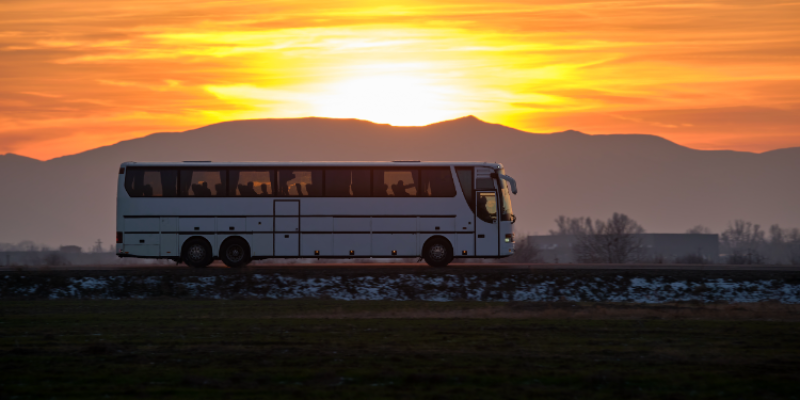
The bus network in Heredia is the backbone of public transport for most residents. Multiple private companies operate specific routes across the city and its surrounding neighborhoods. Operators such as Transportes Unidos La 400 and COOPANA R.L. run regular services linking areas like Barva, San Rafael, and Santo Domingo, as well as providing frequent direct connections to downtown San José. During peak hours, departures on the most popular corridors run every five to fifteen minutes, which makes buses a genuinely practical option for daily commutes.
Fares are very low. Most local routes cost under CRC 600 (roughly USD 1.15) per journey, which means that even a daily round trip to San José costs only a few hundred colones. Long-distance coaches to coastal areas or neighboring countries such as Nicaragua depart from San José, which is easily reachable from Heredia by bus or train in under an hour.
One ongoing challenge is the absence of a centralized bus terminal in Heredia. Currently, buses use public streets as informal depots, which contributes to congestion in the city center. A municipal initiative to build a proper terminal in downtown Heredia has been pushed forward by residents, though construction timelines remain subject to local government processes. In the meantime, most bus stops are clearly marked and easy to locate with the help of a navigation app.
Join the Heredia community
Get regular tips and advice to make the most of your expat life
Commuter train in Heredia
Costa Rica does not have a metro or traditional light rail system, but the INCOFER commuter train effectively fills that role for Heredia residents. The train connects Heredia's central station directly to San José (Estación Atlántico) and to Alajuela, making it the most reliable way to bypass the Central Valley's notorious road congestion during peak hours.
Schedules focus on commuter hours, with services concentrated between roughly 5:00 AM and 9:00 AM in the morning and 3:00 PM and 7:00 PM in the afternoon, running about every thirty minutes. The service is no-frills but functional, and it is heavily used by university students and expatriates working in the capital. According to the current INCOFER tariff schedule, a one-way ticket from Heredia to San José costs CRC 545 (approximately USD 1.05), and the route from Heredia to Alajuela costs CRC 800 (approximately USD 1.55). These are among the most cost-effective commutes available in the Central Valley.
For anyone commuting into the capital on a regular basis, the train is worth building your schedule around. It saves both money and stress, and the journey time is predictable in a way that road travel simply is not during rush hour.
Tickets and passes in Heredia
The Costa Rican public transport ticketing system operates on a pay-per-ride basis. There are currently no unified monthly passes, weekly cards, or tourist travel cards covering buses and trains together. Every journey is paid for individually, which keeps the system simple but means there is no discount for frequent riders.
Historically, passengers needed exact change in colones for every bus ride. That is changing. The SINPE-TP system now allows travelers to tap standard contactless debit and credit cards, including Visa and Mastercard, as well as compatible smartwatches, on equipped buses and INCOFER trains. This is a major convenience for newly arrived expats who have not yet built up a supply of small coins.
For those who do not yet have a local bank account, a physical prepaid card called the "Monedero SINPE-TP" is available. It can be bought and reloaded at Banco de Costa Rica (BCR) Tucán service points located near major stations. This is a practical short-term solution while you set up your finances in the country. Rollout is ongoing, so it is worth confirming which specific routes and vehicles are equipped before relying solely on contactless payment.
Taxis in Heredia
Official taxis in Heredia are easy to identify: they are painted bright red and display a yellow triangle on the front doors bearing their operating license number. Taxis registered in Heredia carry license plates beginning with "TH." This color-coding system is important because unlicensed "pirate" taxis (locally called piratas) also operate in the area, and using one carries both safety risks and the likelihood of being significantly overcharged.
All licensed taxis are regulated by the Public Services Regulatory Authority (ARESEP), and drivers are legally required to use the official taximeter, known locally as "la maría." The base fare starts at around CRC 645 (roughly USD 1.25), with an additional charge of approximately CRC 640 (about USD 1.20) per kilometer, as reported by recent transport guides. A small surcharge applies between 10:00 PM and 5:00 AM.
You can hail a red taxi on the street, find one at a designated rank near Parque Florencio Escalante, or call for one by phone. For shorter trips within Heredia itself, taxis are a reliable and comfortable option. For trips to San José or the airport, ride-sharing apps tend to offer better value and more transparency on pricing.
Ride-sharing in Heredia
Ride-sharing apps have become the go-to transport option for a large share of Heredia's expat community. Uber leads the market with dense driver coverage across Heredia, San José, and Alajuela, while DiDi and InDriver are also growing in the region. The apps offer upfront pricing, in-app safety features, and cashless payment, which makes them particularly convenient for newcomers.
It is worth noting that ride-sharing platforms operate in a legal grey area in Costa Rica, as official taxi unions have opposed their presence. In practice, however, Uber and DiDi function without disruption and are considered safe and reliable. Drivers occasionally ask passengers to sit in the front seat to avoid drawing attention from official taxi drivers at busy spots. This is common local practice and nothing to be concerned about.
Fares are generally lower than those of licensed red taxis. An Uber base rate starts at around USD 1.50 to USD 1.80, with an average cost of about USD 2.00 per mile depending on time of day and surge pricing. InDriver is worth downloading as a secondary app: it lets passengers propose a fare and negotiate directly with drivers, which can be useful during high-demand periods or for longer regional trips outside normal coverage zones.
Cycling as a daily commuting option in Heredia's urban center is not particularly practical. The streets are narrow, traffic is heavy, and there are no dedicated cycle lanes in most parts of the city. Combined with the tropical humidity and the volcanic topography of the Central Valley, riding to work on a standard bicycle is a challenging proposition for most people.
That said, cycling in and around Heredia has a strong recreational following. The surrounding hills and countryside are excellent for mountain biking and gravel riding, and e-bikes have grown in popularity as a way to handle the terrain without arriving at your destination completely exhausted. Several local agencies provide high-end e-bike and road bike rentals for those who want to explore the area. If you plan to buy a bike locally, a reliable option typically costs between USD 150 and USD 300, based on current local market prices.
There is no municipal bike-sharing scheme in Heredia equivalent to systems found in larger cities. Cyclists need to either rent from a private shop or bring their own bike. For day-to-day transport, most expats rely on buses or ride-sharing rather than cycling.
Walking in Heredia
Downtown Heredia is genuinely walkable. The city follows a historic colonial grid layout centered on Parque Central, and the areas around the Universidad Nacional (UNA) are lively, pedestrian-friendly, and easy to navigate on foot. Errands, coffee shops, markets, and restaurants are all within a short walk in the core neighborhoods.
Expatriates who settle in Santo Domingo de Heredia, one of the most popular residential areas for foreigners, often highlight just how pleasant daily walking is there. The streets are quieter, lined with greenery, and well connected to local markets and cafés. It is a neighborhood designed for a slower, more grounded pace of life.
During the day, walking in central and residential zones is safe and comfortable. After dark, however, common-sense precautions apply. Walking long distances at night, especially between distinct neighborhoods or along quieter outskirts, is best avoided. In those situations, booking an Uber or hailing a licensed red taxi is the sensible choice.
Driving in Heredia
Having a car in Heredia gives you real flexibility, particularly if you need to travel outside the Central Valley or commute at irregular hours. However, driving in the GAM during rush hour is a test of patience. Traffic congestion is severe on most major routes, and a journey that takes ten minutes at midday can easily stretch to forty-five minutes or more at peak times. Anyone considering buying a car should weigh that reality honestly before committing.
For shorter stays or new arrivals still exploring, car rentals are widely available. Agencies such as Adobe Rent a Car and Alamo have offices in the Heredia area. Small economy rentals currently average around USD 21 to USD 30 per day. A valid license from your home country is accepted for up to ninety days. An International Driving Permit is only needed if your original license is not written in English or Spanish.
Road conditions vary considerably. Highways such as Ruta 1 and Ruta 32 are well-maintained, but side streets and rural roads frequently have potholes and poor drainage. Parking in downtown Heredia is limited; your best option is to use a secure public parking garage (locally called a parqueo) or pay close attention to metered street parking restrictions to avoid fines. For full details on license requirements, insurance, and road rules in Costa Rica, refer to the dedicated country-level driving article.
Getting to and from the airport in Heredia
One of the great logistical advantages of living in Heredia is how close it sits to Juan Santamaría International Airport (SJO), located just five to ten kilometers away in neighboring Alajuela. Despite the short distance, the drive can take anywhere from fifteen to forty minutes, depending on traffic, so it is always wise to leave extra time when catching a flight.
At the airport, official airport taxis are painted orange rather than red and operate on fixed rates rather than a meter. A ride from SJO to Heredia typically costs between USD 15 and USD 25. This is a reliable and straightforward option, particularly if you are arriving late at night with luggage.
Uber is also active at the airport and is generally cheaper. A standard UberX ride from the airport to Heredia costs approximately CRC 9,000 (around USD 17.50), according to reports from expats familiar with the route. Drivers at SJO may ask you to meet them on the upper departures level to avoid friction with the official taxi stands. This is a common workaround and perfectly safe.
Pre-booked private airport shuttles are also popular, especially for families or groups arriving with a lot of luggage. Door-to-door service from the arrivals gate to your accommodation in Heredia typically costs around USD 64 for a small group. This is the most convenient option if you want to arrive without any logistical stress, though it costs considerably more than Uber.
A handful of apps make navigating Heredia and the broader Central Valley far easier, and downloading them before you arrive is strongly recommended.
Waze is universally considered the most essential navigation app in Costa Rica. It is updated in real time by a large local user base and is significantly better than Google Maps for avoiding congestion, identifying potholes, and rerouting around road closures. If you drive at all in Costa Rica, Waze is non-negotiable.
Uber and DiDi are the primary ride-hailing apps for Heredia. Both offer good driver coverage across the city and into San José and Alajuela. Uber is currently the dominant platform, but DiDi is expanding steadily.
Moovit is highly useful for anyone relying on local buses. Physical timetables at bus stops are often missing or outdated, and Moovit fills that gap by providing real-time bus route information, stop locations, and schedule estimates.
InDriver allows passengers to propose a fare and negotiate directly with drivers. It is particularly useful for longer trips or during surge pricing periods when Uber rates spike.
Between these apps, you have everything you need to navigate daily life in Heredia, whether you are commuting, running errands, or heading to the airport.
Frequently asked questions about transport in Heredia
No, local buses in Heredia require payment in Costa Rican colones (CRC) or via the SINPE-TP contactless system. If paying cash, carry small coins, as drivers rarely have change for large bills.
Ride-sharing apps technically operate in a legal grey area in Costa Rica, but Uber and DiDi are fully functional, widely used, and considered safe by locals and expats alike. Drivers may occasionally ask you to sit in the front seat to avoid drawing attention from official taxi operators. This is routine and not a cause for concern.
Official taxis are bright red and display a yellow triangle on the front doors showing their operating license. Taxis registered in Heredia carry plates beginning with "TH." At the airport, official taxis are orange rather than red. Always avoid unlicensed pirata taxis, which lack these markings.
No, Costa Rica does not currently offer monthly or weekly travel passes for its public transport network. All buses and trains work on an affordable pay-per-ride basis, with fares paid in cash or via the SINPE-TP contactless system.
Juan Santamaría International Airport (SJO) is only five to ten kilometers from Heredia. You can take an official orange airport taxi for a fixed rate of USD 15 to USD 25, book an Uber for around USD 17.50, or pre-arrange a private shuttle to your door for approximately USD 64 for a small group. Uber is generally the best balance of cost and convenience.
Yes. The INCOFER urban commuter train connects Heredia to San José and Alajuela. It runs primarily during morning and afternoon peak hours and is one of the most efficient ways to reach the capital without sitting in traffic. Visit the INCOFER official website for current schedules.
Yes, a valid home country license is accepted for up to ninety days for tourists and new arrivals. After that period, residents need to convert their license to a Costa Rican one. An International Driving Permit is only required if your original license is not in English or Spanish.
Waze is the clear choice. It is updated continuously by local users and handles Costa Rica's traffic quirks, road closures, and pothole warnings far better than Google Maps. It is the app most drivers in the Central Valley rely on daily.
ℹ️
We do our best to provide accurate and up to date information. However, if you have noticed any inaccuracies in this article, please let us know in the comments section below.
A journalist, holder of the DALF C1 and C2 and a diploma from the University of Mauritius, I have nearly twenty years of writing experience. After six years in the Mauritian press, I joined Expat.com, where I have been working for over a decade, including five years as editorial assistant, and now as editorial manager.