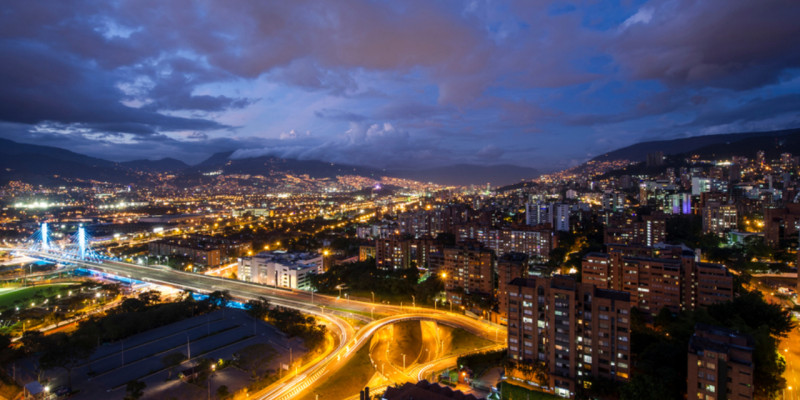
Colombia's geography shapes everything about how people move through it. A country divided by three Andean mountain ranges, a Pacific coastline, a Caribbean shore, and an Amazon basin cannot rely on a single transport model, and it doesn't. Cities like Bogotá, Medellín, and Cartagena each operate their own transit systems, intercity travel depends almost entirely on buses and domestic flights, and in the Amazon region, rivers remain the main roads. This article covers every major transport option available to expats living in Colombia, from daily commutes on Bus Rapid Transit networks to airport transfers, cycling infrastructure, and the legal complexities of ride-hailing apps.
Colombia's transport network reflects the country's complex terrain and regional diversity. Urban mobility in major cities relies on Bus Rapid Transit (BRT) systems, supplemented by standard buses, taxis, and ride-hailing apps. Medellín stands apart as the only city with a full urban rail network. For travel between cities, long-distance buses and domestic flights are the two dominant options, since a national passenger rail network does not exist.
Each major city manages its own transit authority, and payment systems are evolving rapidly. Many BRT systems now support contactless payment directly at turnstiles, and cities are progressively integrating shared micro-mobility options such as e-scooters and e-bikes into first- and last-mile connections. English signage is rare outside airports, so a working knowledge of basic Spanish is useful for navigating terminals, ticket counters, and bus stops.
The backbone of urban public transport in Colombia is the BRT model, where articulated buses run on dedicated lanes separated from general traffic. Bogotá operates TransMilenio, Cali runs the Masivo Integrado de Occidente (MIO), and Cartagena has TransCaribe. Each system is managed by its respective city authority and branded independently, but they share a common structure: trunk lines with high-frequency services feeding into feeder bus networks that extend into residential areas.
Operating hours across these systems typically run from 05:00 to 23:00. During peak hours, trunk buses on TransMilenio run every 3 to 5 minutes, though carriages become heavily congested. Keeping bags in front of the body and remaining aware of surroundings is advisable during rush hour on any of these systems. Off-peak travel is considerably more comfortable. The 2026 single-journey fares are COP 3,550 (about USD 0.97) in Bogotá, COP 3,500 (about USD 0.95) in Cali, and COP 3,900 (about USD 1.06) in Cartagena, making these among the most affordable transit systems in the region.
Join the Colombia community
Get regular tips and advice to make the most of your expat life
Metro and urban rail in Colombia
Medellín is the only Colombian city with a fully operational urban rail network. The Metro de Medellín runs two primary lines: Line A, which follows an east-west corridor through the city center, and Line B, which connects the city center westward toward the Estadio district. Both lines integrate directly with the Metrocable gondola system, which links hillside comunas to the metro network, and with a tram line serving the northeastern corridor.
The base personalized fare, known as the "Frecuente" rate, is COP 3,820 (about USD 1.04) per journey when using a registered Cívica card. Occasional travelers using an unregistered card pay COP 4,400 (about USD 1.20). The metro is widely recognized for its high standards of cleanliness and civic conduct, collectively referred to by locals as "Cultura Metro," which sets behavioral expectations for all passengers.
Bogotá's first elevated metro line and the RegioTram de Occidente commuter rail are currently under construction and have not yet launched passenger services.
Buses in Colombia
Beyond the BRT trunk lines, standard urban buses and feeder services cover residential neighborhoods that the main BRT corridors do not reach. These operate on fixed routes but with less predictable timing, and payment is typically made directly to the driver or via the city's smart card at boarding.
For intercity travel, long-distance buses are the standard option for most Colombians and many expats. Companies such as Bolivariano and Expreso Palmira operate from centralized terminal stations in major cities, with service classes ranging from standard seating to semi-cama and fully reclining VIP sleeper seats on overnight routes. Prices vary significantly by route and class, and purchasing tickets in advance through official digital platforms is strongly recommended during public holidays and Semana Santa (Holy Week), when demand surges and departures sell out quickly.
Journey times on long-distance buses can be substantial due to Colombia's mountain terrain. A trip from Bogotá to Medellín, for instance, covers roughly 400 kilometers but takes approximately 8 to 10 hours by road. For longer distances, domestic flights are generally a faster and sometimes comparably priced alternative.
Colombia does not have a functional national passenger rail network. The existing rail infrastructure is dedicated almost entirely to freight, primarily for transporting coal and industrial goods. Expats should not expect to use trains for commuting or traveling between cities.
The only operational passenger train is the Tren Turístico de la Sabana, commonly known as Turistren, which runs on weekends from Bogotá to nearby municipalities, including Zipaquirá, home of the famous Salt Cathedral. This is a leisure excursion, not a commuter service. Colombia's mountainous topography historically made rail expansion costly and impractical, which led to an emphasis on road transport and aviation instead.
Ferries and river transport in Colombia
Water transport plays a practical and sometimes essential role in several parts of Colombia. Along the Caribbean coast, speedboats and ferries connect Cartagena to the Rosario Islands, and the island of San Andrés to neighboring Providencia. On San Andrés itself, public buses and taxis cover the main island, while renting a golf cart or scooter is a popular way to explore. Crossing to Providencia requires a speedboat, as it is the only connection between the two islands.
In the Amazon basin, particularly around Leticia, and along stretches of the Magdalena River, riverboats known locally as lanchas serve as the primary transport lifeline for communities with no road access. These small motorized vessels are functional but basic, and safety equipment is not always provided or enforced by the crew. Wearing a life jacket on any small motorized boat, whether on rivers or coastal waters, is advisable regardless of how short the crossing appears.
Tickets and passes in Colombia
Each city's transit system uses its own rechargeable smart card. In Bogotá, the card is called TuLlave; in Medellín, it is the Cívica; and Cali and Cartagena issue their own equivalent local cards. These are available at designated stations and service points within each network.
Bogotá's TransMilenio system has expanded its payment options to include tap-to-pay using contactless Visa and Mastercard debit and credit cards directly at turnstiles, as part of a broader shift toward open-loop payment standards. This is convenient for new arrivals and visitors, though international cards may incur foreign transaction fees depending on the issuing bank.
In Medellín, personalizing the Cívica card unlocks the lower "Frecuente" fare of COP 3,820 (about USD 1.04) per journey. Personalization requires presenting a valid passport or Colombian ID at a designated Metro station. Without personalization, the occasional fare of COP 4,400 (about USD 1.20) applies. The Cívica card is also valid across the Metro, Metrocable, tram, and Metroplús BRT buses, allowing seamless transfers within a single integrated fare system. Seniors in Medellín pay a subsidized rate of COP 3,330 (about USD 0.91), though this discount is restricted to qualifying local residents rather than foreign nationals.
Taxis in Colombia
Licensedtaxis in Colombia are yellow and operate under city-specific tariff regulations. In Bogotá, the 2026 minimum fare (carrera mínima) is set at COP 8,000 (about USD 2.18), with a meter starting rate (banderazo) of COP 4,500 (about USD 1.23). The meter then advances at COP 159 per 100 meters traveled. A night surcharge of COP 3,800 applies to all rides taken on Sundays, public holidays, or outside standard daytime hours. When booking through an authorized app that includes a quality factor, the minimum fare rises slightly to COP 8,300 (about USD 2.26).
Street hailing of taxis carries a well-documented safety risk in Colombian cities. Both the US and UK embassies advise citizens against flagging down taxis on the street due to the risk of opportunistic crime. Using a licensed dispatch app or calling a registered service provides a traceable booking and reduces exposure to this risk. The Taxis Libres app is one authorized option in Bogotá. Confirming that the meter is reset to zero at the start of each ride is good practice regardless of how the trip was arranged.
Ride-sharing and apps in Colombia
Apps including Uber, Cabify, InDrive, and DiDi are widely used across Colombia's major cities, but they operate in a legal gray area. Rather than being classified as public transport operators, these platforms use "vehicle rental with driver" contracts as their operating framework. This means they are not prohibited for passengers, but drivers remain exposed to fines and vehicle impoundment from local transit authorities.
The practical consequence for expats is that these services function day-to-day without significant disruption, but occasional enforcement actions do occur. Legislative proposals debated in 2026 have sought to either formalize or restrict these platforms further, so the regulatory situation may shift. Linking a credit card to the app is recommended for a smoother payment experience, though cash is accepted on many platforms. For navigation, Google Maps and Moovit both cover Colombian cities and are useful for planning routes across multiple transport modes.
Good to know:
Drivers on ride-hailing platforms in Colombia sometimes ask passengers to sit in the front seat to avoid drawing the attention of transit enforcement officers. This is a known workaround given the platforms' unresolved legal status, not a safety concern.
Driving in Colombia
Driving in Colombia's cities means contending with significant traffic congestion and a municipal restriction called Pico y Placa, which limits private vehicle use on specific weekdays and hours based on the last digit of the license plate. The rules and restricted hours vary by city, so checking local regulations before renting or driving a vehicle in each city is essential.
Fuel prices as of early 2026 average around COP 16,491 (about USD 4.49) per gallon for regular unleaded gasoline in Bogotá, and COP 16,412 (about USD 4.47) in Medellín. Diesel costs approximately COP 11,276 (about USD 3.07) per gallon in Bogotá. Electric vehicle infrastructure is expanding in main urban centers, though fast-charging stations outside major cities remain limited.
Tourists can drive using their home country's license for the duration of a valid tourist visa, typically up to 90 days. Expats who establish legal residency must obtain a Colombian driver's license. Bringing an international driving permit is recommended, regardless, as some rental agencies require it for insurance purposes. A benchmark 8-day car rental in Colombia averages approximately USD 475. For a full breakdown of license conversion, insurance, and road rules, consult our Driving in Colombia article.
Cycling in Colombia
Bogotá has one of the most extensive networks of dedicated bike lanes (ciclovías) in Latin America, making cycling a genuinely viable option for daily commuting in much of the city. The infrastructure extends across hundreds of kilometers of marked lanes, though quality and continuity vary significantly by neighborhood.
Every Sunday and on public holidays, major cities close central avenues to motor vehicles for the "Ciclovía," opening these corridors to cyclists, skaters, and pedestrians from early morning until mid-afternoon. This is a long-standing tradition that reflects the depth of cycling culture in Colombian urban life.
Bicycle theft is a persistent problem in urban areas. Anyone commuting by bike should invest in a high-quality U-lock rather than a cable lock. Bicycles can be bought locally or rented, and shared e-bike and e-scooter services are expanding as part of broader first- and last-mile mobility schemes in several cities.
Walking in Colombia
Walkability in Colombian cities depends heavily on the neighborhood. Commercial, upscale, and historic districts, including Bogotá's Chapinero and Usaquén, Medellín's El Poblado and Laureles, and Cartagena's walled city, offer well-maintained sidewalks and a pleasant pedestrian environment. Older residential zones and peripheral areas tend to have uneven surfaces, unexpected potholes, and limited accessibility for people with reduced mobility.
Drivers and motorcyclists do not consistently yield to pedestrians at crosswalks, so extra caution at intersections is needed even where marked crossings exist. Keeping a smartphone out of sight near busy roads reduces the risk of snatch-and-grab theft by passing motorcycles, which remains a common form of street crime across multiple cities.
Traditional and local transport in Colombia
In the mountainous Eje Cafetero (Coffee Axis) region, the iconic Jeep Willys, known locally as "Yipaos," remain the working vehicle of choice for ferrying passengers and agricultural goods along steep, unpaved terrain. These open-sided jeeps are a functional mode of rural transport and a recognized symbol of the region's cultural identity.
In smaller coastal towns and peripheral urban areas, moto-taxis provide cheap last-mile transport. These unregulated motorbike services are not covered by public transport insurance policies, helmets for passengers are rarely provided, and accident rates are high. The safety risks are significant, and expats are generally better served by alternatives where they exist.
"Chivas," the colorful wooden open-sided buses historically used for rural transport, still operate in some rural areas but have largely been repurposed in major cities as mobile party buses for nighttime entertainment rather than as a practical daily transport option.
Bogotá's El Dorado International Airport (BOG) is Colombia's main international gateway. The official authorized taxi operator at the terminal is Taxi Imperial, and all metered rides to or from El Dorado include a fixed airport surcharge of COP 8,000 (about USD 2.18), resulting in total fares that typically range between COP 30,000 and COP 45,000 (about USD 8.19 to USD 12.28) depending on the destination and traffic conditions. Always use the official taxi pickup lanes at the airport and avoid individuals offering private rides inside the arrivals hall.
Medellín is served by José María Córdova International Airport (MDE), located in the municipality of Rionegro, approximately 45-60 minutes from the city center. Fixed-rate white taxis and lower-cost shuttle buses both operate this route. Uber and other ride-hailing apps also serve both airports, subject to the same legal gray area noted in the ride-hailing section.
Setting up a local or travel eSIM before arrival is worth considering for expats, as it allows immediate access to ride-hailing apps and navigation tools upon landing. Airport public Wi-Fi can be unreliable in the arrivals area, and having mobile data from the moment you exit the terminal simplifies the process of arranging onward transport.
Frequently asked questions about transport in Colombia
You can load a rechargeable TuLlave smart card, available at any TransMilenio station, or tap directly at the turnstile using a contactless Visa or Mastercard. Contactless payment is now accepted at most TransMilenio gates, though your bank may apply international transaction fees if using a foreign card.
Uber operates across Colombia but functions in a legal gray area under "vehicle rental with driver" contracts rather than as an officially authorized public transport provider. Passengers are not penalized, but drivers can face fines or vehicle impoundment from transit authorities. The service is widely available in major cities and generally functions without disruption in practice.
Pico y Placa is a mandatory traffic restriction policy applied in several Colombian cities that limits when private vehicles can circulate based on the last digit of the license plate. The restricted days and hours vary by city, so checking local rules before driving or renting a vehicle in each city is essential.
All metered rides from El Dorado include an airport surcharge of COP 8,000 (about USD 2.18). Total fares typically range between COP 30,000 and COP 45,000 (about USD 8.19 to USD 12.28), depending on the destination and traffic. Always confirm the meter is reset at the start of the ride.
Yes. The Cívica card integrates the Metro, Metrocable, tram, and Metroplús BRT buses into a single fare system, allowing transfers between modes without purchasing a separate ticket for each.
Tourists can drive using their home country's license for the duration of a valid tourist visa, typically up to 90 days. Expats who establish legal residency must apply for a Colombian driver's license. Carrying an international driving permit is advisable regardless, as some rental agencies require it for insurance purposes.
Public buses and taxis operate on the main island. Renting a golf cart or scooter is a popular option for covering more ground. Reaching neighboring Providencia requires a speedboat, as it is the only connection between the two islands.
Colombia's mountainous topography made building and maintaining an extensive rail network costly and logistically complex. The country instead developed a road network for long-distance buses and a strong domestic aviation sector. Existing rail infrastructure is used almost exclusively for freight.
ℹ️
We do our best to provide accurate and up to date information. However, if you have noticed any inaccuracies in this article, please let us know in the comments section below.
A journalist, holder of the DALF C1 and C2 and a diploma from the University of Mauritius, I have nearly twenty years of writing experience. After six years in the Mauritian press, I joined Expat.com, where I have been working for over a decade, including five years as editorial assistant, and now as editorial manager.