Colombia has a well-established pet culture, and cities like Bogotá, Medellín, and Cali have seen a steady rise in pet-friendly housing, green spaces, and veterinary services in recent years. Bringing a dog or cat into the country is entirely feasible, but the process follows strict agricultural health rules set by the Instituto Colombiano Agropecuario (ICA), and the margin for error is narrow: the veterinary health certificate that travels with your pet is only valid for 10 calendar days. Starting your preparations at least 4 to 6 months before your departure date gives you the time needed to align vaccinations, documentation, and airline bookings without unnecessary stress.
Dogs and cats can enter Colombia as accompanied baggage or as cargo without a traditional commercial import permit, provided they meet the ICA's health and documentation criteria. The one firm age requirement is that pets must be at least 15 weeks (105 days) old at the time of entry. This minimum exists because pets must receive their rabies vaccination and then complete a mandatory 21-day waiting period before they are eligible to travel.
If you are traveling with multiple animals, the ICA's online SISPAP system (Sistema de Información Sanitaria para Importación y Exportación) allows you to group up to 10 animals of the same species on a single inspection request. Dogs and cats must be filed on separate requests, so a traveler arriving with both a dog and a cat will need to submit two distinct applications.
Colombia does not have a blanket ban on specific dog breeds, but animals classified as "Potentially Dangerous Dogs" under Colombian law, including Pit Bull Terriers, Dobermans, and Rottweilers, are subject to strict handling regulations once in the country. Owners of these breeds should familiarize themselves with local obligations before arrival.
Birds are subject to significantly stricter import controls. Requirements vary depending on the species and country of origin, but generally include obtaining an advance import permit (Documento Zoosanitario para Importación) and complying with quarantine measures after arrival. Quarantine conditions and duration are determined by the ICA on a case-by-case basis.
If you are relocating with a bird or any species other than a dog or cat, verify the applicable rules directly with the ICA well in advance, as sanitary restrictions can change quickly.
The ICA sets out clear health requirements for dogs and cats entering Colombia. Meeting each one precisely, with the correct documentation, is what determines whether your pet clears the border without delays.
Microchip: An ISO 11784/11785-compliant 15-digit microchip is strongly recommended for all pets entering Colombia and is strictly required for dogs under 12 months of age being exported from Colombia. Having your pet chipped before travel is a good practice regardless of direction.
Rabies vaccination: All pets must be vaccinated against rabies. Pets receiving their first rabies vaccine must wait at least 21 days before traveling. Colombia does not require a Rabies Titer Test (RNATT/FAVN) for dogs or cats, regardless of the country of origin.
Additional vaccinations for dogs: Dogs must show proof of vaccination against Distemper, Canine Hepatitis, Leptospirosis, Parvovirus, Coronavirus, and Parainfluenza.
Additional vaccinations for cats: Cats must be vaccinated against Feline Panleukopenia in addition to rabies.
Parasite treatment: Both internal and external antiparasitic treatments must be administered within 60 days before travel. The health certificate must record the exact product name, active ingredient, and date of administration. Vague entries will cause rejection at the ICA inspection point.
SISPAP registration: Owners must register in the ICA SISPAP portal as a "Viajero-Importador" and generate a Pre-Certificado de Inspección Sanitaria (Pre-CIS) before the flight. This is a mandatory step, not optional.
Good to know:
Your veterinarian must record the vaccine batch numbers and the exact details of the antiparasitic product on the health certificate. Missing or imprecise entries are among the most common reasons the ICA rejects documentation at the airport.
Every document must be complete, valid, and presented in original form. Arriving with photocopies as your only proof of vaccination or treatment will not be sufficient.
Veterinary health certificate: Issued by an accredited veterinarian and endorsed by the national veterinary authority of the origin country. This certificate must be issued within 10 calendar days of your arrival in Colombia. For travelers coming from the United States, this means obtaining the USDA APHIS Form 7001, endorsed digitally or physically via the VEHCS system. Canadian travelers need the CFIA Trilingual Animal Health Certificate.
SISPAP Pre-CIS form: A printed copy of the Pre-CIS generated through the ICA SISPAP portal, along with your payment receipt.
Vaccination records: The original vaccination card showing the vaccine name, batch number, administration date, and validity period for each required immunization.
Photocopy of the health certificate: ICA officials require at least one photocopy of the original endorsed certificate in addition to the original.
The health certificate does not need to be stamped by a Colombian consular office, and a notary's signature is not required. However, the endorsed original must physically accompany your pet: a digital-only version is not accepted at the ICA inspection desk. If your certificate was processed through VEHCS, print and carry an ink-signed or physically printed version of the digital endorsement.
Join the Colombia community
Get regular tips and advice to make the most of your expat life
Preparing your pet for the move to Colombia
The 10-day validity window on the health certificate is the tightest constraint in the entire process. Schedule the veterinary appointment for exactly 10 days before your flight, leaving no room for administrative delays. If your origin country requires an endorsement appointment (such as with the USDA or CFIA), book that slot as soon as your flight is confirmed, since appointment availability can be limited at peak periods.
Parasite treatment must fall within the 60-day window before departure. Coordinate with your vet so that both internal and external treatments are administered in time and recorded with the exact product names and batch references that the ICA requires.
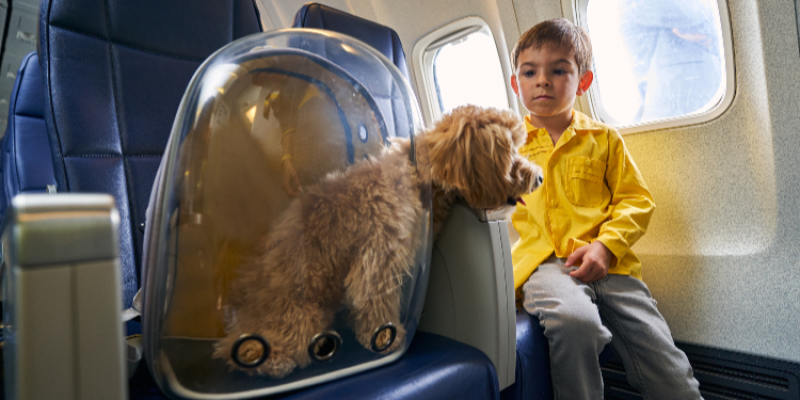
For the physical journey, purchase an IATA-approved travel crate early and let your pet spend time in it weeks before the flight. The crate must be large enough for the animal to stand, turn around, and lie down naturally. For in-cabin travel, LATAM accepts soft-sided carriers measuring no more than 40 x 28 x 25 cm, while Avianca allows carriers up to 56 x 35 x 25 cm. Check current dimensions directly with your airline when booking, as specifications can be updated.
Airlines strongly discourage sedating pets for air travel. Sedation affects an animal's ability to regulate its body temperature and balance at altitude, which increases rather than reduces risk. Focus instead on crate familiarization and calm pre-flight exercise. Feed your pet a light meal about 4 hours before the flight, and place a frozen water bowl in the crate to provide hydration during the journey without the risk of spills.
Travel options for pets flying to Colombia
Whether your pet travels in the cabin or in the hold depends on its size and the specific airline's policies. Both Avianca and LATAM are the primary carriers for routes to Colombia, and each has clear rules.
Avianca cabin travel: Small dogs and cats at least 8 weeks old may travel in the cabin. The combined weight of the pet and carrier must not exceed 8 kg, and the carrier must fit within the 56 x 35 x 25 cm maximum dimensions.
LATAM cabin travel: Dogs and cats must be at least 16 weeks old (or 6 months for flights originating in the US) to travel in the cabin. The combined weight limit is 7 kg, with a soft bag measuring no more than 40 x 28 x 25 cm.
Hold and cargo travel: Larger pets must travel in the aircraft hold. LATAM permits animals up to 45 kg (pet plus crate combined) on specific wide-body aircraft such as the B767, B777, and B787, though this limit drops to 32 kg on European and certain regional routes.
Both airlines restrict brachycephalic (snub-nosed) breeds from traveling in the hold due to respiratory risks. Breeds such as Pugs, Shih Tzus, and Persian cats fall into this category and may only travel in the cabin if they meet the weight and size limits. If they do not, check with the airline before booking, as options may be limited.
Airlines also enforce temperature rules: pets cannot travel in the hold if ground temperatures at the departure, connection, or arrival airport exceed 29.4°C (85°F). This is most relevant during the summer months or at airports in hot climates. Always add the pet reservation to your ticket immediately after booking, as airlines cap the number of cabin pets per flight.
Good to know:
Avianca does not permit birds in the cabin or hold on international routes; birds are only permitted on domestic flights within Colombia.
Costs of relocating your pet to Colombia
Pet relocation involves several distinct fees, and budgeting for all of them in advance avoids surprises on travel day. The figures below use USD as the reference currency, with COP equivalents based on the exchange rate of USD 1 = COP 3,668.89 (March 30, 2026). Rates fluctuate, so treat COP figures as indicative.
USDA APHIS endorsement fee: USD 101 (approximately COP 370,558) per health certificate for travelers originating in the United States.
ICA Certificado de Inspección Sanitaria (CIS) fee: Approximately COP 55,242 (USD 15) for up to 5 pets. This fee is payable at the airport on arrival by international credit or debit card (Visa, Mastercard, American Express, or Diners). Cash is not accepted. Payment can also be made in advance through the PSE online platform within SISPAP.
Avianca cabin fee: USD 200 (COP 733,778) each way on most international routes; USD 150 (COP 550,333) on shorter or domestic routes.
LATAM cabin fee: Between USD 150 and USD 200 (COP 550,333 to COP 733,778) each way on regional and US routes.
Hold or cargo fee: Transporting a medium to large dog in the hold ranges from USD 150 to over USD 300 (COP 1,100,667) depending on the animal's weight and the distance of the route.
These figures cover the core relocation costs. Veterinary appointments, crate purchases, and any additional vaccinations or treatments required to meet ICA standards add further to the total. If you choose to work with a professional pet relocation service, request an itemized quote to understand exactly what is and is not included.
What to expect on travel day
On arrival at a Colombian international airport, whether at El Dorado in Bogotá, José María Córdova in Medellín, or Alfonso Bonilla Aragón in Cali, proceed directly to the ICA office before reaching baggage claim or the exit. Present the original endorsed health certificate, vaccination records, the printed SISPAP Pre-CIS form, and the payment receipt to the ICA veterinary officer on duty.
The officer will conduct a physical inspection of the animal and cross-check it against all documentation to confirm the pet matches its paperwork and shows no clinical signs of infectious disease. If everything is in order, the officer will issue and print the official Certificado de Inspección Sanitaria (CIS), which you will need to clear customs. Do not exit the baggage area before receiving this document.
The ICA office at El Dorado in Bogotá operates around the clock. If you are arriving at a smaller regional international airport, confirm the ICA office hours in advance to avoid unexpected delays on arrival.
Quarantine requirements in Colombia
Colombia does not require mandatory quarantine for dogs and cats that arrive with complete, valid documentation. If all paperwork is in order and the animal appears healthy at inspection, you can leave the airport with your pet on the same day.
If documents are incomplete, invalid, or the health certificate has expired in transit, the ICA has the authority to require home quarantine, temporarily retain the animal at the airport, or mandate re-export at the owner's expense. The most common reason for border complications is the 10-day health certificate expiring before arrival, particularly when flights involve long layovers or delays.
A specific exception applies to pets originating from countries where the rabies vaccine is not routinely administered: owners must present an official letter from that country's veterinary authority explaining the situation. In this case, the ICA may admit the animal under a strict home quarantine and require vaccination to be carried out in Colombia.
Settling your pet in Colombia
Once your pet has cleared the ICA inspection and you have the CIS in hand, the adjustment period begins. Colombia's major cities offer a growing range of veterinary clinics, pet supply stores, and grooming services, particularly in Bogotá, Medellín, and Cali. Register your pet with a local vet as soon as possible after arrival to establish a health record under Colombian care and stay current with any vaccinations or treatments that fall due.
Colombia's climate varies significantly by altitude rather than by season. Bogotá sits at about 2,600 meters above sea level and has a cool, temperate climate year-round, which suits many northern European and North American breeds well. Coastal cities like Cartagena and Barranquilla are considerably warmer and more humid, which can be harder on dogs with thick coats or flat faces. Factor your destination's climate into your post-arrival care routine.
Pet supplies, including quality dry and wet food brands, flea and tick treatments, and standard accessories, are widely available in urban areas through veterinary clinics and dedicated pet retail chains. Specialized or prescription diets may be harder to source outside major cities, so bring a supply of any specific product your pet relies on until you can confirm local availability.
Colombia's housing laws have become notably more protective of pet owners in recent years. A reform to the Ley 675 de Propiedad Horizontal, passed between 2024 and 2025, explicitly prohibits building administrators from including clauses in bylaws that restrict or prevent residents from keeping pets in residential complexes. Landlords and property administrators cannot legally refuse to rent or sell a property on the grounds that the tenant or buyer has a pet. Pet deposits may still be negotiated between parties, but a blanket prohibition is no longer enforceable.
Colombia's urban public transport networks also accommodate pets, with specific rules in place. On Bogotá's TransMilenio system, small animals must travel in a secure, enclosed carrier. Medium and large dogs may travel without a carrier but must wear a collar, remain on the floor, and be held securely by their owner throughout the journey. Dogs classified as potentially dangerous, such as Pit Bull Terriers and Rottweilers, must wear both a muzzle and a collar and may only be handled by an adult. Medellín's Metro system follows similar guidelines: pets must travel in an enclosed carrier or transport crate.
Across Colombian cities, owners are legally required to clean up after their pets in public spaces. Failure to do so can result in fines under the National Code of Security and Citizen Coexistence.
Pets must be at least 15 weeks (105 days) old to enter Colombia. This accounts for the required rabies vaccination at 12 weeks of age, followed by a mandatory 21-day waiting period. Puppies and kittens younger than 15 weeks are not permitted entry.
A traditional commercial import permit is not required for personal pets. However, you must register in the ICA SISPAP system online before your flight to generate a Pre-CIS. Carry a printed copy of this form and your payment receipt to present at the ICA desk on arrival.
No. Colombia does not require a Rabies Titer Test (RNATT/FAVN) for dogs or cats, regardless of the country of origin. A valid rabies vaccination with the required 21-day waiting period is sufficient.
The official health certificate endorsed by your origin country's veterinary authority is valid for a maximum of 10 calendar days from the date of issuance until your arrival in Colombia. Plan your vet appointment accordingly, and account for any transit time when calculating the window.
Yes. The SISPAP system allows you to group up to 10 animals of the same species on a single inspection request. If you are traveling with both dogs and cats, you must submit two separate SISPAP applications, one for each species.
Colombia does not ban the importation of specific breeds. However, dogs classified as "Potentially Dangerous," including Pit Bulls and Dobermans, are subject to strict muzzle, leash, and handling requirements in public spaces and on public transport once in the country.
If documents are missing, invalid, or the health certificate has expired, the ICA may require home quarantine, temporarily retain the animal at the airport, or mandate re-export at the owner's expense. Always travel with the original endorsed documents, not copies alone.
Small dogs and cats that meet weight and size limits can travel in the cabin on Avianca and LATAM flights. Avianca's limit is a combined 8 kg (pet plus carrier), and LATAM's is 7 kg. Cabin fees typically run between USD 150 and USD 200 each way. Book the pet reservation at the same time as your own ticket, as cabin spots are capped per flight.
ℹ️
We do our best to provide accurate and up to date information. However, if you have noticed any inaccuracies in this article, please let us know in the comments section below.
A journalist, holder of the DALF C1 and C2 and a diploma from the University of Mauritius, I have nearly twenty years of writing experience. After six years in the Mauritian press, I joined Expat.com, where I have been working for over a decade, including five years as editorial assistant, and now as editorial manager.