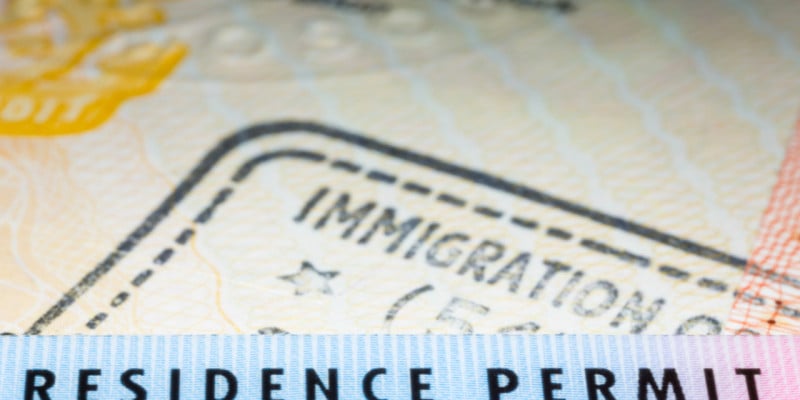
After two years of building a life in Chile, many foreign nationals reach a turning point: the moment to apply for permanent residency and leave the cycle of temporary visa renewals behind. Known officially as the Residencia Definitiva, this status grants the right to live, work, and study in Chile indefinitely, with no restrictions on employment and full access to public services. What makes Chile stand out is the clarity of its digital application process and the absence of any language test at this stage, making the pathway more accessible than in many other countries. This article covers every step of the process, from eligibility and required documents to processing times, costs, and what comes after approval.
Permanent residency in Chile, officially called the Residencia Definitiva, is a legal status granted by the Servicio Nacional de Migraciones (SERMIG) that allows foreign nationals to live, work, and study in the country indefinitely. Unlike a temporary visa, this status carries no expiration date as long as the holder meets the physical presence requirements. It applies across the entire national territory, meaning residents are free to settle anywhere in the country, whether in Antofagasta in the north, Santiago in the center, or Punta Arenas in the far south.
Obtaining the Residencia Definitiva is the milestone most expats work toward after arriving on a temporary permit. It eliminates the cost and administrative burden of annual renewals and establishes a clear path toward Chilean citizenship. Upon approval, residents receive a new Chilean ID card (Cédula de Identidad) valid for five years, which must be renewed physically at the Registro Civil, though the residency status itself remains in force.
Chile's immigration framework integrates permanent residents fully into the local economy. They can open bank accounts, access the healthcare system, buy property, and conduct any lawful business activity under the same conditions as Chilean citizens. For foreign nationals planning a long-term future in the country, the Residencia Definitiva is the foundation on which everything else is built.
Permanent residency vs. citizenship in Chile: key differences
Permanent residency and Chilean citizenship are distinct statuses with meaningfully different rights and protections. Understanding the gap between them helps foreign nationals plan ahead rather than treating the Residencia Definitiva as an endpoint.
As a permanent resident, you retain your original nationality and passport. You can work for any employer, own property, and access public services, but you remain subject to certain immigration rules, most importantly the requirement not to be absent from Chile for more than two continuous years. If that limit is exceeded without a prior extension, the residency status is automatically revoked in the immigration system without any formal notification. This process, known as revocación tácita, means you could lose your residency without realizing it has happened until you try to re-enter the country or renew your ID card, as established in SERMIG regulations. Citizens, by contrast, can live abroad indefinitely without any risk to their status.
Citizenship grants a Chilean passport, which offers visa-free or visa-on-arrival access to a broad range of countries, including the Schengen Area. It also provides absolute protection against deportation and full constitutional rights equivalent to those of native-born Chileans. Permanent residents can face deportation if convicted of serious crimes or found to have obtained their visa through fraud.
One notable feature of the permanent residency stage is the right to vote. Foreign residents gain the right to vote in all Chilean elections after five years of continuous legal residence in the country, under the Chilean Constitution. This right exists even before citizenship is granted, which is relatively uncommon internationally.
Chile permits dual citizenship, so foreign nationals who eventually apply for naturalization are not required by Chile to give up their original passport. This applies regardless of nationality, making the path from permanent residency to citizenship a genuinely open one for most expats.
Join the Chile community
Get regular tips and advice to make the most of your expat life
Pathways to permanent residency in Chile
There are several routes to the Residencia Definitiva, and the right one depends on your current visa type, family ties, and how long you have already spent in Chile.
The most common route is the standard pathway, which requires holding a valid temporary residence permit (Residencia Temporal) and completing 24 months of continuous residence in Chile. During this period, applicants must maintain a substantial connection to the country, and SERMIG places limits on time spent abroad. Applicants should plan to avoid being outside Chile for more than 60 to 180 days in total across the 24-month period, though verifying the precise current threshold directly with SERMIG is advisable, as this rule may vary by case.
An accelerated 12-month pathway is available to certain applicants: those married to a Chilean citizen, those with Chilean children, and significant investors who can demonstrate a substantial economic contribution to the country. This shortened timeline makes the Residencia Definitiva considerably more accessible for families with mixed nationality.
Dependents of a primary applicant, including spouses, civil partners, and minor children, can apply for their own permanent residency at the same time, provided they have held a dependent temporary visa for the required duration. This means families can often consolidate the process into a single application period.
All applicants, regardless of pathway, must show financial stability. This means demonstrating that you can support yourself in Chile without relying on state assistance. Acceptable evidence includes employment contracts, salary records covering the past 12 to 24 months, tax returns, or a sworn declaration of income for self-employed or independent workers. Retirees and those living on passive income need to show that their funds arrive consistently into a Chilean bank account.
One clear advantage of the Chilean system is that there is no Spanish language test required at the permanent residency stage. Applicants must have a clean criminal record both in Chile and in their home country, but no formal integration exam is required until the citizenship stage.
Required documents for permanent residency in Chile
The Residencia Definitiva application is submitted entirely online through the SERMIG digital portal, and all documents are uploaded as scanned files. Preparing documents in advance is essential, particularly those that need to be obtained from your home country, as apostille and translation processes can take several weeks.
The standard document checklist includes:
A scanned copy of the identification page of your valid passport
A copy of your current temporary residence permit (Residencia Temporal) and your Chilean foreign ID card (Cédula de Identidad)
An official police clearance certificate from your country of origin, apostilled or legalized, issued within 90 days of the application date
A Chilean criminal record certificate issued for special purposes (Certificado de antecedentes para fines especiales) from the Registro Civil
Proof of financial means: an employment contract, the last 12 to 24 months of salary slips, tax returns, or a sworn income declaration for independent workers
A recent color passport-style photo with a white background, uploaded in JPG or PNG format
Good to know:
Applicants whose official documents, such as police clearances, are issued in English may submit them without incurring the cost of a certified translation into Spanish.
Pay attention to validity windows. The foreign criminal record certificate must be issued no more than 90 days before the application date. If you order it too early, you may need to request a new one before submitting. For documents that require apostilling in your home country, build in enough lead time to avoid this problem.
Application process for permanent residency in Chile
The entire Residencia Definitiva application process is carried out online through the SERMIG digital portal, using your ClaveÚnica, Chile's unified digital identity credential. No physical paperwork is submitted at any stage, which makes the process manageable even in cities far from Santiago.
The application window is strictly defined: you must submit no more than 90 days and no less than 10 days before your current temporary visa expires. Missing this window can mean losing the right to apply from within Chile, so tracking your visa expiry date carefully is essential.
Once submitted, the application moves through the following stages:
Recepcionada (Received): You receive an automatic email confirmation.
Análisis (Analysis): SERMIG reviews your file. If information is missing or incorrect, they issue a strict deadline to upload corrections. Responding promptly is critical.
Certificado en trámite (In-process certificate): While your application is under review, SERMIG issues a certificate confirming your application is active. This document legally extends your right to remain, work, and travel in Chile even after your temporary visa expires. Downloading an updated version from the portal if the original certificate expires during the wait is advisable.
Resolución exenta (Approval resolution): If approved, you have exactly 30 days to book an appointment at any Registro Civil office across Chile, whether in Santiago, Valparaíso, Concepción, or a smaller municipality, to obtain your new permanent ID card.
If the application is rejected, applicants are generally given one opportunity to file an administrative appeal (Recurso Administrativo), or SERMIG may instead grant an extension of the temporary residence permit. The digital portal is designed for individual use, and many applicants complete the process without professional assistance. However, for those with complex income structures involving multiple foreign sources, consulting an immigration attorney before submitting can help ensure financial documents are accepted without delays.
Processing times and fees for permanent residency in Chile
The official government fee for the Residencia Definitiva application is CLP 138,974 (approximately USD 155). This fee is not paid at the time of initial submission; it is charged only during the Analysis or Resolution phase, when the platform prompts payment.
Two groups are fully exempt from this fee: foreign nationals married to a Chilean citizen and applicants under 18 years of age.
Additional costs to budget for include:
The physical ID card issuance at the Registro Civil: approximately CLP 4,280 (under USD 5)
Apostilling and translating home country documents: this varies significantly by country and document type, but typically ranges from USD 50 to USD 200
Regarding processing times, the gap between official timelines and real-world experience is significant. Officially reported average processing time for the Residencia Definitiva was 335.2 days. Given ongoing backlogs, applicants should realistically plan for a process lasting between 8 and 14 months from submission to final decision.
This extended wait does not leave applicants in legal limbo. The in-process certificate issued by SERMIG keeps your right to work and remain in Chile fully intact throughout the review period. Immigration rules and fee amounts are subject to change, so checking the current SERMIG fee schedule before submitting is always advisable.
Rights and benefits of permanent residency in Chile
The Residencia Definitiva removes the most significant constraints that temporary visa holders face. The practical benefits are wide-ranging and take effect immediately upon approval.
Regarding employment, permanent residents can work for any employer, change jobs freely without notifying immigration authorities, start their own business, or switch between employed and self-employed status without additional permits. This flexibility is one of the most valued aspects of the status, particularly for those who previously held an employer-tied temporary visa.
Permanent residents have the same rights as Chilean citizens when it comes to buying property anywhere in the country, and they can apply for mortgages, personal loans, and credit cards under identical conditions. There are no foreign ownership restrictions tied to residency status.
Full access to the public healthcare system (FONASA) and private health insurers (ISAPRE) is available from the point of approval, along with eligibility for state social benefits. Family reunification also becomes easier: permanent residents can sponsor spouses, children, and parents for temporary residency visas through a more straightforward process than temporary permit holders can access.
After five years of continuous legal residence in Chile, foreign residents gain the right to vote in all Chilean elections, including presidential and parliamentary contests. This right applies at the permanent residency stage and does not require citizenship.
The Residencia Definitiva does not expire, but it can be lost. The most common reason is exceeding the continuous absence limit. If a permanent resident stays outside Chile for more than two uninterrupted years, the status is automatically revoked in the immigration system without any formal notification. This process, known as revocación tácita, means you could lose your residency without realizing it has happened until you try to re-enter the country or renew your ID card.
The simplest way to avoid this is to return to Chile before two years have elapsed from your departure date. Returning for even a single day resets the clock entirely.
If you need to be away for an extended period due to work, study, or health reasons, a consular extension (prórroga) is available. This one-time extension adds another two years to your permitted absence and costs USD 75. The request must be submitted to the nearest Chilean consulate at least 60 days before the initial two-year limit is reached. Waiting until the last minute risks losing access to this option.
Separately, the physical ID card (Cédula de Identidad para Extranjeros) must be renewed at the Registro Civil every five years, even though the underlying residency status itself does not expire. Keeping track of this renewal date is important, as an expired card can create practical difficulties with banks, employers, and other institutions even when the residency status remains valid.
Status can also be revoked by authorities if a resident is convicted of serious crimes, drug trafficking offenses, or is found to have obtained their visa through fraudulent means. If residency is lost for any reason, the individual must restart the entire immigration process from scratch.
Permanent residents who choose to take the next step can apply for Chilean citizenship(Carta de Nacionalización) after accumulating five continuous years of legal residence in the country. Importantly, the five-year count includes time spent living in Chile under temporary residency visas, not only time held as a permanent resident. This means that, in practice, most applicants who obtained permanent residency after two years of temporary residence need to wait approximately three more years to become eligible for naturalization.
Applicants must be at least 18 years old, though younger applicants aged 14 and above may apply with parental or guardian authorization if they meet the residence requirement. Unlike the permanent residency process, citizenship requires a demonstrated level of Spanish proficiency and basic knowledge of Chilean culture and history, assessed through a formal interview.
The required documents for the citizenship application include the current permanent residency permit, a birth certificate, criminal record checks from both Chile and the home country, and evidence of ongoing financial stability. Processing typically takes between 2 and 3 years, culminating in a formal oath of allegiance ceremony.
Chile permits dual citizenship, so applicants are not required by Chilean law to renounce their original nationality. Whether your home country allows dual citizenship is a separate question governed by your country's own laws, so verifying this in advance is worthwhile if retaining your original passport matters to you.
Frequently asked questions about permanent residency in Chile
Once you submit your application within the required timeframe, SERMIG issues a certificate confirming your application is active. This document automatically extends your legal right to stay, work, and travel in Chile until a final decision is made, even if your physical ID card has expired. It is advisable to download an updated version from the SERMIG portal if this certificate itself expires during a prolonged wait.
No. There are no mandatory Spanish language exams or integration courses required to obtain permanent residency in Chile. Language proficiency is only assessed later if you choose to apply for Chilean citizenship, at which point a formal interview tests your Spanish and general knowledge of the country.
Yes, international travel is possible during the processing period. When re-entering Chile, carry your expired ID card alongside your valid passport and a printed copy of your in-process certificate to present at border control. Keeping a current printed copy available is practical, given that the certificate can be downloaded from the SERMIG portal at any time.
Medical certificates are not generally required for the standard Residencia Definitiva application. The mandatory checks focus on criminal records and financial stability. If you are uncertain whether any specific health-related requirement applies to your case, confirming directly with SERMIG before submitting is the safest approach.
No. The Residencia Definitiva can only be requested by foreign nationals who currently hold a valid temporary residence permit and who are physically present in Chile within the prescribed application window before that permit expires. Applicants who are abroad when the window opens risk losing the right to apply from within Chile.
No. Official SERMIG rules state that documents issued abroad must be apostilled and translated into Spanish or English. Documents already issued in English are accepted without any certified translation into Spanish. This applies to police clearances, financial documents, and other official records issued in English-speaking countries.
The official government fee for most applicants is CLP 138,974, approximately USD 155. Spouses of Chilean citizens and applicants under 18 are fully exempt from this fee. Additional costs, such as apostilling documents and obtaining a new ID card at the Registro Civil, add a smaller amount on top. Fee amounts can change, so checking the current SERMIG fee schedule before applying is always advisable.
If your application is rejected, you generally have the right to file an administrative appeal (Recurso Administrativo) to submit new or corrected information. In cases where permanent residency is denied due to insufficient residence time rather than disqualifying factors, SERMIG may automatically grant an extension of your temporary visa instead, giving you additional time to meet the eligibility threshold.
ℹ️
We do our best to provide accurate and up to date information. However, if you have noticed any inaccuracies in this article, please let us know in the comments section below.
A journalist, holder of the DALF C1 and C2 and a diploma from the University of Mauritius, I have nearly twenty years of writing experience. After six years in the Mauritian press, I joined Expat.com, where I have been working for over a decade, including five years as editorial assistant, and now as editorial manager.