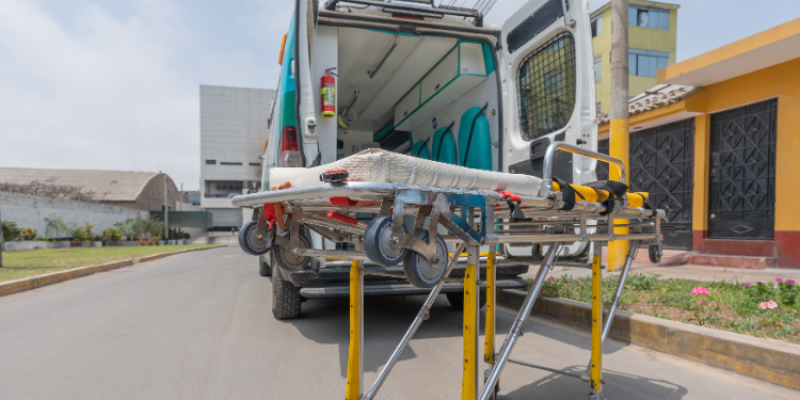
Colombia covers a vast and varied territory, from Andean mountain cities to Caribbean coastlines, and the emergency services that cover this geography are as varied as the landscape itself. For expats, understanding how to reach help quickly and what to expect when it arrives can make a significant difference in a crisis. This article covers every major emergency scenario you are likely to face in Colombia: medical emergencies and hospital payment realities, roadside assistance, natural disaster alerts, police contacts, lost documents, personal safety, and mental health support. One detail that sets Colombia apart from many destinations is its single universal emergency number, 123, which routes callers to police, fire, and ambulance services nationwide from any device, free of charge.
The universal emergency number in Colombia is 123, reachable free of charge from any mobile or landline device across all regions, including Bogotá, Medellín, and Cali. Dialing 123 connects callers to a central dispatch center that routes requests to the police, ambulance, or fire services depending on the nature of the emergency.
Several dedicated direct lines also remain operational and are worth saving separately as backups:
112: alternative line for the National Police
119: direct line for the fire department (Bomberos)
132: Red Cross ambulance service
125: direct medical emergency line
English-speaking dispatchers are not guaranteed on the 123 line. If a language barrier occurs, use a translation app or immediately pass the phone to a Spanish-speaking contact. In tourist-heavy areas, asking staff at a hotel or restaurant to make the call on your behalf is a practical alternative.
Save all of the above numbers in your phone before you need them.
Good to know:
Rural and mountainous areas can have intermittent cellular reception, so having multiple contact options increases your chances of reaching help quickly.
Public ambulances can be requested by dialing 123 or the direct medical emergency line at 125. In practice, response times in cities like Bogotá can be significantly delayed due to traffic volumes. Many expats use private ambulance services as an alternative: Ambulancias Santa Lucía, reachable at 601 467 3129, is one option operating in Bogotá.
Emergency rooms at top-tier private hospitals, including Fundación Santa Fe in Bogotá and Clínica del Rosario in Medellín, require upfront payment from foreign visitors unless an active direct billing arrangement or a Guarantee of Payment (GOP) letter has been established in advance with an international health insurer. Confirm whether your insurer offers direct billing in Colombia before you need emergency care: out-of-pocket costs must often be paid before non-life-threatening treatment begins.
The costs involved in private medical care are substantial. Private specialist consultations typically run between COP 150,000 and COP 350,000 (approximately USD 41 to USD 95). Inpatient stays at private facilities range from COP 500,000 to COP 1,500,000 per night (approximately USD 136 to USD 409), depending on the city and room type.
In cases of extreme medical necessity, an emergency medical evacuation from a remote Colombian region to an adequate care facility can exceed COP 917,500,000 (approximately USD 250,000). Comprehensive international health insurance that explicitly covers evacuation costs is strongly advisable for anyone living or traveling outside Colombia's major urban centers.
Join the Colombia community
Get regular tips and advice to make the most of your expat life
Roadside emergencies in Colombia
For highway patrol assistance and roadside emergencies on national roads, motorists should dial 767. This line is operated by the Traffic and Transportation Police (Policía de Tránsito y Transporte) and covers the national road network.
Private roadside assistance is typically arranged through local car insurance policies or rental agreements. English-speaking support is rare outside of premium international providers, so it is worth checking the language capabilities of any roadside assistance service before signing a rental or insurance contract. If you plan on driving between major cities, save the 767 number in advance, as rural cellular reception can be unreliable in some stretches of highway.
Fire emergencies in Colombia
The direct emergency number for the fire department (Bomberos) is 119. Bomberos units handle structural fires, wildfire containment, and specialized rescue operations, including certain localized flooding emergencies. Responses are coordinated with civil defense entities through the main 123 C4 command center in Bogotá. Calling 119 directly bypasses the general dispatch switchboard and can reach fire services faster in time-critical situations.
Police in Colombia
The primary law enforcement agency is the Policía Nacional de Colombia, reachable via the universal 123 line or the alternative 112 line. The police system operates through neighborhood sectors known as Cuadrantes; residents can seek immediate physical assistance at neighborhood police stations called CAI (Centro de Atención Inmediata).
Dedicated Tourist Police (Policía de Turismo) units operate in high-traffic expat and tourist zones, including La Candelaria and Parque de la 93 in Bogotá, as well as the Walled City in Cartagena. These officers receive specialized training for assisting foreigners and are more likely to provide English-speaking support. The direct line for the Bogotá Tourist Police is +57 601 337 4413. If you are a crime victim, explicitly request the Policía de Turismo, as standard municipal officers rarely speak English.
In severe cases of extortion or kidnapping, contact GAULA, Colombia's specialized anti-kidnapping unit, at hotline 165.
Colombia faces regular natural hazards, including seismic events, landslides in mountainous cities such as Medellín and Bogotá, and seasonal flooding driven by ENSO weather patterns. Disaster response is officially coordinated by the UNGRD (Unidad Nacional para la Gestión del Riesgo de Desastres).
Real-time geological alerts and seismic monitoring are provided by the Servicio Geológico Colombiano (SGC). Monitor the SGC website and ensure your mobile device settings permit emergency cell broadcast alerts, as Colombia's Sistema de Alerta Temprana (Early Warning System) delivers warnings directly to phones located in affected zones via cellular broadcast technology.
For localized civil emergencies and disaster relief, the Civil Defense (Defensa Civil) line is 144. Keep this number saved alongside the universal 123 line, as Defensa Civil often coordinates ground-level rescue and relief operations during floods and landslides.
Good to know:
Registering with your embassy's traveler notification program, keeping a go-bag with essential documents, water, and medication, and downloading offline maps are practical steps that significantly reduce your response time during a natural disaster.
Embassy and consular services in Colombia
Most major embassies maintain emergency consular lines for their nationals in Colombia. Contact details for key missions in Bogotá are listed below. Always confirm current availability directly with the embassy, as staffing and services can vary.
US Embassy: Calle 24 Bis No. 48-50, Bogotá. After-hours emergency line for US citizens: +57 601 275 2000. The US State Department's Colombia Travel Advisory also provides current security and consular guidance.
British Embassy: Carrera 9, No. 76-49, Piso 8, Edificio ING Barings, Bogotá. Emergency consular line: +57 1 326 8300. Current information is available via the British Embassy Colombia page on GOV.UK.
EU nationals whose own country has no diplomatic representation in Colombia can apply for an Emergency Travel Document (ETD) at any available EU member state mission under the current EU ETD protocol. French, Spanish, and Italian embassies in Bogotá can all process ETD applications for unrepresented EU citizens.
Registering with your embassy's traveler notification program, such as the US Smart Traveler Enrollment Program (STEP), is recommended. These programs deliver localized security alerts directly to registered travelers and can be critical during civil unrest or natural disasters.
Lost or stolen documents in Colombia
If your passport or other vital documents are lost or stolen, the first step is to file an official police report (denuncia). Most embassies and insurers require this document before they can issue a replacement passport or process a claim.
Reports can be filed digitally through the ADenunciar online platform, co-managed by the Fiscalía General de la Nación and the Policía Nacional. The validation process takes a minimum of 24 hours; if the report is accepted, a Criminal Notice Number (Nunc) is delivered by email within five business days.
If you need immediate proof of loss, for example, to attend an urgent embassy appointment, visit the nearest police station or CAI in person rather than relying on the online portal. A physically stamped report issued at a CAI can be obtained the same day and is accepted by embassies for emergency document processing.
Crime and personal safety in Colombia
The US State Department's Colombia Travel Advisory categorizes Colombia as a country with high incidences of violent crime, including armed robbery, express kidnapping, and extortion, and notes clearly that resisting during a robbery is highly dangerous.
A specific and persistent threat involves scopolamine (known locally as burundanga), a drug that can be administered through spiked drinks, food, or aerosol in tourist areas. It incapacitates victims before criminals steal valuables and banking credentials. Monitor your drinks closely in bars and nightclubs and avoid accepting food or beverages from strangers.
Non-violent property crime, including bag snatching and pickpocketing, is widespread in crowded urban areas. Keep a low profile, avoid displaying expensive jewelry or smartphones in public, and use only verified ride-hailing apps rather than flagging taxis on the street. These precautions apply across Colombia's major cities.
If you or someone you know is experiencing a mental health crisis, the primary resource is Línea 106, Colombia's 24/7 suicide prevention and mental health hotline, operated under the guidance of the Ministry of Health. The line is free and confidential.
A specialized youth mental health hotline for children and adolescents is available at +57 1 580 8111. For situations requiring immediate medical or police intervention, the universal 123 line can also be used to dispatch emergency responders.
Colombia does not currently operate a nationally publicized English-language crisis hotline. Expats who need immediate bilingual mental health support should access telehealth services through their international health insurance provider. Before moving to Colombia, confirm that your insurer offers 24/7 psychological support in English, and store that contact number offline on your device so it is accessible without an internet connection.
Two official apps are particularly relevant for expats in Colombia. The first is App POLIS, which connects users directly with their designated local police sector (cuadrante) using GPS tracking. It features an integrated panic button that dispatches an alert to nearby patrol vehicles when a crime is actively occurring. Register your Colombian address within the App POLIS as soon as you have housing to activate the panic button correctly.
The second is ADenunciar, which allows you to log high-impact crimes electronically without visiting a police station in person. This is useful for non-urgent administrative crime reporting, such as filing for insurance purposes after a theft. For immediate emergencies, always call 123 rather than using the app.
Both apps are available on standard app stores and are managed by official Colombian government bodies.
The central universal emergency number is 123, which routes callers to police, fire, and ambulance services free of charge from any mobile or landline device. Separate direct lines also exist: 112 for the National Police, 119 for the Bomberos, 125 for medical emergencies, and 132 for the Red Cross ambulance service.
You can request the Tourist Police through the main 123 line, or dial them directly in Bogotá at +57 601 337 4413. Tourist Police units operate in expat and tourist-heavy areas, including La Candelaria, Parque de la 93, and the Walled City in Cartagena. These officers are more likely to provide English-language support than standard municipal police officers.
Most top-tier private clinics require upfront payment or a Guarantee of Payment letter from an insurer before treatment begins. Direct billing is only possible if a preexisting arrangement exists between the hospital and your insurance provider. Confirm this with your insurer before you travel or relocate, and keep emergency funds accessible in case direct billing is not available at the moment of care.
A medical evacuation flight from a remote region of Colombia can exceed COP 917,500,000 (approximately USD 250,000) depending on the patient's condition and the required destination. International health insurance that includes evacuation coverage is strongly advisable for anyone based outside Colombia's major cities.
Yes, the ADenunciar platform allows you to file a police report online, but validation takes a minimum of 24 hours, and the Nunc confirmation number can take up to five business days to arrive by email. If you have an embassy appointment the next day, visit a CAI in person to obtain a physically stamped report on the same day.
Under the current EU ETD protocol, any EU citizen whose own country has no diplomatic representation in Colombia can apply for an Emergency Travel Document at any EU member state mission. The French, Spanish, and Italian embassies in Bogotá are all authorized to process these applications. Contact the relevant embassy directly to confirm current procedures and appointment availability.
Yes, App POLIS connects users to their designated neighborhood police sector via GPS tracking and features a panic button that alerts nearby patrol vehicles in real time. Register your local address in the app as soon as you have permanent housing in Colombia to activate the panic button correctly. The app is available on standard app stores.
Colombia's national crisis line, Línea 106, operates exclusively in Spanish. Expats needing immediate English-language mental health support should use the 24/7 telehealth services provided by their international health insurer. Store your insurer's psychological support line as an offline contact on your device so it is accessible without an internet connection.
ℹ️
We do our best to provide accurate and up to date information. However, if you have noticed any inaccuracies in this article, please let us know in the comments section below.
A journalist, holder of the DALF C1 and C2 and a diploma from the University of Mauritius, I have nearly twenty years of writing experience. After six years in the Mauritian press, I joined Expat.com, where I have been working for over a decade, including five years as editorial assistant, and now as editorial manager.