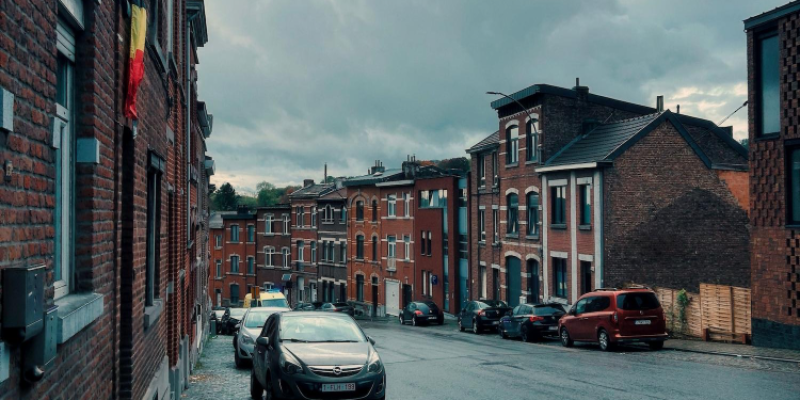
The decision to buy property in Liège rather than rent marks a turning point that carries real financial and administrative weight. At EUR 2,022 per square meter on average, Liège sits well below the Belgian national benchmark, making it one of the more financially accessible mid-sized cities in the country for foreign buyers. Belgium imposes no nationality-based restrictions on residential purchases, so any foreign national can buy through the standard process. That process, however, runs entirely through the mandatory notarial system, where the compromis de vente (pre-deed contract) is legally binding from the moment both parties sign it. Wallonia's reduced registration duty of 3% for owner-occupiers, against the standard 12.5%, can represent tens of thousands of euros in savings, making residency status one of the first practical decisions to factor into your purchase strategy.
Any foreign national canbuy residential property in Liège. Belgium imposes no nationality-based restrictions on property ownership: there are no foreign-ownership caps, no restricted zones for residential purchases, and no residency requirement to buy. The purchase route is the same for everyone: a mandatory notarial process handled by a Belgian civil-law notary, who acts as the legally required conveyancer for both buyer and seller. This dual role is broader than conveyancing arrangements in many other countries, covering title searches, planning checks, and deed preparation simultaneously for both parties. Buyers may additionally appoint their own separate notary alongside the seller's, and the notarial fee is shared between the two notaries rather than doubled, so independent representation costs the buyer nothing extra.
Residency status does not affect the right to buy, but it does affect the applicable tax rate. Wallonia's reduced registration-duty rate of 3% requires the buyer to establish their main residence in the property and register in Belgium's population register or register of foreign nationals. Non-resident buyers can still purchase freely but pay the standard 12.5% rate. On a typical Liège property, this difference is financially significant; confirm with your notary before deciding how to structure the purchase.
Foreign buyers who do not yet hold a Belgian electronic identity document or equivalent authentication can access federal tax authority applications through ForReg, the FPS Finance route for persons without Belgian authentication credentials. Regarding fund provenance: Belgian registration formalities require demonstrable traceability of funds, so ensure money for the purchase is clearly documented and available ahead of the notary's payment requests.
Liège's residential districts span a wide range of price points and lifestyles, from regeneration zones pulling in new-build investment to older urban fabric that attracts buyers looking for character. The practical differences between neighborhoods are significant enough that where you buy matters almost as much as what you buy.
Guillemins, the district around the Liège-Guillemins high-speed rail station, is the most transport-connected and upscale part of the city. Sustained urban redevelopment has brought new residential projects and commands some of the highest per-square-meter prices in Liège. Buyers here are largely purchasing modern apartment stock in a neighborhood that has moved away from industrial origins; the trade-off is premium pricing for the regeneration premium.
The Center and Hypercenter offer the broadest access to shops, public administration, and public transport, making them the most self-contained option for arrivals without a car. Pricing sits in the mid-range for Liège. Outremeuse, a central island district, has a similar price profile but a more distinct character: older urban fabric, a walkable scale, and a strong local cultural identity that appeals to buyers prioritizing atmosphere over new-build amenities.
Two up-and-coming districts are worth watching. Bavière is a regeneration zone where entry prices are more accessible than in Guillemins; Médiacité/Longdoz, linked to retail and commercial redevelopment, follows a similar trajectory. Both offer lower entry points than established regeneration areas, though buyers should factor in the uncertainty that comes with ongoing construction phases. Before committing to either district, visit at different times of day and check commute routes; conditions can shift quickly within the same postcode.
Bressoux, in the northeast, has a high density of apartment housing and suits buyers on tighter budgets. High supply does not guarantee building quality, so compare condition, noise exposure, and immediate surroundings before making an offer.
Liège is also a major university city, which creates sustained demand for rental accommodation in the center and Outremeuse in particular. Buyers considering investment properties should review Walloon rental permit requirements before targeting those districts.
Join the Liège community
Get regular tips and advice to make the most of your expat life
Property prices in Liège
The city-wide average asking price across all property types in Liège (postcode 4000) stood at EUR 2,022 per square meter in January 2026 (Immoweb price data). This places Liège noticeably below the Belgium-wide benchmark of approximately EUR 2,421 per square meter, making it one of the more affordable mid-sized Belgian cities for buyers. Compared to the top tier of European capitals, the city-wide figure is modest, which matters for buyers relocating from higher-cost markets and calibrating what their budget can realistically achieve here.
Entry-level studios are available from around EUR 60,000, while the median house price in Liège reached approximately EUR 481,392 in early 2026 (Statbel). The most affordable neighborhood for apartment purchases, Bonne-Femme, recorded a median of EUR 77,000 on completed transactions. These figures illustrate the width of the market: a buyer with a EUR 100,000 budget has realistic options, while a family seeking a house in a central or regenerating district should plan for EUR 300,000 or more.
Prices are rising, but the pace has slowed considerably. The province of Liège recorded 0.1% price growth in the second quarter of 2026, in line with a broader Belgian deceleration after stronger gains the prior year. Treat asking prices as a starting point and cross-reference recent transaction data for the specific district and property type you are targeting, since neighborhood-level differences are substantial.
Types of property in Liège
Second-hand stock is what most buyers encounter. Older apartment buildings and townhouses form the majority of listings across central districts, and Art Déco houses and buildings that appear on Wallonia's immovable-heritage inventory are also available for buyers interested in period properties. The two core property categories in the Liège market are ordinary houses (maisons d'habitation ordinaires) and apartments, including studios, flats, and duplexes.
New-build supply is limited in the city proper; what exists tends to be concentrated in regeneration zones such as Guillemins and Bavière. The tax treatment for new builds differs substantially from resale: instead of registration duty, 21% VAT applies to new dwellings. A building counts as new until December 31 of the second year following first occupation. Social housing acquired from a CPAS/OCMW may attract a reduced rate of 12%, and housing bought from a recognized regional or social housing company may qualify for 6%. Given the higher upfront tax cost, the energy performance and lower maintenance risk of new-build stock should be weighed against the premium.
Off-plan purchases (sur plan or VEFA) are available and covered by Belgium's Breyne law, which applies to homes bought before or during construction and to turnkey (clé sur porte) projects. The Breyne law provides staged payment rules and performance guarantees; the practical risks are delivery timing and developer performance. Have your notary review all technical documents before signing any off-plan contract.
Searching on Belgian portals means navigating French-language listing terminology. Key terms to know: appartement, studio, flat, duplex, penthouse for apartments; maison, maison de ville, maison mitoyenne, maison semi-mitoyenne, maison 3 façades, maison 4 façades, villa for houses; neuf / bien neuf for new-build; seconde main / 2e main for resale; VEFA / achat sur plan for off-plan; charges for co-ownership running costs; PEB for the energy-performance certificate (equivalent to an energy rating); compromis de vente for the binding pre-deed contract; and acte authentique for the notarial deed that legally transfers ownership.
Finding property in Liège
Immoweb is Belgium's main property portal and the practical starting point for any Liège search. Set alerts by postcode for continuous coverage of new listings. Zimmo is useful for cross-checking listings that do not appear on Immoweb and for filtering by new-project availability in regeneration zones; it covers apartments, houses, and building plots across Liège's postcodes. Immovlan complements both portals and often includes PEB energy-certificate and electrical-conformity references in listing details, which helps pre-screen properties before visiting.
For notary-led sales, the CNAL (Maison des Notaires de Liège) lists properties sold through the notarial channel in the Liège arrondissement. When a notary places a property for sale directly, this platform carries the mandate; it is worth checking alongside the commercial portals to catch notary-led listings that may not appear elsewhere. Set alerts for all four: Immoweb, Zimmo, Immovlan, and CNAL. The most productive postcode filters for Liège cover 4000, 4020, 4030, 4031, and 4032.
Local and international real estate agencies active in Liège include: AG Immobilière (residential sale and purchase); d'Affnay, one of the city's oldest agencies, founded in 1920; Optimum (buying, selling, rental, valuation, and new-build); IGG Immo (sale and rental with a documented six-step sale process); Engel & Völkers Liège (higher-end residential, with some listings displayed in English); SOGEFIM (valuation and sale); SODIMO (operating in the Liège market for more than a decade); I.P.A (intermediation and property management); and HDS Immobilière (residential services).
All Belgian agents are regulated by the IPI (Institut Professionnel des Agents Immobiliers). Before engaging any agent, verify their IPI registration number on the IPI website. An agent without a valid number is operating without authorization. Watch for the standard online listing fraud patterns: phantom agents posing as owners, and asking prices set conspicuously below market to attract contact. Several Immoweb listings include virtual tours for remote pre-screening, which is worth using before traveling to view.
Establish your full budget before visiting any property. The purchase price is only part of the outlay: registration duty, notary fees, and deed disbursements are obligatory additional costs that cannot normally be financed through a mortgage. If you need a mortgage, secure a pre-approval in principle first; sellers and notaries take offers more seriously from buyers who have confirmed their financing.
When you are ready to make an offer, submit it in writing with explicit conditions attached. The single most important clause for financed buyers is the suspensive mortgage condition: Walloon official guidance confirms that registration duties become due after signing the compromis de vente unless a mortgage condition is included. An accepted offer without that clause creates a binding obligation even if financing later fails.
Signing the compromis de vente is a legally binding act. It constitutes a sale and commits both parties; it is not a preliminary or provisional document, and there is no standard cooling-off period in Belgian residential sales. A deposit of 10% of the purchase price is typically paid at this stage. The compromis forms the basis for the notary's preparation of the authentic deed, and the maximum period between the two is four months (approximately 17 weeks). In practice, mortgage processing, authority searches, energy certificates, and municipal information requests can all affect the timeline; ask your notary for an expected schedule specific to your file.
Between the compromis and the final deed, the notary gathers information from public authorities: the seller's identity, any registered mortgages or legal securities on the property, the cadastral situation, and urban-planning compliance. The City of Liège Service des Affaires immobilières provides the municipal notarial information required for ownership changes, divisions, and mutations within Liège. The declared purchase price cannot be set below the property's market value; FPS Finance can audit and increase the taxable base if the declared value appears understated.
Both parties sign the acte authentique (authentic deed) before the notary. This deed legally transfers ownership. The notary then has 15 days to register it with the registration administration and transcribes a copy at the mortgage office for the district, making the deed enforceable against third parties and protecting the buyer against claims from the seller's creditors. Appoint your own notary independently of the seller's: as noted above, the fee is shared, and independent representation costs nothing extra. This is a buyer protection worth using, particularly for complex purchases.
Costs of buying in Liège
The main transfer tax on existing property in Wallonia is the droits d'enregistrement (registration duty). The standard rate is 12.5% of the purchase price. From January 1, 2025, a reduced rate of 3% applies when the buyer acquires a single dwelling as their main residence and meets the regional conditions, primarily establishing residence in the property and registering with Belgium's population or foreign-nationals register. The gap between 12.5% and 3% on a typical Liège purchase is the largest single variable in the buyer's cost calculation; confirm eligibility with your notary before signing anything.
For new-build dwellings, VAT applies instead of registration duty. The standard rate is 21%. Social housing acquired from a CPAS/OCMW may attract 12%, and housing bought from a recognized regional or social housing company may qualify for 6%. A building is treated as new until December 31 of the second year following the year of first occupation.
Notary fees are set by a regulated national tariff, updated in February 2026, and are not negotiable. The exact amount depends on the purchase price and deed category; your notary is required to provide a fee estimate before signing. If buyer and seller each use a separate notary, the fee is split between them: no additional charge applies for independent representation. Beyond the notary fee, budget for deed disbursements, urban-planning searches, the energy-performance certificate, and any mortgage-registration charges.
In Belgian residential transactions, the estate agent commission is paid by the seller, not the buyer. There is no statutory buyer-side agency fee, and no additional purchase tax or levy specific to foreign or non-resident buyers under current Belgian or Walloon law. The applicable costs depend on property type and whether the reduced-duty conditions are met, not on nationality.
Good to know:
Registration duty is paid through the notary when the authentic deed is submitted for registration. For a private sale agreement on Belgian immovable property signed without a notary, registration must occur within four months of signing.
Financing and mortgages in Liège
Belgian mortgage lenders assess income, residency status, debt burden, and collateral on an individual basis. Residents in Belgium are generally assessed on the same terms as Belgian nationals, while non-residents may face more conservative lending criteria or be declined by some banks. The National Bank of Belgium's prudential threshold for owner-occupied residential lending is 90% loan-to-value (LTV). In practice, plan for a minimum 10% deposit on the purchase price, plus additional funds to cover transaction costs, which cannot normally be financed through the mortgage.
Fixed-rate mortgages were available from approximately 3.20% per year, with new variable-rate contracts averaging around 4.12% per year, as of April 2026. Rates vary by lender, loan term, borrower profile, and LTV ratio; comparing offers from multiple Belgian banks before committing is worthwhile. Belgian mortgages are euro-denominated, so buyers whose income is in another currency face exchange-rate risk: movements between the euro and their income currency directly affect the real monthly cost. Factor this into affordability calculations before applying, particularly if income is earned in a non-eurozone currency.
The Société wallonne du Crédit social (SWCS), Wallonia's social-mortgage lender, offers lower-rate loans but requires applicants to be domiciled in Belgium and not already be full owners or usufructuaries of another dwelling. New arrivals who are not yet domiciled in Belgium should focus on commercial bank offers first, then assess SWCS eligibility once they are registered.
Legal considerations in Liège
The buyer's primary legal protection is the authenticated notarial deed itself. Before drafting it, the notary must obtain information from public authorities on the seller's identity, the property's legal situation, and urban-planning compliance. Ownership transfers legally only once the notarial deed is signed; prior documents, including the compromis, bind the parties but do not transfer title.
Two property-specific risks require active attention before the deed. The first is existing mortgages or liens: a 30-year title request through FPS Finance cadastral services shows all registered ownership and transfer history. Your notary is required to check and clear any registered encumbrances before the deed; use the online cadastral tools to consult parcel boundaries and building outlines in advance of visiting. The second is urban-planning compliance: the notarial deed process includes obtaining renseignements urbanistiques (urban-planning information) from the municipality. The City of Liège's Service des Affaires immobilières provides this information for property-transfer, mutation, and division procedures. Unlawful extensions, changes of use, or outstanding planning violations are identified at this stage.
Where property is inherited before or during a sale, a notarial deed of inheritance must be drawn up before the sale proceeds. In cases outside a simplified procedure, only a civil-law notary may draw up this document, and all co-owners must be party to any sale. Belgian property dispute resolution routes include both courts and approved mediators for civil property matters.
For complex purchases, including off-plan acquisitions, inherited properties, or co-ownership situations, adding an independent property lawyer to your advisory team is a practical safeguard on top of the notarial process. Do not rely solely on the notary recommended by the seller or agent. If you do not know which notary handled a previous deed for a property, FPS Finance can issue an official title of ownership.
Owning property in Liège
The annual Belgian property tax is the précompte immobilier, calculated on the indexed cadastral income. In Liège, the bill is assembled from the Walloon regional base rate plus a municipal surcharge of 2,990 centimes additionnels and a provincial surcharge of 1,750 centimes additionnels (the Province of Liège rate set for the period through 2030). The tax is assessed and collected annually; the notary arranges apportionment between buyer and seller at completion for the year of purchase, so you will not pay a full year's tax in the year you acquire the property.
Apartment owners in a copropriété (co-owned building) pay monthly charges covering shared maintenance, building insurance, elevator, cleaning, and the syndic (managing agent) fees. In Liège, these typically run EUR 150 to EUR 350 per month depending on building size, age, and amenities. Before buying into any co-owned building, request the last three years of charge statements and the reserve fund balance: a depleted reserve fund signals deferred maintenance costs that will fall on owners.
Annual home insurance runs to approximately EUR 200 to EUR 550 for standard residential cover. Insurance is strongly recommended and may be required by a mortgage lender; premiums vary by insurer, property type, surface area, and location, so obtain several quotes. Beyond insurance, remote owners can engage a local property management agency: services in the Liège area start from around EUR 15 per unit monthly for basic management. Confirm the scope of services, including tenant finding, rent collection, maintenance coordination, and support with tax filings, before signing a management mandate.
If you let the property to a tenant for private residential use, Belgian taxable real-estate income is based on the indexed cadastral income increased by 40%, added to your other income at progressive personal income tax rates (up to 50% marginal rate). If the tenant uses the property for professional purposes, the taxable amount is calculated from actual gross rents, reduced by a 40% flat maintenance allowance subject to statutory caps. The full detail of Belgian rental income taxation varies by use type; take advice from a Belgian tax professional if your rental situation is not straightforward.
Foreign owners who are not Belgian tax residents must file a Belgian non-resident income tax return each year to declare Belgian-source real-estate income. This obligation applies even if the property is not rented: Belgian taxation of immovable property is based on the cadastral income whether or not the property generates actual rent. The interaction with your home-country tax obligations requires separate advice from a tax professional familiar with both jurisdictions.
Before marketing a property, assemble the complete seller's file. Four documents are mandatory: the title deed; the renseignements urbanistiques (urban-planning information from the municipality); the PEB energy-performance certificate, which must be communicated to the buyer before the compromis de vente; and the electrical-control certificate (contrôle électrique). Incomplete files delay both the compromis and the authentic deed; collect these documents well before listing the property.
The selling sequence mirrors the buying process: agree on price and conditions, sign the compromis de vente (binding on both parties), allow the notary to conduct searches, and then sign the acte authentique. The authentic deed normally follows within a maximum of four months from the compromis, with the notary handling registration and transcription formalities after signing. If you use an estate agent, the seller-side commission is typically 2% to 4% of the sale price, paid by the contracting party, normally the seller. You may also sell through a notary-led sale or privately without an agent.
For Belgian tax-resident individuals, capital gains on private residential property are generally not taxable under Belgian law. Exceptions apply in specific circumstances: short-term resale of undeveloped land, buildings resold within a short period after purchase, or gains treated as professional or speculative income. Most straightforward residential sales by private individuals do not trigger a capital gains liability.
For non-resident sellers, the picture requires individual assessment. Gains on Belgian immovable property are in principle not taxable in Belgian non-resident income tax unless the gain relates to property used for professional activity or falls into another taxable category. Where a gain is taxable in Belgium, a withholding tax applies and constitutes the final Belgian tax for non-resident individuals; the applicable rate depends on the property type and holding period. Take advice from a Belgian tax adviser before completing the sale, particularly if the transaction involves a substantial gain.
There are no Belgian capital controls on repatriating sale proceeds internationally. Banks are required under anti-money laundering obligations to verify the origin of large cross-border transfers: obtain a copy of the authentic sale deed from your notary before transferring funds, as banks routinely request it as source-of-funds documentation.
No residency is required to buy property in Liège. Any foreign national can purchase through the standard Belgian notarial process. Residency does matter for the reduced registration duty rate: Wallonia's 3% rate requires the buyer to establish their main residence in the property and register in Belgium's population register or register of foreign nationals. Non-residents can still buy but pay the standard 12.5% rate.
Liège offers relatively accessible entry prices within Belgium, with a city-wide average of EUR 2,022 per square meter against a national benchmark of around EUR 2,421 per square meter, and apartments from EUR 77,000 in the most affordable neighborhood. Investment quality depends on the specific street, building condition, energy class (PEB rating), co-ownership charges, and rental-permit compliance. As with any property market, risks include price fluctuations, illiquidity, and regulatory changes. For rental investment, verify Walloon lease rules and Liège's rental-permit obligations before projecting yields.
Prices are rising but at a slowing pace. The province of Liège recorded only 0.1% price growth in the second quarter of 2026, in line with a broader Belgian deceleration after stronger prior-year gains. The city-wide average asking price stood at EUR 2,022 per square meter. Neighborhood and property-type differences are significant, so compare recent sale transactions for your specific target district rather than relying on city-wide averages alone.
Resale property is subject to registration duty at either 12.5% or the reduced 3% rate for eligible owner-occupiers; new-build property is subject to 21% VAT instead, which makes the upfront tax cost considerably higher for most buyers. New builds may offer better energy performance and lower renovation risk, while resale properties typically offer lower entry prices and more room to negotiate. New-build supply in Liège is limited and concentrated in regeneration zones such as Guillemins and Bavière. The right choice depends on your total tax treatment, renovation budget, energy-class requirements, and whether the property will be owner-occupied or let.
Foreign nationals can apply for a Belgian mortgage, but access depends on residency status, income profile, and individual lender assessment. The National Bank of Belgium's prudential ceiling is 90% loan-to-value, meaning a minimum 10% deposit of the purchase price is required before transaction costs are factored in. Fixed-rate mortgages were available from approximately 3.20% and variable rates averaged around 4.12%. The Walloon social mortgage lender requires applicants to be domiciled in Belgium. Buyers with income in a non-euro currency face exchange-rate risk on euro-denominated repayments and should factor this into affordability calculations.
From signing the binding pre-deed contract (compromis de vente) to signing the authentic deed, the maximum period is four months, or approximately 17 weeks. Add time before the compromis for property search, offer negotiation, and mortgage pre-approval. After the deed is signed, the notary has 15 days to register it. Mortgage approval delays, urban-planning searches, and outstanding certificates are the most common causes of extended timelines; ask your notary for an expected timeline specific to your file.
Yes, residential letting is governed by Walloon residential-lease rules. A rental permit is required before letting certain property types: collective housing and individual dwellings of 28 square meters or less must obtain a permit before being let. The City of Liège's rental-permit rules also cover student accommodation. Check permit requirements with the municipality and a Walloon housing adviser before signing any lease.
For most private Belgian tax-resident sellers, ordinary residential sales generate no capital gains tax. For non-resident sellers, gains are in principle not taxable in Belgian non-resident income tax unless the gain is professional or falls into another taxable category; where gains are taxable, a withholding tax applies as the final Belgian tax, with the rate depending on property type and holding period. The annual property tax (précompte immobilier) is apportioned between buyer and seller at completion for the year of sale. Take advice from a Belgian notary or tax adviser before completing the sale.
ℹ️
We do our best to provide accurate and up to date information. However, if you have noticed any inaccuracies in this article, please let us know in the comments section below.
I fell in love with words at an early age After a break to focus on my studies, I rediscovered the joy of writing while keeping a blog during my years between London and Madrid. This passion for storytelling and for exploring new cultures naturally inspired me to create Expat.com, a space for my own reflections as well as for anyone wishing to share their experiences and journeys abroad.