Getting food right in Liège is more than a matter of finding a good restaurant. The city has a firmly rooted local food culture built around specific dishes, specific rituals, and a social framework that doesn't map neatly onto what most newcomers expect. A mid-range dinner for two runs around EUR 80; a tray of fries from a neighborhood fry shop costs EUR 6. Between those two endpoints, the city offers Michelin-listed restaurants, a nearly 500-year-old Sunday market drawing tens of thousands of shoppers each week, dedicated plant-based restaurants, and three active food delivery platforms. The single most useful adjustment for arriving expats is understanding that a "café" in Liège functions primarily as a social drinking venue, where beer and conversation take precedence over espresso.
Eating in Liège is rarely a solitary act. The city's culinary identity is built around sharing: long brasserie tables, outdoor terraces packed with conversation, and public events where food is consumed as much for the social occasion as the meal itself. Walloon brasserie cooking forms the backbone of the local restaurant scene, but street food is equally embedded in daily life. Boulets-frites, the pearl-sugar gaufre de Liège (Liège waffle), eaten in the street or at seasonal fairs, and the juniper spirit pèkèt are all part of what it means to eat in this city, not tourism novelties but everyday pleasures taken seriously by locals.
That public dimension extends to the city's event calendar. Les Épicuriales, a free open-air gastronomic festival held every May in Parc de la Boverie, brings together city restaurateurs in a tent-and-tasting-counter format open to everyone. The format captures something typical of Liège: good food presented as a communal experience rather than an exclusive one.
One thing that catches many newcomers off guard: a "café" in Liège is not primarily a coffee shop. It functions more like a social drinking venue, where beer and conversation are the main draw rather than espresso. The city's bar scene spans terraces, microbreweries, cocktail bars, and student bars, particularly around central squares and nightlife districts. The more contemporary dining picture includes local-produce positioning, hybrid brasserie-gastronomic formats, and a growing number of vegetarian and vegan options, visible in concepts such as Légiaparc Origines, a restaurant presenting regional heritage dishes built around a 100% local plate and glass.
The dish most associated with the city is boulet à la liégeoise, also called boulet sauce lapin: a large meatball served with fries and a sweet-sour brown sauce made with onions and Sirop de Liège, a concentrated fruit syrup particular to the region. At most brasseries, a portion with house compote runs around EUR 19.50. Alongside it, salade liégeoise (a warm salad of green beans, bacon, and potatoes) and fricassée liégeoise (a hearty tavern-style preparation) are the other workhorse dishes of the traditional brasserie menu. For something more adventurous, rognons de veau à la liégeoise (veal kidneys) and boudin blanc à la marjolaine (white pudding flavored with marjoram) appear on menus that maintain the full regional repertoire.
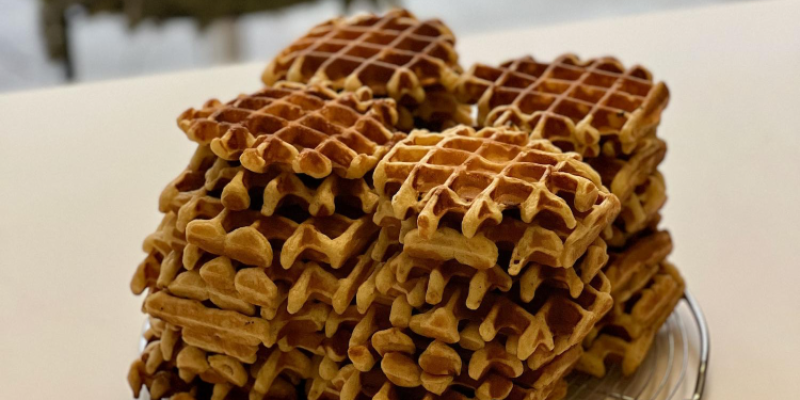
Street food occupies its own distinct category. The gaufre de Liège is a dense, yeasted waffle made with pearl sugar that caramelizes into the dough during baking; it is noticeably different from the thinner, lighter Brussels waffle found in international tourist shops. At street stalls, one costs around EUR 6.50. A barquette de frites (tray of Belgian fries) from a local friterie (dedicated fry shop) runs about EUR 6 and is the go-to quick eat in the city center and in late-night areas. A more seasonal find is the lacquemant: thin wheat wafers coated in a rock-candy syrup flavored with orange blossom, sold for around EUR 5 at the traditional Foire d'octobre (October fair). Outside that fairground season, they are hard to come by.
On the sweet side, café liégeois (a dessert of coffee ice cream and cream) and bouquètes (small buckwheat pancakes) round out the city's dessert identity alongside the waffle. For drinks, pèkèt is the emblematic local spirit: a juniper-forward liquor comparable in character to Belgian or Dutch jenever, drunk neat or in local cocktails, and particularly visible during the 15 August popular celebrations. Regional beers are equally central to bar and brasserie culture, with most tavern menus designed around pairing dishes with local brews rather than wine.
Join the Liège community
Get regular tips and advice to make the most of your expat life
Types of dining in Liège
Liège covers the full range of dining formats, from a EUR 6 cone of fries to a multi-course tasting menu. The Michelin Guide lists restaurants in the city across Belgian, classic French, country cooking, and seafood categories, confirming a genuine formal gastronomic base. For day-to-day dining, though, brasseries and bistronomy-style venues dominate: table service, printed menus, and hot food throughout the day. The Belgian brasserie is closer in practice to a French bistro than a pub; the taverne, a step more casual, is the format closest to a neighborhood bar-with-food.
The city's most dynamic everyday food destination is La Grand Poste Food Market (Quai sur Meuse 19), an indoor street-food market open at both lunch and dinner, with rotating counters offering international options. It works equally well for a solo lunch or a group dinner where different people want different things. International chains such as Burger King and McDonald's also operate in the city, complementing a local quick-eat culture built around friteries, waffles, and casual food-court formats.
Three outdoor markets are worth knowing about. The Marché de la Batte, held on the Meuse quays every Sunday from 08:00 to 14:30, is a near-five-century institution with around 200 stalls drawing tens of thousands of visitors each week; it functions as both a fresh-produce market and a general bazaar. The Court Circuit on Place Cathédrale (Thursdays, 12:00 to 18:00, April through October) brings roughly 20 producers from within 50 km of the city: seasonal vegetables, dairy, bread, meat, charcuterie, local spirits, sweets, and honey. Finally, the Marché Matinal de Liège at Droixhe is a wholesale fresh-produce market open to the public on Saturday mornings from 06:00 to 10:00, useful for bulk buying.
Where you eat in Liège tends to depend on what kind of meal you want. The area around Place Cathédrale and the streets immediately off it (Rue Saint-Paul, Rue Sœurs-de-Hasque, Rue Bonne Fortune) forms the city's central café and casual-restaurant cluster: practical for a meal during a shopping trip or a visit to the historic center, and home to the weekly Court Circuit local-producer market on Thursdays. The vibe is busy and accessible rather than destination dining.
A few streets away, Le Carré is Liège's festive and student-oriented nightlife district. Food here skews toward late-night and affordable: Belgian fries, burgers, hot sandwiches, and local sauces, served well into the night. Le Petit Carré, a friterie in the heart of the district, also does boulets for those who want something more substantial after a night out.
For a more eclectic mix of cuisines and a neighborhood feel, Outremeuse (particularly around Rue Roture) is the area to explore. The street runs through a district with a bohemian reputation: independent bars, concert venues, and restaurants covering North African, grill, Italian, and Thai cuisines. Named venues on the official Liège visitor portal include Café Brasil, Le P'tit Bougnat, KulturA, La Charbonnade, and Chez Yaya. It is a neighborhood where the dining tends to be genuine rather than polished.
The Rue Souverain-Pont and Hors-Château axis in the historic center is the city's clearest independent-restaurant row, with contemporary restaurants and bars within easy walking distance of one another. Addresses include L'Antidote (a bar-restaurant in a converted 1920s pharmacy), Barrio (sharing plates and cocktails), Fugazi (featured in Le Fooding), the Italian restaurant Danieli, and the romantic Le Thème. For indoor street-food and daily market dining, La Grand Poste on Quai sur Meuse houses rotating counters including an Italian pasta counter by Maccheroni Famiglia, open at lunch and dinner every day.
International cuisine in Liège
Italian cuisine has a particularly visible presence in Liège. L'Arborizo is a risotto-focused Italian concept in the city center; Danieli on Rue Hors-Château covers the trattoria end of the spectrum; and Ciao Ragazzi, an Italian mortadella bar listed by the official tourism portal, also runs a small grocery section stocking imported Italian charcuterie, cheeses, and pantry condiments. For Italian ingredients at home, Il Negozio and Capri & Co are both Italian fine-food shops serving the Liège area with imported products and prepared food.
The African dining scene, concentrated in the Longdoz quarter near Médiacité, is a part of Liège's food landscape that surprises many newcomers who expect only Belgian-French options. Tropical Food identifies as an African restaurant in the city, while Melting-Pot operates as an African restaurant in Longdoz itself, close to the district's transport connections. Lebanese cuisine is also represented: Lazeez, centrally located, covers both halal and vegan needs within the same menu. For Asian cooking with halal certification, Benzai Food fills a similar role.
Plant-based dining has a dedicated address in Ventre Content, a fully plant-based, organic, and local eatery running a changing seasonal menu. Como en Casa appears in the city's local food directory as vegetarian and vegan-friendly, and Cabale offers modern cooking with Georgian influence. For everyday international staples, the Delhaize Longdoz and Delhaize Shop & Go at Guillemins station cover a broad range of products; specialist or ethnic shops and online ordering fill the remaining gaps for more specific home-country ingredients.
Grocery shopping in Liège
The two main mid-range supermarket chains in Liège are Carrefour (available in both Carrefour Market and the smaller Carrefour Express convenience format) and Delhaize (including a full-sized store at Longdoz and the compact Shop & Go at Guillemins station). Both offer online ordering alongside in-store shopping. For budget-conscious grocery runs, Colruyt, Lidl, and Aldi offer the lowest prices in the city; Colruyt in particular operates a lowest-price guarantee across its range without requiring a loyalty card. A typical monthly grocery spend for one person in Liège runs roughly EUR 300 to EUR 400.
The two outdoor markets worth building a routine around are the Marché de la Batte and Court Circuit. The Batte, on the Meuse quays every Sunday from 08:00 to 14:30, covers fresh produce alongside clothing, antiques, and general goods; its scale (around 200 stalls) makes it the most practical outdoor source for weekly fruit and vegetables when used alongside a regular supermarket. Court Circuit, on Place Cathédrale every Thursday from 12:00 to 18:00 between April and October, is more tightly curated: roughly 20 producers from within 50 km of Liège, selling seasonal fruit and vegetables, dairy, bread, meat, charcuterie, local spirits, sweets, and honey. It is the main option for buying directly from Liège-province producers.
Online grocery delivery runs through two main channels. Carrefour Fast Delivery offers same-day grocery delivery in Liège via the Carrefour website or app, with a customer-selected time slot. Delhaize Delivery operates on a next-day basis with a EUR 60 minimum order. Both delivery apps from Takeaway.com and Deliveroo also list grocery and convenience ordering within their Liège pages for smaller top-up shops.
Good to know:
Belgian supermarket loyalty apps from both Carrefour and Delhaize function similarly to loyalty programs elsewhere and are worth downloading from your first week for regular discounts on branded products.
Eating out costs in Liège
A meal at an inexpensive restaurant in Liège costs around EUR 16 per person; a three-course mid-range dinner for two comes to roughly EUR 80. A fast-food combo runs around EUR 11.50. Street food benchmarks: a Liège waffle at a stall costs about EUR 6.50, a tray of Belgian fries around EUR 6, and a boulet à la liégeoise at a brasserie around EUR 19.50.
Liège is best understood as a mid-range city rather than uniformly cheap or expensive: both budget and fine-dining ends exist, but neither defines the everyday experience. Daily restaurant eating adds up quickly at these prices; pairing regular supermarket and market shopping with occasional restaurant meals is the practical approach for most expats on a standard budget.
Vegetarian options are genuinely easy to find in Liège. Multiple restaurants label vegetarian dishes clearly, several offer dedicated vegetarian menus, and Ventre Content provides a fully plant-based, organic seasonal menu as a reliable fallback. Como en Casa is listed explicitly as vegetarian and vegan-friendly in the city's local food directory, giving vegetarians two named dedicated addresses and numerous mixed-menu options.
Vegan dining is similarly accessible. Beyond Ventre Content (entirely plant-based), Holly's Kitchen on Rue Saint-Paul advertises vegan dishes, Lazeez (Lebanese, central Liège) includes vegan options on its menu, and Street Bao states its recipes are adapted to vegan diets. The city does not require dedicated searching for vegan food in the way that smaller Belgian cities might.
Halal food is available across several restaurant categories: African, Asian, and Lebanese. Holly's Kitchen, Benzai Food (an Asian restaurant with halal positioning), and Lazeez all advertise halal options. Formal halal certification is not consistently displayed across all venues, so confirming preparation practices directly with the restaurant is advisable if certification is a requirement rather than a preference.
Gluten-free coverage is more venue-specific. Il Valentino labels gluten-free dishes on its menu, and Ventre Content accommodates special requests. Checking menus in advance is worthwhile; city-wide gluten-free labeling is not standardized in the way vegetarian labeling often is.
When communicating dietary needs at restaurants in Liège, use French: «Je suis végétarien/végétarienne» (vegetarian), «Je ne mange aucun produit d'origine animale» (vegan), «Est-ce que c'est halal?» (halal), «Je dois manger sans gluten» (gluten-free), and «J'ai une allergie à...» (allergy to a specific item). For serious allergies, adding «C'est une allergie sévère; y a-t-il un risque de contamination croisée?» is worth doing, as allergen communication practices are not as standardized as in some other European countries. Some restaurants ask for dietary requirements at the time of reservation rather than on arrival.
Food delivery in Liège
Three major platforms cover Liège: Takeaway.com, Deliveroo, and Uber Eats. Takeaway.com is the market leader in Belgium and works the same way as major food delivery apps elsewhere. Deliveroo advertises 30-minute delivery in Liège. Coverage, fees, and restaurant availability vary by address, time of day, kitchen hours, and courier availability; when one app shows a restaurant as closed or unavailable, checking a second platform often opens up more options, particularly late at night or during bad weather.
Grocery delivery is also available through the delivery apps. Deliveroo and Takeaway.com both list grocery and convenience options within their Liège pages for smaller top-up purchases. For a full weekly grocery order, Carrefour Fast Delivery and Delhaize Delivery (covered in the grocery section above) are the more practical routes. Tipping for delivery in Liège is optional; card terminals on some apps prompt for a tip, but there is no social obligation to add one.
Reservations are recommended for popular and gastronomic restaurants in Liège, particularly on weekends. TheFork lists bookable time slots across a wide range of city restaurants. Higher-demand venues such as Toma Restaurant publish reservation-opening dates directly on their own sites. Some restaurants ask for dietary requirements at reservation rather than on arrival, so it is worth noting any needs when booking rather than waiting until you sit down.
Standard dinner service in Liège runs from roughly 19:30 through 21:00. Liège is not a late-dining city by southern European standards: kitchen closing times land typically around 22:00, even if bars and nightlife continue considerably later. For a meal after 22:00, checking a specific restaurant's kitchen hours in advance or switching to delivery apps while they still show restaurants as open is the practical approach.
Card payment is standard at Liège restaurants. Smaller cafés, bars, friteries, and market stalls may prefer Bancontact (the Belgian debit card system) or cash, so carrying a small amount of cash alongside your bank card is useful in casual or late-night settings. For groups dining at formal restaurants, some venues limit the number of separate card payments per table: one Liège restaurant specifies a maximum of six separate payments for a group booking. Larger parties should either designate a single payer or confirm the bill-splitting policy before ordering.
Tipping is optional in Liège. Service is included in Belgian restaurant prices, and most locals do not tip a fixed percentage. Rounding up or leaving a small extra amount for good table service is appreciated but carries no social pressure. Card terminals at some venues now prompt for a tip amount; the choice is entirely the diner's. Compared to countries where tipping at 15 to 20% is a social norm, Liège restaurants operate on a service-included basis where any addition is genuinely discretionary.
Dress code follows venue type: brasseries, bistronomy restaurants, and casual international spots are informal, while Michelin-listed and gastronomic tasting-menu restaurants call for smart-casual or smarter attire. When uncertain, a quick check of the restaurant's website or its Michelin Guide listing gives a reliable signal before you arrive.
Frequently asked questions
Liège is closely associated with a core set of Walloon specialties: boulets-frites (large meatballs in a sweet-sour sauce served with fries), the gaufre de Liège (a dense, pearl-sugar waffle), salade liégeoise (a warm salad of green beans, bacon, and potatoes), and fricassée liégeoise. On the drinks side, pèkèt, a local juniper spirit, and regional beers are central to bar and brasserie culture. For a first taste of the city's food identity, a Liège waffle from a street stall and a boulets-frites lunch at a traditional brasserie are the most direct starting points.
A café in Liège functions more like a social drinking venue than a coffee shop: beer, local spirits such as pèkèt, and conversation are the main draw rather than espresso. The city has a lively scene of terraces, microbreweries, cocktail bars, and student bars, particularly around central squares and in the Le Carré nightlife district. Coffee is available, but it is secondary to the drinking and social culture that defines the scene.
Most restaurants in Liège open for dinner around 19:30, with the main service running through to about 21:00. Kitchens typically close by 22:00, so Liège is not a late-dining city by southern European standards. If you plan to eat after 22:00, check the specific restaurant's kitchen hours in advance or use one of the city's meal-delivery platforms while restaurants are still active.
A meal at an inexpensive restaurant runs around EUR 16 per person, a three-course mid-range dinner for two costs around EUR 80, and a fast-food combo is around EUR 11.50. Street food options such as a Liège waffle (around EUR 6.50) or a tray of Belgian fries from a friterie (around EUR 6) keep casual eating-out affordable. For most expats on a standard budget, treating restaurants as a leisure option rather than a daily substitute for home cooking is the practical approach.
Card payment is standard at most Liège restaurants and on all major delivery platforms. Small cafés, bars, friteries, and market stalls may prefer Bancontact (the Belgian debit card network) or cash. Carrying both a bank card and a small amount of cash covers the full range of eating-out scenarios, especially at casual and late-night venues.
Tipping is optional in Liège: service is included in Belgian restaurant prices, and there is no social expectation to add a fixed percentage. Most locals round up or leave a small extra amount for good service, but this is entirely at the diner's discretion. Some card terminals now prompt for a tip amount; you can decline or enter whatever you choose.
Liège is covered by three major platforms: Deliveroo, Uber Eats, and Takeaway.com, which is the Belgian market leader. Deliveroo advertises 30-minute delivery within the city. Coverage, fees, and restaurant availability can vary by address and time of day, so checking more than one app during peak hours or bad weather is a practical habit. Grocery delivery is also available through Carrefour Fast Delivery, which offers same-day delivery via the Carrefour website or app.
Several things catch newcomers off guard: a café is primarily a beer-and-drinks venue rather than a coffee shop; kitchens close earlier than in many southern European countries, typically around 22:00; the Liège waffle and pèkèt are genuine everyday items, not tourist novelties; and restaurants may serve bottled water unless you ask for tap water. Tipping is also optional rather than expected, which differs from countries where a service tip is standard practice.
Mainstream restaurant dining in Liège works best between 19:00 and 21:00, with most kitchens closing by around 22:00. Bars and nightlife venues, particularly in the Le Carré district, continue well beyond that hour. For food after 22:00, the most reliable options are checking whether a specific restaurant lists late kitchen hours or using delivery platforms while restaurants still show as open.
ℹ️
We do our best to provide accurate and up to date information. However, if you have noticed any inaccuracies in this article, please let us know in the comments section below.
I fell in love with words at an early age After a break to focus on my studies, I rediscovered the joy of writing while keeping a blog during my years between London and Madrid. This passion for storytelling and for exploring new cultures naturally inspired me to create Expat.com, a space for my own reflections as well as for anyone wishing to share their experiences and journeys abroad.