What does settling into life in Liège actually look like? For much of what the city offers, very little. The Marché de la Batte draws up to 20,000 shoppers to the Meuse quays each Sunday morning at no charge; the calendar from spring through August runs on a dense sequence of free public events, from the Fête de la Musique across the city centre in June to the week-long Fêtes du 15 août street festivities in Outremeuse; and city museums open their doors without charge on the first Sunday of every month. Liège ranks third among Belgian cities by shopping visitor numbers, but what shapes resident life more than its retail offer is a calendar where the most embedded local events cost nothing to attend.
Free access is the practical foundation of Liège's museum life. City municipal museums open their permanent collections at no charge on the first Sunday of each month, giving residents a reliable, recurring entry point into the city's cultural offer. Comparable in principle to the permanent free-entry model of national museums elsewhere in Europe, the key difference here is that it applies to city museums on a specific day each month rather than every day. That distinction matters for planning: if you want to explore without spending, Sunday morning is the moment to go.
The three sites that anchor Liège's city-center heritage cluster are the Musée de la Vie wallonne, the Archéoforum de Liège, and the Palais des Princes-Évêques. Together they cover Walloon social history, underground Roman-era and medieval archaeology directly beneath Place Saint-Lambert, and the political legacy of one of the most powerful ecclesiastical territories in medieval Europe. All three are included in the free-access program of the annual Week-end des Coteaux, a spring heritage weekend typically held in April, when their permanent collections open without charge during normal hours alongside guided walks on the Coteaux de la Citadelle hillside above the city. Outside that event, major museum entry runs between EUR 7 and EUR 13.
The Grand Curtius stands apart as the most comprehensive single-site museum in Liège: five collections (fine arts, arms and armor, glass, archaeology, and religious art) housed in a single historic complex in the city center. It is the sort of venue that rewards a second or third visit over the course of a year rather than a single sweep through every gallery.
For fine art and contemporary exhibitions, La Boverie is the main address: a fine-arts museum and exhibition center set inside Parc de la Boverie on the Meuse riverbank, reached on foot from the city center via the Passerelle La Belle Liégeoise pedestrian bridge. Entry to the Aquarium-Muséum Universitaire de Liège, a university-run combined natural-history and living-aquarium venue, costs EUR 13 for adults; children under 6 enter free.
Once a year in May, the Nuit ardente des Musées, co-organized by the University of Liège, opens more than 19 institutions across the city from morning until 22:00, with special programming including torchlight visits, projections, concerts, escape games, and workshops. For newcomers, it is one of the most efficient ways to survey the city's full museum network in a single evening.
Students enrolled at Liège higher-education institutions have an additional access route through the PassArt scheme. Erasmus students and first-time enrollees, together with two close relatives, receive free cultural vouchers for partner venues across the city and province. It works more like a student discount card than a season pass: structured cultural access built into the first weeks of enrollment, rather than a long-term subscription.
Performing arts are centered on Théâtre de Liège, the city's main subsidized venue, with a program that includes the biennial Festival Pays de Danses (featuring companies from across Europe, Africa, Asia, and the Americas) and recurring contemporary theatre and dance seasons. Ticket prices range from EUR 10 to EUR 35. The Biennale de l'image possible (BIP) and the Festival de Liège, covering contemporary theatre, dance, and performance, round out the city's recurring arts calendar. Much of the visual and heritage offer requires no French: self-guided museum visits, art exhibitions, outdoor heritage walks, and concerts carry no language threshold, and the city's English tourism and museum pages are active. Liège Culture (liegeculture.be) is the main local platform aggregating concerts, exhibitions, cinema, and museum events across the city.
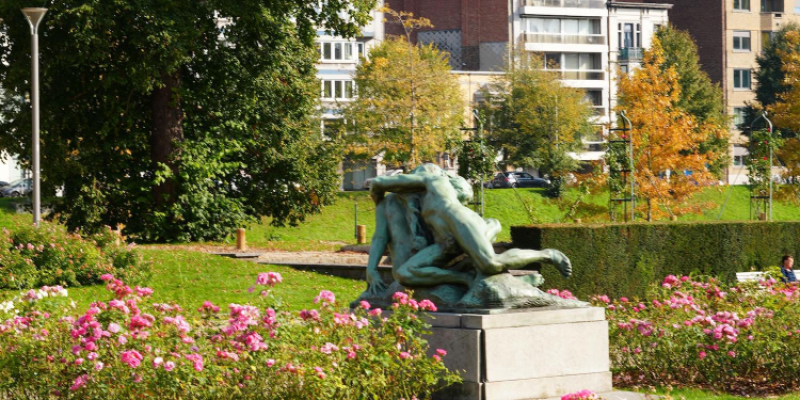
The Meuse riverside is where most of Liège's outdoor life is organized. The quays, Parc de la Boverie, and the connecting paths form a continuous walkable route linking the city's main tourist anchors, residential neighborhoods, and green spaces. Parc de la Boverie sits on the riverbank and is free: lawns, ponds, sculptures, and flower beds, with La Boverie museum at its center. A Meuse river shuttle connects city tourist highlights by water, providing an easy orientation trip for new arrivals and families; be aware that during summer heatwaves, the shuttle can be suspended temporarily due to river conditions.
The Coteaux de la Citadelle is the hillside area that rises directly above the city center, with walking paths, viewpoints, urban nature, and heritage sites. It is a practical half-day walk from the old town and forms the backdrop of the annual Week-end des Coteaux spring heritage event. The description "nature in the heart of Liège" is not marketing language: the trails are genuinely within walking distance of the central neighborhoods, and the views over the Meuse valley make it a natural first walk for anyone settling into the city.
Liège has an active leisure cycling and walking infrastructure built around the RAVeL (Réseau Autonome de Voies Lentes) network: Wallonia's system of signposted greenways on former railway lines and canal towpaths, open to cyclists, walkers, and inline skaters free of charge. The concept is similar to rail-trail networks in North America or dedicated cycling routes in northern Europe: multi-use, traffic-free, and well-maintained. The city signposts RAVeL access and routes for residents.
The Jardin Botanique de Liège (Les Serres du Jardin Botanique) is a botanical garden in the city center with greenhouses, mature trees, and guided activities. Entry to the gardens is free, and a program of plant events and visits runs from March through August each year.
Every August, the Festival de Promenade organizes guided nature and heritage walks in and around Liège, including the Grand Tour de Liège: a 50 km green loop around the city exploring the surrounding landscape and biotope diversity. It is a structured, low-pressure way to discover the territory beyond the city center while meeting other residents. In May, Les Épicuriales de Liège, a free outdoor gastronomic festival, takes over Parc de la Boverie for several days, making late spring one of the most sociable seasons in the park.
Water activities on the Meuse range from the casual river shuttle to more structured paddle sports. Liège Sport runs introductory sessions in kayak, white-water paddle, rafting, and stand-up paddleboarding in a natural river setting. Beyond the main axes, the city maintains 133 play and relaxation areas distributed across its residential districts: neighborhood outdoor spaces that serve as the everyday green infrastructure for families and residents away from the main parks.
Join the Liège community
Get regular tips and advice to make the most of your expat life
Shopping in Liège
Rue Vinâve d'Ile draws around 200,000 visitors per week, placing Liège third among Belgian cities by shopping visitor numbers. The broader city center holds more than 1,200 shops across over 150,000 square meters of retail space: a genuinely dense commercial district by any measure. For newcomers, the practical question is which area to use for which type of shopping.
The most distinctive weekly routine is Sunday morning at the Marché de la Batte: around 200 stalls along the Meuse quays, open from 08:00 to 14:30, selling fruit, vegetables, cheese, clothes, flowers, and secondhand books. Between 10,000 and 20,000 shoppers come each Sunday. It is a large general open-air market (think Borough Market in London in scale, but with a broader, less artisan product mix) rather than an exclusively producers' event; for that, the Court Circuit market on Place Cathédrale, running Thursdays from 12:00 to 18:00 between April and October, offers seasonal produce from around 20 local producers within 50 km of the city. Between the two markets, residents can cover most fresh-food needs without setting foot in a supermarket.
The historic city center combines shopping and sightseeing naturally. Passage Lemonnier, a covered historic gallery, and the streets around Féronstrée and Hors-Château are promoted as a walking-and-shopping zone where heritage architecture and retail overlap. Independent boutiques cluster further in toward the old town, around Saint-Paul, Grand Léopold, and Le Carré, where local fashion, slow-fashion labels, and designer pieces sit alongside the neighborhood's bars and cafés. The annual Fashion in Motion initiative places Liège designers and artists inside cultural venues, heritage spaces, and boutiques across those districts, making it a useful moment to discover the independent retail scene.
For covered mainstream shopping, Galeries St Lambert on Place Saint-Lambert (roughly 35 shops, tram stop at the door) is the most central option. Médiacité on Boulevard Raymond Poincaré (45,000 m²) and Shopping Belle-Île (more than 100 boutiques, 12 restaurants, free parking, 30,500 m²) offer a broader retail range slightly outside the pedestrian center. A large-format retail zone at Cora-Rocourt (75,000 m²) serves the wider Liège area from the Rocourt suburb north of the city.
Events and festivals in Liège
Liège's event calendar runs across all four seasons, with a notably dense concentration from April through August. Spring opens with the Week-end des Coteaux in April (free museum access at the Grand Curtius, Archéoforum, Musée de la Vie wallonne, and Palais des Princes-Évêques), followed quickly by the Liège-Bastogne-Liège cycling classic in late April: one of cycling's oldest Monument races, with its start and finish in Liège itself. In May, the Épicuriales de Liège brings a free outdoor gastronomy festival to Parc de la Boverie for several days, while the Summer Beer Lovers' Festival takes place in the same month.
June brings the Fête de la Musique à Liège, a completely free multi-venue music event spread across the city center and surrounding districts over several days around the summer solstice. For newcomers at any stage of integration, it is one of the most accessible social entry points the city calendar offers: no tickets, no reservation, no language barrier at live-music performances.
July and August are the peak season. The FADA Liège Streetfood Festival at Parc d'Avroy runs for several days in July. The Har'El Gospel Festival follows in late July or early August, framed as a broad, family-oriented multicultural event. The Fêtes du 15 août in the Outremeuse neighborhood span about a week centered on August 15: a free program of brocantes (flea markets), concerts, games, fairs, folkloric processions with giant figures, and evening street celebrations. These festivities carry the weight of a genuinely popular neighborhood institution, comparable in community ownership to a large-scale street party but rooted in local Liège tradition. The Liège Electronic Music Festival (LEMF) follows in late August, and the Festival de Promenade guided walks run through the full month of August.
Autumn marks the opening of the theatre and opera seasons: Théâtre de Liège and the Opéra Royal de Wallonie-Liège both open their programs from September. The Festival International du Rire de Liège (also known as Vous Rire à Liège) runs for about two weeks in October, covering comedy in the broadest sense.
Two recurring biennial events are worth tracking: the Festival Pays de Danses at Théâtre de Liège, which brings contemporary dance companies from across four continents, and the Biennale de l'image possible (BIP), a visual-arts and image biennial listed among the city's major cultural events.
To stay current with Liège's program, four platforms are useful: the official city agenda at liege.be/fr/evenements; the Visit Liège tourism agenda, where event organizers can submit listings for regional distribution; Liège Culture (liegeculture.be) for concerts, exhibitions, cinema, and cultural events; and Liège Center (liegecentre.be/evenements) for public-space and commercial-center programming. The Palais des Congrès de Liège calendar covers conventions, festivals, and large-format events.
Nightlife in Liège
Le Carré is the center of Liège's nightlife: a network of narrow historic pedestrian streets in the old town with the city's highest concentration of bars, terraces, cocktail bars, and microbreweries. It is busiest from Thursday to Saturday evenings and reaches its most festive pitch during the student celebrations of Saint-Nicolas (December 6) and Saint-Torè, the patron of the Outremeuse neighborhood. Events in Le Carré routinely continue past midnight. The district functions more like a UK university city's student quarter (narrow historic streets, dense bar provision, a mostly student crowd from Thursday to Saturday) than a purely commercial nightlife zone: it is also a heritage neighborhood with genuine architectural character beyond the drinking culture. The Visit Liège nightlife page lists current venues and events.
The Outremeuse neighborhood offers a different atmosphere, especially during the Fêtes du 15 août in August, when the streets host free concerts, processions, and evening festivities for over a week. For a calmer alternative to Le Carré outside the festival season, Moxo on Place Xavier Neujean is described by the tourism office as a more relaxed festive venue.
Live music and cultural nightlife extend well beyond Le Carré. Reflektor in central Liège runs an active concert program across genres. KulturA. (Rue Roture 13) is a cooperative alternative venue run by multiple collectives with a year-round events calendar. L'An Vert programs live music including jazz events linked to the Jazz04 network and the Conservatoire Royal de Liège. Flak Bar combines craft beer, music, and seasonal artist collaborations for an audiophile crowd. For late-night DJ events, Bota Club on Chaussée de Tongres typically starts from 23:00.
Summer adds outdoor cinema to the late-evening options: Cinéma Sauvenière runs outdoor screenings through the summer with tickets around EUR 8, while La Boverie's summer programming has included free outdoor events in recent seasons.
Family activities in Liège
The typical family outing in Liège combines a museum visit with time in a park or by the river; the city's family-oriented venues cluster tightly enough that a half-day can cover both. The practical starting point for most ages is the Aquarium-Muséum Universitaire de Liège: a university-run venue combining natural-history collections with a living aquarium. Children under 6 enter free; the 6- to 11-year-old group must be accompanied by someone at least 16. Each summer, the venue runs an aquatic-world discovery program for families and children from age 6, alongside a five-day science camp for ages 9 to 12 co-organized with the Maison de la Science (Quai Édouard Van Beneden 22). The Maison de la Science also runs a Totemus treasure hunt linking both venues, well suited to primary school-age children.
The Musée des Transports en commun de Wallonie (Rue Richard-Heintz 9) presents nearly 200 years of public transport through historic trams, buses, trolleybuses, a stagecoach, and a metro prototype. It is a genuinely child-friendly venue comparable to a regional transport heritage museum, with child ticket categories for ages 3 to 5 and 6 to 12, plus a family ticket covering up to 2 adults and 3 children. The museum operates from March through November and offers free admission on the first Sunday of the month during that season.
For younger children, the Musée de la Vie wallonne runs story sessions (contes) for ages 2.5 to 6 on Wednesdays in July and Sundays in August each year, alongside summer activity stages for ages 5 to 9. The museum also organizes joint history activities with the Archéoforum for school-age children. The Archéoforum de Liège, an underground archaeological site of 3,725 m² beneath Place Saint-Lambert, suits curious primary-school children particularly well: it offers birthday activities for ages 5 to 12, a themed activity called "Il était une fois un prince-évêque" for ages 5 to 6, and children's books and games in its shop. The underground setting makes it a strong rainy-day option for school-age children.
La Boverie and Parc de la Boverie work well as a combined outing: a museum visit followed by free time on the lawns, around the ponds, or along the riverside. La Ferme des Enfants de Liège adds farm-themed nature activities, stories, walks, and treasure hunts particularly suited to younger children through school and extracurricular programs.
For outdoor play, Parc Astrid (Quai de Wallonie 5) is the largest equipped family park in the city, with 10 play areas featuring slides, trampolines, towers, and a zipline, plus a 300-meter athletics track, pétanque courts, workout equipment, picnic areas, and 250 bicycle racks. The Aire de la Citadelle (Boulevard du 14ème de Ligne) provides a multisports area and separate play zones for ages 2 to 5 and 5 to 12. These are in addition to the 133 play and relaxation areas distributed across the city's residential districts.
During winter school breaks, multi-activity holiday programs for children aged 6 to 12 are available through organizations such as Solidaris, with themed formats covering a range of sports and creative activities.
Good to know:
For rainy days, the city's main indoor family venues sit within walking distance of each other: the Aquarium-Muséum and Maison de la Science for science and nature, the Musée des Transports for vehicles and technology, the Musée de la Vie wallonne for craft-based storytelling activities (especially for preschool ages), and the Archéoforum's underground setting, which works well in poor weather precisely because it is sheltered and visually dramatic for children.
Wellness and relaxation in Liège
The most accessible wellness spaces in Liège cost nothing. Parc de la Boverie (free riverside park with lawns and ponds), the Jardin Botanique de Liège (free botanical garden with mature greenhouses in the city center), and the Quai Édouard Van Beneden riverside area form the city's everyday relaxation infrastructure. The Quai Van Beneden also hosts outdoor wellness events in warmer months: yin yoga sessions by the water are among the options that appear in the summer program.
For paid options, yoga drop-in classes cost around EUR 15 per session. Studios with regular schedules include Massages Yoga Liège, Yogi Power Studio, and Samanas. The University of Liège's sport service also lists yoga among its organized activities for students, making it one of the lower-cost weekly options for those connected to the university.
DAO Liège is the city's main spa and wellness center, combining spa treatments with fitness and group classes. Spa sessions run from approximately EUR 45 to EUR 100, and hammam access starts at around EUR 50. It is one of the few single-venue options in the city where exercise and deep relaxation sit side by side. Liège does not have the dedicated thermal infrastructure of Belgian spa towns; the cities of Spa (roughly 40 km away) and Chaudfontaine (about 10 km) are the regional alternatives for a full thermal-spa day, both accessible by train or car.
Each September, the Retrouvailles leisure fair at Parc de la Boverie brings together sports clubs, leisure associations, and outdoor-activity providers in one place after the summer break. For newcomers arriving in late summer or early autumn, it is a practical moment to discover local wellness and active-leisure options without having to research individual clubs and studios from scratch.
Students and university-connected newcomers have the most structured social entry path into Liège. ULiège's International Welcome Days, held in early September each year, run over three days and include campus discovery, an intercultural seminar, and an Erasmus welcome event in the city center, followed by a Welcome Evening for incoming international students. The format gives newcomers an immediate peer group before the academic year begins. ESN ULiège (Erasmus Student Network) builds on that foundation throughout the year, organizing city tours, trips, parties, sports events, and cultural outings; it actively recruits new international members, including those not on a formal Erasmus exchange. For anyone who has participated in an ESN chapter elsewhere in Europe, the structure here is familiar.
New students who want to strengthen their French before the academic year can enroll in the ISLV preparatory French course, run by the Institut Supérieur des Langues Vivantes at ULiège. The course runs in late August and early September each year: 30 hours of daily classes at A1 and A2 level, a certificate of participation, a fee of EUR 120, and a mandatory placement test on the first day. It is open only to new ULiège enrollees, and attendance is compulsory.
For newcomers not connected to the university, the lowest-barrier social entry points are the city's large free public events. The Fête de la Musique in June (free concerts across the city), the Fêtes du 15 août in Outremeuse (free street festivities spanning over a week in August), and the Festival de Promenade guided walks in August all require no prior contact and carry no language or registration threshold. The September Retrouvailles leisure fair at Parc de la Boverie is another useful moment: it gathers sports clubs, hobby groups, and activity providers in one place, making it easy to find activity partners in a single afternoon.
For alternative and independent cultural life, KulturA. (Rue Roture 13) is a cooperative event venue run by multiple collectives with a year-round program of concerts, performances, and cultural events. It is a practical starting point for newcomers drawn to Liège's independent scene. Liège Pride ASBL organizes the annual Pride parade in late August, supported publicly by ULiège.
To find clubs, associations, and events beyond those listed here, four tools cover most of what is on: the ULiège student and international events feed (news.uliege.be) for university-linked programming; the Visit Liège agenda (visitezliege.be) for public and tourism events; Liège Culture (liegeculture.be) for concerts, exhibitions, and cinema; and Liège Center (liegecentre.be/evenements) for city-center public-space programming.
Liège has a compact, walkable leisure scene built around museums, riverside walks, markets, bars, and a year-round calendar of public events. Most residents combine regular museum free days on the first Sunday of each month, seasonal heritage weekends, outdoor festivals, and neighborhood street parties rather than relying on single attractions. The Maison du Tourisme du Pays de Liège at Quai de la Goffe 13 is open daily and provides event listings and visitor information in English.
Strong starting points include La Boverie (fine-arts museum set in a riverside park), the Grand Curtius (five museum collections under one historic roof), and the Musée de la Vie wallonne and Archéoforum for local history and archaeology. City municipal museums open free of charge on the first Sunday of each month, comparable to the free-entry model at major national museums in other countries, though here it applies specifically to Liège's city-run venues on that one day each month. Each May, the Nuit ardente des Musées opens more than 19 institutions until 22:00 with special programming, making it one of the most efficient ways for a newcomer to survey the city's entire museum network in a single evening. Major museum entry otherwise costs between EUR 7 and EUR 13.
The main outdoor options are the Meuse riverside (walks, the free Parc de la Boverie, and a river shuttle connecting tourist sites), the Coteaux de la Citadelle hillside (nature walks and city views), and the RAVeL network of signposted greenways on former rail lines and canal towpaths, open free of charge to cyclists, walkers, and skaters. Every August, the Festival de Promenade organizes guided nature and heritage walks in and around the city, including the Grand Tour de Liège, a 50 km loop. Water activities through Liège Sport range from the casual river shuttle to introductory kayak and stand-up paddle sessions on the Meuse.
For everyday shopping, the Marché de la Batte on Sunday mornings (08:00 to 14:30 on the Meuse quays, around 200 stalls selling food, flowers, books, and clothing) and the Court Circuit local-producer market on Thursday lunchtimes at Place Cathédrale are the most distinctive options. Rue Vinâve d'Ile is the flagship city-center shopping street, drawing around 200,000 visitors per week; the covered Passage Lemonnier and the streets around Féronstrée and Hors-Château combine heritage architecture with independent shops. For malls, Galeries St Lambert (Place Saint-Lambert) is the most central; Shopping Belle-Île offers more than 100 boutiques with free parking, and Médiacité provides a broader retail range slightly outside the pedestrian center.
Key recurring events span the full year: the Liège-Bastogne-Liège cycling classic and the Épicuriales outdoor gastronomic festival at Parc de la Boverie (both in spring, the Épicuriales free); the Fête de la Musique across the city center (June, free); the FADA streetfood festival at Parc d'Avroy (July); the Fêtes du 15 août in Outremeuse (August, free, running over more than 8 days with concerts, processions, flea markets, and family activities); the Liège Electronic Music Festival and the Festival de Promenade guided walks (both August); and the Vous Rire comedy festival (October). The Visit Liège agenda at visitezliege.be and the Liège Culture calendar at liegeculture.be are the two most complete resources for tracking current programming.
Le Carré, a network of narrow historic pedestrian streets in the city center, is Liège's main bar district: the highest concentration of bars, terraces, cocktail bars, and microbreweries in the city, busiest from Thursday to Saturday and during major student celebrations such as Saint-Nicolas in December. Beyond bar-hopping, live-music options include Reflektor (central Liège, active concert program), KulturA. (Rue Roture 13, cooperative alternative venue), L'An Vert (jazz and live music), and Flak Bar (craft beer and music). Late-night club events at Bota Club (Chaussée de Tongres 186) typically start from 23:00. Summer adds outdoor cinema screenings at around EUR 8 per ticket, and the Fêtes du 15 août in Outremeuse bring free open-air concerts and street celebrations across more than a week.
Good options by age group: for ages 2.5 to 6, story sessions at the Musée de la Vie wallonne run on Wednesdays in July and Sundays in August; for ages 5 to 12, the Archéoforum underground archaeological site offers birthday activities and themed games; for school-age children, the Aquarium-Muséum Universitaire and the Maison de la Science both run hands-on summer programs. The Musée des Transports en commun de Wallonie (open March to November) has a family ticket and free admission on the first Sunday of each month; children under 6 enter the Aquarium-Muséum free. Parc Astrid is the city's largest equipped family park, with 10 play areas including slides, a zipline, pétanque, and a 300-meter athletics track.
The most accessible free relaxation spaces are Parc de la Boverie (lawns, ponds, and riverside walks), the Jardin Botanique in the city center, and the Quai Édouard Van Beneden riverside area, where outdoor yoga sessions are held in warmer months. For paid options, yoga drop-in classes cost around EUR 15 at studios including Massages Yoga Liège, Yogi Power Studio, and Samanas. The DAO Liège center offers spa sessions from approximately EUR 45 to EUR 100 and hammam access from around EUR 50. For a full thermal-spa day, the cities of Spa and Chaudfontaine are under 45 minutes away by road.
The lowest-barrier entry points are free public events: the Fête de la Musique in June, the Fêtes du 15 août in Outremeuse in August, and the Festival de Promenade guided walks in August all require no prior contact or language threshold to enjoy. Students and university-connected newcomers have a structured path through ESN ULiège, which organizes social, cultural, and sports events throughout the year and actively recruits new international members; ULiège also runs International Welcome Days in early September each year. The Retrouvailles leisure-association fair at Parc de la Boverie in September brings sports clubs and hobby groups together in one place, making it a practical moment to find activity partners after the summer break.
Free options include walking the historic center, the Coteaux de la Citadelle hillside, and the Meuse riverside; visiting Parc de la Boverie and the Jardin Botanique; and attending city museum free days on the first Sunday of each month. Major free events include the Fête de la Musique in June, the Épicuriales gastronomic festival at Parc de la Boverie in May, and the Fêtes du 15 août in Outremeuse in August. The Week-end des Coteaux each spring gives free access to permanent collections at the Archéoforum, Grand Curtius, Musée de la Vie wallonne, and Palais des Princes-Évêques during normal museum hours.
ℹ️
We do our best to provide accurate and up to date information. However, if you have noticed any inaccuracies in this article, please let us know in the comments section below.
I fell in love with words at an early age After a break to focus on my studies, I rediscovered the joy of writing while keeping a blog during my years between London and Madrid. This passion for storytelling and for exploring new cultures naturally inspired me to create Expat.com, a space for my own reflections as well as for anyone wishing to share their experiences and journeys abroad.