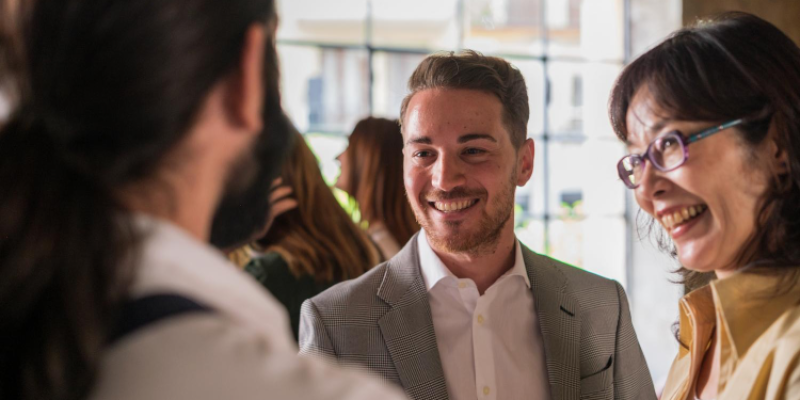
In your first week in Liège, you notice that French is the working language everywhere: on event flyers, in the coworking space at La Grand Poste, and at the chamber afterwork you decided to attend. Building a professional and social network here works differently than cold LinkedIn outreach: relationships develop through repeated attendance at the same events, the same conversation tables, and the same startup meetups rather than through a single well-timed introduction. Liège has fewer explicitly expat-facing structures than larger Belgian cities, which means identifying the right recurring formats early, whether a monthly chamber event, a language table, or a university welcome activity, makes a real difference in how quickly you settle in.
Two distinct rhythms shape how professionals and newcomers build contacts in Liège: structured sector events run through chambers, business clubs, and associations, and social integration through consistent attendance at cultural activities, language tables, volunteering, and neighborhood gatherings. Cold outreach alone rarely opens doors; showing up repeatedly at the same recurring format is a more reliable path to real connections.
Professional events in Liège run on a semi-formal register: a planned agenda, a room with name badges, and scheduled speakers at chamber afterworks or sector days; relaxed, unscripted conversation at startup meetups, cultural evenings, or university welcome activities. Expecting the same transactional pace at every event will lead to frustration. Lead with what you do and what you're working on; the follow-up invitation tends to come after a second or third encounter, not the first.
French is the default language for civic, association, and cultural life in Liège. English surfaces at ULiège international-student events, tech startup meetups, and some health-innovation gatherings, making those formats the most accessible entry points for newcomers before moving into French-language professional and civic circles. Arriving without any French and expecting an entirely English-language social life is the most commonly reported difficulty among foreign residents settling in the city.
Trust builds through repeated contact rather than a single impressive introduction. Newcomers who attend the same conversation table, startup session, or cultural program several times earn a natural reason to continue exchanges. Once contact is established, keep follow-up light: a message proposing a coffee or suggesting attending the next event together lands better than a formal pitch within 24 hours of meeting someone.
Active professional networking in Liège clusters around startups and innovation, digital and AI, health and biotech, industrial technology, logistics, the creative industries, tourism, insurance, and SME services. The entry point for most sectors is the AKT-CCI Liège-Verviers-Namur, the main regional chamber of commerce covering companies and entrepreneurs across the Liège, Verviers, and Namur area. It organizes business networking events, runs a member app for regional economic news, and supports business matchmaking, with no nationality restriction on membership. Its regular afterwork format, Tchin For Links, is a convivial business gathering open to the chamber's business community; check the chamber's agenda for upcoming editions.
For startups and tech, Tech Thursdays Liège is the most accessible monthly entry point: a full-day format at La Grand Poste combining coworking, founder exchanges, a morning breakfast, an expert workshop, and an end-of-day happy hour. La Grand Poste, the city's main creative and entrepreneurial venue on Quai Sur-Meuse, hosts most major tech and innovation networking events in Liège and maintains an active community calendar worth following. Tickets for Tech Thursdays are bookable through PassPass. Health-innovation professionals should also look at Hacking Health Liège, organized with Bridge 2 Health, CHU de Liège, and ULiège RISE, which brings together healthcare professionals, innovators, and entrepreneurs; a spring edition is held annually, also at La Grand Poste.
Several sector-specific structures run their own networking programs. Essenscia, the Belgian chemistry and life sciences federation, organizes the Biotech Entrepreneurs' Dialogue, a targeted gathering for biotech founders, experts, and institutional representatives held each spring in Liège. The Salon AMBITION INDUSTRY, a biennial professional trade fair at Liège Expo, covers industry, defense, aeronautics, and space; Liège Expo hosts other sector trade fairs throughout the year, and its full calendar is worth checking for your field. For the digital and AI space, IA Days, organized by Agence du Numérique at the Liège Creative District, is an annual multi-day event covering artificial intelligence and digital skills, typically held in early November across La Grand Poste and partner venues; the program is published on DigitalWallonia.be.
University-linked events offer a different kind of access. The Founder Link, hosted at HEC Liège with projects selected by ULiège RISE, connects founders and researchers in a commercialization-focused format and is typically held in early autumn. StartUp.Wallonia, located on Avenue Maurice Destenay in Liège, is the official Walloon startup platform connecting innovative companies with partners, financing, and international opportunities; it is the ecosystem-level entry point for any founder looking to plug into the broader Liège and Wallonia innovation network. The Liège Science Park, linked to the University of Liège, also functions as an informal networking venue: its annual Jogging Entreprises-ULiège event draws business and university participants and doubles as a relaxed professional meeting opportunity.
Sector professionals outside tech and biotech have dedicated organizations to tap into. The Cercle Liégeois des Assureurs (CLA) runs networking lunches and assemblies for insurance professionals. Skål International de Liège, part of the worldwide travel and tourism professional network, organizes business meetings and site-discovery activities for professionals in that sector. Pôle MecaTech, the Wallonia cluster for mechanical engineering, industrial innovation, cybersecurity, and manufacturing technology, runs sector events and calls throughout the year. Entry costs vary by format; some business networking evenings in Liège are priced as low as EUR 9, making them accessible even if you're testing the waters in a new sector.
To discover upcoming events, the most practical platforms are: the AKT-CCI LVN agenda, La Grand Poste's community pages, PassPass for startup and tech events, the ULiège news and events pages for research and university-linked activities, DigitalWallonia.be for AI and digital programs, Liège Expo for trade fairs, and Eventbrite Liège's business listings as a supplementary discovery channel. Professional events in Liège are generally open by role or sector with no nationality restriction; French is the working language in most settings, but having a short French self-introduction prepared reduces friction at any event where English is not the default.
Join the Liège community
Get regular tips and advice to make the most of your expat life
Expat networking in Liège
The most structured and reliably active international network in Liège is built around ULiège and its student programs. The ULiège Buddy Program matches arriving international exchange students with local sponsors, providing a ready-made social anchor from the first days in the city. ESN ULiège (Erasmus Student Network) organizes activities and events to help Erasmus and international students discover Liège and connect with each other; the network actively recruits new members each year and is the most English-friendly structured social entry point for younger international newcomers.
Beyond student channels, CRIPEL (Centre Régional d'Intégration) is the official regional integration center for foreign nationals and people of foreign origin in the Liège area. It organizes intercultural access programs and information sessions, including activities at Maison des Sports de Liège, and is open to all nationalities regardless of migration status. CRIPEL is one of the most reliable first-stop institutions for any newcomer building a foothold in the city's social fabric. CAP Migrants ASBL (Rue de Férinne 98, 4020 Liège) supports recently arrived migrants in building social and professional integration projects, making it a practical resource for newcomers who have recently obtained residence status and want structured social anchoring.
The Service Social des Étrangers ASBL offers French as a Foreign Language groups designed to favor interaction, collaboration, and secure group participation, running from September to December each year. These formats function as social as well as language spaces: the small-group format creates natural ongoing contact with other foreign residents in a structured setting.
For newcomers who want to practice French while meeting people, Laïcité Province de Liège runs a French conversation table specifically for non-francophones, held throughout the academic year; Centre Liégeois de Formation offers French as a foreign language courses running from late August to mid-December; and ILM Liège offers evening language courses including level-validation sessions each autumn. These programs double as social entry points: the recurring weekly format creates the kind of repeated contact that turns acquaintances into genuine connections.
On social media, the Liège Expats Facebook group is cited by multiple foreign residents as a practical place to introduce yourself and find social contacts. Check current activity inside Facebook directly before relying on it for event dates, as group activity can fluctuate. The r/Liège subreddit is a bilingual community covering practical questions from newcomers and is active enough to be a useful sounding board for anything from accommodation to finding English-speaking contacts. The risk of staying entirely within international circles is real in Liège: integrating into the city's professional and civic life requires attending French-language settings alongside any expat or student networks you join.
Social clubs and groups in Liège
Friendships in Liège form more reliably through repeated structured activities than through one-off events. The city's social life is strongly local and French-speaking; newcomers who start with international student networks or language-based formats before gradually moving into local clubs and cultural associations tend to build connections faster than those who attempt to enter local circles cold.
The Liège Sport "Trouvez un club" directory lists sports clubs across the city by category, including indoor soccer, rugby, table tennis, and orienteering. It is the practical first step for any newcomer wanting to join a local club rather than a private gym. A lower-barrier option for those who want exercise and social contact simultaneously is Je Cours Pour Ma Forme, a supervised group running program organized by Liège Sport with the city's proximity service, open to all ages and fitness levels. RFC Liège Rugby publishes membership information each season; prospective members submit documents to the club secretariat in Grivegnée, and city sport vouchers can help eligible members with fees. The ULiège Sports service uses an online registration system for seasonal courses, and its Tennis Club Université actively encourages interclub participation as a way to meet other players at the Sart-Tilman sports center. The CSLI Angleur-Grivegnée directory lists municipal club options including a volleyball club, roller derby, and a local tennis club, covering the southeastern neighborhoods of the city.
For cultural and creative activities, Culture Liège ASBL runs weekly artistic technique workshops on Wednesday afternoons at the Galerie Opéra on Place de la République Française, with sessions priced at EUR 15 each. The La Boca tango club maintains a regular events calendar of social dance evenings; because partners rotate during milongas, these evenings offer easy, low-pressure introductions without needing a pre-existing social network. WalClub organizes small-group paid leisure activities in Liège, including guided walks of the city; activities built around a shared object such as a neighborhood tour create natural conversation for newcomers who find cold introductions difficult, and group sizes are kept small (typically a maximum of 15 participants, with advance reservation).
The City of Liège's Cafés Papote are informal neighborhood conversation moments organized around a snack, designed as low-pressure spaces where residents talk without a formal agenda. They are particularly useful for newcomers who want local, non-commercial social contact outside a structured club environment. ULiège ISLV offers once-a-week evening language classes in Arabic, Chinese, Dutch, English, German, Italian, Portuguese, Russian, and Spanish, using oral exercises, games, roleplay, and small-group conversation; registration opens each year in late summer. The social format of these classes, with regular small-group interaction, makes them a genuine community as well as a language course.
To track what is on across the city, Liège Culture lists events across Théâtre de Liège, Les Chiroux, Centre culturel de Chênée, and Galerie Opéra, and the City of Liège events page covers recurring public festivals, guided city visits, and major seasonal programming.
Online networking in Liège
LinkedIn is the primary professional networking platform in Liège, used by business clubs, integration organizations, and event organizers alike to promote activities and connect with members. Bocholtz Liège Leaders Club, a local executive and leadership networking circle, announces its events and afterworks through LinkedIn, including sessions in collaboration with Silversquare Guillemins. Rendez-vous Mensuel is a monthly networking format for entrepreneurs, association leaders, students, and diaspora professionals, with events at Espace Partagé on Rue de Fragnée in Liège; it is bookable and discoverable entirely through LinkedIn. B19 Liège, a structured business club with a recurring speaker program and membership process for executives and entrepreneurs, also uses LinkedIn as its primary public-facing channel; prospective members can initiate contact by LinkedIn message, WhatsApp, or email.
WhatsApp is the dominant channel for direct professional contact once an initial introduction has been made. B19 Liège explicitly lists it alongside LinkedIn and email as a contact method for prospective members, which reflects a broader pattern: a LinkedIn connection gets the relationship started, and WhatsApp carries the informal back-and-forth from there. After exchanging contacts at an event, a WhatsApp message proposing a next step is the accepted norm in most Liège professional circles.
For social and expat networking, Facebook remains relevant. The Liège Expats group is cited by multiple foreign residents in the city as a practical community for introductions and social contacts; verify current activity inside Facebook before relying on it for event dates, as group energy fluctuates over time. The r/Liège subreddit covers both practical questions and social introductions in a bilingual format, and is a useful channel for newcomers who have not yet built a local network.
The general dynamic across all these platforms is the same: discover online, convert offline. B19, Bocholtz, Rendez-vous Mensuel, and CRIPEL all use their online presence to drive attendance at in-person events and information sessions, not to replace them. Moving from an online introduction to a face-to-face encounter, whether a chamber afterwork, a startup session, or a café meeting, is what actually builds a sustainable network in Liège. French dominates official and institutional online communication, but English-language channels including Reddit and international student pages are active enough to serve as a genuine first layer before transitioning to French-language professional networks.
Open every encounter in French whenever possible. A simple "Bonjour, je m'appelle..." is the expected register in Liège's public, university, and cultural settings. You do not need perfect French to make a good impression: prepare a short self-introduction, your reason for being in Liège, and two or three questions in French. Switch to English only after confirming the other person is comfortable with it. Professionals accustomed to speed-networking formats where English is the default should adjust expectations: most Liège professional events, even in tech and innovation, run primarily in French, and treating the first conversation as purely transactional will cut it short before it has a chance to develop.
Build your circle through repeated attendance rather than cold outreach. Choose one professional recurring format, such as an AKT-CCI afterwork, a monthly startup meetup, or a sector event, and one social format, such as a language table, a sports club, or a cultural workshop. Attend several times. By your third visit to the same event, you are no longer a stranger, and referrals or collaboration invitations follow naturally from that familiarity rather than from a well-crafted LinkedIn message sent cold.
After meeting someone at an event, follow up within a few days: a short message in the language you used together, naming the event and one specific point from the conversation. Propose a low-pressure next step, whether a coffee near the city center, attending the next edition of the same event together, or sharing a contact. Avoid sending a generic résumé or sales deck unless it was explicitly requested; a first follow-up that references something personal about the conversation lands considerably better than a formatted pitch.
A common mistake is meeting only fellow newcomers and never entering French-speaking local spaces. Students at ULiège or HEC Liège should use university welcome activities as a foundation but add city events, neighborhood gatherings, and cultural programs to their weekly routine. Professionals and digital nomads working remotely should supplement their schedules with local afterworks, startup sessions, or cultural evenings rather than relying entirely on international online communities, which are more comfortable but less useful for building a network that functions within the city.
For scheduled professional events, workshops, university welcome sessions, and ticketed recruitment afterworks, treat the stated start time as real: arrive on time or slightly before. Talks and guided sessions start when announced. For a one-to-one coffee, send a message ahead if you will be late rather than arriving without notice. The punctuality expectation at structured professional formats in Liège is consistent, and arriving late to an event with a registration desk puts you outside the natural opening-conversation window.
Finally, do not rely on LinkedIn cold outreach alone. LinkedIn works well in Liège as a follow-up tool after an in-person meeting, a way to send a brief note referencing where you met and what was discussed. It is a weaker tool as a first-contact channel: Liège-based professionals tend to respond to contacts made face-to-face at events, chambers, or coworking spaces rather than to unsolicited connection requests. Connect on LinkedIn the same day you meet someone, then propose a concrete next step; that sequence is what makes the platform genuinely useful here.
Frequently asked questions
Networking in Liège runs on two tracks: structured professional events through chambers and sector associations, and social integration through repeated attendance at cultural activities, language tables, and neighborhood events. Trust builds through repeated contact rather than a single introduction, so showing up consistently at the same recurring format matters more than a one-off cold outreach. French is the default language in most local settings; English is accessible at university-linked events and some startup or innovation gatherings. Expect relationships to develop over several encounters rather than a single meeting.
Start with AKT-CCI Liège-Verviers-Namur events and afterworks, then add sector-specific events at Liège Expo, La Grand Poste, and BluePoint Liège. For tech and startups, Tech Thursdays is a monthly entry point held at La Grand Poste, combining coworking, expert workshops, and a happy hour. For students and researchers, ULiège Welcome Days and HEC Liège events are the fastest structured routes. Coworking spaces near Guillemins that host regular events also accelerate introductions to the local professional scene.
Warm introductions help, especially in business and freelance circles. The most practical approach is to attend recurring formats first, such as a chamber afterwork, a startup meetup, or a sector event, and ask for a follow-up or referral only after a short in-person conversation. Liège professional events emphasize conviviality and quality of connection, so leading with an immediate business pitch tends to land poorly. Building rapport across a few encounters before making a direct ask is a more reliable approach.
Yes: B19 Liège, Bocholtz Liège Leaders Club, and CRIPEL all actively use LinkedIn to promote events and connect with members. LinkedIn works best as a follow-up tool after an in-person meeting; the standard pattern is to connect on the same day you meet someone, then propose a coffee or a concrete next step. Cold LinkedIn outreach alone is less effective than attending events first, since local professionals respond better to contacts made face-to-face.
The most structured active community is the international student network through ULiège, ESN ULiège, and the ULiège Buddy Program, which matches arriving exchange students with local sponsors. The Liège Expats Facebook group is frequently cited by newcomers as a practical social group for international residents, though activity should be checked directly inside Facebook before relying on it for event dates. For broader newcomer integration regardless of nationality, CRIPEL and CAP Migrants ASBL are official and reliable starting points.
Making friends is easier through repeated structured activities than through one-off events. Language tables, cultural programming, sports clubs, and university welcome activities create natural recurring contact that converts acquaintances into friendships over time. Liège's social life is strongly local and French-speaking, so even basic conversational French opens doors that English-only circles cannot. Expect gradual integration through consistency rather than immediate social invitations.
French is the default for local professional and social networking: in chambers, associations, cultural settings, and everyday civic life. English is accessible at ULiège international-student events and some startup or innovation events, but it is not sufficient outside explicitly international settings. Preparing at minimum a short French self-introduction, a brief explanation of why you are in Liège, and a few questions in French is the practical minimum for navigating most Liège networking contexts.
The main mistakes are treating events as pure sales opportunities, staying only inside student or expat circles, and skipping French-language settings. Failing to follow up after a first meeting is also common and wastes the effort of showing up. Professionals accustomed to transactional speed-networking should adjust expectations: Liège professional culture values conviviality and repeated contact over immediate business propositions. Attend events, introduce yourself briefly, ask about the other person's work, and follow up within a few days with a specific but low-pressure message.
A short email or LinkedIn message is the safest follow-up, written in French unless the conversation clearly happened in English. Reference where you met, keep the message specific to something from the conversation, and propose one concrete next step such as a coffee or attending the next event together. WhatsApp is widely used for direct contact once an initial connection has been made; at least one major Liège business club explicitly lists it alongside LinkedIn and email as a preferred contact channel.
Yes, provided you choose spaces that host events and build a community rather than functioning purely as desk rental. La Grand Poste, centrally located and event-heavy with a startup community, and Spaces Liège Guillemins, near the main train station, are the most event-oriented options. Day passes run from EUR 29 to EUR 45 (excl. VAT), and monthly hot desks start at EUR 300. Returning regularly and attending hosted events, rather than simply booking a desk, is what makes coworking a genuine networking tool in Liège.
ℹ️
We do our best to provide accurate and up to date information. However, if you have noticed any inaccuracies in this article, please let us know in the comments section below.
I fell in love with words at an early age After a break to focus on my studies, I rediscovered the joy of writing while keeping a blog during my years between London and Madrid. This passion for storytelling and for exploring new cultures naturally inspired me to create Expat.com, a space for my own reflections as well as for anyone wishing to share their experiences and journeys abroad.