Europe's second-largest port makes Antwerp one of the most commercially connected cities on the continent, and that shapes how professional networking works here: sector-specific, organized, and built around five dominant industries running from logistics and maritime trade to diamonds, technology, and construction. For newcomers, the practical challenge is less about finding events than knowing which register to enter. English is the working language at international and startup events; Dutch dominates the local entrepreneur infrastructure, from the chamber of commerce to most sector associations. Across both registers, the pattern that consistently produces results is not the strength of a first impression but the frequency of return: Antwerp networking is a slow build, not a sprint.
Two distinct modes of networking coexist in Antwerp, and understanding the difference between them saves a lot of wasted effort. The first is purpose-built: structured professional networking events organized around specific sectors, startup themes, or business development. The second is lower-threshold: weekly drinks nights, language exchange meetups, and activity-based groups where building a first social circle happens more naturally. Knowing which mode you need on any given week is half the battle.
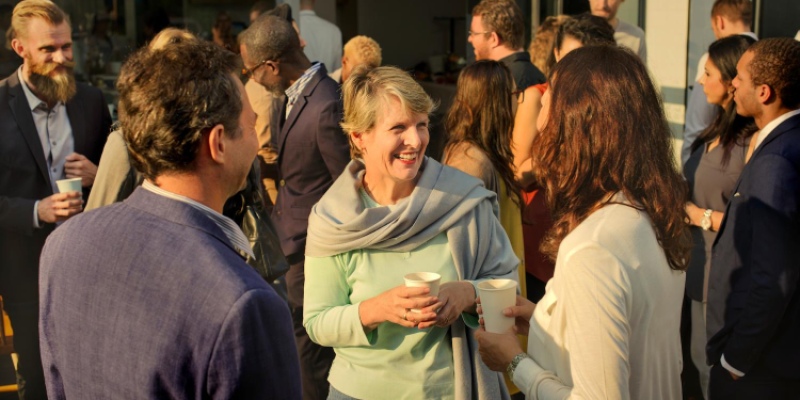
The tone at most Antwerp networking events leans semi-formal. Professional events have a clear topic or sector framing, but many are deliberately built around drinks and direct mingling rather than staged presentations. At these open formats, you can approach other attendees without waiting for a formal introduction. Many international and expat-facing events in Antwerp are explicitly designed for inclusion: no rigid structure, no language-barrier assumptions, and a welcome extended equally to newcomers, locals, and travelers alike.
That openness has a limit worth knowing. Antwerp's conversational register places a genuine premium on full turns: letting someone finish speaking before you respond is not a sign of stiffness but simply the standard professional courtesy. Conversations that feel deliberately paced are not cold; they reflect a culture where careful listening is considered as important as what you say. Stepping into that rhythm rather than fighting it produces better first impressions and warmer follow-ups.
The language of networking splits clearly by setting. English is the working language at international, expat-facing, university-linked, and startup events. The local entrepreneur infrastructure, including city business pages, the chamber of commerce, and most sector associations, operates primarily in Dutch. Building even basic Dutch confidence gives a practical edge for anyone who wants access to Antwerp's established professional circles rather than just its international layer.
Follow-up norms are relaxed and relationship-driven. Events typically center on drinks and conversation rather than formal pitches, and the most effective follow-up is simply reconnecting soon after the event through whatever channel the group uses: a WhatsApp group, a Meetup page, or a brief LinkedIn message that recalls the specific conversation. One good conversation is rarely enough on its own; many Antwerp residents already have full social schedules, and sustained presence in the same recurring formats is more effective than a single strong introduction.
Antwerp's professional networking landscape is shaped by five dominant sectors: port, logistics, and maritime trade; the diamond trade; technology, ICT, and cybersecurity; startups and entrepreneurship; and construction, retail, and professional services. Knowing which sector aligns with your profile lets you skip the generalist events and go straight to the communities where your contacts will actually be.
The City of Antwerp's sector network directory is the most comprehensive free starting point for identifying which professional bodies are active in your field. It lists associations covering construction (Embuild), retail (Retail Forum Belgium), and innovation hubs alongside more specialized bodies, and it covers far more ground than any individual chamber or event platform. The complementary business network pages on the same city portal add context on which programs and organizations are currently active for entrepreneurs in the region.
The Voka Kamer van Koophandel Antwerpen-Waasland is the regional chamber of commerce, representing over 3,000 companies and running more than 250 events per year. It is open to companies and entrepreneurs active in the Antwerp-Waasland business community regardless of nationality, and its international-facing communication is available in English, French, and Spanish, making it one of the most accessible entry points for newly arrived professionals. The Antwerp World Diamond Center (AWDC) serves a more specialized function as the official representative body of Antwerp's diamond community, organizing B2B initiatives for professionals in the rough and polished diamond trade; it is the primary door for networking in that sector.
For founders and early-stage entrepreneurs, Start-up Antwerp connects startups, starter initiatives, and established companies across the region with the explicit aim of building Antwerp's startup scene. It is the first place to check for founder-focused events and ecosystem contacts. The Bryo StartUp Antwerpen-Waasland program, organized by Voka with VLAIO support, offers a more structured route: a one-year trajectory for early-stage founders that combines ten group sessions, individual coaching, three additional networking events, and access to the full Voka network alongside a cohort of fifteen fellow starters, held at Voka's Antwerp offices at Markgravestraat 12.
Informal formats run alongside these structured programs. Open Coffee Antwerpen-Noord, organized by Abeka, is a recurring entrepreneur networking breakfast at Godefriduskaai 50 in Antwerp-Noord. The format is low-threshold by design: coffee, conversation, and experience exchange for entrepreneurs at any stage, with no presentations or prepared pitches. Den Aftrap, organized by UNIZO Provincie Antwerpen, is an annual after-summer kick-off networking event for entrepreneurs and SME owners across the province, providing a large-scale gathering point at the start of the professional autumn season.
For professionals in the industrial or manufacturing sectors, Solids Antwerp at Antwerp Expo features a Start-Up Zone designed for trade visitors to meet young, innovative companies in industrial processing and solids handling, combining B2B visibility with sector-specific networking. Port and maritime professionals can find peer-level connections through specialist programs such as the Global Ports Management Executive Program, which brings international port-sector managers to Antwerp for intensive sessions that pair expert content with structured peer networking.
For event discovery beyond these specific organizations, the Antwerp Business Communityon Meetup lists a professional networking community focused on business experience, knowledge, and self-improvement events, providing a useful supplement to formal chamber and sector events for professionals who want more frequent, informal formats.
Join the Antwerp community
Get regular tips and advice to make the most of your expat life
Expat networking in Antwerp
The most accessible open international community in Antwerp is Antwerp Outlanders, which runs weekly free social meetups at rotating venues and occasional paid professional networking events specifically for entrepreneurs, freelancers, and career-focused professionals. Its events are explicitly designed for expats, internationals, travelers, and locals together, with no prior connections required. For English-language social and business networking,Social & Business Maven on Meetup combines new-in-town social activities with business themes, including startup, referral, and business development events; the group also maintains a WhatsApp channel to coordinate meetups.
The community in Antwerp extends well beyond English-speaking circles. The Asociación Belgo-Ibero-Americanais a cultural association dedicated to fostering ties between Belgium and Iberian and Ibero-American countries, and it runs Spanish-language cultural conferences and community events in Antwerp. For professionals arriving via their company or independently, the chamber of commerce also functions as an expat-accessible networking institution: multilingual communication in English, French, and Spanish, combined with 250-plus events per year, makes it a practical option regardless of sector.
For newcomers who need more than a social entry point, Atlas is Antwerp's municipal integration service and the official first stop for non-EU newcomers. It offers a civic integration program covering life in Belgium, basic Dutch, and VDAB employment counseling, alongside individual counseling delivered in a language the newcomer understands. Its participation program and the ikdoemee.be platform direct newcomers to social activities matched to their interests, which can serve as a practical way to meet people through structured community involvement. The AMIE project, targeting vulnerable non-EU adults with legal residence in Antwerp and running with AMIF support, offers individual guidance, group activities, and Dutch practice opportunities, including a biweekly conversation table using accessible-language newspaper articles.
Dutch language practice is one of the most underused social routes available to expats in Antwerp. Bib Vredein Borgerhout runs free Dutch conversation tables every Wednesday from 10:00 to 12:00 outside school holidays, open from language level A2 with no registration required. Linguapolis at the University of Antwerp offers structured online conversation practice in Dutch (at A2-B1 and B1-C1 levels), English, and French in evening slots and is open to the public, not only university students. Both formats simultaneously serve as social settings where newcomers meet other internationals and Belgians who are actively interested in integration.
Staying only within the expat layer is a real risk in Antwerp. English-language and international meetups make it easy to form a first social circle quickly, but that circle can harden into a bubble if it never connects to Dutch-language professional networks, language-practice groups, or local hobby clubs, where the majority of Antwerp residents actually spend their time.
Social clubs and groups in Antwerp
The City of Antwerp associations portal is the most reliable starting point for finding recognized sports clubs, youth organizations, and neighborhood associations. It is searchable by sport and district, and it covers a far wider range of organized activities than any commercial or third-party directory. Before turning to Meetup or Facebook groups, checking this portal gives a direct view of what is formally registered and active near you.
For newcomers who want a sports setting that functions as a social community, two options serve different needs. Arenal Antwerp positions itself as a sports community specifically for people who want to share sport with others, with bookable sessions across activities. David Lloyd Antwerp combines gym and racquet facilities with a richer social calendar: tournaments, quiz nights, family activities, book clubs, and parent groups run alongside the fitness offering, making it particularly practical for expats who want sport plus regular social contact in the same setting. Climbing at The Island and group-class gyms such as Release, RITE, and Brick are options expat newcomers in Antwerp specifically recommend for the same reason: weekly sessions at a fixed time with a consistent group of attendees naturally create familiarity without anyone needing to force a conversation.
Antwerp's network of cultural and community centers (known locally as cultuur- en ontmoetingscentra) provides another route into locally rooted social life. These are municipal district venues where associations and residents organize cultural, youth, and neighborhood activities. Listed by district on the city website, they are a reliable path into groups that are not expat-facing, which matters for anyone whose goal is genuine integration rather than a parallel international social life.
Families with children or younger adults have a specific entry point through youth associations including Scouts, Chiro, and KSA for ages 6 to 25. The city also lists organizations running activities specifically for non-Dutch-speaking newcomer children, giving families a dual function: children join a structured social environment while parents who accompany them meet other families navigating the same transition.
For international socializing, the Expats in Antwerp Meetup page lists informal monthly drinks nights at pubs on Grote Markt where the format is deliberately open: newcomers are expected to walk in and join the table rather than wait for an introduction. Meetup remains the dominant discovery platform for this kind of event in Antwerp, with active groups showing regular events throughout the year.
The practical reality, which local expat communities are fairly candid about, is that friendships in Antwerp form through repeated participation in structured settings, not through spontaneous encounters. Formal community activities and expat-facing events are welcoming, but integrating into established local circles takes persistent, repeated contact through clubs, courses, or neighborhood activities over several months. Treating the first month as a discovery phase, rather than expecting friendships to solidify immediately, leads to better results.
Online networking in Antwerp
LinkedIn is actively used in Antwerp for professional event promotion, sector community building, and post-event follow-up, particularly in business leadership, tech, logistics, trade, and diamond-sector circles. The Antwerp Business Community LinkedIn page is a useful follow destination for staying informed about recurring professional events across the city. The most effective use of LinkedIn after an event is to connect within 24 to 48 hours with a brief message that references the specific shared context rather than sending a generic connection request.
The MONDO program, hosted by the University of Antwerp, operates as an international community program open to international residents beyond enrolled degree students. It uses a Facebook group for activity announcements and a WhatsApp community for practical exchanges between members, including questions about events, second-hand furniture listings, and apartment tips. The combination of Facebook for discovery and WhatsApp for day-to-day coordination is common across Antwerp's international groups: Meetup or Facebook handles the announcement, WhatsApp handles the ongoing conversation.
Facebook groups remain active for several nationality communities in Antwerp. The City of Antwerp has documented Facebook groups used by specific communities in the city through its community network mapping. That said, group health varies considerably, and any group found through third-party listings should be checked for recent activity before being relied on as an active community.
Online channels in Antwerp function as discovery and coordination tools, not relationship-building platforms. The pattern that works consistently is to use LinkedIn, Meetup, or Facebook to find events and groups; attend in person; and use WhatsApp for follow-up within the group.
At professional events, open formally but without stiffness. State your name and what you do clearly, let your counterpart finish before responding, and lead with what you do rather than with what you are looking for. Antwerp's business culture places explicit weight on integrity at first contact: directness and respect for conversational turns matter more than charm or elaborate small talk. The conversational rhythm can feel deliberate to newcomers used to faster-paced professional exchanges, but it is simply the standard register here, not a signal of disinterest. Matching it rather than pushing against it builds better first impressions.
In social and informal settings, read body language carefully and keep first exchanges short. Many Antwerp residents are polite but not always explicit when they want to end a conversation; offering a natural exit point rather than extending the interaction builds more durable goodwill than pushing for a longer connection. A warm response does not necessarily signal an invitation for an immediate follow-up plan. Treat the first meeting as the start of a thread, not a single event to be converted.
The most reliable relationship-building strategy is repeated contact through activities: sports classes, Dutch practice groups, coworking events, startup sessions, and interest-based meetups give people a natural reason to see you again without the social pressure of arranged one-on-one contact. Platforms including Antwerp Outlanders, Social & Business Maven on Meetup, and the City of Antwerp's sector network directory provide recurring formats for this across both social and professional registers.
Do not rely solely on expat-facing events. Combining international social meetups with local sector networks, whether in logistics, retail, construction, or tech, prevents getting stuck in a newcomer bubble and opens access to the professional relationships that actually power Antwerp's economy. The sector associations listed on the city's business pages are the most direct route into those local circles.
Dutch practice doubles as a social investment. Conversation tables at Bib Vrede, Atlas participation routes, and Dutch courses at Linguapolis are simultaneously language tools and social settings. Newcomers who attend these formats consistently report meeting both other internationals committed to integration and Belgian residents genuinely interested in helping. When practicing Dutch with a local, asking explicitly how they would like to handle the language, whether Dutch-only, English-only, or each person speaking their own while the other listens, removes the awkwardness of the person switching to English out of politeness and keeps the exchange comfortable for both sides.
For follow-up after a professional event, send a short message within 24 to 48 hours that recalls the specific conversation and proposes one concrete next step: coffee, a shared event, or a relevant introduction if that was discussed. Keep it low-pressure and useful, not transactional. For social meetups, the simplest follow-up is to return to the next session and pick up where you left off. The most common mistake newcomers make is asking for something in a first exchange, whether a job lead, a client referral, or a professional introduction, before there is any shared context. Lead with what you do, not with what you need.
A second common mistake is treating English as sufficient in all contexts. English works well in international, startup, and tech settings; in local professional and neighborhood contexts, a Dutch greeting followed by English is noticeably better received than starting in English without acknowledgment. Even basic Dutch signals commitment to integration rather than temporary residence. A third mistake is attending one event and drawing broad conclusions about Antwerp's social openness. The city's networking scene rewards patience and repetition; a single visit to any format is rarely representative of what consistent presence can produce.
Good to know:
Punctuality is expected at professional meetings, first coffees, and structured networking events. Arriving on time or a few minutes early is standard; for social meetups the expectation is more relaxed, but if you are running significantly late, a brief message to the organizer or group is considered courteous rather than excessive.
Antwerp networking is practical and event-led: business breakfasts, open coffee meetups, sector events, startup sessions, and international social meetups are all active. The most effective approach is to attend the same formats repeatedly rather than once, introduce yourself briefly, and follow up with a concrete reason to stay in touch. Dutch dominates local entrepreneur circles; English is standard in expat, startup, tech, and international professional settings. Follow-up norms lean toward relationship-first: events center on drinks and mingling rather than formal pitches.
Start with recurring formats: Open Coffee Antwerpen-Noord for entrepreneurs, Antwerp Business Community events for business leadership, and the City of Antwerp's sector-organization directory for industry-specific bodies. Startup events through Start-up Antwerp or the Bryo program are well-suited for founder-focused contacts. Coworking spaces that host workshops and after-work moments are also effective because introductions feel natural rather than forced.
Warm introductions help but are not required. Open formats such as Open Coffee Antwerpen-Noord, Antwerp Outlanders events, and chamber networking sessions are explicitly designed for people who arrive without prior contacts. Prepare a short, clear introduction, register in advance where required, and ask for one specific next step rather than expecting an immediate opportunity.
LinkedIn is actively used for professional event promotion, sector-community building, and post-event follow-up in Antwerp, particularly in business leadership, tech, logistics, and trade circles. The most effective approach is to connect within 24-48 hours after a specific meeting with a brief message referencing the shared context rather than sending a generic connection request. The Antwerp Business Community uses LinkedIn as its primary online channel for recurring professional events.
Yes. The most accessible communities include Antwerp Outlanders, which runs weekly social and professional meetups for expats, internationals, and locals, and Social and Business Maven on Meetup, which organizes English-language social and business networking events. The MONDO program at the University of Antwerp is open to all international residents in Belgium, not only degree students. Atlas, the city's municipal newcomer integration service, also connects new arrivals to social activities through its participation program.
Making friends is more reliable when you combine repeated attendance with activity-based settings: language practice, sport, cultural events, and neighborhood activities. One-off attendance at events can feel disappointing because many gatherings are already group-based. Treat the first month as a discovery phase and aim to become a familiar face in two or three recurring settings before expecting deeper connections. Patience and repeated presence matter more than a single strong first impression.
Dutch is the default in local entrepreneur and SME circles and across the City of Antwerp's business and administrative infrastructure. English is standard at expat, startup, tech, university-adjacent, and international professional events. A practical approach for newcomers is to open in English at international events while using Dutch greetings and basic phrases in local settings: the effort signals respect even when the conversation continues in English.
The most common mistakes are making the first exchange too transactional by asking for job leads or introductions immediately, staying only in expat circles and never engaging local sector networks, and misreading politeness as an invitation for friendship. Treating English as sufficient for all contexts is another frequent misstep, since Dutch matters in local professional and neighborhood settings. Building trust in Antwerp takes repeated, low-pressure contact over several encounters, not a single impressive introduction.
A short written follow-up within 24-48 hours works well: mention the event, reference one shared topic, and propose a concrete next step such as coffee or a relevant introduction. LinkedIn, email, or the event platform's messaging are all appropriate channels. For contacts made at recurring meetups, simply attending the next session and picking up the conversation is often more natural than sending a formal message.
Yes, especially for freelancers, startup workers, and remote professionals arriving without a local office. Antwerp coworking spaces regularly host workshops, startup info sessions, business events, and after-work moments where introductions happen naturally. The social value comes from attending these events rather than simply renting a desk: shared physical space alone rarely generates meaningful professional contacts.
ℹ️
We do our best to provide accurate and up to date information. However, if you have noticed any inaccuracies in this article, please let us know in the comments section below.
I fell in love with words at an early age After a break to focus on my studies, I rediscovered the joy of writing while keeping a blog during my years between London and Madrid. This passion for storytelling and for exploring new cultures naturally inspired me to create Expat.com, a space for my own reflections as well as for anyone wishing to share their experiences and journeys abroad.