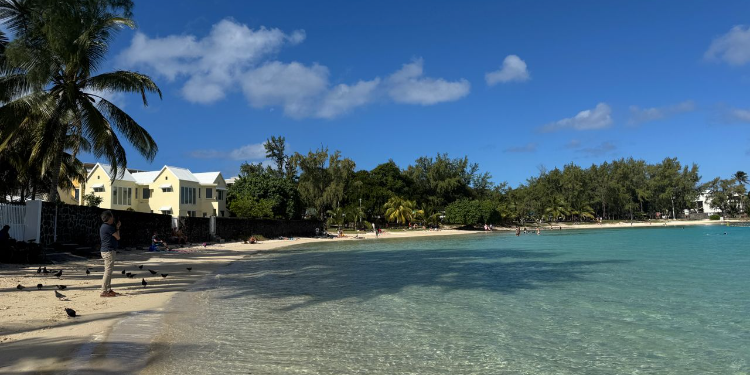
Buying a villa overlooking the lagoon, an apartment in a gated development, or a home ahead of relocating to Mauritius remains within reach for foreign nationals. Yet the process now requires closer scrutiny. The Finance Act 2026, adopted by Parliament and granted presidential assent on 12 August, revises several property-related taxes. At the same time, the Ministry of Housing and Land has begun taking action against barriers and other restrictions limiting public access to beaches.
The 10% increase will not apply to EDB scheme properties
The Finance Act 2025 had planned to raise the registration duty paid by certain foreign buyers to 10%, effective July 1, 2026. A similar increase was set to apply to the Land Transfer Tax payable by the seller. The Finance Act 2026 reverses these provisions. For transactions involving property developments approved by the Economic Development Board, the registration duty remains at the standard rate of 5%. The Land Transfer Tax, borne by the seller, is also set at 5%.
One area of uncertainty remains, however, for deeds registered between July 1, 2026 (when the 10% rate was due to take effect) and the date the new law came into force. The legislation does not clearly provide for automatic reimbursement. Anyone who completed a transaction during this period should ask their notary or the Registrar-General to confirm how their case will be handled.
Living in Mauritius does not mean you can buy any property
For expats already living on the island, the first point to understand remains unchanged: a residence permit does not confer the same property rights as Mauritian citizenship.
Holders of an Occupation Permit, a retired non-citizen permit, or a Permanent Residence Permit are still considered non-citizens. Any purchase they make must therefore fall within one of the categories permitted under Mauritian law. These include properties within a Property Development Scheme, a Smart City Scheme, a former IRS or RES, or an Invest Hotel Scheme. They may also purchase an apartment in a Ground + 2 building.
In recent years, certain primary permit holders have also been able to buy property on the traditional residential market. This route allows them to acquire a single property, at a minimum price of USD 500,000, with approval from the Prime Minister's Office obtained through the EDB. It applies to primary holders of an Occupation Permit, a retired non-citizen permit, or a Permanent Residence Permit. The property must serve as a personal residence. It cannot be located on state land or on the Pas Géométriques. Agricultural land is excluded, as are plots or individual houses exceeding 1.25 arpents.
Crucially, this type of purchase does not create a new right of residence. If the buyer's permit expires, owning a property is not enough to extend their stay.
Join the Mauritius community
Get regular tips and advice to make the most of your expat life
For prospective expats, the USD 375,000 threshold remains central
Foreigners planning their move to Mauritius can still link a property purchase to a residence permit. In eligible schemes, an investment of at least USD 375,000 qualifies the buyer for a permit that remains valid for as long as they retain ownership of the property. Under a PDS, this status can also cover a spouse and children under 24. The owner may reside in Mauritius and benefit from the professional rights provided under the scheme. The EDB has confirmed that the residence-through-purchase arrangement under the PDS remains in place.
The Ground + 2 system works differently. A non-citizen may purchase an apartment in a building with at least two floors above ground level, starting from Rs 6 million. However, they can only apply for a residence permit linked to that property if their investment reaches at least USD 375,000.
This distinction matters. A foreigner may be authorized to own property without gaining the right to settle in the country long-term. A property purchase and an immigration plan must therefore be prepared together, but treated as two separate processes.
Expats who are already established in Mauritius also benefit from a practical advantage. The EDB allows them to use income earned in Mauritius, local savings, dividends, rental income, or proceeds from the sale of a previous property. They must demonstrate the origin of these funds, but are not required to transfer them out of the country before reinvesting them.
The Golden Visa doesn't apply to residential property
The distinction between property investment and immigration becomes even clearer with the new Golden Visa. Under the Economic and Financial Measures Act 2026, holders must invest at least USD 1 million in an economic activity within twelve months of the visa being issued. The value of a residence purchased through an EDB scheme is expressly excluded from this calculation. Buying a USD 1 million PDS villa is therefore not, on its own, sufficient to obtain this status. Even if the buyer qualifies for the residence permit linked to their property, they will need to make a separate economic investment of USD 1 million if they are targeting the Golden Visa.
For prospective expats, the choice is now clearer. The Golden Visa is built around productive investment, not buying a home.
An additional duty targets specific properties
While the government has stepped back from doubling the main taxes on EDB scheme transactions, it has introduced a more targeted charge. The Finance Act 2026 establishes a 10% additional duty on a specific category of sales to non-citizens. The measure applies to properties located on state land or on the Pas Géométriques and transferred under Article 3(3)(c)(v) of the Non-Citizens (Property Restriction) Act. This provision governs a non-citizen's purchase of an apartment in a building with at least two floors above ground level, at a minimum price of Rs 6 million and with the required authorizations. The new duty therefore targets a specific subset of Ground + 2 acquisitions. The conditions are cumulative. A property is not affected simply because it is near the sea. It must be located on state land or on the Pas Géométriques and transferred to the non-citizen under the specific Ground + 2 provision referenced in the legislation.
Note that properties acquired under a PDS, IRS, RES, Smart City Scheme, or Invest Hotel Scheme are not directly subject to this additional duty. These schemes fall under a different provision of the Non-Citizens (Property Restriction) Act.
The 10% duty is payable by the seller. In the standard case where the seller also owes the 5% Land Transfer Tax, their total liability can reach 15% of the taxable value of the transaction. Even though the buyer does not pay this additional duty directly, the seller may seek to factor it into the asking price or during negotiations. That said, the additional duty does not apply where a prior agreement relating to the property was concluded before June 19, 2026 and drawn up and signed before a notary.
In the case of an off-plan sale, the document must be a preliminary reservation contract within the meaning of Article 1601-38 of the Mauritian Civil Code. For other sales, it must be a promise of sale within the meaning of Article 1589, concluded under suspensive conditions and executed before a notary. A purchase offer, a letter of intent, a private reservation, or an agreement signed under private seal before June 19, 2026 is therefore not sufficient to qualify for the exemption. The notary must verify the land's status, the legal provision authorizing the acquisition, and the form of the prior agreement before confirming the amount due.
The government cracks down on beaches marketed as private
Pressure on coastal property is not coming from taxation alone. On August 11 and 13, Housing and Land Minister Shakeel Mohamed put beach access at the center of his agenda. At Pointe-d'Esny and Blue Bay, authorities found signs, posts, ropes, plants, fences, and other structures that gave the impression certain stretches of beach were reserved for campement owners. "The beach must be accessible to everyone," the minister told Mauritian media.
Affected leaseholders are to receive notices giving them 14 days to remove any structures deemed non-compliant. If they refuse, the ministry is considering sanctions ranging up to the suspension or cancellation of the lease, subject to the proper administrative procedures being followed. The ministry also wants to clarify the concepts of the High Water Mark, the Building Line, and public access to the sea.
Bungalow owners, for their part, present a different picture. Several have raised concerns about noise, litter, trespassing, and the use of their private facilities. The ministry acknowledges these difficulties and is working with the Beach Authority on stricter measures to address such nuisances.
References to "private beach" are becoming riskier
This administrative push is changing how property listings should be read. Terms like "private beach," "exclusive access," or "private seafront" can no longer be taken at face value without prior verification. A plot of land may be privately owned up to a defined boundary without the beach in front of it being private. Similarly, a fence, hedge, or jetty that has been in place for years is not necessarily authorized. For an expat, the risk goes beyond losing a feature that was highlighted during the sale. The new owner could be required to remove a structure built by a previous owner, restore a right of way, or answer for a breach of lease conditions. Title verification must therefore cover cadastral boundaries, the High Water Mark, the Building Line, public rights of way, building permits, and any conditions imposed by the state. For a coastal property, a technical and legal inspection becomes just as important as a structural survey.
The ministry has also announced that 364 sites on the Pas Géométriques, sold between 2014 and 2016, will be considered illegally transferred. Amicable discussions are currently under way with those affected. While not all titles on the Pas Géométriques are being called into question, this announcement raises the risk level for buyers. The origin of the title, successive transfers, and administrative authorizations will all need to be examined before any payment is made. A single property may now carry several compounding issues: an additional tax on the sale, an unauthorized coastal structure, a disputed right of way, or a title subject to a dispute with the state.
A journalist, holder of the DALF C1 and C2 and a diploma from the University of Mauritius, I have nearly twenty years of writing experience. After six years in the Mauritian press, I joined Expat.com, where I have been working for over a decade, including five years as editorial assistant, and now as editorial manager.