


 Guide updated by Bruno Arcos on 03 July 2026
Portugal has become one of Europe's most sought-after destinations for expats, attracting thousands each year with its exceptional quality of life, mild climate, reliable healthcare system, and more affordable cost of living compared to many Western European countries. Whether you're a retiree, entrepreneur, digital nomad, or simply seeking a fresh start, Portugal offers favorable conditions for long-term settlement.
What makes Portugal stand out
Administrative procedures are relatively straightforward for EU citizens, and the country offers attractive tax incentives for certain profiles. Lisbon, Porto, and Faro rank among the most popular cities, but Portugal also presents excellent opportunities in lesser-known regions like Alentejo or the Douro Valley.
The country boasts modern infrastructure, efficient transport networks, and accessible housing, though prices have risen significantly in tourist hotspots. English is widely spoken in major cities, although learning Portuguese remains essential for full integration.
Finally, safety, welcoming locals, and cultural openness make Portugal a reassuring destination for solo expats or families alike.
Your setup journey
Guide in 14 steps. Click any step below to jump directly to the section you need.
01Where to live in Portugal
Portugal offers diverse living environments, from coastlines to dynamic cities, rural villages, and Atlantic islands. Your choice depends on priorities: employment, cost of living, climate, or lifestyle preferences.
Popular destinations
Lisbon: Portugal's capital is modern, cosmopolitan, and well-connected – ideal for entrepreneurs, freelancers, and international professionals. Living costs are high compared to the rest of the country. Average rent for a 1-bedroom apartment in the city center: EUR 1,200-1,600. International schools include St. Julian's School and Carlucci American International School.
Porto: Dynamic and more affordable than Lisbon, with strong local culture and a thriving startup ecosystem. Average rent for a 1-bedroom apartment: EUR 800-1,100. The city offers Oporto British School and excellent public transport.
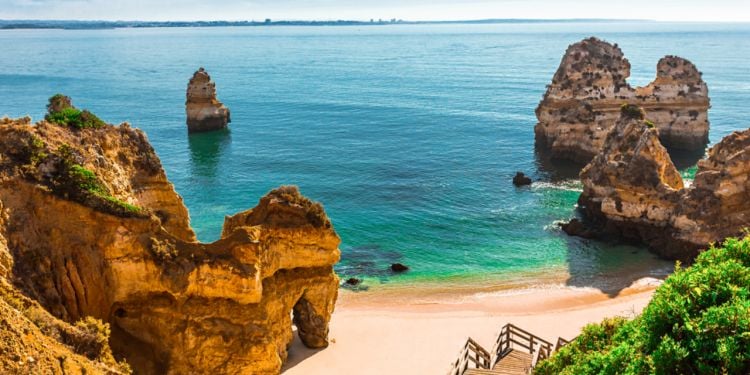
Faro and the Algarve: Highly popular with retirees, this region enjoys year-round sunshine and a beachside setting. Average rent: EUR 700-1,000. International schools include Nobel International School Algarve.
Braga: Young and affordable city with excellent quality of life and good connections to Porto. Average rent: EUR 600-800. Growing tech sector and university town atmosphere.
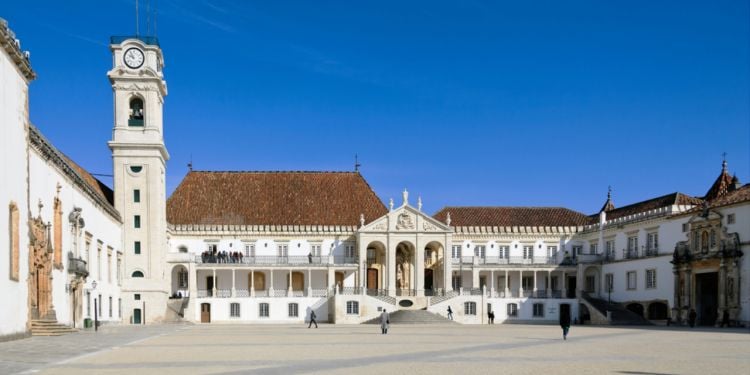
Coimbra: Portugal's university hub, calm and less expensive, suitable for families and students. Average rent: EUR 500-700. Rich historical heritage and student-friendly environment.
02Visas and Residency Requirements
Moving to Portugal involves administrative procedures that vary depending on your nationality and intended length of stay. Proper preparation requires understanding residence obligations, registration requirements, and visa procedures.
Essential Information
EU citizens don't need a visa, but registration with the local town hall (Certificado de Registo de Cidadão da União Europeia) is mandatory for stays exceeding 90 days.
Non-EU nationals require a visa before arrival (work visa, residence visa, or family reunification visa depending on circumstances). Visa applications must be submitted at the Portuguese consulate in your home country.
A tax number (NIF) is essential for signing rental contracts, opening bank accounts, or working. Obtain it from a local tax office (Finanças).
Residence permits for long-term stays are issued by SEF (Serviço de Estrangeiros e Fronteiras), the immigration service.
Health insurance is highly recommended, especially while waiting for access to the Portuguese public healthcare system.




03Working in Portugal: Opportunities and Requirements
Portugal's job market is increasingly open to international professionals, particularly in high-demand sectors. Lisbon and Porto concentrate most employment opportunities.
Key points to remember
In-demand sectors include tech, multilingual customer service, tourism, healthcare, construction, and engineering.
English is common in large companies and call centers, but Portuguese remains essential for many positions.
Portugal supports business creation with simplified procedures and active incubators, particularly in Lisbon, Porto, and Braga.
Remote work is widespread, thanks to reliable internet coverage and affordable living costs in secondary cities.
Employment key figures
Portugal's labor market shows steady growth with increasing opportunities for skilled professionals. The country offers competitive working conditions within the European framework.
As of 2025, the unemployment rate stands at approximately 6.7%
The gross minimum wage is set at EUR 820 per month
Legal working hours are 40 hours per week
Approximately 300,000 expats work in Portugal
World Bank Doing Business ranking: 39th out of 190 countries, with an average company registration time of 5 to 7 days.

04Finding Accommodation in Portugal
Finding housing is generally straightforward, though demand is high in Lisbon, Porto, and the Algarve. Prices vary significantly by region.
Essential information
Standard rental contracts run for 1 year or more. Rents are higher in urban centers and coastal areas. Documents typically required include: ID, NIF (tax number), proof of income or guarantor, and sometimes a substantial deposit.
Property purchase is accessible to foreigners. Working with a lawyer or licensed real estate agent is recommended.
Flatsharing is very common among students and young professionals.
No housing assistance exists for expats who aren't Portuguese tax residents.
Discover more


Join the discussion on the forum
05Cost of Living in Portugal
Understanding the cost of living in Portugal helps you plan your budget effectively. Expenses vary significantly between Lisbon, Porto, and smaller cities or rural areas. Overall, Portugal remains more affordable than most Western European countries, though prices in popular expat areas have increased in recent years.
Monthly budget: Single person
This budget reflects typical expenses for a single person living in a mid-range apartment in a Portuguese city center. Costs decrease significantly outside major urban areas.
Expense Category | Monthly Cost (EUR) |
Rent (1-bedroom, city center) | 900 |
Utilities (electricity, water, internet) | 100 |
Groceries | 250 |
Transportation (public) | 40 |
Eating out & entertainment | 200 |
Mobile phone | 20 |
Health insurance (private) | 50 |
Total | 1,560 |
Monthly budget: Family of four
A family budget includes larger accommodation, school fees, and increased grocery and entertainment costs. International school fees represent a significant expense for many expat families.
Expense category | Monthly cost (EUR) |
Rent (3-bedroom, city center) | 1,800 |
Utilities | 150 |
Groceries | 600 |
Transportation | 100 |
International school (2 children) | 1,500 |
Eating out & activities | 400 |
Health insurance (family) | 150 |
Total | 4,700 |
Cost of living data based on Numbeo, October 2025. Actual expenses vary by location and lifestyle.
Join the discussion on the forum
06Healthcare and Social Protection
Portugal operates a public healthcare system (SNS – Serviço Nacional de Saúde) that is accessible but sometimes overwhelmed in certain regions. Many expats opt for private health insurance to reduce waiting times.
What you need to know
- Access to the public system is free or low-cost for registered residents. Registration with your local health center is required.
- A European Health Insurance Card (EHIC) is useful for short stays or while awaiting resident registration.
- Private health insurance is affordable and provides quick access to private clinics and hospitals.
- Emergency number is 112. Public hospitals have 24/7 emergency services.
Discover more



07Banking and Taxation in Portugal
Understanding Portugal's banking and tax systems is essential for living or investing in the country. Opening a bank account and obtaining a tax number (NIF) are typically the first steps.
Key points to remember
Opening a bank account is possible as a resident or non-resident. A passport or ID card, proof of address, and NIF are generally required.
A tax number (NIF) is essential for signing leases, opening accounts, obtaining contracts, or handling tax matters. Apply at a Finanças office upon arrival.
Tax residents must declare worldwide income. Tax treaties exist to avoid double taxation.
The Non-Habitual Resident (NHR) status may offer tax advantages for 10 years under certain conditions.
Mortgages and property loans are accessible to foreigners after credit assessment. A substantial down payment is often required.
Discover more


08Retiring in Portugal: A Popular Choice
Portugal attracts numerous international retirees thanks to its mild climate, quality of life, safety, and generally reasonable cost of living. It's an ideal destination for active retirees seeking a vibrant lifestyle.
What you need to know
The healthcare system is accessible to European retirees through the S1 form, with options to supplement with private insurance.
An advantageous tax regime has long been available for new residents, with partial exemptions on certain pensions. Conditions have evolved, so it's important to verify current rules based on your country of origin.
Cost of living is more affordable than in most Western European countries, particularly outside tourist areas.
Large expat communities exist in the Algarve, Lisbon, Porto, and Madeira, offering social opportunities and support networks.
Quality of life in Portugal is excellent, with a relaxed pace that appeals to retirees seeking tranquility.
09Higher Education in Portugal
Portugal attracts increasing numbers of international students thanks to quality education, moderate tuition fees, and vibrant student life. The country is part of the European Higher Education Area (Bologna Process), facilitating degree recognition and mobility.
Key points
Two main types of institutions exist: universities and polytechnic institutes (more professionally oriented).
Most courses are taught in Portuguese, but programs in English are available, particularly in business, engineering, social sciences, and technology.
Admission is possible through European channels (notably for Erasmus students) or direct application.
Tuition fees generally range from EUR 1,000 to EUR 2,500 per year for international students, depending on the institution and program.
Discover more
10Education in Portugal
Portugal's school system is accessible and generally of good quality, offering several options for expat families depending on your location and preferred language of instruction.
Key information
Schooling is compulsory from ages 6 to 18 in public or private schools.
Enrollment often requires proof of residence and is possible once you obtain your Portuguese tax number (NIF).
Portuguese is the main language of instruction in public schools; some schools offer bilingual programs.
International schools exist in major cities (Lisbon, Porto, Algarve), with curricula following British, American, or other international standards.
The school year runs from September to June, with breaks at Christmas, Easter, and summer.
Discover more

Join the discussion on the forum
11Planning Your Move to Portugal
A successful relocation begins well before arrival. Preparing your move to Portugal requires anticipation, organization, and thorough knowledge of procedures before, during, and after departure.
Your moving checklist
- Research visa requirements and apply early if you're a non-EU citizen, as processing can take several months
- Arrange health insurance to cover the initial period before accessing the Portuguese healthcare system
- Sort your finances by informing your bank of your move and researching Portuguese banking options
- Plan temporary accommodation for your first weeks while searching for permanent housing
- Obtain your NIF as soon as possible after arrival – you'll need it for nearly everything
- Register with local authorities within the required timeframe to establish legal residence
- Arrange for shipping of belongings, comparing international moving companies for best rates
- Research schools if relocating with children, as popular international schools fill quickly
- Consider learning Portuguese before arrival to ease your transition and daily interactions
- Connect with expat communities online to get advice and build your network before moving
Taking these steps methodically will help ensure a smooth transition to your new life in Portugal.


12Daily Life in Portugal
Portugal offers a pleasant lifestyle shaped by a mild climate, renowned cuisine, and a more relaxed pace than elsewhere in Europe. Daily life is generally straightforward, though some local customs may surprise newcomers.
What to expect
Portuguese is essential for daily life, though English is often understood in major cities and tourist areas.
The Portuguese are welcoming, but building lasting relationships sometimes takes time.
Shops generally open from 9am to 7pm, with a midday break in smaller towns. Neighborhood markets are very popular.
Public transport is efficient in cities, with metros in Lisbon and Porto, plus reliable bus networks.
Portuguese cuisine features fresh seafood, pastéis de nata, and excellent wines at reasonable prices.
Banking services are modern, though some paperwork can be time-consuming initially.







Join the discussion on the forum
13Leisure in Portugal
Enjoy you free time while living in Portugal. Discover sports, leisure, cultural activities and entertainment options to make the most of your expat life.
Discover more
14At a glance
Administrative procedures are generally straightforward, especially for EU citizens.
Quality of life in Portugal is excellent, with a healthy work-life balance.
Cost of living is reasonable, though it varies by region.
The healthcare system is reliable, with both public access and affordable private options.
Numerous professional opportunities exist in digital, tourism, healthcare, and entrepreneurship sectors.
You'll easily connect with other expats, particularly in major cities and coastal regions.
Moving to Portugal means choosing a welcoming and accessible country. Whether you're coming to work, start a business, study, or retire, Portugal offers a pleasant lifestyle, mild climate, efficient public services, and an open culture. We hope this Expat.com guide has provided you with the essential information for every important aspect of your relocation. Ready to take the next step? Join our Portugal expat community forum to connect with others who've made the move.
Join the Portugal community
Get regular tips and advice to make the most of your expat life
Essential services for your expat journey






Forum topics on living in Portugal
Discover forums topics on expat life in Portugal: join the conversation, ask your questions, get advice and share your experience.
- Anybody purchase a Genuino Sesmarias condo from ESCALA GLOBAL, S.A.
- Smoking in Algarve
- Certificate of authenticity of the driving licence - UK
- Cheap 12-month rental agreement as proof of accommodation
- Struggling to find a Portugal visa appointment from London — any tips?
- Immigration attorney
- Most common scams in Portugal
- Travel while waiting for new residence card
- D7 application - VFS Global selections?
- Online rental platforms - safe or a headache?
- Builders & Contractors in Portugal: Proceeding with caution.
- Buy Nurofen plus in Portugal pharmacies
- VFS appointment - no luck. Any advice?
- Cost of house renovations
- Where to buy good blankets, sheets and linens in Portugal
- Website that shows real estate SOLD prices