


Julien Faliu
@Julien
French expat in Mauritius
Forum posts
53212
Contacts
727
About me
French, Married with children, 48 years old
Lives in Grand Baie
Speaks Français, anglais, espagnol, catalan, créole mauricien
Registration: 11 March 2005
Articles written or translated by Julien Faliu
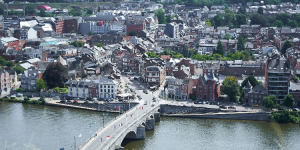
Expats who settle in Namur say afterward that they underestimated two things: how quickly the city's compact scale becomes a genuine advantage in daily life, and how much French matters from the very first week. Namur is the capital of Wallonia, Belgium's French-speaking southern region, set at the confluence of the Meuse and Sambre rivers. For a regional capital, it operates at a human scale: walkable, quieter than Brussels, and considerably more affordable, with studios from EUR 495 and a realistic single-person monthly budget of around EUR 1,900 all-in. Direct rail connections keep Brussels under an hour away, making Namur a practical base for hybrid workers and families.
10 September 2026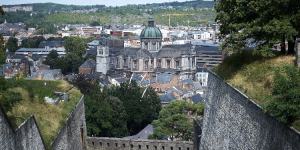
Namur covers more ground than its size suggests. As the symbolic capital of Wallonia, it hosts the region's largest civic festival each September, when the Fêtes de Wallonie fills public squares and streets for 10 days with concerts, parades, and open-air events. Entry to the city's main museums costs between EUR 5 and EUR 8 per adult, with free admission built into the calendar through monthly open days and the museumPASSmusées. The outdoor season runs from April through October, with river activities at the Meuse and Sambre, traffic-free RAVeL cycling routes, and a summer events program concentrated from May onward, much of it free to attend.
10 September 2026
For anyone settling in this compact Walloon city, eating well is less about navigating a complex restaurant scene and more about understanding a few consistent patterns: which market runs on which day, what the Belgian brasserie format means in practice, and where to find the local products that make Namur's food identity distinct. The city has genuine specialties, petits-gris de Namur (locally raised garden snails) and pèkèt, a Walloon juniper spirit that doubles as a cooking ingredient, alongside a bistronomy scene that has grown with the Université de Namur's student population and a price range spanning from a EUR 4 weekday canteen lunch to multi-course gastronomic menus.
10 September 2026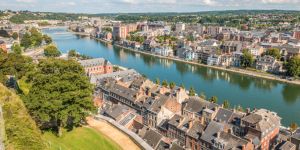
Your first job search in Namur quickly surfaces the defining feature of the city's labor market: nearly every recruiter, every vacancy portal, and every HR document operates in French, and the city's status as Wallonia's administrative capital means public institutions are among the largest employers in the area. That structural reality shapes both where jobs are concentrated and how to approach finding one. The University of Namur is the most internationally open employer, publishing vacancies in French and English, while other major recruiters span healthcare, transport and logistics, and the Walloon regional administration based in the Jambes district.
10 September 2026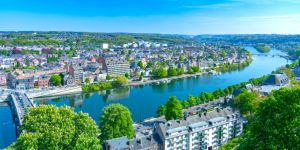
Many newcomers assume that renting in a mid-sized Belgian city involves fewer formalities than in Brussels. In Namur, that assumption costs time. Belgian rental law applies here in full: a deposit held in a blocked account through the federal e-DEPO platform, a signed entry condition report (état des lieux), and mandatory lease registration are all standard steps that catch unprepared tenants off guard. What makes Namur particularly distinct for expats is that virtually every housing transaction operates entirely in French, from lease documents and municipal forms to the support network behind the Maison de l'Habitat. On the upside, rental prices in Namur run noticeably lower than in Brussels.
10 September 2026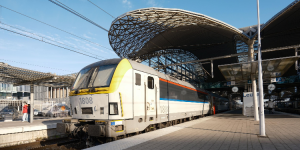
Getting around Leuven without a car is not just feasible; it is the way most residents actually live. The city has no metro or tram network, but its compact, largely traffic-free center makes cycling and walking the default for daily errands, while De Lijn buses and SNCB/NMBS trains from Leuven Station cover everything from cross-city trips to the 16-minute direct connection to Brussels Airport. What catches many newcomers off guard is how little of daily life actually requires a bus or train at all: the historic center restricts vehicle access and is built around foot and bicycle traffic. Bicycle theft, however, is a genuine and widely flagged risk in the city; investing in a solid lock from day one is standard practice.
10 September 2026
KU Leuven ranks among Europe's top 50 universities and runs more than 100 English-taught programs, yet the city it occupies is a compact Flemish city where Dutch governs the housing market, local jobs, and administrative life outside the lecture hall. That gap between an internationally accessible campus and a locally Dutch-speaking city defines much of the international student experience in Leuven. With 26% of its 64,476 students coming from outside Belgium, the infrastructure for newcomers is well-developed: Orientation Days, a university-managed housing database, and dedicated city registration support all exist. The catch is student housing: demand consistently outpaces supply, peak listing season runs from March to May, and students who wait until summer to search find the market significantly thinner.
10 September 2026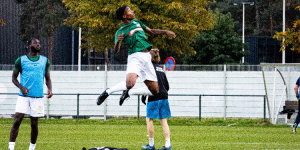
Leuven is a compact university city, yet it fields professional clubs in football, basketball, and volleyball simultaneously, all competing at the top tier of their respective Belgian leagues. That concentration of high-level sport in a city of this size is unusual, but the more practical surprise for newcomers is that the infrastructure behind it is largely open to them from day one. KU Leuven Sport, whose Sportcampus Arenberg serves those professional and university teams, sells sports cards to any city resident regardless of university affiliation, covering court bookings, group sessions, fitness, and the pool. Alongside this, the city's Sportdienst network of clubs, municipal pools, and bookable halls adds a second access route. Cycling doubles as both transport and weekend sport, shaped by rolling Flemish Brabant countryside that begins at the city's edge.
10 September 2026
Moving to Leuven with children means getting to grips with a school system that may look very different from the one your family knows. As part of Dutch-speaking Flanders, Leuven follows the Flemish education system, with Dutch as the main language of instruction in local schools. At the same time, the city's strong international community, largely shaped by KU Leuven, means expat families can also explore international schooling and language-support options. From preschool and primary education to secondary school and university, understanding how the system works can make choosing the right school much easier. This article explains the main education options in Leuven, how enrollment works, what international families should know about language requirements, and the key factors to consider before making a decision.
10 September 2026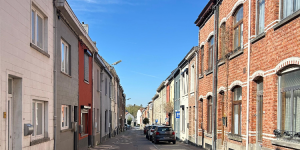
Foreign nationals face no legal restriction on buying property in Leuven: Belgian law imposes no nationality-based ownership cap or restricted zone for residential property. The practical distinction that matters most to expat buyers is tax-related, not legal: whether the standard 12% Flemish registration duty or the reduced 2% rate for a buyer's only own home applies depends on occupancy conditions, not on where the buyer is from.
10 September 2026
Leuven hosts a world-leading research university, a major semiconductor R&D center at imec, and a dense cluster of life-sciences and deep-tech companies, yet its networking culture is less spontaneous than that profile might suggest. English works fluently in university, startup, and international-newcomer settings, but Dutch remains the social default for local belonging, and professional networks here are organized around institutions and sectors rather than open mixers. International House Leuven runs activities nearly every day for internationals, the city operates a free Buddy for Newcomers scheme, and organizations such as Leuven MindGate are explicitly open to professionals of any nationality. The gap newcomers most commonly underestimate is not access, but persistence: a single event rarely builds a lasting connection in Leuven.
10 September 2026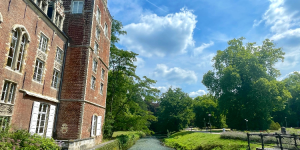
Most people assume that a Belgian university city of 100,000 residents will be affordable, easy to navigate in English, and socially straightforward for newcomers. Leuven complicates each of those assumptions. The housing market is tight and competitive, with one-bedroom apartments in the center running around EUR 1,000 per month. Dutch is the administrative language and the social default outside KU Leuven and the international research environment. And while the city is genuinely internationally oriented, local friendships tend to develop through recurring shared activities rather than instant informality. What Leuven does offer is a rare combination: a compact, walkable city shaped by one of Europe's leading research universities, with a cultural life, cycling infrastructure, and knowledge-economy atmosphere, reinforced by its candidacy for the European Capital of Culture 2030, that far exceed what its size might suggest.
10 September 2026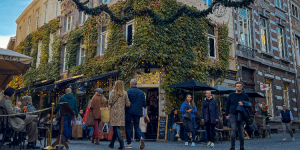
Your first evening in Leuven, you'll likely end up on the Oude Markt without quite planning to: 45 cafés and bars ring the square, and the terraces fill quickly once the working day ends. That concentration of social eating and drinking is a practical entry point to how the city actually functions day to day. Leuven is both a Flemish city with a serious beer heritage (Stella Artois is brewed here) and a university town drawing students and researchers from 166 nationalities, and both facts shape what you'll find to eat. Budget frituur snacks and Michelin-starred restaurants coexist within a few minutes' walk of each other, weekly markets carry fresh produce and specialty ingredients, and a growing number of dedicated groceries serve South Asian, African, and Italian communities alongside the Belgian mainstream.
10 September 2026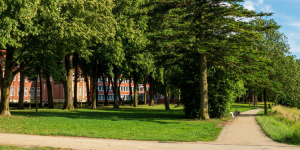
The first weeks in Leuven tend to reframe expectations quickly. What reads on paper as a university town turns out to hold a UNESCO-listed medieval beguinage, a collection of Flemish Old Masters almost impossible to see elsewhere, a dense calendar of free outdoor festivals through the summer months, and a city-run family infrastructure that covers everything from supervised holiday playgrounds to free library programs for children. For newcomers without an existing network, three dedicated institutions, International House Leuven, Pangaea, and De Nomade, exist specifically to help internationals build a social life. The city is compact enough to cover on foot or by bike, and major cultural venues publish visitor information in English, which lowers the entry barrier considerably in the early weeks of settling in.
10 September 2026
What draws most expats to Leuven for work is not a broad commercial economy but a specific concentration: the research and life sciences cluster that has grown around KU Leuven, one of Europe's major research universities. The city sits in Dutch-speaking Flanders, which shapes everything from job applications to workplace communication. Dutch is the operating language of local companies, public administration, and most employers outside the international research environment; English carries further in university labs, biotech firms, and multinational offices, but rarely replaces Dutch entirely for contracts or HR. For expats evaluating a move here, the practical question is less "are there jobs?" and more "which sector, and on what terms?" The answer varies considerably depending on whether you are joining a research institution, a spin-off company, or a locally rooted employer.
10 September 2026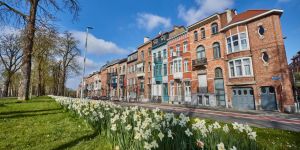
Leuven draws researchers, students, and professionals from across the world, all competing for housing in a city of more than 100,000 residents that also accommodates 50,000 students. The rental market in Leuven spans managed university residences, private apartments, and shared houses across five distinct districts, each with its own character and price point. For international newcomers, the practical challenge is twofold: the market moves quickly, particularly during the student-housing season, and Belgian tenancy rules around deposits and lease types follow a specific framework that many arrivals do not anticipate. The deposit, for instance, must be held in a blocked bank account in the tenant's name rather than paid to the landlord directly, a rule that catches many first-time renters in Belgium off guard.
10 September 2026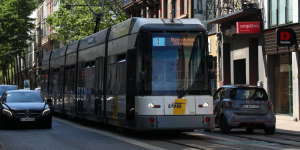
Do you really need a car to get around Antwerp? For most newcomers settling in the city center, the honest answer is no. A single operator, De Lijn, runs buses, surface trams, and the underground premetro network under one ticketing system, covering most cross-city journeys. The center is actively designed to limit routine car use: a Low Emission Zone restricts older vehicles, parking in the historic heart is reserved almost entirely for residents, and cycling is treated as a normal daily mode with more than 300 bike-share stations and priority cycling streets throughout the city. What Antwerp calls a metro is not a conventional subway but a network of trams that dip underground through the center: a distinction worth knowing before planning your first commute.
09 September 2026
Antwerp hosts nine higher-education institutions offering more than 200 study specializations, with particular depth in fashion and fine arts, supply chain management, maritime education, and tropical medicine. English-taught programs are available across the city, but they concentrate at the master's and postgraduate levels; most bachelor's programs are taught in Dutch. Tuition for EU/EEA students at the University of Antwerp runs approximately EUR 1,157 per year at the standard Flemish rate, making the cost of study itself considerably less of a barrier than the logistics of arriving and settling in.
09 September 2026
Getting active in a new city tends to happen in stages: a run through the nearest park, a gym membership nearby, and eventually a club or league that becomes a social anchor. In Antwerp, that progression has more infrastructure behind it than most newcomers expect. The city maintains a public portal for sport locations, clubs, and participation across dozens of disciplines; municipal pool entry starts at EUR 4.50 for residents; and individual sports hall sessions cost around EUR 3. Two professional football clubs with distinct fan cultures, a professional basketball team competing across Belgium and the Netherlands, and the Ronde van Vlaanderen cycling race departing from the Scheldt quays each spring give the city a dense sporting identity.
09 September 2026
Antwerp draws internationally mobile families from across Europe and beyond, and the city's school landscape reflects that breadth: parents arriving here can choose between free Dutch-language Flemish schooling and two well-established private international schools teaching in English and French. That choice is consequential in practical terms. Annual tuition at the international schools ranges from EUR 8,771 to EUR 39,530, so budget is one of the first filters most families apply. Location is the second: the two private schools sit in different parts of the city, and where a family enrolls their child often determines where they end up living. For secondary school entry in the Flemish public system, Antwerp runs a centralized allocation process rather than a direct enrollment model, which means families who miss the registration window can only access schools with remaining places.
09 September 2026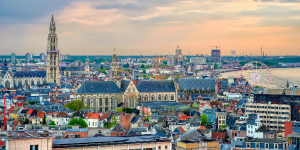
You've decided Antwerp could be your next home, and you're wondering what it actually takes to buy property there as a foreigner. The short answer is that Belgian law imposes no nationality-based restrictions on residential property purchases: foreign nationals can buy freely, without caps, restricted zones, or extra charges tied to their country of origin. What matters in practice is understanding a purchasing system built around the notary rather than a solicitor or attorney, a tax structure where the difference between an existing property and a new build can amount to tens of thousands of euros, and a city where prices average around EUR 2,805 per square meter but rise sharply in sought-after districts like 't Zuid and Zurenborg.
09 September 2026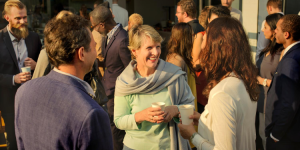
Europe's second-largest port makes Antwerp one of the most commercially connected cities on the continent, and that shapes how professional networking works here: sector-specific, organized, and built around five dominant industries running from logistics and maritime trade to diamonds, technology, and construction. For newcomers, the practical challenge is less about finding events than knowing which register to enter. English is the working language at international and startup events; Dutch dominates the local entrepreneur infrastructure, from the chamber of commerce to most sector associations. Across both registers, the pattern that consistently produces results is not the strength of a first impression but the frequency of return: Antwerp networking is a slow build, not a sprint.
09 September 2026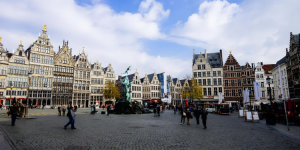
Many newcomers assume that Antwerp's compact size and English-friendly professional environment make it one of the more straightforward Western European cities to settle into. The reality is more layered. Dutch is the administrative language of Antwerp and of Flanders, and while English gets most people through the working day without difficulty, it stops being sufficient the moment a lease renewal, a GP appointment, or a school enrollment form arrives. Beyond language, housing competition in desirable districts is real, and arriving without a Belgian income history adds friction to a market that already ranks as Belgium's second most expensive. What Antwerp offers in exchange is a genuinely walkable, culturally rich city with a large-economy job base, distinct neighborhoods, and a social calendar dense enough to fill every weekend year-round.
09 September 2026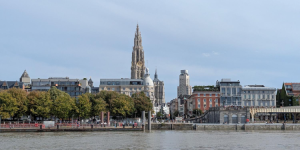
Antwerp is simultaneously a working port, a fashion capital, and one of the most museum-dense mid-sized cities in northern Europe; the contrast between its industrial scale and its cultural compactness is one of the first things newcomers notice. The city's A-kaart, the municipal resident card available to all registered inhabitants, gives free entry to nine major museums on the first Tuesday of each month, making a regular cultural routine considerably more affordable than it initially looks. Free options extend outdoors too: the Middelheimmuseum's open-air sculpture collection, the MAS rooftop panorama over the Scheldt, and weekly summer park-sports sessions across the city's districts cost nothing. In early August, Antwerp Pride, Museumnacht, and Bollekesfeest overlap within the same week, compressing the social calendar into one of the densest event windows in the Belgian summer.
09 September 2026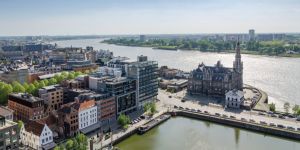
Many expats who move to Antwerp underestimate how sharply the job market divides along language lines. Dutch is the working language of Flanders, and most roles in administration, retail, and local services require at least functional proficiency. Yet the city's port, chemicals sector, and diamond trade pull in international talent on English-language contracts, creating a genuine but narrower parallel market for newcomers without Dutch. Antwerp's employment geography is also unusually clustered: where your employer sits, whether in the port zone, the Diamond District near Central Station, or the Blue Gate Antwerp campus in the south, shapes your daily commute as much as your career path.
09 September 2026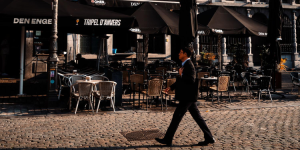
You've arrived in Antwerp and need to find your footing at the table. The city's food culture layers Flemish-Belgian comfort cooking, a deeply rooted beer-café tradition, and a walkable center where Michelin-recognized restaurants sit minutes from a frituur selling a large portion of fries for EUR 3.50. What catches many expats off guard is less the variety than the rhythm: restaurant kitchens typically close by 21:30, and many venues shut one or two days per week. The café, whether a traditional bruine kroeg (neighborhood pub-café) or a rooftop bar, functions as an all-day social anchor here, not just a place for a quick coffee.
09 September 2026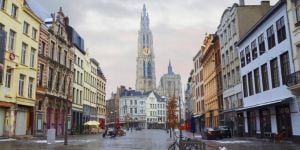
Renting in Antwerp means navigating a market where the postcode on a listing tells you almost as much as the price. The city is organized into ten administrative districts, each with its own rent level, character, and commute profile: a studio in the historic center (postcode 2000) starts around EUR 925 furnished, while a room in outer Stuivenberg can cost as little as EUR 500. Standard residential leases in Flanders run for nine years, a legal framework very different from short-term rental norms elsewhere in Europe, and the rental guarantee alone can reach three months' rent before you move in.
09 September 2026
Getting schooling right is often the first major decision families make when relocating to Ghent. The city offers a broad public school network that is free to enroll in, alongside one dedicated English-medium international school inside the city limits: International School Ghent (ISG). That binary is sharper here than in larger Belgian cities, which means the language question, Dutch-language public system or English-medium ISG, needs to be answered early. ISG charges annual tuition of EUR 16,400 to EUR 21,900 depending on year group, while the public system caps additional costs at EUR 550 over the full primary cycle. For families moving with children of secondary age, the choice also shapes the university pathway: most programs at Ghent University are taught in Dutch.
09 September 2026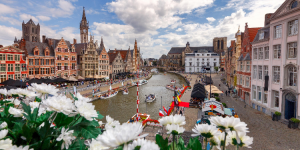
Most people assume that Ghent is simply a quieter alternative to Brussels or a smaller version of Bruges. The reality is that Ghent operates on its own terms: a Flemish university city of nearly 274,000 residents where 34% of the population is in their twenties or thirties, where cycling is genuinely faster than driving in the historic center, and where Dutch is the language of every administrative interaction regardless of how well-developed the city's English-facing web presence appears. The rental market moves fast and rewards preparation, childcare waiting lists are long, and the city's Circulation Plan makes car-reliant habits actively inconvenient. For those who arrive ready to engage with those realities, Ghent offers cultural density, a compact and walkable center, and a social scene that runs on cyclists, students, and café terraces rather than on metropolitan budgets.
09 September 2026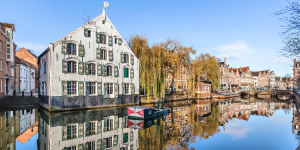
What stops most foreign buyers from purchasing property in Ghent? Not the law: Belgium imposes no nationality-based restrictions, and buying property in Ghent is open to all nationalities on equal legal footing. The practical obstacles are more specific: understanding a purchase tax structure where the difference between the standard 12% Flemish sales duty and the reduced 2% rate hinges on domicile registration, grasping why the compromis (the private sale agreement) is legally the sale itself, and knowing that most mortgage lenders tie their lending conditions to Belgian residency and euro income rather than nationality. Ghent's average asking price across all property types stands at approximately EUR 3,063 per m², making the cost of buying, beyond the purchase price, a budget item that shapes the decision as much as the property itself.
09 September 2026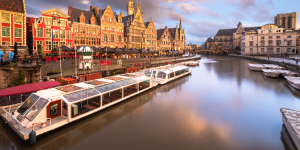
Settling into a new city means figuring out how to get around before almost anything else. In Ghent, that question has a clearer answer than in most European cities of similar size: cycling already accounts for 33.5% of all trips, the historic centre is divided into traffic sectors that make driving through it impractical, and a four-line tram network run by De Lijn connects the key hubs. The practical consequence for a newcomer is that a car is optional, not essential, and that getting mobile from day one requires little more than a contactless bank card and the De Lijn app.
09 September 2026
Ghent has a notably active event infrastructure for a city of its size: sector conferences, startup showcases, university welcome sessions, and city-sponsored festivals run throughout the year, giving newcomers a steady stream of structured entry points into both professional and social life. The city's networking culture is activity-led rather than transaction-driven; relationships form through repeated participation in shared contexts, not cold introductions. Dutch is the language of everyday civic life, but English is widely used in academic, tech, and expat-facing settings. One concrete factor that sets Ghent apart is the International House East Flanders, a publicly funded hub for international workers and families that provides a single contact point covering housing, administration, integration, and career guidance.
09 September 2026
Keeping fit and staying active in Ghent is straightforward once you know where to look, but the city's infrastructure rewards those who plan ahead. Cycling is not a weekend hobby here: Ghent was named Cycling City 2024 and has built one of Belgium's most extensive cycle-path networks, making two wheels part of everyday life from the moment you arrive. Beyond cycling, the city runs over 350 sports camps each year for children, maintains five public swimming pools plus an outdoor pond, and offers everything from padel and rowing to rugby and skateboarding through a single online booking system. Most sports and court bookings require a free Sportprofiel account on the municipal platform; setting that up early is the single most practical step a newcomer can take.
09 September 2026
Ghent's food scene spans four distinct registers: Flemish comfort classics, a plant-based dining culture that earned the city an official identity as Europe's veggie capital, a lively café culture woven into everyday social life, and a contemporary gastronomy wave where young chefs operate in medieval settings. For newcomers, understanding those registers is practical from the first week: dinner service opens at 18:00, kitchens close earlier than most European cities, and reservations matter even on weekday evenings. The city's Donderdag Veggiedag (vegetarian Thursday) initiative placed plant-based eating at the center of local dining years before it became mainstream elsewhere, and its effects remain visible across the restaurant scene, from casual eateries to guide-listed fine dining.
09 September 2026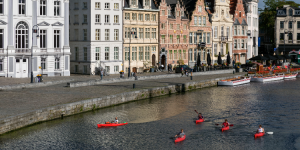
You've just arrived in Ghent, and you're figuring out how to spend your weekends, your evenings, and your days off. The city makes that easier than you might expect: its compact medieval center, 513 km of cycling infrastructure, and a calendar of free cultural events mean you can build a full leisure life here without a large budget or a car. What sets Ghent apart from other Belgian cities, given its size, is the density of what's available within walking distance, from the MSK Museum of Fine Arts and the Ghent University Museum to the Gentse Feesten (Ghent Festivities), a 10-day free city festival every July that turns the historic center into an open-air stage.
09 September 2026
Securing the right university place is just the starting point for studying in Ghent; the harder challenge is housing. With 70,000 students concentrated in a compact city, Ghent is Flanders' most student-saturated urban environment, and Ghent University itself warns that finding suitable accommodation takes substantial time and energy. The city hosts three distinct higher-education institutions, each with its own admissions process, fee structure, and student support system, all operating in English for international students.
09 September 2026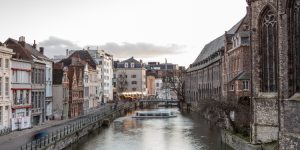
You've found an apartment listing in Ghent that looks perfect, but by the time you reply, it's already gone. That's the reality of renting in Ghent: demand consistently outstrips supply, and searches can take anywhere from a few weeks to six months depending on the type of housing you need. The city's private rental market skews heavily toward apartments, with standard long-term leases running under Flemish rules that will feel unfamiliar if you're used to short-term contracts. Furnished options are limited, lease administration runs in Dutch, and arriving without a signed lease is common rather than exceptional.
09 September 2026
Ghent has a split personality as an employment market: a medieval university city that is also home to one of Europe's major seaports. That combination produces a job market with genuine breadth, from biotech and academic research to port logistics and energy management, but one where language shapes access in ways that affect every newcomer's strategy. Dutch is the working language of most public-sector, care, and operational roles; English carries further in research, technology, and international business services. The national wage floor for Belgium is EUR 2,233.61 gross per month from July 2026, but sectoral collective agreements typically set higher minimums, and automatic wage indexation means salaries adjust with inflation without individual negotiation.
09 September 2026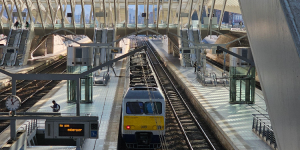
You've arrived at Liège-Guillemins and need to figure out how to get across the city. Belgium's newest urban tram line stops right outside the station, running every 5 minutes at peak hours along a single 11.7 km route that links the city's main transport, employment, and leisure nodes. What catches many newcomers off guard is the ticketing: on-board purchase is not available on the tram or the high-frequency bus lines, so you need a ticket activated before you board. Downloading the TEC app before your first journey is the single most practical first step. Liège's network combines that tram with a bus system covering the neighborhoods off the tram route, SNCB suburban trains, and, for anyone mixing both, a City Pass subscription that covers all of them within the urban zone.
09 September 2026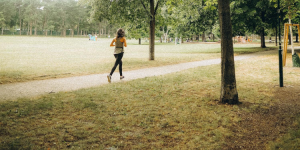
You've just arrived in Liège and want to keep up your sport or try something new: the first thing to understand is that organized sport here runs through clubs and associations, not drop-in facilities. Most registrations, camp sign-ups, and membership renewals follow an annual cycle that restarts each August and September, so arriving around that window makes getting started considerably easier. The city has two strong sporting identities that shape everyday life: Standard de Liège in the Jupiler Pro League draws the city's largest sports following, while Liège-Bastogne-Liège, one of road cycling's five Monuments, makes cycling culture unusually prominent for a city of this size.
09 September 2026
With almost one-quarter of Université de Liège students coming from abroad, Liège offers an established international community alongside the character of a lively French-speaking student city. Its universities, professionally focused colleges and arts schools provide a broad range of study options, while moderate living costs and low-cost public transport make the city an accessible choice in Belgium. However, studying in Liège requires careful planning, especially when it comes to language requirements, admission deadlines, tuition fees and accommodation. This guide covers the main institutions, application procedures, student support services, housing options, living expenses, employment rules and social life to help international students prepare for their move.
09 September 2026
Finding a school in Liège presents a specific challenge for expat families: the city has no full-time international school, and all mainstream provision runs in French. What it does offer is a dense, varied, publicly funded school network covering nursery through secondary, with free tuition, language immersion streams in English, Dutch, and German, and a structured reception program for children arriving without sufficient French. The system also works differently from what many families expect. There are no catchment-area assignments; parents apply to a school they choose rather than being allocated one by address. That active-choice model means enrollment takes real initiative, but it also means families are not locked into a default option that may not fit.
09 September 2026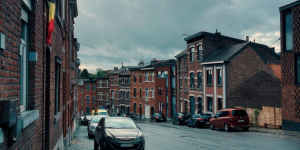
The decision to buy property in Liège rather than rent marks a turning point that carries real financial and administrative weight. At EUR 2,022 per square meter on average, Liège sits well below the Belgian national benchmark, making it one of the more financially accessible mid-sized cities in the country for foreign buyers. Belgium imposes no nationality-based restrictions on residential purchases, so any foreign national can buy through the standard process. That process, however, runs entirely through the mandatory notarial system, where the compromis de vente (pre-deed contract) is legally binding from the moment both parties sign it. Wallonia's reduced registration duty of 3% for owner-occupiers, against the standard 12.5%, can represent tens of thousands of euros in savings, making residency status one of the first practical decisions to factor into your purchase strategy.
09 September 2026
In your first week in Liège, you notice that French is the working language everywhere: on event flyers, in the coworking space at La Grand Poste, and at the chamber afterwork you decided to attend. Building a professional and social network here works differently than cold LinkedIn outreach: relationships develop through repeated attendance at the same events, the same conversation tables, and the same startup meetups rather than through a single well-timed introduction. Liège has fewer explicitly expat-facing structures than larger Belgian cities, which means identifying the right recurring formats early, whether a monthly chamber event, a language table, or a university welcome activity, makes a real difference in how quickly you settle in.
09 September 2026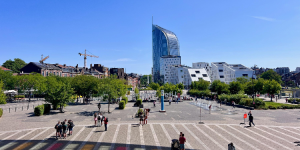
Liège draws residents from 153 nationalities, yet it operates almost entirely in French and makes no particular concession to international convenience. That contrast is the defining reality for anyone considering a move here: Wallonia's main city offers genuine affordability relative to Brussels, direct high-speed rail connections to four neighboring capitals, and a cultural and social life that punches well above its size, but it does so entirely on its own terms. The city's tram-anchored public transport network was restructured in 2025, its childcare places are under documented pressure, and its neighborhoods range from quiet residential streets on the hills to animated, sometimes rough central districts shaped by a large student population. For the right profile, Liège is a compact, affordable, and socially rewarding base; for those expecting a polished international-capital environment, its strong Walloon regional character is a genuine adjustment.
09 September 2026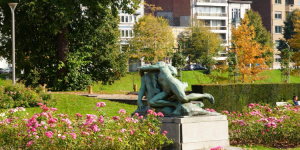
What does settling into life in Liège actually look like? For much of what the city offers, very little. The Marché de la Batte draws up to 20,000 shoppers to the Meuse quays each Sunday morning at no charge; the calendar from spring through August runs on a dense sequence of free public events, from the Fête de la Musique across the city centre in June to the week-long Fêtes du 15 août street festivities in Outremeuse; and city museums open their doors without charge on the first Sunday of every month. Liège ranks third among Belgian cities by shopping visitor numbers, but what shapes resident life more than its retail offer is a calendar where the most embedded local events cost nothing to attend.
09 September 2026
Getting food right in Liège is more than a matter of finding a good restaurant. The city has a firmly rooted local food culture built around specific dishes, specific rituals, and a social framework that doesn't map neatly onto what most newcomers expect. A mid-range dinner for two runs around EUR 80; a tray of fries from a neighborhood fry shop costs EUR 6. Between those two endpoints, the city offers Michelin-listed restaurants, a nearly 500-year-old Sunday market drawing tens of thousands of shoppers each week, dedicated plant-based restaurants, and three active food delivery platforms. The single most useful adjustment for arriving expats is understanding that a "café" in Liège functions primarily as a social drinking venue, where beer and conversation take precedence over espresso.
09 September 2026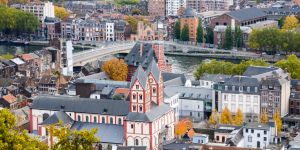
Liège sits within easy reach of Luxembourg, the Netherlands, and Germany, and its proximity to three language regions might suggest a multilingual labor market. In practice, French is the working language for the overwhelming majority of local employers. That said, the city's economic mix is broader than its industrial reputation implies: the University of Liège, CHU de Liège, a cargo airport that supports around 12,000 jobs in logistics and freight, and a cluster of international manufacturers including ArcelorMittal, FN Herstal, and Umicore all create real openings for foreign professionals with the right sector background. Salaries in Liège go further than comparable pay in Brussels or Antwerp because housing costs are meaningfully lower, which shifts the financial calculation for anyone weighing where in Belgium to build a career.
09 September 2026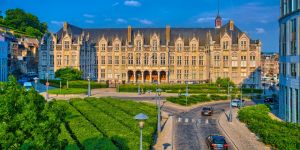
Getting your housing situation right in Liège matters well beyond having a roof over your head. In Belgium, your lease is the document that unlocks commune registration, residence card applications, and every other administrative step that follows arrival; without a lease that explicitly permits domiciliation (official address registration), none of those processes can move forward. The standard Walloon residential lease runs for nine years, considerably longer than most newcomers expect, and advertised rents routinely exclude building charges and utilities. Liège's geography adds a further layer of complexity: neighborhood character and transit access can shift significantly from one street to the next within the same district, making an in-person visit to any specific address a necessary step before signing.
09 September 2026
Relocating to Switzerland with school-age children means facing a system that shifts depending on where a family settles: education is organized canton by canton, not nationally, so the right school in Geneva may look nothing like the right school in Zurich or Basel. For most families, the practical fork in the road is between a free public school taught in the local cantonal language (German, French, or Italian) and one of the country's many international schools offering the IB, British, American, or French curricula, with tuition ranging from around CHF 19,800 to over CHF 105,900 a year at the most selective boarding institutions. Popular international schools fill up quickly; waiting lists are common in Geneva and Zurich, and places are rarely secured before an application fee is paid, which makes timing as important as the choice of curriculum itself.
08 September 2026